Tectariaceae
Halberd Fern Family
Tectariaceae is a family of ferns in the order Polypodiales, containing 7-10 genera and approximately 230 species. These diverse ferns are characterized by their highly variable leaf morphology and round sori (spore clusters) that are often covered with a protective indusium. The family is distributed nearly worldwide but is most diverse in tropical regions, with the genus Tectaria comprising about 150 species, making it one of the largest fern genera.
Overview
The Tectariaceae family is a diverse group of ferns primarily found in tropical and subtropical regions worldwide. The family is dominated by the genus Tectaria, which contains approximately 150 species, making it one of the most species-rich fern genera. These ferns are primarily terrestrial or grow on rocks, though some species may be epiphytic (growing on other plants).
The family's taxonomic history has been complex, with various genera being moved in and out of the family based on morphological and molecular studies. Modern molecular phylogenetic research has helped clarify the relationships within the family and with other fern groups.
Most species of Tectariaceae are found in tropical forests, where they contribute to the understory vegetation. Some species have adapted to more specialized habitats, including limestone outcrops and disturbed areas.
Quick Facts
- Scientific Name: Tectariaceae
- Common Name: Halberd Fern Family
- Number of Genera: 7-10
- Number of Species: Approximately 230
- Distribution: Nearly worldwide, most diverse in tropical regions
- Evolutionary Group: Monilophytes - Leptosporangiate Ferns - Polypodiales
Key Characteristics
Growth Form and Habit
Members of Tectariaceae are primarily terrestrial ferns or grow on rocks. They typically have short to long-creeping rhizomes that are covered with scales. Some species may grow as epiphytes on tree trunks or branches in humid forest environments.
Fronds
The fronds (leaves) of Tectariaceae show extreme morphological variation across the family. They can range from simple (undivided) to highly divided (pinnate to tripinnate). The fronds may be dimorphic in some species, with fertile fronds differing in appearance from sterile ones. The stipes (stems) are often grooved on the upper surface and may have scales, especially at the base.
Reproductive Structures
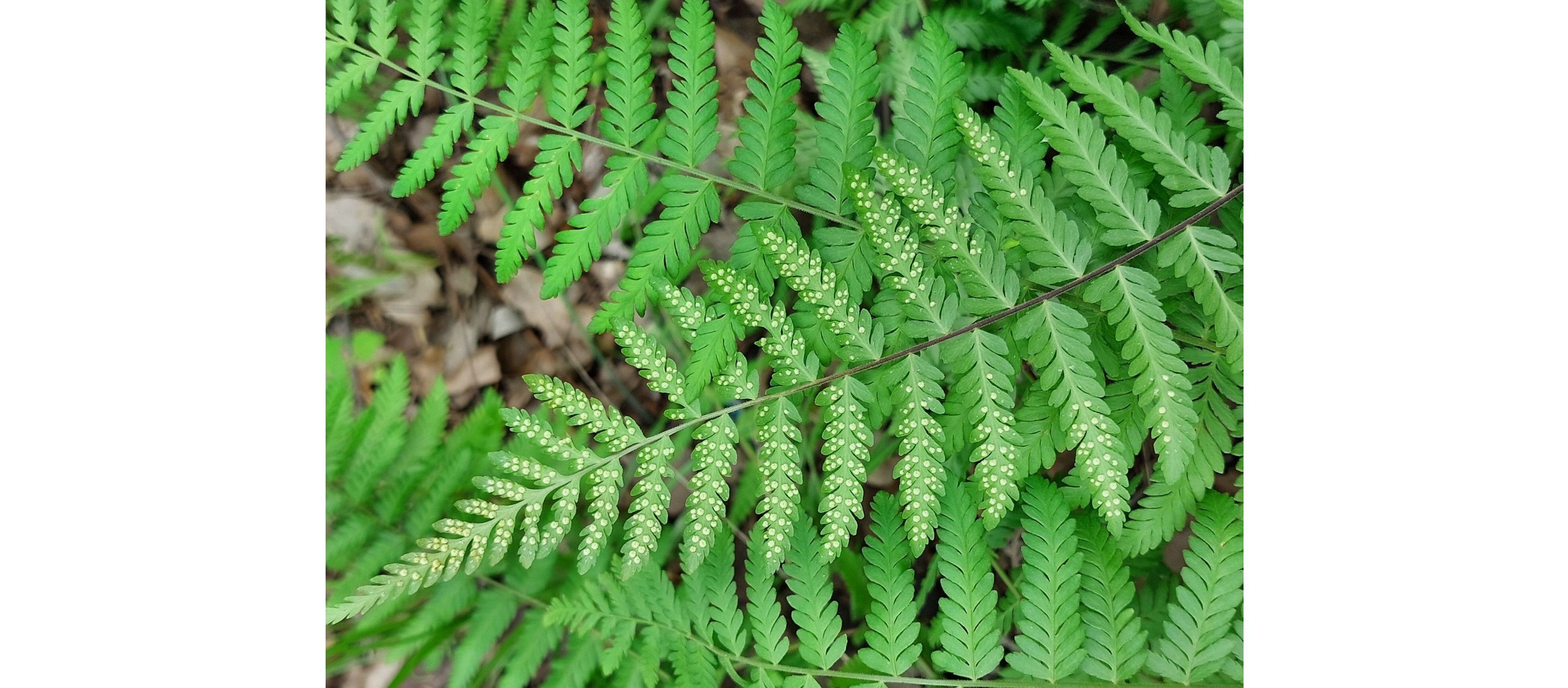
The sori (clusters of spore-producing structures) are typically round and are often covered with a membranous protective flap of tissue called an indusium. In some species, the indusium may be kidney-shaped or absent. The spores are bean-shaped (bilateral) and monolete (with a single linear scar).
Distinguishing Features
Tectariaceae can be distinguished from related fern families by a combination of:
- Highly variable leaf morphology
- Round sori often with indusia
- Bean-shaped (bilateral) monolete spores
- Terrestrial or rock-dwelling habit

Typical frond structure of a Tectaria species showing the variable leaf morphology and sori arrangement.
Identification
Field Identification Tips
When trying to identify members of the Tectariaceae family in the field, look for:
- Variable frond morphology - from simple to highly divided leaves
- Round sori on the underside of fronds, often with indusia
- Terrestrial growth habit or growing on rocks
- Rhizomes covered with scales
- Presence in tropical or subtropical forest habitats
Similar Families
Tectariaceae may be confused with several related fern families:
- Dryopteridaceae: Similar in appearance but can often be distinguished by differences in indusium shape and attachment, as well as molecular characteristics.
- Polypodiaceae: Generally lacks indusia and often has more leathery fronds.
- Thelypteridaceae: Typically has more finely divided fronds with characteristic hairs rather than scales.
- Aspleniaceae: Has elongated sori rather than the round sori typical of Tectariaceae.
Distinguishing Features
The most reliable features for distinguishing Tectariaceae from similar ferns include:
- Sori arrangement: Typically round and often with indusia
- Spore type: Bean-shaped (bilateral) monolete spores
- Habitat preference: Primarily terrestrial or on rocks in tropical regions
- Rhizome scales: Distinctive scale patterns on the rhizomes
For definitive identification, examination of the sori and indusia under magnification is often necessary, as these features are the most diagnostic for the family.
Notable Examples
The family Tectariaceae contains several genera, with Tectaria being the largest. Here are some notable representatives:

Tectaria crenata
Crenate Halberd Fern
A widespread species in tropical Asia with simple to trifoliate fronds that have crenate (scalloped) margins. The fronds emerge from a short, creeping rhizome covered with dark scales. This species is often found in moist forest understories and along stream banks.

Tectaria incisa
Incised Halberd Fern
Native to tropical America, this species has large, pinnate fronds with deeply incised pinnae (leaflets). It grows in humid forest habitats and is characterized by its prominent round sori with kidney-shaped indusia. The fronds can reach up to 1 meter in length.

Tectaria trifoliata
Trifoliate Halberd Fern
Found in tropical America, this distinctive species has trifoliate fronds (with three leaflets) that emerge from a short-creeping rhizome. The central leaflet is larger than the two lateral ones. The sori are arranged in rows along the veins and are covered with round to kidney-shaped indusia.
Related Families
Tectariaceae belongs to the order Polypodiales and is phylogenetically related to several other fern families. Based on molecular studies, its closest relatives include:

Dryopteridaceae
Wood Fern Family

Polypodiaceae
Polypody Family

Nephrolepidaceae
Sword Fern Family

Lomariopsidaceae
Lomariopsis Family
Phylogenetic Note
Tectariaceae has undergone significant taxonomic revisions based on molecular phylogenetic studies. Previously, many of its members were classified in other families such as Dryopteridaceae or Polypodiaceae. Modern molecular studies have confirmed it as a distinct evolutionary lineage within the eupolypod I clade of the Polypodiales order.