Lomariopsidaceae
(No single common name; includes climbing ferns, shield ferns)
Lomariopsidaceae is a diverse family of ferns (order Polypodiales, clade Eupolypods I) found throughout the tropics. It includes terrestrial, epiphytic, and notably, hemiepiphytic climbing ferns. The family exhibits varied frond morphology (often pinnate, sometimes dimorphic), frequently articulate pinnae, and diverse reproductive structures ranging from round sori (indusiate or exindusiate) to acrostichoid sporangial arrangements.
Overview
Lomariopsidaceae is a fascinating family of ferns primarily distributed across tropical regions worldwide. It showcases remarkable diversity in growth habits, encompassing terrestrial species (like *Cyclopeltis*), epiphytes, and particularly, hemiepiphytic climbers (*Lomariopsis*, *Lomagramma*) that start on the forest floor and climb up tree trunks using long, creeping rhizomes. The family also includes the well-known and horticulturally important genus *Nephrolepis* (Boston ferns and relatives), although its placement is sometimes debated (see Phylogeny).
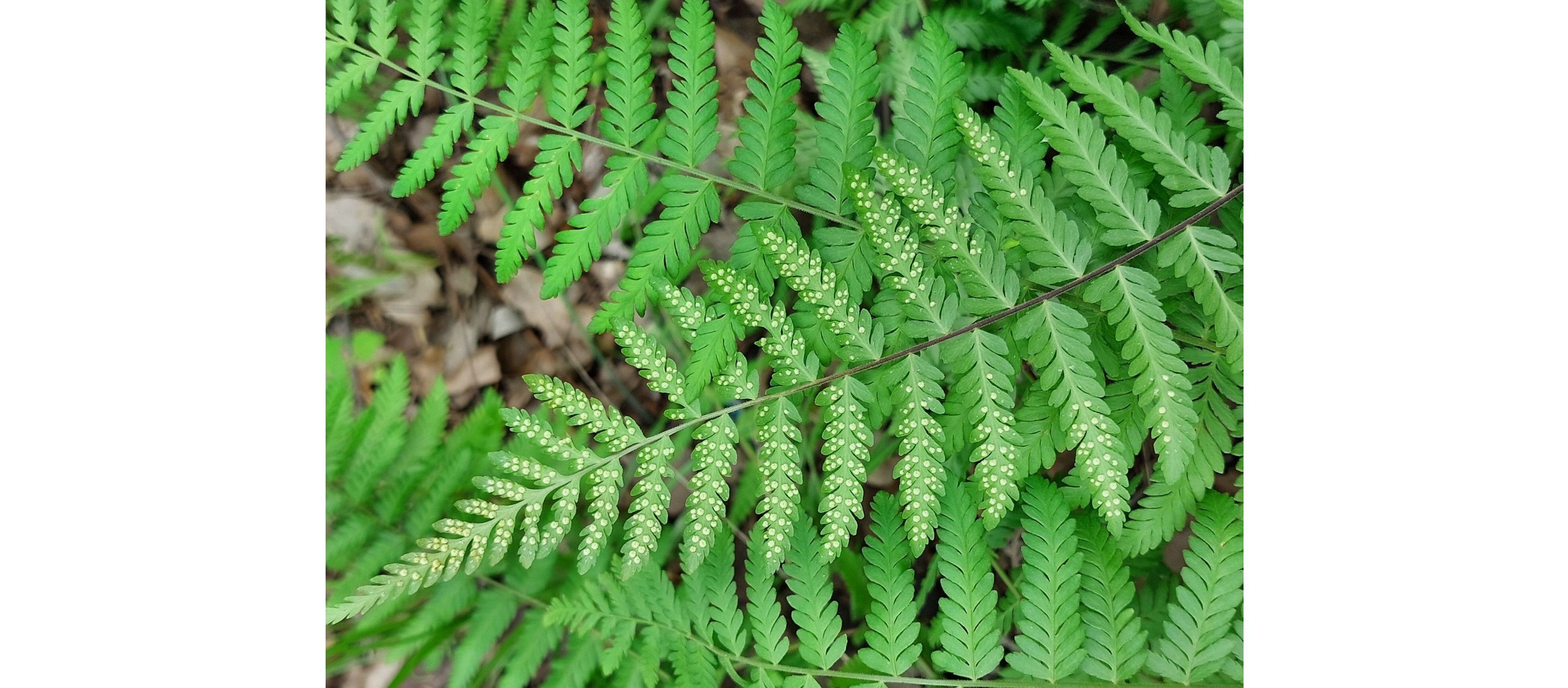
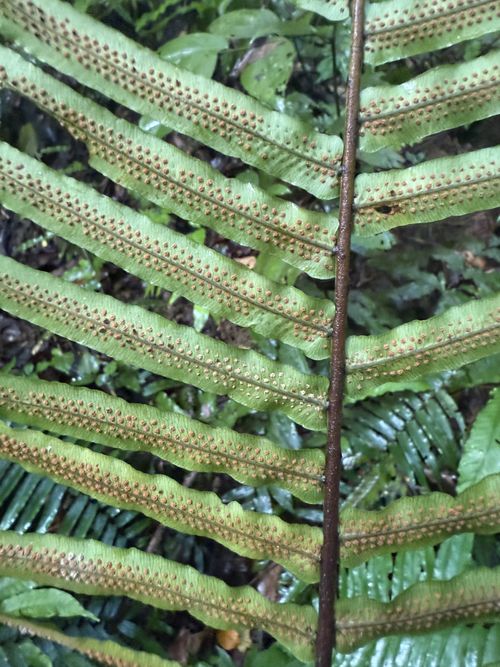
Morphologically, the family is characterized by typically pinnate fronds, which can be monomorphic or strongly dimorphic (especially in climbing species where fertile fronds are often contracted). A common feature in several genera (*Nephrolepis*, *Cyclopeltis*) is the presence of articulate pinnae, meaning the pinnae are jointed at the base and can detach cleanly from the rachis. Reproductive strategies are varied: some genera possess typical round sori, either covered by kidney-shaped indusia (*Nephrolepis*, *Cyclopeltis*) or lacking indusia (*Lomariopsis*), while others (*Lomagramma*) exhibit an acrostichoid condition where sporangia cover the entire lower surface of the contracted fertile pinnae.
Quick Facts
- Scientific Name: Lomariopsidaceae Alston
- Common Name: (No single common name; includes climbing ferns, shield ferns)
- Number of Genera: ~4-5 (*Lomariopsis*, *Lomagramma*, *Cyclopeltis*, *Thysanosoria*; sometimes includes *Nephrolepis*)
- Number of Species: ~60-70 (more if *Nephrolepis* is included)
- Distribution: Pantropical.
- Evolutionary Group: Ferns (Polypodiopsida) - Polypodiales - Eupolypods I
Key Characteristics
Note: Lomariopsidaceae is a diverse tropical family characterized by varied habits (terrestrial, epiphytic, climbing), often pinnate fronds with articulate pinnae in some genera, and diverse reproductive structures (round indusiate sori, round exindusiate sori, or acrostichoid sporangia).
Sporophyte (Dominant Phase) Structure
The visible fern plant is the diploid sporophyte:
- Rhizome: Variable: short and erect or creeping (terrestrial/epiphytic) to long-creeping, climbing, and high-climbing (hemiepiphytic); typically covered with scales (often peltately attached, sometimes clathrate or non-clathrate).
- Fronds (Leaves):
- Size & Form: Highly variable, small to large; monomorphic or dimorphic (fertile fronds often contracted in climbing/acrostichoid species).
- Stipe (Petiole): Vascular bundles typically multiple (3+), round in cross-section, arranged in a U-shape or arc (similar to Dryopteridaceae).
- Blade: Usually 1-pinnate, rarely simple (*Lomariopsis* spp.) or 2-pinnate (*Cyclopeltis*). Pinnae shape variable. **Pinnae often articulate** to the rachis (*Nephrolepis*, *Cyclopeltis*, *Thysanosoria*), detaching cleanly.
- Veins: Typically **free**, simple or forked. Sometimes **netted** without free included veinlets (*Lomagramma*).
- Indument: Scales usually present on rhizomes and stipe bases; blades may be glabrous or bear scales or hairs.
Reproductive Structures (Sori / Sporangia)
Reproductive structures are diverse within the family:
- Discrete Sori: (*Nephrolepis*, *Cyclopeltis*, *Lomariopsis*, *Thysanosoria*)
- Shape & Position: Sori are typically **round**, borne dorsally or terminally on veins, away from the margin.
- Indusium:
- **Present** and kidney-shaped (reniform) or circular with a narrow sinus, attached at the sinus (*Nephrolepis*, *Cyclopeltis*, *Thysanosoria*).
- **Absent** (exindusiate) in *Lomariopsis*.
- Acrostichoid Sporangia: (*Lomagramma*)
- Sporangia completely cover the undersurface of the fertile pinnae, which are typically strongly contracted (narrower) compared to the sterile pinnae (dimorphism). No discrete sori or indusia are formed.
Sporangia and Spores
- Sporangia: Typical leptosporangiate structure. In acrostichoid forms, often mixed with paraphyses (sterile hairs).
- Spores: Monolete (bilateral, bean-shaped); surface often tuberculate, echinate (spiny), or ridged.
Gametophyte
The small, haploid gametophyte phase:
- Form: Typically develops as a green, heart-shaped prothallus.
Field Identification
Identifying Lomariopsidaceae involves considering the growth habit, frond structure (especially pinna articulation), and the type of reproductive structures present.
Primary Identification Features
- Habit: Note if the fern is terrestrial, epiphytic, or a climber with long rhizomes on tree trunks.
- Pinna Articulation: Check if the pinnae are jointed at the base where they attach to the rachis (common in *Nephrolepis*, *Cyclopeltis*).
- Reproductive Structures: Determine the type:
- Round sori with kidney-shaped indusia? (Suggests *Nephrolepis*, *Cyclopeltis*)
- Round sori without indusia? (Suggests *Lomariopsis*)
- Sporangia covering the entire undersurface of contracted fertile pinnae (acrostichoid)? (Suggests *Lomagramma*)
- Stipe Vascular Bundles: Multiple round bundles in cross-section (requires cutting).
- Frond Form: Typically 1-pinnate (sometimes simple or 2-pinnate).
Secondary Identification Features
- Venation: Usually free, but check for netted veins in potential *Lomagramma*.
- Rhizome Scales: Often peltately attached.
- Tropical Distribution: Primarily found in tropical regions.
Seasonal Identification Tips
- Year-round: As mostly tropical ferns, plants are usually present year-round.
- Fertile Fronds: Mature reproductive structures are needed for definitive ID based on sori/sporangia type. Dimorphism is obvious when both sterile and fertile fronds are present.
Common Confusion Points
Distinguishing Lomariopsidaceae requires careful attention to the combination of features:
- Dryopteridaceae: Shares multiple stipe bundles and often round sori with reniform indusia. However, Dryopteridaceae are terrestrial, lack articulate pinnae, and lack climbing habits or acrostichoid sporangia. Phylogenetically distant (Eupolypods II).
- Oleandraceae (*Oleandra*): Can be epiphytic with articulate fronds (stipe articulation) and round sori with reniform indusia. Differs in having simple or 1-pinnate fronds articulating to knobs on the rhizome, different scale types, and phylogenetic position (different clade within Eupolypods I).
- Davalliaceae: Epiphytic, often finely dissected fronds, articulate stipes/pinnae. Differs in having sori near the margin with distinctive cup-shaped or tubular indusia opening outwards.
- Elaphoglossaceae (*Elaphoglossum*): Has acrostichoid sporangia but typically on simple, entire fronds (not pinnate climbers like *Lomagramma*). Phylogenetically distant (Eupolypods II).
- Polypodiaceae: Often epiphytic with round, exindusiate sori. Differs in often having articulate fronds (stipe, not pinnae usually), clathrate scales, and different venation patterns.
- Tectariaceae: Terrestrial or rupestral, often complex frond dissection, netted venation common, sori often round with reniform indusia, but lacks articulate pinnae and climbing habit.
Key differentiator: The combination of **habit**, **pinna articulation (present/absent)**, **sorus/sporangia type (round indusiate, round exindusiate, or acrostichoid)**, and **multiple round stipe bundles** helps define genera within or related to Lomariopsidaceae.
Field Guide Quick Reference
Look For:
- Habit: Terrestrial, epiphytic, or **climbing**
- Fronds: Usually 1-pinnate, sometimes dimorphic
- Pinnae: **Often articulate** (*Nephrolepis*, *Cyclopeltis*)
- Reproduction:
- Round sori + reniform indusium OR
- Round sori + no indusium OR
- Acrostichoid sporangia
- Stipe Base: **Multiple (3+)** round vascular bundles
- Distribution: Pantropical
Key Distinctions:
- vs. Dryopteridaceae: Lacks articulate pinnae, climbing habit, acrostichoid type.
- vs. Oleandraceae: Fronds articulate to rhizome, different scales/habit.
- vs. Davalliaceae: Different indusium shape/position.
- vs. Elaphoglossaceae: Acrostichoid type usually on simple fronds.
- vs. Polypodiaceae: Different scales, articulation, venation.
Notable Examples
Lomariopsidaceae includes ecologically diverse and horticulturally significant ferns.

Nephrolepis exaltata 'Bostoniensis'
Boston Fern
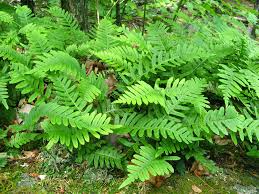
A widely cultivated fern (often treated in Nephrolepidaceae). Characterized by erect rhizomes, 1-pinnate fronds with articulate pinnae, and round sori with kidney-shaped indusia.

Lomariopsis spp.
Climbing Lomariopsis
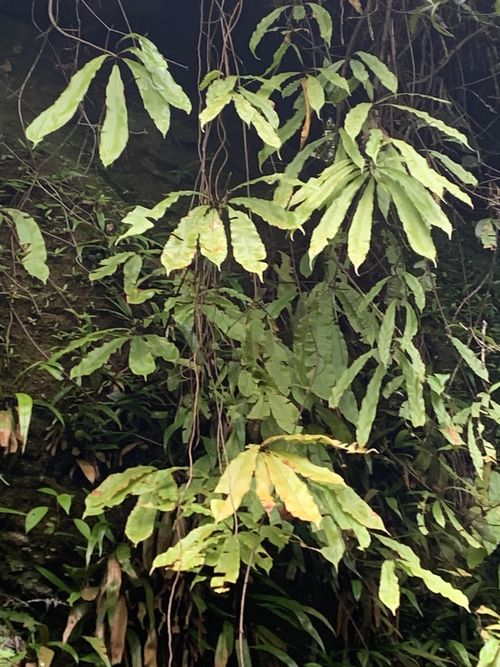
Genus of hemiepiphytic climbers. Typically have 1-pinnate fronds (sometimes simple juvenile/bathyphylls), non-articulate pinnae, dimorphic fronds, and round, exindusiate sori on the contracted fertile fronds.

Lomagramma spp.
Climbing Lomagramma
Another genus of hemiepiphytic climbers with netted venation. Distinctive for its strongly dimorphic fronds where the fertile fronds are highly contracted and bear acrostichoid sporangia covering the undersurface.

Cyclopeltis presliana
(No common name)
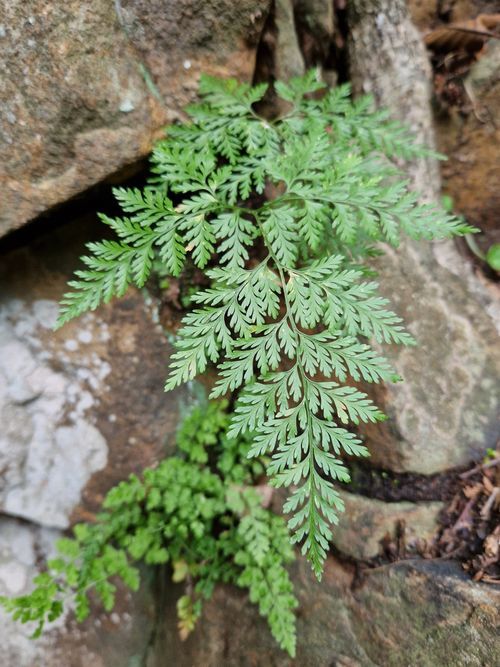
A terrestrial fern with 1-pinnate or sometimes 2-pinnate fronds, articulate pinnae, and round sori covered by persistent, peltately attached (or circular with narrow sinus) indusia.
Phylogeny and Classification
Lomariopsidaceae belongs to the **Eupolypods I** clade within the order Polypodiales, a different major lineage than the "athyrioid/asplenioid" families discussed previously (which are Eupolypods II). Its relatives within Eupolypods I include families like Tectariaceae, Oleandraceae, Polypodiaceae, and Davalliaceae. Molecular phylogenetics confirms the core genera (*Lomariopsis*, *Lomagramma*, *Cyclopeltis*, *Thysanosoria*) form a monophyletic group.
The placement of *Nephrolepis* is contentious. Molecular data often place it sister to the rest of Lomariopsidaceae or sometimes slightly outside it, leading some classifications (like PPG I) to tentatively include it, while others place it in its own family, Nephrolepidaceae. Regardless of *Nephrolepis*'s precise placement, the family (sensu lato or stricto) showcases significant evolutionary diversification in growth habit (terrestrial to climbing hemiepiphyte) and reproductive strategy (discrete sori to acrostichoid sporangia).
Position in Plant Phylogeny
- Kingdom: Plantae
- Division: Pteridophyta (or Polypodiophyta)
- Class: Polypodiopsida
- Order: Polypodiales
- Family: Lomariopsidaceae
- (Part of the Eupolypods I clade)
Evolutionary Significance
Lomariopsidaceae is significant for:
- Habit Diversity: Shows remarkable diversification from terrestrial to epiphytic and specialized climbing hemiepiphytic strategies.
- Reproductive Strategy Evolution: Includes transitions from typical discrete sori (indusiate and exindusiate) to the acrostichoid condition within closely related genera.
- Articulate Pinnae: The presence of articulate pinnae in several genera represents an interesting morphological feature, possibly related to environmental adaptation or dispersal (though also found convergently in other families).
- Horticultural Importance: Includes *Nephrolepis*, one of the most widely cultivated fern genera globally.
- Taxonomic Challenges: The variable circumscription highlights ongoing work in defining family boundaries using molecular and morphological data.