Dryopteridaceae
Wood Fern Family
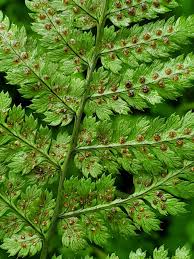
The Dryopteridaceae is a large and diverse family of ferns (Pteridophytes) within the order Polypodiales. Commonly known as the wood fern family, its members are predominantly terrestrial, inhabiting forests, woodlands, and rocky areas worldwide, with centers of diversity in temperate regions and tropical mountains. The family is generally characterized by scaly rhizomes and stipe bases, pinnately compound fronds, and round sori (spore clusters) protected by conspicuous kidney-shaped or shield-shaped indusia (tissue flaps). It includes popular horticultural genera like Dryopteris (Wood Ferns) and Polystichum (Holly Ferns).
Overview
Dryopteridaceae represents a major lineage of modern ferns. Like other ferns, they exhibit an alternation of generations with a dominant, complex diploid sporophyte (the leafy fern plant) and a small, free-living haploid gametophyte (prothallus). The family's success is evident in its cosmopolitan distribution and occupation of diverse terrestrial habitats, particularly shaded understories.
Members of Dryopteridaceae play significant roles in their ecosystems as primary producers and habitat providers. Many species are valued in horticulture for their often robust and attractive foliage, thriving in shade gardens. Genera like Dryopteris, Polystichum, Cyrtomium, and Arachniodes are widely cultivated. Some Dryopteris species contain phloroglucinol compounds and have historical uses in traditional medicine, though some can be toxic. The family is known for high chromosome numbers and frequent hybridization and polyploidy, contributing to its diversity and taxonomic complexity. The large genus Elaphoglossum represents a morphologically distinct lineage within the family, characterized by simple fronds.
Quick Facts
- Scientific Name: Dryopteridaceae Herter
- Common Name: Wood Fern family
- Number of Genera: Approximately 26
- Number of Species: Approximately 2200
- Distribution: Cosmopolitan, especially diverse in temperate regions and montane tropics.
- Evolutionary Group: Pteridophytes (Ferns) - Order Polypodiales (Eupolypods I)
Key Characteristics
Sporophyte (Dominant Fern Plant)
- Rhizome: Usually stout, short- to long-creeping, ascending, or erect, typically covered densely with non-clathrate (uniform cell walls) scales.
- Fronds (Leaves): Generally monomorphic (fertile and sterile fronds similar) or sometimes weakly dimorphic. Unfurling fronds exhibit circinate vernation (fiddleheads/croziers). Fronds are typically pinnately compound (1- to 4-pinnate), less commonly simple (notably in Elaphoglossum).
- Stipe (Frond Stalk): Usually bears persistent scales, especially towards the base, similar to those on the rhizome. Often grooved on the upper (adaxial) surface. Vascular bundles within the stipe are typically multiple and roundish in cross-section.
- Blade (Leafy Part): Texture varies from herbaceous to leathery. Divided into pinnae (primary leaflets) and often further into pinnules. The central axis is the rachis. Veins are typically free, forking, but sometimes anastomosing (joining) in genera like Cyrtomium.
- Scales: Conspicuous on rhizomes and stipe bases, sometimes also on rachis and costae. Shape, size, color (pale tan to dark brown/black), and marginal features (entire, toothed, ciliate) are important diagnostic characters.
- Sori: Clusters of sporangia (spore-producing structures), typically borne on the veins on the lower (abaxial) surface of the blade. Usually round in shape. (Exception: Elaphoglossum has acrostichoid sori, where sporangia cover the entire fertile surface).
- Indusium: A protective flap of tissue covering the sorus. Typically present and often conspicuous (though sometimes small or caducous). Characteristically kidney-shaped (reniform) and attached at its sinus (Dryopteris, Arachniodes), or shield-shaped (peltate) and attached centrally (Polystichum, Cyrtomium).
- Sporangia: Stalked structures containing spores, featuring an annulus (a row of specialized cells) that facilitates spore discharge via a hygroscopic mechanism.
- Spores: Released from sporangia. Typically monolete (bilateral, bean-shaped with a single scar line), brownish, often with a winged or folded outer layer (perispore).
Gametophyte (Prothallus)
- Structure: The haploid stage, typically small (millimeters across), green, photosynthetic, and often heart-shaped (cordate). It is free-living but inconspicuous compared to the sporophyte.
- Reproduction: Bears the sex organs: antheridia (producing sperm) and archegonia (producing eggs). Fertilization requires water for sperm to swim to the egg, leading to the development of a new diploid sporophyte embryo.
Chemical Characteristics
- Many species, particularly in the genus Dryopteris, are known to produce complex phloroglucinol compounds, which may have defensive roles and have been investigated for medicinal properties.
Field Identification
Identifying Dryopteridaceae relies on observing features of the sporophyte, particularly the frond structure, scales, and the arrangement and morphology of the sori and indusia. A hand lens is often helpful.
Primary Identification Features
- Habit: Mostly terrestrial ferns, often in moist, shaded habitats.
- Scaliness: Rhizomes and stipe bases usually distinctly scaly.
- Frond Division: Typically pinnately compound (1- to 4-pinnate). (Elaphoglossum is a major exception with simple fronds).
- Sori Shape: Generally round. (Elaphoglossum exception: acrostichoid).
- Indusium: Usually present, roundish overall, specifically kidney-shaped (reniform) or shield-shaped (peltate). Check attachment point (sinus vs. central).
- Spores: Monolete (requires microscopy).
Secondary Identification Features
- Scale Details: Color, shape, margin (entire, toothed), density.
- Frond Architecture: Degree of dissection (1-pinnate, 2-pinnate, etc.), shape of pinnae/pinnules, presence of basiscopic or acroscopic lobes/auricles.
- Vein Pattern: Usually free, but check for anastomosing veins (Cyrtomium).
- Glands/Hairs: Usually absent or inconspicuous (unlike Thelypteridaceae which often has needle-like hairs).
- Frond Texture: Herbaceous, papery, or leathery.
- Evergreen vs. Deciduous: Some species are evergreen (Polystichum acrostichoides), others die back in winter.
Seasonal Identification Tips
- Spring: Look for emerging fiddleheads/croziers, often very scaly.
- Summer/Fall: Mature fronds with developed sori are present, optimal for identification. Check sorus maturity and indusium persistence.
- Winter: Evergreen species remain identifiable. Deciduous species die back, leaving rhizomes dormant.
Common Confusion Points
- Athyriaceae (Lady Fern family): Sori often J-shaped, U-shaped (hooked), or linear along one side of a vein, though sometimes roundish; indusia similarly shaped. Scales often different.
- Thelypteridaceae (Marsh Fern family): Sori typically round; indusia often present but small, kidney-shaped, and sometimes hairy or glandular. Often possess needle-like hairs on frond surfaces. Stipe vascular bundles usually 2, crescent-shaped.
- Aspleniaceae (Spleenwort family): Sori elongated along veins, indusium attached along the vein. Rhizome scales often clathrate (lattice-like cell walls).
- Woodsiaceae (Cliff Fern family): Indusium often inferior (attached beneath the sorus) and cup-like, star-like, or composed of filamentous segments. Often smaller rock ferns.
- Polypodiaceae: Sori usually round or oblong but typically lack indusia (exindusiate). Many are epiphytic. Rhizome scales often clathrate.
Field Guide Quick Reference
Look For:
- Terrestrial fern
- Scaly rhizome / stipe base
- Fronds usually pinnately compound
- Sori Round (borne on veins)
- Indusium Present (usu.)
- Indusium Kidney-shaped OR Peltate
Key Variations:
- Degree of frond dissection
- Scale color/shape
- Indusium attachment (sinus vs. central)
- Veins free vs. anastomosing
- Evergreen vs. Deciduous
- Elaphoglossum: Simple fronds, acrostichoid sori
Notable Examples
Dryopteridaceae includes many familiar and horticulturally important ferns:

Dryopteris marginalis
Marginal Wood Fern
Common evergreen fern of eastern North America, found in rocky woodlands. Fronds are typically 2-pinnate, leathery. Sori are round, distinctly placed near the margins of the pinnule undersides. Indusium is kidney-shaped (reniform).

Polystichum acrostichoides
Christmas Fern
Evergreen fern native to eastern North America. Fronds are 1-pinnate with characteristic ear-like lobes (auricles) at the base of each pinna. Sori are round, covered by a centrally attached, shield-shaped (peltate) indusium. Fertile pinnae are often contracted at the frond tip.

Cyrtomium falcatum
Japanese Holly Fern
Native to eastern Asia, widely cultivated and naturalized elsewhere. Fronds are 1-pinnate with large, glossy, leathery, holly-like pinnae. Veins are anastomosing (netted). Sori are round with peltate indusia, scattered on the pinna underside.

Dryopteris erythrosora
Autumn Fern
Native to eastern Asia, a popular horticultural fern. Known for its coppery-red young fronds that mature to green. Fronds are typically 2-pinnate. Sori are round with reddish, kidney-shaped indusia, giving the underside a distinct appearance when fertile.

Elaphoglossum spp.
Tongue Ferns
A very large genus (~600 species), mostly tropical and epiphytic or epipetric. Distinct within Dryopteridaceae for having typically simple, entire (undivided) fronds. Strongly dimorphic: fertile fronds often narrower, with the entire lower surface densely covered in sporangia (acrostichoid condition), lacking discrete sori and indusia.
Phylogeny and Classification
Dryopteridaceae is a major family within the order Polypodiales, the largest order of living ferns. It belongs to the large clade known as Eupolypods I, which contains roughly one-third of all fern species. Molecular phylogenetic studies have confirmed the monophyly of Dryopteridaceae (including Elaphoglossum and related genera) and clarified its relationships with other Eupolypod I families.
The family is notable for its high base chromosome numbers (often x=41) and a propensity for hybridization and polyploidization (formation of species with multiple sets of chromosomes), which has played a significant role in generating its vast species diversity. The inclusion of morphologically divergent genera like Elaphoglossum highlights the power of molecular data in revealing evolutionary relationships that might be obscured by morphology alone.
Position in Fern Phylogeny
- Division: Pteridophyta (Ferns and allies)
- Class: Polypodiopsida
- Order: Polypodiales
- Clade: Eupolypods I
- Family: Dryopteridaceae
Evolutionary Significance
Dryopteridaceae represents a highly successful radiation of primarily terrestrial ferns in forest ecosystems worldwide. Key evolutionary aspects include:
- Dominant Sporophyte: The typical fern life cycle with a large, complex sporophyte.
- Vascular Tissue: Efficient transport allowing for large frond size.
- Protective Structures: Development of scales on rhizomes/stipes and indusia covering sori likely provide protection against desiccation and predation.
- Hybridization and Polyploidy: A major engine of diversification within the family, leading to complex species relationships.
- Habitat Specialization: Adaptation to diverse terrestrial niches, from moist forests to rocky slopes, and including epiphytism in Elaphoglossum.


