Polypodiaceae
Polypody Family
Polypodiaceae is one of the largest families of ferns (Pteridophytes), belonging to the order Polypodiales and the Eupolypods II clade. Commonly known as the polypody family, its members are predominantly epiphytic (growing on other plants) or epipetric (growing on rocks), with fewer terrestrial species. They are most diverse in tropical regions. Key characteristics often include creeping rhizomes with scales (frequently clathrate), simple to pinnately divided fronds that may be articulated at the base, and typically roundish sori (spore clusters) that characteristically lack a true indusium (protective flap).
Overview
Representing a major evolutionary radiation of epiphytic ferns, Polypodiaceae is a significant component of biodiversity in tropical and subtropical forests worldwide. Their ability to thrive on tree trunks, branches, and rocks is facilitated by adaptations such as creeping rhizomes for attachment, specialized scales for water retention, and sometimes drought tolerance mechanisms like resurrection ability (Pleopeltis) or CAM photosynthesis.
Like other ferns, Polypodiaceae exhibit an alternation of generations with a dominant sporophyte (the leafy plant) and an independent, smaller gametophyte (prothallus). The family includes many popular horticultural subjects, such as Staghorn Ferns (Platycerium), Rabbit's Foot Ferns (Phlebodium), and various polypodies, valued for their diverse frond shapes and textures. Ecologically, they contribute substantially to biomass and nutrient cycling in epiphytic communities. Recent molecular studies have expanded the family to include the formerly separate Grammitidaceae, adding significant diversity in morphology and spore type.
As of Thursday, March 27, 2025 at 6:51 AM in Norman, Oklahoma, the circumscription of Polypodiaceae including grammitids is widely accepted based on phylogenetic evidence.
Quick Facts
- Scientific Name: Polypodiaceae J.Presl & C.Presl
- Common Name: Polypody family
- Number of Genera: Approximately 65
- Number of Species: Approximately 1650 (including grammitids)
- Distribution: Pantropical, extending into temperate zones; predominantly epiphytic or epipetric.
- Evolutionary Group: Pteridophytes (Ferns) - Order Polypodiales (Eupolypods II)
Key Characteristics
Sporophyte (Dominant Fern Plant)
- Habit: Mostly epiphytic or epipetric, less commonly terrestrial.
- Rhizome: Typically long-creeping (sometimes short-creeping), dorsiventral or radial, usually covered in scales. Scales often clathrate (with thickened, dark cell walls outlining translucent centers, like a lattice) and may be peltately attached (stalked from the center).
- Fronds (Leaves): Usually monomorphic, sometimes dimorphic. Often articulated to the rhizome (base of stipe separates cleanly), leaving distinct scars. Frond shape is highly variable: simple and entire (undivided), pinnatifid (lobed but not cut to the rachis), pinnately compound, or uniquely shaped (e.g., shield and fertile fronds of Platycerium).
- Stipe (Frond Stalk): Presence and length variable; often articulated at the base.
- Blade (Leafy Part): Texture thin to thick and leathery. Venation pattern variable: commonly anastomosing (netted) forming areoles (sometimes with included veinlets), or free (especially common in grammitids). Surface may be glabrous (smooth), scaly, or hairy (grammitids often have distinctive setae/hairs).
- Scales: Present on rhizome, sometimes extending to stipe and blade. Clathrate scales are characteristic of many genera but not universal. Shape varies (lanceolate, ovate, round, stellate).
- Sori: Clusters of sporangia, borne on the underside of the blade, typically on vein endings, vein junctions, or forming a network. Shape usually round to oval, sometimes elongated along veins, or rarely covering the entire fertile surface (acrostichoid).
- Indusium: Characteristically absent (exindusiate) in the vast majority of genera. Sori may be superficial, sunken into pits, or sometimes protected by scales or hairs (paraphyses), but lack a true, flap-like indusium derived from blade tissue.
- Sporangia: Stalked, with a vertical annulus interrupted by the stalk. Often mixed with sterile hairs (paraphyses).
- Spores: Mostly monolete (bilateral, bean-shaped), typically yellowish or hyaline. However, the large included grammitid clade typically has trilete (tetrahedral) spores that are often green (chlorophyllous).
Gametophyte (Prothallus)
- Structure: The small, free-living haploid stage is typically green, photosynthetic, and heart-shaped or ribbon-shaped, bearing the antheridia and archegonia.
Chemical Characteristics
- Biochemically diverse; some species contain compounds like ecdysteroids (insect molting hormones) or specific flavonoids and phenolic compounds. Phloroglucinols are less common than in Dryopteridaceae.
Field Identification
Recognizing Polypodiaceae often involves noting the habitat, rhizome features, and especially the characteristics of the sori.
Primary Identification Features
- Habit: Predominantly epiphytic or epipetric.
- Rhizome: Usually creeping, often covered in scales which are frequently clathrate.
- Fronds: Often articulated at the base (detaching cleanly from rhizome).
- Sori: Typically roundish (oval, elongate) and characteristically lacking a true indusium (exindusiate).
Secondary Identification Features
- Frond Shape: Highly variable - simple, pinnatifid, pinnate, unique forms (Platycerium).
- Venation: Netted (anastomosing) vs. free veins.
- Scales/Hairs: Presence, type (clathrate?), and location of scales or hairs (setae common in grammitids).
- Spore Type: Monolete (most) vs. Trilete (grammitids) - requires microscopy.
- Sorus Position/Arrangement: On vein ends, junctions; in rows, scattered, acrostichoid.
Seasonal Identification Tips
- Year-Round: Many species, especially tropical ones, are evergreen and can be identified year-round by frond morphology and soral characteristics (if fertile). Rhizome scales are persistent.
- Temperate Species: Some may be deciduous or semi-evergreen (e.g., some Polypodium). Check for fertile fronds during the growing season (typically summer/fall).
Common Confusion Points
- Indusiate Fern Families: The lack of an indusium is key. Families like Dryopteridaceae, Athyriaceae, Thelypteridaceae, Woodsiaceae, Davalliaceae, Oleandraceae, Tectariaceae all typically have indusia, although they might be small, hidden, or fall off early (caducous) in some cases. Careful observation of the sorus is needed.
- Davalliaceae: Also often epiphytic/epipetric with clathrate scales and articulated fronds, BUT possess distinct cup-shaped or kidney-shaped indusia attached at the base and/or sides.
- Vittariaceae (Shoestring Fern Family): Often epiphytic with simple, linear fronds; sori are linear along veins or margins, usually exindusiate but distinct from the typically roundish sori of most Polypodiaceae.
- Some Aspleniaceae: While typically having linear sori with indusia, some species can have roundish sori or lose indusia early, but rhizome scales are usually clathrate and different in structure.
Field Guide Quick Reference
Look For:
- Epiphytic/Epipetric habit (mostly)
- Creeping rhizome
- Scales often Clathrate
- Fronds often Articulated
- Sori Roundish (usu.)
- NO True Indusium (Exindusiate)
Key Variations:
- Frond Shape: Simple / Pinnatifid / Pinnate / Unique
- Venation: Netted / Free
- Scales / Hairs on Blade?
- Spores: Monolete / Trilete (Grammitids)
- Rhizome scale details
Notable Examples
Polypodiaceae includes a vast array of ferns, from common temperate species to bizarre tropical epiphytes:

Polypodium virginianum
Rock Polypody / Common Polypody
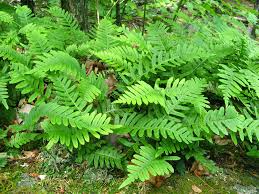
Common fern found on rocks and logs in eastern North America. Evergreen, with pinnatifid fronds arising from a creeping rhizome with non-clathrate scales. Sori round, exindusiate, in rows on the underside of lobes.

Pleopeltis polypodioides
Resurrection Fern
Epiphytic fern of the southeastern US and Americas. Famous for its ability to curl up and appear dead when dry, then rapidly rehydrate and turn green with moisture. Fronds pinnatifid, covered in peltate scales. Sori round, exindusiate, somewhat sunken.

Phlebodium aureum
Golden Polypody / Rabbit's Foot Fern
Large epiphytic or terrestrial fern, popular in cultivation. Rhizome stout, densely covered in golden-brown scales ("rabbit's foot"). Fronds large, pinnatifid with broad lobes, often bluish-green (glaucous). Sori round, large, exindusiate, in rows. Veins netted.

Platycerium bifurcatum
Common Staghorn Fern
Spectacular epiphytic fern widely cultivated. Exhibits strong frond dimorphism: sterile "shield" fronds are rounded, clasping the substrate, while fertile "antler" fronds are erect or pendant, forked, bearing spores in dense brownish patches (acrostichoid) near the tips. Covered in stellate hairs.

Grammitis spp.
Grammitid Ferns
Representing the large "grammitid" clade now included in Polypodiaceae. Often small epiphytes with simple or pinnatifid fronds, frequently hairy (setose), with free veins. Sori typically round, exindusiate. Spores characteristically trilete and often green.
Phylogeny and Classification
Polypodiaceae is a major family within the Eupolypods II clade of the order Polypodiales. This placement distinguishes it from families like Dryopteridaceae and Aspleniaceae (Eupolypods I). Molecular phylogenetics has been instrumental in defining the modern, broad circumscription of Polypodiaceae, most notably through the inclusion of the formerly separate family Grammitidaceae.
This inclusive view reveals Polypodiaceae as a vast evolutionary radiation primarily characterized by adaptation to epiphytic and epipetric lifestyles. Key evolutionary trends include the frequent loss of the indusium, the development of clathrate scales, frond articulation, diverse frond morphologies, and physiological adaptations to drought stress common in epiphytic habitats. The family is divided into several well-supported subfamilies, such as Polypodioideae, Grammitidoideae, Platycerioideae, Loxogrammoideae, and Microsoroideae.
Position in Fern Phylogeny
- Division: Pteridophyta (Ferns and allies)
- Class: Polypodiopsida
- Order: Polypodiales
- Clade: Eupolypods II
- Family: Polypodiaceae
Evolutionary Significance
Polypodiaceae represents one of the most successful radiations of epiphytic vascular plants:
- Epiphytism: Mastered the challenges of growing on other plants, involving adaptations for attachment, water uptake/retention, and nutrient acquisition.
- Morphological Diversity: Extreme variation in frond shape and size, from tiny simple grammitids to large Staghorn ferns.
- Loss of Indusium: Independent loss of the protective indusium occurred multiple times, perhaps related to other protective mechanisms or dispersal strategies.
- Physiological Adaptations: Development of drought tolerance mechanisms like CAM photosynthesis (in some Pyrrosia), desiccation tolerance (Pleopeltis), and water-absorbing scales.
- Inclusion of Grammitids: Demonstrates how molecular data can unite morphologically diverse groups, revealing deep evolutionary connections (e.g., shift from monolete to trilete spores).


