Polemoniaceae
The Polemoniaceae family, commonly known as the Phlox Family or Jacob's Ladder Family, belongs to the order Ericales within the Asterid clade of eudicots. It comprises approximately 18-25 genera and 350-400 species, consisting mostly of annual and perennial herbs, but also including some shrubs, small trees, and lianas. The family has a wide distribution but is most diverse in temperate regions of the Northern Hemisphere, particularly western North America, with secondary centers in South America and Eurasia. Well-known members include Phlox, Polemonium (Jacob's ladder), and Gilia.
Overview
Polemoniaceae is a diverse family recognized by its typically 5-parted, radially symmetrical flowers with fused petals (sympetalous corolla) forming a distinct tube and spreading lobes. The corolla lobes are characteristically convolute (twisted) in bud. The ovary is superior and usually composed of 3 fused carpels, leading to a style with 3 stigmatic lobes and typically a 3-valved capsular fruit. Leaves are variable, often alternate and pinnately compound or dissected (Polemonium, Gilia), but sometimes opposite and simple (Phlox). Many species possess glandular hairs, sometimes resulting in a distinctive odor.
The family shows remarkable adaptive radiation, particularly in western North America, occupying habitats ranging from deserts and grasslands to forests, alpine tundra, and wetlands. This ecological diversification is mirrored by a wide array of pollination syndromes, with flower shapes and colors adapted for pollination by bees, butterflies, moths, hummingbirds, and even bats (Cobaea). Many species, especially in the genera Phlox, Polemonium, and Gilia, are popular ornamental plants appreciated for their showy flowers.
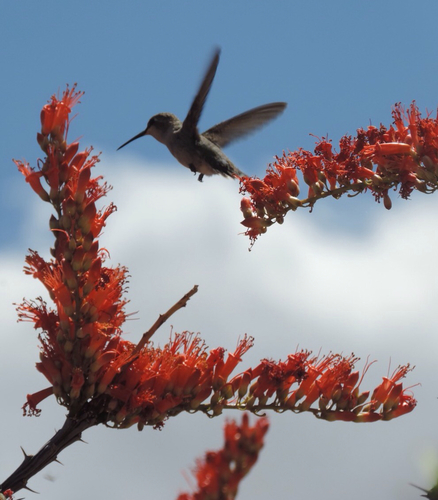
Phylogenetically, Polemoniaceae is placed in the order Ericales, where it forms a clade with the small family Fouquieriaceae (Ocotillo family), together sister to the remaining diverse families of the order.
Quick Facts
- Scientific Name: Polemoniaceae
- Common Name: Phlox Family, Jacob's Ladder Family
- Number of Genera: Approximately 18-25
- Number of Species: Approximately 350-400
- Distribution: Primarily North America (esp. western NA), also temperate South America and Eurasia.
- Evolutionary Group: Eudicots - Asterids - Ericales
Key Characteristics
Growth Form and Habit
Mostly annual or perennial herbs, also subshrubs, shrubs, small trees, or rarely lianas (Cobaea). Plants often possess glandular hairs, sometimes making them sticky or giving off a characteristic scent.
Leaves
Leaves are usually alternate and spiral (though often opposite in Phlox and sometimes lower leaves of others). Leaf form is highly variable: simple and entire (Phlox) or often pinnately compound, lobed, or dissected (Polemonium, Gilia, etc.). Stipules are absent.
Inflorescence
Flowers are typically arranged in terminal or axillary cymes, which are often aggregated into dense heads, panicles, corymbs, or spike-like clusters.
Flowers
Flowers are usually actinomorphic (radially symmetrical), rarely slightly zygomorphic, bisexual, and typically 5-parted (pentamerous). Key features include:
- Calyx: Tubular or campanulate (bell-shaped), composed of 5 fused sepals ending in 5 lobes; persistent in fruit. Often plicate (with thin, membranous tissue between the lobes/ribs).
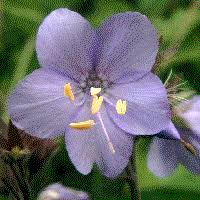
- Corolla: Sympetalous (petals fused) forming a distinct tube and 5 spreading lobes. Corolla shape varies: salverform (narrow tube, flat lobes - Phlox), funnelform, campanulate (Polemonium), or rotate (wheel-shaped). Corolla lobes are characteristically convolute (twisted or overlapping) in bud. Colors are diverse: blue, purple, pink, red, white, or yellow.
- Androecium: Features 5 stamens attached to the corolla tube (epipetalous), alternating with the corolla lobes. Filaments are often inserted at different heights within the corolla tube, sometimes hairy at the base.
- Gynoecium: Features a superior ovary composed of (2-)3(-5) fused carpels. The ovary is typically 3-locular with 1 to many ovules per locule on axile placentas. The style is simple and terminal, typically ending in 3 linear or slightly lobed stigmas. A nectar disc is usually present at the base of the ovary.
Fruits and Seeds
The fruit is typically a loculicidal capsule (splitting along the back of each of the 3 locules), sometimes septicidal (splitting along the septa) or rarely indehiscent. It contains 1 to many seeds per locule. Seeds are sometimes winged or develop a mucilaginous coat when wet.
Chemical Characteristics
The family is known to contain iridoids, saponins, and various flavonoids. Some species have traditional medicinal uses.
Field Identification
Identifying Polemoniaceae involves recognizing their often showy flowers combined with specific vegetative and structural details:
Primary Identification Features
- Habit: Mostly herbs or subshrubs, often with glandular hairs.
- Leaves: Usually alternate (except Phlox), often compound or dissected (except Phlox), no stipules.
- Flowers: Usually actinomorphic, 5-parted.
- Corolla: Sympetalous (fused petals) with a tube and 5 spreading lobes; lobes often convolute (twisted) in bud.
- Calyx: Persistent, tubular/campanulate, 5-lobed, often plicate.
- Stamens: 5, attached to corolla tube, alternating with lobes.
- Ovary: Superior, usually 3-carpellate.
- Style/Stigma: Style simple, usually with 3 stigmatic lobes/branches.
- Fruit: Typically a 3-valved capsule.
Seasonal Identification Tips
- Flowers are often showy and provide key characters (shape, color, convolute buds) during the blooming season (spring-summer mainly).
- The 3-lobed stigma and 3-valved capsule are important diagnostic features, visible during and after flowering.
- Leaf arrangement (alternate/opposite) and form (simple/compound/dissected) are useful vegetative clues.
Common Confusion Points
Distinguishing Polemoniaceae from families with similar sympetalous, 5-parted flowers:
- Boraginaceae (Borage Family): Often rough-hairy (not glandular); inflorescences often coiled cymes (scorpioid); ovary typically deeply 4-lobed forming 4 nutlets (vs. 3-carpellate ovary and capsule in Polemoniaceae).
- Solanaceae (Nightshade Family): Leaves usually alternate and simple; calyx often accrescent (enlarging in fruit); stamens often connivent; fruit typically a berry or different type of capsule.
- Gentianaceae (Gentian Family): Leaves usually opposite; corolla lobes often plicate (folded) in bud (vs. convolute); ovary usually 2-carpellate with parietal placentation.
- Phrymaceae / Scrophulariaceae / Plantaginaceae (Lamiales): Flowers often zygomorphic (bilaterally symmetrical); ovary typically 2-carpellate. Polemoniaceae flowers are usually actinomorphic with a 3-carpellate ovary.
- The combination of 5-parted actinomorphic flowers, sympetalous corolla with convolute lobes, 5 stamens, superior 3-carpellate ovary with 3 stigmas, and capsular fruit is characteristic of Polemoniaceae.
Field Guide Quick Reference (Polemoniaceae)
Look For:
- Mostly herbs, often glandular-hairy
- Leaves: Often alternate & compound/dissected (except Phlox: opposite & simple), no stipules
- Flowers: Usually actinomorphic, 5-parted
- Corolla: Sympetalous, lobes convolute in bud
- Calyx: Persistent, 5-lobed
- Stamens: 5, epipetalous
- Ovary: Superior, usually 3-carpellate
- Style/Stigma: Usually 3-lobed
- Fruit: Usually 3-valved capsule
Key Distinctions:
- 3-carpellate ovary/style/capsule (vs. 4-lobed/nutlets in Boraginaceae, 2-carpellate in Phrymaceae etc.)
- Corolla lobes convolute in bud
- Actinomorphic flowers (usually)
- Different leaf/fruit types than Solanaceae
- Different leaf arrangement/ovary than Gentianaceae
Notable Examples
Polemoniaceae includes many familiar and horticulturally important genera:

Phlox spp.
Phloxes
A large genus (~70 species) primarily from North America, characterized by opposite, simple leaves and showy flowers with a slender corolla tube and flat, spreading lobes (salverform). Includes many popular garden perennials (like P. paniculata, Garden Phlox) and annuals.

Polemonium spp.
Jacob's Ladders
A genus of perennial herbs found in temperate Northern Hemisphere and Andes, recognized by their alternate, pinnately compound leaves with numerous leaflets resembling ladder rungs. Flowers are typically bell-shaped (campanulate) and blue or purple (P. caeruleum).

Gilia spp.
Gilias
A diverse genus (~25-50 species) of annual and perennial herbs, mostly from western North America. Typically have alternate, dissected or pinnately lobed leaves and flowers varying in shape and color, often aggregated into heads (G. capitata) or open clusters.

Ipomopsis spp.
Gilias, Skyrockets
A genus closely related to Gilia, often featuring brightly colored (especially red), tubular flowers adapted for hummingbird pollination. Ipomopsis aggregata (Scarlet Gilia or Skyrocket) is a well-known example from western North America.

Cobaea scandens
Cup-and-Saucer Vine, Cathedral Bells
An unusual member of the family, this fast-growing perennial vine from Mexico climbs using tendrils at the ends of its compound leaves. It has large, bell-shaped, purplish flowers with a prominent, saucer-like calyx. Often grown as an annual ornamental.
Phylogeny and Classification
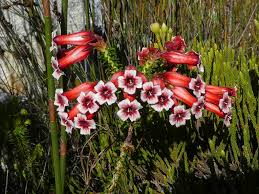
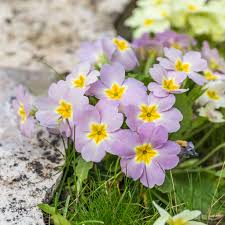
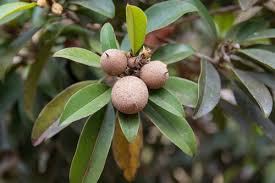
Polemoniaceae is placed within the large order Ericales, which belongs to the Asterid clade of eudicots. Within Ericales, Polemoniaceae is not closely related to the core group containing Ericaceae (Heaths), Primulaceae (Primroses), and Sapotaceae.
Instead, molecular phylogenetic studies show that Polemoniaceae forms a well-supported clade with the small family Fouquieriaceae (Ocotillo family, found in arid regions of North America). This Polemoniaceae-Fouquieriaceae clade is positioned near the base of the Ericales order, potentially sister to all other families in the order. This placement suggests an earlier divergence compared to the majority of Ericalean diversity.
Position in Plant Phylogeny
- Kingdom: Plantae
- Clade: Angiosperms (Flowering plants)
- Clade: Eudicots
- Clade: Asterids
- Order: Ericales
- Family: Polemoniaceae
Evolutionary Significance
Polemoniaceae holds evolutionary significance for several reasons:
- Its extensive diversification, particularly in the varied landscapes of western North America, makes it a model system for studying adaptive radiation and speciation.
- The family exhibits a wide range of pollination syndromes, with floral morphology adapted for diverse pollinators (bees, butterflies, moths, hummingbirds, bats), providing insights into plant-pollinator coevolution.
- Its phylogenetic position near the base of the Ericales order is important for understanding the early evolution and character states of this major Asterid lineage.
- Many species are important components of their ecosystems and several are popular horticultural plants worldwide.