Sapotaceae
Sapodilla Family / Sapote Family
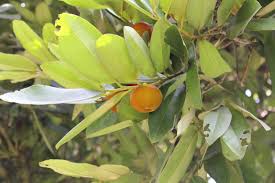
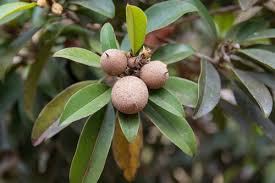
Sapotaceae is a large family of trees and shrubs, predominantly found in tropical regions worldwide. They are readily recognized by the presence of milky latex in stems and leaves, typically alternate, simple, entire, leathery leaves (often clustered at branch tips and lacking stipules), and frequently bearing rusty or brownish hairs. Flowers are actinomorphic, often with sepals in two whorls and petals fused into a tube. The fruit is characteristically a fleshy berry containing one or few large, hard, shiny seeds with a prominent scar (hilum).
Overview
The Sapotaceae family is a significant component of tropical forests globally, comprising around 53-70 genera and over 1100 species. These trees and shrubs are ecologically important as canopy or understory components, providing food and habitat for numerous animals. Their most defining characteristic is the presence of milky latex, which has been exploited commercially in some species.
Economically, Sapotaceae is highly valuable. It provides numerous edible fruits popular in tropical regions, including Sapodilla (Manilkara zapota, also the original source of chicle for chewing gum), Mamey Sapote (Pouteria sapota), Star Apple (Chrysophyllum cainito), Canistel (Pouteria campechiana), and Abiu (Pouteria caimito). Shea butter, a vital fat used in food and cosmetics, comes from the seeds of the African tree Vitellaria paradoxa. Gutta-percha, a natural thermoplastic latex, is derived from Palaquium gutta. Many species also yield valuable timber.
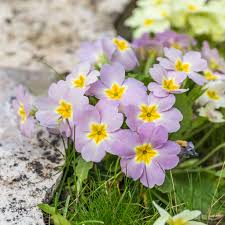
Phylogenetically, Sapotaceae belongs to the order Ericales, where its closest relatives include Ebenaceae (ebony family) and Primulaceae (primrose family).
Quick Facts
- Scientific Name: Sapotaceae
- Common Name: Sapodilla Family, Sapote Family
- Number of Genera: Approximately 53-70
- Number of Species: Approximately 1100-1250
- Distribution: Pantropical, extending into subtropics.
- Evolutionary Group: Eudicots - Ericales
- Habit: Trees and shrubs.
Key Characteristics
Growth Form and Habit
Trees or shrubs, typically evergreen.
Leaves
Leaves are usually arranged alternately and spirally, often appearing clustered or crowded at the tips of branches. They are simple, entire (smooth-margined), and typically thick and leathery (coriaceous). Leaves lack stipules (exstipulate). Young branches, buds, and often the undersides of leaves frequently possess a characteristic indumentum (covering) of rusty-brown or golden-brown hairs, which are often T-shaped or branched (malpighiaceous hairs).
Stems
Stems are woody and characteristically contain milky latex, which exudes when cut.
Roots
Normal woody plant root system.
Sexuality and Inflorescence
Inflorescences are usually axillary, often appearing as dense clusters (fascicles) on older wood below the leaves, or sometimes flowers are solitary. Flowers are typically perfect (bisexual), though sometimes functionally unisexual.
Flowers
Flowers are usually actinomorphic (radially symmetrical), often small, and typically whitish, cream, greenish, or yellowish. Flower parts are often in multiples of 4-8, commonly 5 or 6.
- Calyx: Usually consists of (4-)6-8 sepals arranged in two distinct whorls (e.g., 3+3 or 4+4), though sometimes a single whorl of 5 is present. Sepals are free or fused only at the base, often persistent in fruit.
- Corolla: Consists of petals fused into a tube (sympetalous) at the base, with (4-)6-8 lobes that alternate with the sepal whorls. Petal lobes frequently have dorsal or lateral appendages, making the corolla appear more complex than simple lobes.
- Androecium (Stamens): Contains stamens equal in number to the corolla lobes (e.g., 6 or 8) and positioned opposite them (antipetalous). Stamens are attached (adnate) to the corolla tube. Often, there is an additional outer whorl of sterile staminodes, alternating with the fertile stamens (and thus opposite the sepals).
- Ovary: Superior, composed of (2-)4-12(-30) fused carpels, forming a multi-locular ovary with the same number of locules as carpels. Placentation is usually axile (sometimes basal), typically with one ovule per locule. A single, simple style is present, often with an inconspicuous stigma.
Fruits and Seeds
The fruit is characteristically a fleshy berry, sometimes with a leathery skin. It contains 1 to few (rarely many) seeds.
Seeds are relatively large, possessing a hard, smooth, often shiny, dark brown or black seed coat. A distinctive feature is the large, often broad and dull scar (hilum) indicating the point of attachment within the fruit. The endosperm is usually present and oily.
Chemical Characteristics
The presence of milky latex (containing triterpenes, gums like chicle or gutta-percha) is ubiquitous. Plants often accumulate silica and sometimes aluminum. Saponins and tannins are also common.
Field Identification
Identifying Sapotaceae usually relies on a combination of vegetative and fruit/seed characters:
Primary Identification Features
- Habit: Tree or shrub, primarily tropical.
- Latex: Presence of milky latex in cut stems or leaves.
- Leaves: Usually alternate, simple, entire, leathery, often clustered at branch tips, exstipulate.
- Indumentum: Often with rusty or brownish hairs on young parts or leaf undersides.
- Flowers: Actinomorphic, sepals usually in 2 whorls, petals fused (often with appendages), stamens opposite petal lobes (often with alternating staminodes).
- Fruit: Fleshy berry.
- Seeds: Few, large, hard, shiny seed coat with a prominent scar (hilum).
Secondary Identification Features
- Flower Position: Often in axillary clusters (fascicles) on older wood.
- Petal Appendages: Lobes of the corolla often have dorsal or lateral appendages (requires close look).
- Ovary: Superior, multi-locular.
Seasonal Identification Tips
- Year-round Features: Habit, milky latex, leaf arrangement/shape/texture, lack of stipules, and often rusty indumentum are reliable vegetative characters.
- Fruiting Season: The berry fruit and especially the characteristic large, hard seeds with prominent scars are highly diagnostic.
- Flowering Season: Flowers can be small and require magnification to see details like petal appendages and staminode presence.
Common Confusion Points
Sapotaceae can be confused with other tropical tree/shrub families, especially those with latex:
- Euphorbiaceae (Spurge family): Many produce milky latex, but leaves are often alternate (though sometimes simple/entire), frequently have stipules, flowers are typically unisexual (often highly modified, e.g., cyathia), and fruit is commonly a 3-lobed capsule (schizocarp). Different order (Malpighiales).
- Apocynaceae (Dogbane family): Often have milky latex and simple entire leaves, but leaves are usually opposite, stipules often small or absent, flowers are 5-merous with distinct structures (e.g., corona, fused styles/stamens), and fruit is often a pair of follicles, drupe, or berry. Different order (Gentianales).
- Moraceae (Fig family): Often have milky latex and alternate simple leaves, but possess conspicuous conical terminal buds covered by stipules that leave annular scars. Flowers are tiny, unisexual, clustered in specialized inflorescences (syconia, heads, spikes); fruit is a multiple fruit or drupe. Different order (Rosales).
- Clusiaceae / Guttiferae: Often have latex (usually yellow/orange, not milky white) and simple entire leaves, but leaves are typically opposite, lack stipules, flowers often have numerous stamens, and fruit is a berry or capsule. Different order (Malpighiales).
- Ebenaceae (Ebony family): Trees/shrubs with alternate, simple, entire leaves, lacking latex. Flowers are unisexual, sympetalous, fruit is a berry often subtended by persistent calyx. Same order (Ericales), closely related.
The combination of milky latex, alternate simple entire leathery leaves (often rusty hairy, exstipulate), flowers with sepals usually in two whorls and stamens opposite petals, berry fruit, and large seeds with prominent scars is characteristic of Sapotaceae.
Field Guide Quick Reference
Look For:
- Tree/shrub (mostly tropical)
- Milky latex present
- Leaves usually alternate, simple, entire, leathery
- Often rusty/brown hairs
- Exstipulate
- Flowers actinomorphic
- Sepals usually in 2 whorls
- Petals fused, often appendaged
- Stamens opposite petal lobes (+ often staminodes)
- Fruit a berry
- Seeds large, hard, shiny, with large hilum scar
Key Variations:
- Number of parts per floral whorl
- Presence/shape of petal appendages
- Presence/absence of staminodes
- Fruit size and shape
Notable Examples
Sapotaceae is rich in species providing valuable fruits, latex, and oils:

Manilkara zapota
Sapodilla, Naseberry, Chicle
A tropical evergreen tree native to Central America and Mexico, widely cultivated for its sweet, granular-fleshed berry fruit. Its latex was the original source of chicle, used to make chewing gum.

Pouteria sapota
Mamey Sapote
A large tree native to Mexico and Central America, cultivated for its large berry fruit with rough brown skin and soft, orange or reddish flesh. Contains one large, shiny seed with a prominent hilum.

Vitellaria paradoxa (syn. Butyrospermum parkii)
Shea Butter Tree
A tree native to savanna regions of West and Central Africa. The seeds within its berry fruit are rich in fat, which is extracted to produce Shea butter, widely used in cosmetics, lotions, and sometimes food.
Phylogeny and Classification
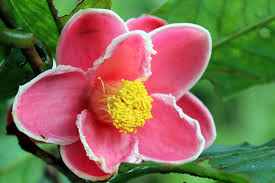
Sapotaceae belongs to the large eudicot order Ericales. This order is diverse, containing families like Ericaceae (heaths), Primulaceae (primroses), Theaceae (tea), Actinidiaceae (kiwifruit), Ebenaceae (ebony), Lecythidaceae (Brazil nut), and Balsaminaceae (impatiens), among others.
Within Ericales, molecular phylogenetic studies consistently place Sapotaceae in a well-supported clade with Ebenaceae (Ebony family) and Primulaceae sensu lato (Primrose family, including former Myrsinaceae and Theophrastaceae). Sapotaceae is often resolved as sister to Ebenaceae, with Primulaceae s.l. sister to that pair. These families share characteristics like often being woody, having sympetalous corollas (fused petals), and superior ovaries (though Ebenaceae often has unisexual flowers).
Position in Plant Phylogeny
- Kingdom: Plantae
- Clade: Angiosperms (Flowering plants)
- Clade: Eudicots
- Clade: Asterids
- Order: Ericales
- Family: Sapotaceae
Evolutionary Significance
Sapotaceae is a significant family in tropical ecosystems and evolutionary studies:
- Tropical Dominance: Represents a major radiation of trees and shrubs that are often dominant components of tropical rainforest canopies worldwide.
- Economic Importance: The source of numerous valuable fruits, latex products (chicle, gutta-percha), oils (Shea butter), and timber.
- Latex Production: The ubiquitous presence of milky latex is a key physiological trait related to defense and wound sealing.
- Seed Structure: The characteristic large, hard seed with a prominent hilum is distinctive and likely related to dispersal syndromes (often by mammals or large birds).
- Phylogenetic Placement: Its position within Ericales helps understand the diversification of this large order, particularly relationships among woody tropical families.