Fouquieriaceae
Ocotillo Family
The Fouquieriaceae is a small but distinctive family of flowering plants in the order Ericales, containing the single genus Fouquieria. These plants are shrubs or small trees highly adapted to arid environments in southwestern North America (USA and Mexico). They are known for their often unusual stem morphology, spines derived from petioles, and showy tubular flowers.
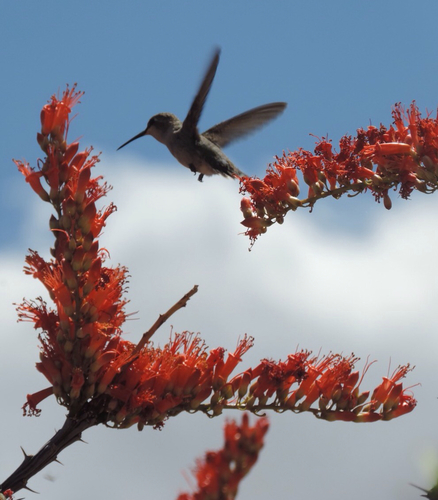
Overview
The Fouquieriaceae family comprises about 11 species within the single genus Fouquieria. These remarkable desert plants are endemic to the arid regions of the southwestern United States and Mexico. They exhibit striking adaptations to drought, including unusual stem forms, rapid leaf production after rains, and often drought-deciduous habits.
The family includes well-known species like the Ocotillo (Fouquieria splendens), with its cluster of long, wand-like, spiny stems, and the bizarre Boojum Tree (Fouquieria columnaris) of Baja California, with its thick, tapering trunk and short, randomly oriented branches. A key feature is the presence of spines formed from the hardened petioles (leaf stalks) of the primary leaves. Small secondary leaves are produced in clusters at the base of these spines.
Many species produce spectacular displays of brightly colored, tubular flowers, typically red, orange, or yellow, which are often pollinated by hummingbirds or insects. Despite their cactus-like appearance or habitat, they are true eudicots belonging to the Asterid clade, within the order Ericales.
Quick Facts
- Scientific Name: Fouquieriaceae DC.
- Common Name: Ocotillo Family
- Number of Genera: 1 (Fouquieria)
- Number of Species: Approximately 11
- Distribution: Southwestern USA and Mexico (arid regions).
- Evolutionary Group: Eudicots - Asterids - Ericales
- Key Feature: Desert shrubs/trees; spines derived from petioles; dimorphic leaves; showy tubular flowers (often red); fruit a capsule.
Key Characteristics
Growth Form and Habit
Members of Fouquieriaceae are xerophytic (drought-adapted) shrubs or small trees. Stems can be slender and wand-like (e.g., Ocotillo) or thick and succulent (pachycaul, e.g., Boojum Tree). Stems are typically woody and armed with spines.
Spines and Leaves
A defining characteristic is the presence of spines derived from the persistent, hardened petioles of primary leaves borne on long shoots. These primary leaves are often larger and appear quickly after rains but are usually drought-deciduous. In the axils of these spines (on short shoots or areoles), clusters of smaller, secondary leaves develop. These secondary leaves are simple, typically small, entire or sometimes lobed, and may also be deciduous or persist longer than primary leaves. This pattern of primary leaves forming spines and secondary leaves clustered at their base is known as leaf dimorphism.
Inflorescence
Flowers are borne in terminal or axillary inflorescences, typically panicles or racemes, often showy.
Flowers
Flowers are typically bisexual, actinomorphic (radially symmetrical), and 5-merous. They are often brightly colored (red, orange, yellow, cream) and tubular.
- Calyx: Consists of 5 distinct (free) sepals, often unequal and overlapping (imbricate), persistent in fruit.
- Corolla: Consists of 5 petals fused together (sympetalous) to form a distinct tube, often brightly colored and adapted for hummingbird pollination.
- Androecium: Stamens are numerous, typically 10 to 25 or more, usually distinct or only slightly fused at the very base. Filaments are often hairy near the base; anthers dehisce via longitudinal slits. Stamens are often exserted (protruding) from the corolla tube.
- Gynoecium: A superior ovary composed of 3 fused carpels. It can be either 3-locular with axile placentation or functionally 1-locular with basal or parietal placentation. Styles are 3, free or fused basally.
Fruits and Seeds
The fruit is a dry, leathery or woody capsule that dehisces loculicidally (splits along the locule midlines), typically containing numerous seeds. Seeds are often flattened and winged or possess hairs, aiding in wind dispersal.
Pollination
Many species, especially those with red tubular flowers like F. splendens, are primarily pollinated by hummingbirds. Other species with different flower colors or shapes may be pollinated by insects (bees, wasps, butterflies).
Field Identification
Identifying Fouquieria species relies on their distinctive growth forms, spines, leaves, and flowers within their desert habitat:
Primary Identification Features
- Habitat: Arid regions of SW USA and Mexico.
- Growth Form: Unique shrub or tree shapes (e.g., wand-like stems of Ocotillo, thick trunk of Boojum Tree).
- Spines: Presence of sharp spines derived from persistent leaf petioles along the stems.
- Dimorphic Leaves: Larger primary leaves (often absent) associated with spines, and clusters of smaller secondary leaves at the base of the spines (on short shoots/areoles).
- Flowers: Showy, tubular flowers (often red, orange, yellow), typically 5-merous with fused petals and numerous (10+) exserted stamens, borne in terminal clusters.
- Fruit: Dry, 3-valved capsule.
Secondary Identification Features
- Stem Texture/Color: Stems often grayish or brownish, sometimes appearing somewhat succulent.
- Leaf Persistence: Leaves often appear rapidly after rain and may be shed during drought.
Seasonal Identification Tips
- Flowering Season: Often occurs in spring or after significant rainfall events. The bright flowers are highly conspicuous.
- Leaf Production: Leaves (especially secondary leaves) are most likely to be present during wetter periods. During dry periods, plants may appear as clusters of spiny, leafless stems.
- Year-round: The distinctive stem architecture and spine arrangement are identifiable year-round.
Common Confusion Points
While very distinctive, confusion might arise with unrelated desert plants:
- Cacti (Cactaceae): Also spiny desert plants, but cacti typically have succulent stems, spines arising from specialized structures called areoles (not derived from petioles), and flowers with numerous petals and sepals (not tubular 5-merous flowers).
- Agaves (Asparagaceae): Succulent rosettes, typically monocarpic (flower once then die), producing large flower stalks with numerous flowers, lacking spines derived from petioles.
- Spiny shrubs from other families (e.g., Fabaceae, Ziziphus): Various unrelated shrubs have spines, but they differ in origin (modified stems or stipules, not petioles) and lack the combination of dimorphic leaves and tubular flowers seen in Fouquieriaceae.
Field Guide Quick Reference
Look For:
- Shrub/tree (SW US/Mexico deserts)
- Unique stem forms (wand-like, pachycaul)
- Spines derived from petioles
- Dimorphic leaves (primary -> spine, secondary clustered)
- Showy tubular flowers (often red)
- 5 fused petals, 10+ stamens
- Terminal flower clusters
- Capsule fruit
Key Distinctions:
- Petiole-derived spines (vs. areoles of cacti)
- Tubular sympetalous flower (vs. cacti)
- Woody/semi-succulent stem (vs. Agave rosette)
- Combination of features unique
Notable Examples
All species belong to the genus Fouquieria:

Fouquieria splendens
Ocotillo / Coachwhip / Jacob's Staff
The most well-known species, characterized by its multiple, long, unbranched or sparsely branched, wand-like spiny stems arising from the base. Produces bright red tubular flowers at the stem tips, primarily pollinated by hummingbirds.

Fouquieria columnaris
Boojum Tree / Cirio
A bizarre tree endemic to Baja California and a small part of Sonora, Mexico. It has a thick, tapering, succulent trunk (pachycaul) with numerous short, slender, spiny branches. Produces creamy yellow flowers in panicles near the top.

Fouquieria diguetii
Adam's Tree / Palo Adán
Found in Baja California and Sonora. A small tree or large shrub with a distinct, often swollen trunk and thinner branches compared to the Boojum Tree. Bears bright red tubular flowers similar to Ocotillo.
Phylogeny and Classification
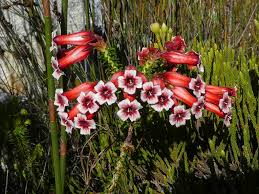
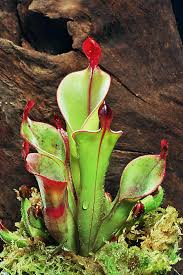
Fouquieriaceae is placed within the large and diverse order Ericales, belonging to the Asterid clade of eudicots. This order includes families with vastly different appearances and ecologies, such as heaths (Ericaceae), pitcher plants (Sarraceniaceae), phlox (Polemoniaceae), persimmons (Ebenaceae), and tea (Theaceae).
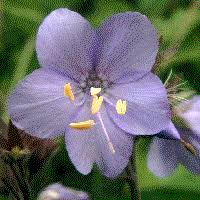
Within Ericales, molecular phylogenetic studies suggest that Fouquieriaceae is most closely related to the family Polemoniaceae (Phlox family). Polemoniaceae are mostly herbs (though some shrubs) often with 5-merous flowers having fused petals and typically 5 stamens attached to the corolla tube, and a 3-carpellate ovary forming a capsule. The link between the desert-adapted, spiny Fouquieriaceae and the often herbaceous Polemoniaceae highlights the significant morphological divergence that can occur within related lineages in the Ericales.
Position in Plant Phylogeny
- Kingdom: Plantae
- Clade: Angiosperms (Flowering plants)
- Clade: Eudicots
- Clade: Asterids
- Order: Ericales
- Family: Fouquieriaceae
Evolutionary Significance
Fouquieriaceae is significant for several evolutionary reasons:
- Adaptation to Aridity: Provides remarkable examples of convergent evolution with cacti and other unrelated desert plants, showcasing unique adaptations like petiole-derived spines and stem photosynthesis/succulence.
- Leaf Dimorphism: The specialized system of primary leaves forming spines and secondary leaves on short shoots is a notable developmental adaptation.
- Phylogenetic Placement: Its position within the large and ecologically diverse Ericales, potentially close to Polemoniaceae, helps illustrate the evolutionary flexibility and divergence within this major asterid order.
- Biogeography: Its restricted distribution in North American deserts makes it a key component of that region's unique flora.