Theaceae
Tea Family, Camellia Family
Theaceae is a family of flowering plants in the order Ericales, renowned for its economically important species, Camellia sinensis (tea), and numerous popular ornamental cultivars, especially within the genus Camellia. The family comprises about 9 genera and 300-400 species of evergreen trees and shrubs, primarily distributed in tropical and subtropical regions of Asia and America.
Overview
Theaceae, the Tea family, holds significant economic and horticultural value. The most famous member, Camellia sinensis, is cultivated globally for tea production, derived from its processed leaves. Many other species, particularly within Camellia (like C. japonica, C. sasanqua) and Stewartia, are prized ornamental plants, admired for their large, often showy flowers and attractive evergreen foliage.
Members of the family are typically found in moist forest environments, often in acidic soils, across tropical, subtropical, and some temperate regions. Southeast Asia and tropical America are major centers of diversity. While some species are widespread due to cultivation, others, like Franklinia alatamaha (Franklin Tree), are critically endangered or extinct in the wild.
Botanically, the family is characterized by simple, alternate leaves, often large and solitary flowers with numerous stamens frequently fused at the base, a superior ovary, and fruit that is commonly a woody capsule.
Quick Facts
- Scientific Name: Theaceae
- Common Name: Tea family, Camellia family
- Number of Genera: Approximately 9 (e.g., Camellia, Stewartia, Gordonia, Franklinia, Schima)
- Number of Species: Approximately 300-400
- Distribution: Tropical and subtropical regions, especially SE Asia and the Americas, with some temperate species.
- Evolutionary Group: Eudicots - Asterids - Ericales
Key Characteristics
Growth Form and Habit
Members are typically evergreen shrubs or small to medium-sized trees. Some species, like certain Stewartia, can be deciduous.
Leaves
Leaves are simple, usually alternate and spirally arranged (rarely opposite). They are often leathery (coriaceous), typically have serrated (toothed) margins, and lack stipules (or have minute, non-functional ones). The presence of thick-walled stone cells (sclereids) in the leaf tissue is common.
Flowers
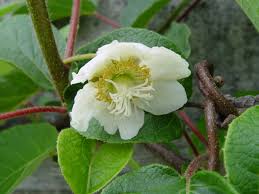
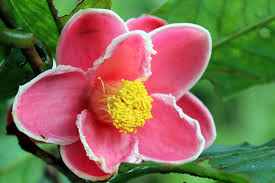
Flowers are often large, showy, and usually borne solitary or in small clusters (fascicles) in the leaf axils. They are typically bisexual and radially symmetrical (actinomorphic).
- Calyx: Usually 5 distinct sepals (sometimes 4 to many), often thick, rounded, and persistent in fruit. Frequently subtended by bracteoles that may grade into the sepals.
- Corolla: Usually 5 distinct petals (sometimes 4 to many), often large, typically white, pink, or red (rarely yellow). Petals are frequently slightly fused (connate) at the very base.
- Androecium: Stamens are numerous (typically 20 to over 100), usually arranged in multiple whorls or indistinct bundles. Filaments are often fused at their bases, forming a ring or short tube that may be attached (adnate) to the base of the corolla. Anthers are typically attached at their base (basifixed) or versatile.
- Gynoecium: A single superior ovary (rarely half-inferior) composed of (2-)3-5(-many) fused carpels, forming an equivalent number of chambers (locules). Styles may be distinct or fused into a single column, often persistent. Ovules range from 1 to many per locule.
Fruits and Seeds
The most common fruit type is a loculicidal capsule, typically woody or leathery, which splits open along the middle of each locule to release the seeds. The central axis (columella) often persists after the valves dehisce. Less commonly, the fruit may be indehiscent (a berry or drupe-like) or winged (a samara).
Seeds vary from few to many per fruit, sometimes winged. They often contain oily embryos and little or no endosperm (nutritive tissue).
Field Identification
Identifying Theaceae members often relies on the combination of evergreen habit, leaf characteristics, and distinctive flower and fruit features:
Primary Identification Features
- Evergreen Trees/Shrubs: Most members retain their leaves year-round.
- Simple, Alternate, Leathery Leaves: Check for spiral arrangement and often finely serrated margins.
- Large, Showy Flowers: Often solitary, typically white or pink/red.
- 5 Petals (often slightly fused at base): Look for the distinct petals, sometimes appearing slightly cupped at the base.
- Numerous Stamens (often fused into a basal ring/tube): A key feature inside the flower.
- Superior Ovary: Located above the attachment point of sepals and petals.
- Woody Loculicidal Capsule: The most common fruit type, often with persistent sepals at the base and a persistent central column after opening.
Secondary Identification Features
- Serrated Leaf Margins: While not universal, toothed edges are very common.
- Persistent Sepals: Often visible on developing or mature fruits.
- Lack of Stipules: Differentiates from some similar families like Rosaceae.
- Habitat: Often found in moist forests, sometimes with acidic soils.
Seasonal Identification Tips
- Flowering Season: Varies by species; many popular ornamentals (Camellia japonica, C. sasanqua) bloom in fall, winter, or spring. Tea plants often flower in fall.
- Fruiting Season: Capsules mature later, often persisting on the plant.
- Vegetative State: Evergreen leaves are present year-round for most species.
Common Confusion Points
- Rosaceae (Rose Family): Some roses or related genera might have similar flowers, but Rosaceae usually have stipules, often compound leaves, and typically perigynous or epigynous flowers (ovary inferior or surrounded by a floral cup), with fruits like pomes, drupes, achenes, or follicles, rarely capsules.
- Ericaceae (Heath Family): Also in Ericales. Flowers are often urn-shaped (urceolate) or bell-shaped (campanulate) with fused petals, and stamens often have pores or awns on the anthers. Fruits can be capsules or berries.
- Clusiaceae (Mangosteen Family): Often have opposite leaves (vs. alternate in Theaceae) and frequently possess yellow or orange latex. Flowers may have numerous stamens but often differ in structure.
- Magnoliaceae (Magnolia Family): Have large solitary flowers but possess numerous separate carpels arranged spirally on an elongated receptacle (forming cone-like fruit), stipules present (often enclosing the bud), and distinct floral parts not fused in the same way.
Field Guide Quick Reference
Look For:
- Evergreen trees/shrubs
- Alternate, simple, leathery, often serrated leaves
- No stipules
- Large, solitary (often) flowers (white/pink/red)
- 5 sepals, 5 petals (slightly fused base)
- Numerous stamens (fused base)
- Superior ovary (usually 3-5 parts)
- Woody capsule (common fruit)
Key Variations:
- Some species deciduous (Stewartia)
- Flower color varies
- Fruit type can be berry/drupe/samara (less common)
- Leaf margins sometimes entire
Notable Examples
Theaceae includes globally important economic and ornamental plants:

Camellia sinensis
Tea Plant
Native to East Asia, this evergreen shrub or small tree is the source of commercial tea (black, green, white, oolong, etc.), derived from its leaves. It has white, fragrant flowers and is cultivated extensively in tropical and subtropical regions worldwide.

Camellia japonica
Common Camellia, Japanese Camellia
A highly popular ornamental evergreen shrub native to East Asia, prized for its large, showy flowers that bloom from late fall to spring. Thousands of cultivars exist with varying flower colors (white, pink, red) and forms (single, double).

Stewartia pseudocamellia
Japanese Stewartia
A deciduous tree native to Japan and Korea, valued ornamentally for its beautiful white, camellia-like summer flowers, attractive exfoliating bark (mottled gray, orange, brown), and good fall color. Represents the deciduous element within the family.

Franklinia alatamaha
Franklin Tree
A small deciduous tree historically native to a very small area in Georgia, USA. It is famously extinct in the wild since the early 19th century but survives solely through cultivation. Known for its large white flowers in late summer/fall and bright red fall foliage.
Phylogeny and Classification
Theaceae is firmly placed within the order Ericales, a large and diverse group in the asterid clade of eudicots. Molecular phylogenetics has helped clarify the relationships within Theaceae and its position relative to other Ericales families. The family is generally divided into three tribes: Theeae (including Camellia), Gordonieae (Gordonia, Franklinia), and Stewartieae (Stewartia).
Historically, the circumscription of Theaceae has varied, sometimes including families like Ternstroemiaceae. However, current classifications (like APG IV) generally recognize a more narrowly defined Theaceae, characterized by features like numerous stamens often fused basally and typically capsular fruits. Its relationship within Ericales places it among families known for diverse secondary metabolites and adaptations to various, often nutrient-poor or acidic, environments.
Position in Plant Phylogeny
- Kingdom: Plantae
- Clade: Angiosperms (Flowering plants)
- Clade: Eudicots
- Clade: Asterids
- Order: Ericales
- Family: Theaceae
Evolutionary Significance
Theaceae is significant from several perspectives:
- Economic Importance: The domestication and global cultivation of Camellia sinensis make it one of the most economically important non-food plant families.
- Horticultural Diversity: Represents a major source of ornamental shrubs and trees, particularly Camellia species, showcasing selective breeding and hybridization.
- Phylogenetic Position: Its placement within Ericales helps understand the evolution of woody habits, floral structures (especially the androecium), and chemical defenses within this large asterid order.
- Conservation Concern: Includes species of conservation interest, such as the wild relatives of tea and the unique case of Franklinia alatamaha, extinct in the wild.