Athyriaceae
Lady Fern or Glade Fern Family
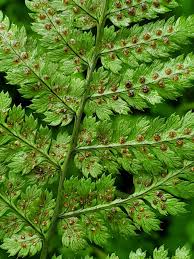
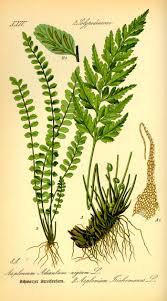
Athyriaceae is a large and diverse family of terrestrial ferns (order Polypodiales), commonly known as lady ferns or glade ferns. They are found nearly worldwide, especially in temperate regions, and are characterized by diverse frond morphology (often finely dissected) and distinctive sorus shapes (often linear, J-shaped, or horseshoe-shaped).
Overview
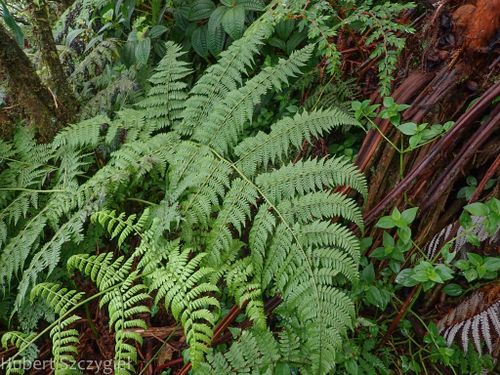
The Athyriaceae family encompasses a significant group of ferns found across the globe, with the highest diversity in temperate and tropical mountain regions. These ferns typically inhabit moist woodlands, forests, streambanks, and shaded slopes. The family is known for its morphological diversity, particularly in frond dissection, ranging from simple pinnate to highly complex, finely cut forms, often giving them a delicate, lacy appearance (like the common Lady Fern, Athyrium filix-femina).
Members of Athyriaceae are typically medium to large terrestrial ferns growing from creeping, ascending, or erect rhizomes, which are usually covered in scales. A key characteristic often used in identification relates to the vascular bundles in the stipe (leaf stalk): typically, there are two strap-shaped or crescent-shaped bundles at the base that unite upwards into a U- or V-shape. The shape and arrangement of the sori (clusters of sporangia) are also crucial, varying from linear to J-shaped, U-shaped (horseshoe-shaped), or sometimes round, usually covered by an indusium of a similar shape.
Quick Facts
- Scientific Name: Athyriaceae Alston
- Common Name: Lady Fern Family, Glade Fern Family
- Number of Genera: ~5-15 (depending on classification, includes large genera like Athyrium, Diplazium, Deparia)
- Number of Species: ~600-1000+ (estimates vary widely with classification)
- Distribution: Cosmopolitan, but most diverse in temperate zones and tropical montane regions.
- Evolutionary Group: Ferns (Polypodiopsida) - Polypodiales - Eupolypods II
Key Characteristics
Note: Athyriaceae are mostly terrestrial ferns characterized by scaly rhizomes, often finely divided fronds, and distinctive sorus shapes (linear, J-shaped, U-shaped, or round) typically with indusia.
Sporophyte (Dominant Phase) Structure
The visible fern plant is the diploid sporophyte:
- Rhizome: Creeping, ascending, or erect; typically covered with scales (usually brown to blackish, lanceolate to ovate, non-clathrate).
- Fronds (Leaves):
- Size & Form: Highly variable, from small to very large; typically monomorphic (fertile and sterile fronds similar), sometimes dimorphic.
- Stipe (Petiole): Base often dark and scaly; characteristically contains two vascular bundles, strap-shaped or crescent-shaped, that merge distally into a single U- or V-shaped bundle.
- Blade: Typically 1-pinnate to 4-pinnate (often pinnate-pinnatifid or more divided), giving a delicate or lacy appearance in many species. Texture herbaceous to somewhat leathery.
- Veins: Usually free, simple or forked, rarely anastomosing (netted).
- Indument: Blades may be glabrous (smooth), glandular, or bear hairs or small scales, especially along axes.
Reproductive Structures (Sori)
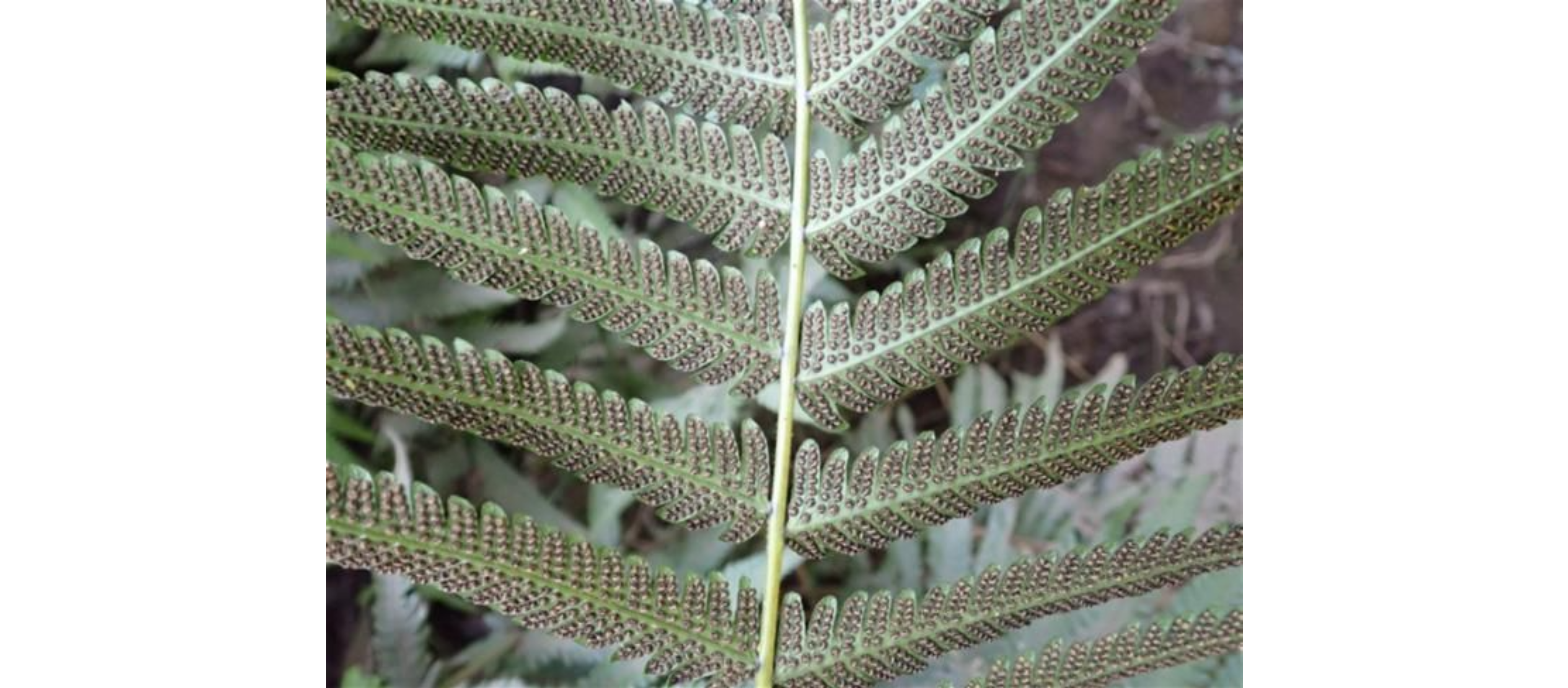
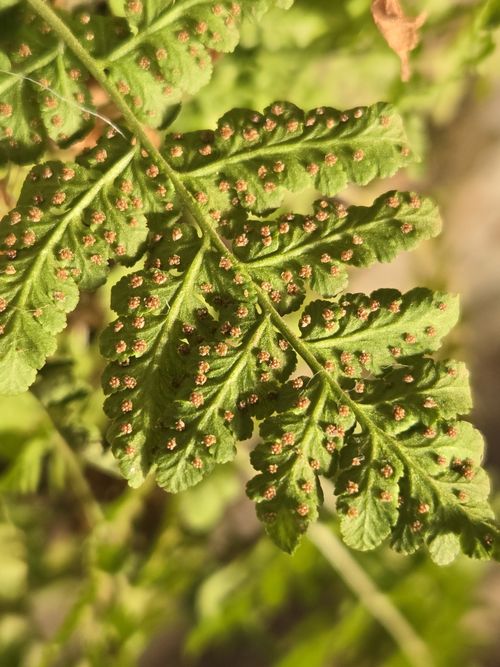
Sori contain the sporangia (spore-producing structures) and are located on the underside of fertile fronds:
- Shape: Highly variable and diagnostic:
- Linear (elongated along a vein)
- J-shaped (hooked at one end)
- Hippocrepiform (U-shaped or horseshoe-shaped)
- Round
- Sometimes paired back-to-back along a vein (diplazioid, characteristic of Diplazium)
- Position: Located along veins, away from the margin.
- Indusium: Typically present (sometimes absent or rudimentary), usually conforming to the shape of the sorus (linear, J-shaped, reniform/kidney-shaped for round sori). Attached along the vein and opening outwards (away from the vein).
Sporangia and Spores
- Sporangia: Typical leptosporangiate structure with a vertical annulus interrupted by the stalk.
- Spores: Monolete (bilateral symmetry, bean-shaped); surface often winged, folded, or reticulate (perispore ornamentation).
Gametophyte
The small, haploid gametophyte phase:
- Form: Typically develops from the spore as a green, heart-shaped (cordate) prothallus, bearing both antheridia (male) and archegonia (female) structures.
Field Identification
Identifying members of the Athyriaceae family often relies on a combination of features, particularly sorus shape, indusium presence/shape, and the vascular bundle configuration in the stipe.
Primary Identification Features
- Sorus Shape: Look for sori that are linear, J-shaped, horseshoe-shaped, or sometimes round on the underside of fronds. Diplazioid (back-to-back linear) sori are key for Diplazium.
- Indusium: Note the presence and shape of the indusium, which usually matches the sorus shape (linear, J-shaped, kidney-shaped for round sori).
- Stipe Vascular Bundles: Check the base of a cut stipe (cross-section) for two prominent, strap-like or crescent-shaped vascular bundles.
- Frond Dissection: Often finely divided (2- to 4-pinnate), giving a feathery or lacy appearance, but can be simpler (1-pinnate).
- Rhizome Scales: Presence of scales (not hairs) on the rhizome and stipe base.
Secondary Identification Features
- Habitat: Typically found in moist, shaded environments like forests and streambanks.
- Vein Pattern: Veins are usually free (not forming a network).
- Rhizome Habit: Can be creeping to erect.
Seasonal Identification Tips
- Year-round: Fronds may be evergreen or deciduous depending on the species and climate. Rhizomes are perennial.
- Summer/Fall: Fertile fronds with mature sori are typically present during warmer months, which is the best time for identification using reproductive features.
Common Confusion Points
Athyriaceae can be confused with several other fern families:
- Dryopteridaceae (Wood Fern Family): Often have round sori with distinct kidney-shaped (reniform) indusia. Crucially, their stipes typically have multiple (3+) round vascular bundles arranged in a ring, not two strap-shaped ones. Fronds are often coarser.
- Thelypteridaceae (Marsh Fern Family): Also have two strap-shaped vascular bundles uniting upwards in the stipe. Sori are often round to slightly elongated, indusia may be kidney-shaped, small, or absent. Often distinguished by the presence of needle-like hairs on the fronds (Athyriaceae usually have scales or glands, if anything).
- Aspleniaceae (Spleenwort Family): Typically have distinctly linear sori running along one side of a vein, with a linear indusium opening towards the midrib/costa. Stipes also have two vascular bundles uniting upwards.
- Woodsiaceae (Cliff Fern Family): Sori are typically round. Indusial structure is variable, often inferior (attached beneath the sorus) and splitting into segments, or absent. Stipes also have two vascular bundles uniting upwards. Often smaller rock ferns.
- Cystopteridaceae (Bladder Fern Family): Generally delicate ferns with round sori and often fragile, hood-shaped indusia attached at the base and arching over the sorus. Stipes also have two vascular bundles uniting upwards.
Key differentiators: Focus on the combination of sorus shape (J-shaped, horseshoe, linear often prominent), indusium shape, and the two strap/crescent-shaped vascular bundles in the stipe base.
Field Guide Quick Reference
Look For:
- Sori: Linear, J-shaped, U-shaped, or round
- Indusia: Present, matching sorus shape (usually)
- Stipe Base: Two strap/crescent vascular bundles
- Fronds: Often finely dissected (lacy)
- Rhizome/Stipe Base: Scaly (not hairy)
- Habitat: Moist, shaded areas
Key Distinctions:
- vs. Dryopteridaceae: Dryopteridaceae have multiple (3+) round vascular bundles in stipe.
- vs. Thelypteridaceae: Thelypteridaceae often have needle-like hairs; sorus shapes differ.
- vs. Aspleniaceae: Aspleniaceae have consistently linear sori/indusia along one side of vein.
- vs. Woodsiaceae/Cystopteridaceae: Differ in indusium structure (inferior, hood-like, or absent).
Notable Examples
Athyriaceae includes several well-known and widespread genera.

Athyrium filix-femina
Common Lady Fern
A classic example, widespread in temperate Northern Hemisphere. Known for its delicate, lacy, 2- to 3-pinnate fronds and characteristic J-shaped or slightly curved sori with similarly shaped indusia.

Diplazium esculentum
Vegetable Fern, Paku
Found in tropical Asia and Oceania. Characterized by large, typically 1- or 2-pinnate fronds and distinctive 'diplazioid' sori (paired linear sori back-to-back along the same vein). Young fronds (fiddleheads) are eaten as a vegetable in some regions.

Deparia acrostichoides
Silvery Glade Fern, Silvery Spleenwort
Native to eastern North America. Features 1-pinnate-pinnatifid fronds. Sori are linear to slightly curved. The common name refers to the silvery appearance of the young, unfolding sori/indusia.
Phylogeny and Classification
Athyriaceae belongs to the large order Polypodiales, specifically within the Eupolypods II clade, one of the major lineages of modern leptosporangiate ferns. Its exact circumscription and relationship to neighboring families (sometimes grouped within the suborder Aspleniineae) have been subject to considerable revision based on molecular phylogenetic studies.
Historically, genera now placed in Athyriaceae were often included within a very broadly defined Dryopteridaceae or Aspleniaceae. Molecular data strongly support Athyriaceae as a distinct lineage, but the boundaries between it and families like Woodsiaceae, Cystopteridaceae, Rhachidosoraceae, and Diplaziopsidaceae are still debated, leading to variations in the number of genera assigned to the family in different classifications. Key genera like Athyrium, Diplazium, and Deparia form the core of the family. The diversity in sorus morphology within the family (linear, J-shaped, U-shaped, round) reflects complex evolutionary patterns.
Position in Plant Phylogeny
- Kingdom: Plantae
- Division: Pteridophyta (or Polypodiophyta)
- Class: Polypodiopsida
- Order: Polypodiales
- Suborder: Aspleniineae (in some systems)
- Family: Athyriaceae
- (Part of the Eupolypods II clade)
Evolutionary Significance
Athyriaceae is significant for:
- Diversity in Sorus Morphology: Shows a wide range of sorus shapes, illustrating evolutionary plasticity in reproductive structures within a single family.
- Cosmopolitan Distribution: Represents a successful radiation of ferns into diverse habitats worldwide, particularly temperate forests.
- Taxonomic Complexity: Highlights the ongoing challenges and revisions in fern classification driven by molecular data, particularly within the large Eupolypods II clade.
- Ecological Roles: Important components of forest understory vegetation, contributing to ground cover and habitat structure.