Aspleniaceae
Spleenwort Family
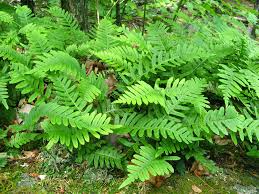
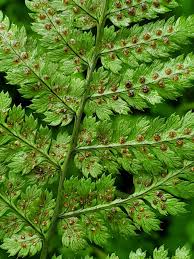
Aspleniaceae is a large and diverse family of leptosporangiate ferns in the order Polypodiales. It is dominated by the huge genus Asplenium, containing ~700-800+ species, making it one of the largest fern genera. Spleenworts are found worldwide (cosmopolitan) in a wide range of habitats, from terrestrial forests to rock crevices (epipetric) and tree branches (epiphytic). They are recognized by their distinctive linear sori (spore clusters) usually covered by a similarly shaped indusium (protective flap).
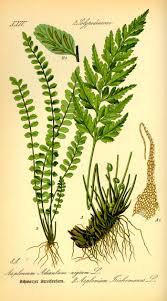
Overview
The Spleenwort family, Aspleniaceae, is almost entirely composed of the genus Asplenium, a highly successful and speciose group of ferns with a global distribution. While most diverse in tropical regions, species are found on every continent except Antarctica, occupying niches from shaded forest floors and moist rock faces to high epiphytic perches in rainforest canopies. Some species are adapted to specific substrates like limestone or serpentine rock.
Aspleniaceae ferns exhibit remarkable morphological diversity, particularly in frond shape, ranging from simple, undivided strap-like leaves (like the Hart's Tongue Fern) to highly dissected, feathery fronds. Despite this variation, the family is unified by key characteristics, especially the structure of the rhizome scales (clathrate) and the arrangement of the sori (linear along veins) and indusia.
Hybridization is common within the genus Asplenium, leading to complex relationships and taxonomic challenges. Many spleenworts are popular horticultural subjects, valued for their attractive foliage, including the Bird's Nest Fern (A. nidus) and various cultivars of Maidenhair Spleenwort (A. trichomanes) and Lady Fern relatives sometimes included here.
Quick Facts
- Scientific Name: Aspleniaceae
- Common Name: Spleenwort family
- Number of Genera: Primarily 1 (Asplenium), sometimes 1-2 others segregated (e.g., Hymenasplenium)
- Number of Species: Approximately 700-800+
- Distribution: Cosmopolitan (worldwide), most diverse in tropics.
- Evolutionary Group: Monilophytes - Leptosporangiate Ferns - Polypodiales
Key Characteristics
Habit and Rhizome
Plants are perennial ferns, typically growing from a short or long-creeping, ascending, or erect rhizome (underground or surface stem). A key diagnostic feature is that the rhizome and often the base of the stipe are covered in clathrate scales – scales whose cell walls are thickened and often dark, forming a distinctive lattice-like pattern.
Fronds (Leaves)
Fronds vary greatly in size and complexity across the family.
- Stipe (Leaf Stalk): Often dark and wiry (sometimes green), smooth or scaly, especially near the base with clathrate scales. Vascular bundles within the stipe are typically two, crescent-shaped near the base, fusing upwards into an X-shape in cross-section.
- Blade (Lamina): Extremely variable. Can be simple (undivided, e.g., A. scolopendrium), pinnatifid (lobed but not fully divided), pinnate (once-divided into leaflets called pinnae), bipinnate (twice-divided), or even more finely dissected. Texture ranges from delicate and herbaceous to thick and leathery.
- Venation: Veins are typically free (not forming a network, or only rarely anastomosing near the margin), dichotomously branching or pinnately arranged within the segments, and usually ending near the margin.
Some species reproduce vegetatively via bulbils (small plantlets) borne on the frond surface (e.g., A. bulbiferum).
Reproductive Structures (Sori, Spores)
Reproduction is via spores produced in sporangia, which are clustered into sori on the underside of the frond blade.
- Sori (Singular: Sorus): The most distinctive feature of the family. Sori are typically linear (elongated) in shape, arranged parallel to, and typically along only one side of, a fertile veinlet. Rarely, sori might occur back-to-back (diplazioid) on the same veinlet (more common in the related Athyriaceae).
- Indusium (Plural: Indusia): A protective flap covering the sorus is usually present (though sometimes reduced or absent). It is also typically linear, attached along the veinlet side of the sorus and opening outwards like a flap, usually towards the frond margin or apex. Its shape, size, and persistence are important identification characters.
- Sporangia: The spore-producing capsules within the sorus. They typically possess a vertical annulus (a ring of specialized cells) that aids in spore dispersal through changes in humidity.
- Spores: Spores are typically monolete (having a single straight scar), bilateral, and often bean-shaped. The outer layer (perispore) is often prominent, sometimes winged, folded, or otherwise ornamented.
Gametophyte
The haploid generation (gametophyte or prothallus) develops from a germinated spore. It is typically small, green, photosynthetic, often heart-shaped, and independent, bearing the antheridia (male organs) and archegonia (female organs) required for sexual reproduction.
Field Identification
Identifying Aspleniaceae ferns relies heavily on examining the sori and indusia on the underside of fertile fronds, along with rhizome scales and general frond morphology:
Primary Identification Features
- Linear Sori: Elongated clusters of sporangia running parallel to the veins.
- Linear Indusium: A flap-like covering attached along one side of the sorus (usually present).
- Clathrate Scales: Check the rhizome and stipe base for scales with a distinct lattice pattern (may require magnification).
- Frond Dissection: Note if fronds are simple, pinnate, bipinnate, etc. (highly variable).
- Habitat: Terrestrial, epiphytic, or epipetric (growing on rocks).
Secondary Identification Features
- Stipe Color and Texture: Often dark, wiry, or polished.
- Vascular Bundle Shape: X-shape in cross-section higher up the stipe (requires sectioning).
- Spore Type: Monolete (requires microscopy).
- Presence of Bulbils: Some species produce plantlets on the fronds.
Seasonal Identification Tips
- Fertile Fronds: Sori are necessary for definitive identification; check fronds during the main growing or sporulating season.
- Evergreen/Deciduous: Frond persistence varies; many are evergreen, aiding year-round identification.
Common Confusion Points
- Athyriaceae (Lady Fern Family): Closely related. Sori can be linear, J-shaped, or horseshoe-shaped; indusia similar shape. Vascular bundles in stipe are often 2 crescent shapes throughout. Scales may be less distinctly clathrate.
- Dryopteridaceae (Wood Fern Family): Sori are typically round or kidney-shaped (reniform), not linear. Indusia are similar shape to sori (round/kidney-shaped) or absent.
- Blechnaceae (Chain Fern Family): Sori are typically linear but run parallel and adjacent to the costa (midrib) of the pinna or segment, often forming continuous chains (coenosori). Indusia open towards the costa.
- Pteridaceae (Maidenhair Fern Family): Sori are often marginal (along the edge), sometimes covered by a reflexed (rolled) leaf margin (false indusium), or run along veins but lack a true indusium.
- Polypodiaceae (Polypody Family): Sori are typically round or oval and lack indusia entirely. Often epiphytic.
Field Guide Quick Reference
Look For:
- Fern habit (terrestrial, epiphytic, epipetric)
- Linear sori along veins
- Linear indusium (usually present)
- Clathrate scales on rhizome/stipe base
- Fronds simple to highly divided
- Stipe often dark/wiry
Key Distinctions:
- vs. Dryopteridaceae: Sori round/kidney-shaped.
- vs. Athyriaceae: Sori linear, J-shaped or hooked; stipe bundles different.
- vs. Blechnaceae: Sori linear along costa.
- vs. Pteridaceae: Sori often marginal or lacking true indusium.
- vs. Polypodiaceae: Sori round/oval, no indusium.
Notable Examples
The vast genus Asplenium includes many well-known and morphologically diverse ferns:

Asplenium nidus
Bird's Nest Fern
A popular houseplant and epiphytic fern native to tropical regions. Forms a rosette of large, simple, strap-shaped, bright green fronds resembling a bird's nest. Sori are linear on the underside.

Asplenium trichomanes
Maidenhair Spleenwort
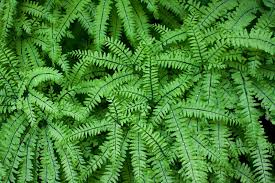
A small, cosmopolitan fern often found growing in rock crevices or walls. Features pinnate fronds with small, rounded or oblong pinnae along a dark, wiry stipe and rachis. Several subspecies exist.

Asplenium scolopendrium
Hart's Tongue Fern
Unusual for the genus, this fern has simple, undivided, strap-shaped fronds resembling a tongue. Native to Europe, North Africa, East Asia, and parts of North America. Sori are prominent linear pairs on the underside.

Asplenium bulbiferum
Mother Spleenwort, Hen and Chicken Fern
Native to New Zealand and Australia, this fern has finely divided (bipinnate to tripinnate) fronds. It is known for producing small plantlets (bulbils) on the upper surface of its fronds, which can drop off and grow into new plants.
Phylogeny and Classification
Aspleniaceae is a family of leptosporangiate ferns belonging to the order Polypodiales, the largest order of modern ferns. Within this order, Aspleniaceae is part of the large "eupolypods" clade, specifically the eupolypods II subgroup, which also includes families like Athyriaceae, Blechnaceae, Dryopteridaceae, and Polypodiaceae.
Molecular phylogenetics has confirmed the monophyly of Aspleniaceae (usually defined broadly as including almost all species within Asplenium). Its sister group relationships within the eupolypods II clade are complex and subject to ongoing research, but it is clearly distinct from families like Dryopteridaceae (round sori) and Polypodiaceae (round sori, no indusia). The family's evolutionary success is evident in its vast number of species and global distribution.
Position in Plant Phylogeny
- Kingdom: Plantae
- Clade: Tracheophytes (Vascular Plants)
- Clade: Monilophytes (Ferns and Horsetails)
- Class: Polypodiopsida (Leptosporangiate Ferns)
- Order: Polypodiales
- Family: Aspleniaceae
Evolutionary Significance
Aspleniaceae is significant in fern evolution:
- Speciation and Hybridization: Asplenium is a model genus for studying rapid speciation, reticulate evolution (hybridization forming new lineages), and polyploidy in ferns.
- Ecological Diversity: Demonstrates remarkable adaptation to diverse habitats worldwide, including epiphytism and specialization to different rock types.
- Morphological Radiation: Exhibits extreme variation in frond morphology within a single large genus, providing material for studying the evolution of leaf form.
- Biogeography: Its cosmopolitan distribution raises interesting questions about dispersal mechanisms (via lightweight spores) and historical biogeography.