Strelitziaceae
Bird-of-Paradise Family
The Strelitziaceae family, commonly known as the bird-of-paradise family, is a small but striking group of monocotyledonous flowering plants native to southern Africa and South America (specifically the Amazon basin). It includes iconic ornamental plants famed for their unique, bird-like flowers and large, banana-like leaves.
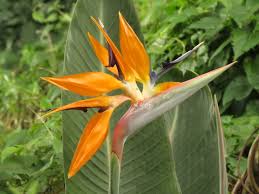
Overview
Strelitziaceae is a relatively small family belonging to the order Zingiberales, which also includes bananas (Musaceae), gingers (Zingiberaceae), and heliconias (Heliconiaceae). The family comprises just three genera and about seven species. Despite its small size, it holds significant horticultural importance due to the spectacular flowers of Strelitzia species and the imposing stature of Ravenala and Phenakospermum.
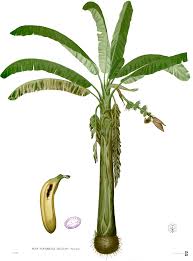
Members of this family are typically large, perennial, rhizomatous herbs, often resembling banana plants in their vegetative form. They are characterized by their distichous (two-ranked) leaf arrangement, large paddle-shaped leaves, and distinctive inflorescences protected by boat-shaped bracts (spathes). Pollination is often specialized, involving birds (ornithophily) in Strelitzia and lemurs in Ravenala.
The family's distribution is disjunct, with Strelitzia found in southern Africa, Ravenala endemic to Madagascar, and Phenakospermum occurring in northern South America and the Amazon basin. This distribution pattern suggests an ancient origin and subsequent separation due to continental drift.
Quick Facts
- Scientific Name: Strelitziaceae
- Common Name: Bird-of-Paradise family
- Number of Genera: 3 (Strelitzia, Ravenala, Phenakospermum)
- Number of Species: Approximately 7
- Distribution: Southern Africa, Madagascar, Northern South America (Amazon Basin)
- Evolutionary Group: Monocots - Commelinids - Zingiberales
Key Characteristics
Growth Form and Habit
Plants in the Strelitziaceae family are large, perennial, acaulescent (stemless) or tree-like herbs growing from underground rhizomes. Strelitzia species typically form clumps, while Ravenala madagascariensis (Traveller's Palm) develops a distinct, palm-like trunk, and Phenakospermum guyannense can reach heights of over 10 meters, resembling a large banana plant.
Leaves
Leaves are large, simple, entire, and often paddle-shaped or oblong, resembling those of banana plants. They possess long petioles and are arranged strictly in two ranks (distichous), often forming a fan-like structure, most notably in Ravenala. The leaf bases sheath the stem or pseudostem. Leaf blades may become shredded by wind over time.
Inflorescence
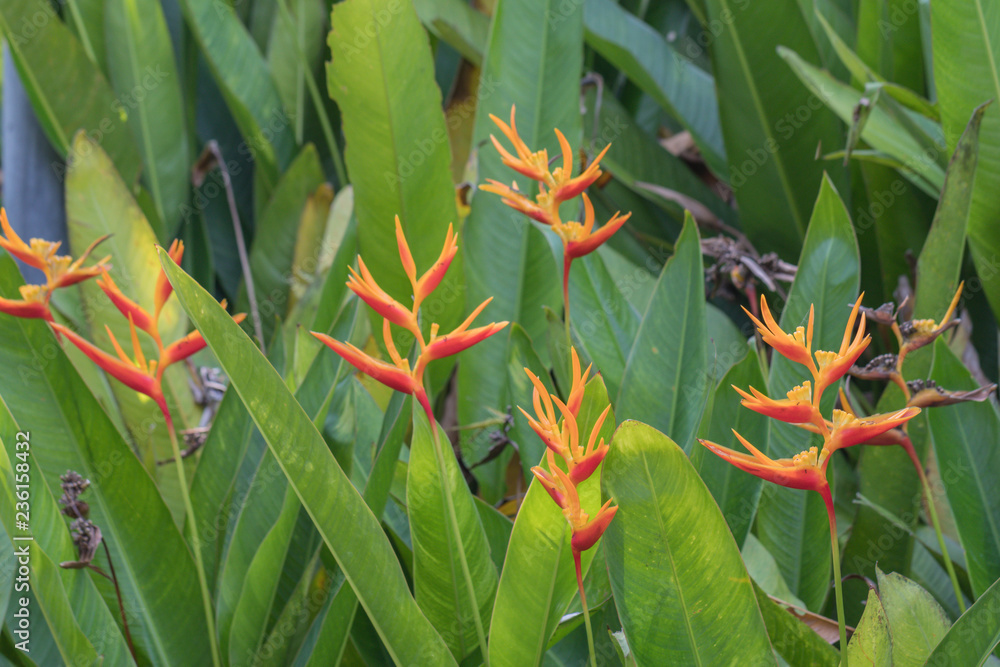
The inflorescence is a cincinnus (a type of monochasial cyme) or a compound cyme, emerging laterally or terminally. It is typically enclosed within one or more large, rigid, boat-shaped bracts known as spathes. These spathes are often brightly colored (especially in Strelitzia) and arranged horizontally or erect, protecting the flowers within.
Flowers
Flowers are bisexual, zygomorphic (bilaterally symmetrical), and often large and showy. Key floral characteristics include:
- Perianth: Composed of 6 tepals in two whorls of 3. The outer whorl consists of 3 free sepals. The inner whorl consists of 3 petals; in Strelitzia, two petals are fused to form a distinctive arrow-shaped structure enclosing the stamens and style, while the third (upper) petal is typically smaller.
- Androecium: Usually 5 fertile stamens (sometimes 6 in Ravenala). Filaments are long, and anthers are linear.
- Gynoecium: A single inferior ovary composed of three fused carpels, with three locules containing numerous ovules. The style is filiform (thread-like) with a simple or lobed stigma.
The structure of Strelitzia flowers is highly adapted for bird pollination; birds perch on the fused petals, causing the stamens and stigma to emerge and contact the bird's breast or feet.
Fruits and Seeds
The fruit is a woody loculicidal capsule containing multiple seeds. The seeds are typically black or brown, hard, and possess a brightly colored, often orange or red, woolly or fibrous aril. This conspicuous aril likely aids in dispersal by attracting birds.
Chemical Characteristics
While not as chemically diverse as families like Asteraceae, Strelitziaceae plants contain phenolic compounds and possess sturdy fibrous tissues. Specific secondary metabolite profiles are less defining for the family compared to morphological features.
Field Identification
Identifying members of the Strelitziaceae family relies on recognizing their distinctive vegetative and floral features, particularly their large size, leaf arrangement, and unique inflorescences.
Primary Identification Features
- Large, banana-like leaves: Leaves are typically large, paddle-shaped with long petioles.
- Distichous leaf arrangement: Leaves are arranged strictly in two ranks, often forming a fan shape.
- Boat-shaped spathes: Inflorescences are subtended by one or more large, rigid, often colorful bracts (spathes).
- Zygomorphic flowers: Flowers are bilaterally symmetrical, often with fused petals forming unique structures (especially the 'arrowhead' in Strelitzia).
- Inferior ovary: The ovary is located below the attachment point of the other floral parts.
Secondary Identification Features
- Rhizomatous habit: Plants grow from underground rhizomes.
- Acaulescent or tree-like form: Ranging from clumping herbs to single-trunked 'trees'.
- Woody capsule fruit: Fruits are hard, dehiscent capsules.
- Seeds with bright arils: Seeds typically have conspicuous, brightly colored (often orange) arils.
Seasonal Identification Tips
Identification is easiest when plants are in flower, but vegetative features are also distinctive year-round:
- Flowering Season: Varies by species and climate, but often occurs during warmer months. The unique flowers are unmistakable.
- Fruiting Season: Woody capsules develop after flowering, eventually splitting to reveal seeds with colorful arils.
- Vegetative Stage: The large, distichously arranged leaves are a key identifier throughout the year, especially the fan-like arrangement in Ravenala.
Common Confusion Points
Strelitziaceae members might be confused with related families in the Zingiberales order:
- Musaceae (banana family): Similar large leaves, but leaves are spirally arranged (not distichous), and flowers/fruits differ significantly (e.g., bananas are berries).
- Heliconiaceae (heliconia family): Also have large leaves (often distichous) and colorful bracts, but bracts typically enclose multiple flowers in a different arrangement, and flower structure differs (e.g., petals not fused into an arrow shape).
- Zingiberaceae (ginger family): Often aromatic, leaves usually distichous but possess a ligule (a small appendage at the junction of leaf blade and sheath), and flower structure is very different.
Field Guide Quick Reference
Look For:
- Large, paddle-shaped leaves
- Strictly 2-ranked (distichous) leaf arrangement
- Large, boat-shaped spathe(s)
- Zygomorphic flowers, often bird-like
- Fused lower petals (in Strelitzia)
- Woody capsule fruit
- Seeds with bright orange/red arils
Key Variations:
- Clumping vs. Tree-like habit
- Flower color (orange/blue in S. reginae, white/blue in S. nicolai)
- Presence of distinct trunk (Ravenala)
- Fan-like leaf arrangement (Ravenala)
Notable Examples
The Strelitziaceae family contains some of the world's most recognizable and spectacular ornamental plants.

Strelitzia reginae
Bird of Paradise / Crane Flower
Native to South Africa, this is the most famous species in the family, widely cultivated globally in warm climates and as a houseplant. It forms clumps of long-stalked, grey-green leaves and produces stunning flowers with orange sepals and blue fused petals, resembling the head of a crane or exotic bird. It is pollinated by sunbirds.

Ravenala madagascariensis
Traveller's Palm
Endemic to Madagascar, this iconic plant is not a true palm but develops a palm-like trunk topped with a spectacular fan of enormous, distichously arranged leaves. The leaf bases collect rainwater, supposedly providing water for travellers (hence the name). It produces greenish-white flowers within large bracts and is pollinated by lemurs.

Strelitzia nicolai
Giant Bird of Paradise / Natal Wild Banana
Also native to southern Africa, this species grows much larger than S. reginae, often developing multiple tree-like stems up to 10 meters tall. Its leaves are larger and more banana-like. The flowers are similar in structure but feature white sepals and pale blue petals. It is often used as a landscape plant for a tropical effect.

Phenakospermum guyannense
South American Traveller's Palm
Found in the Amazon basin and northern South America, this species resembles a large banana plant or Ravenala but lacks a prominent trunk, growing in clumps. It has large, erect leaves and an upright inflorescence with greenish bracts and cream-colored flowers. It is thought to be primarily bat-pollinated.
Phylogeny and Classification
Strelitziaceae belongs to the order Zingiberales, a well-supported clade within the commelinid monocots. This order is known for its large herbaceous plants with distinctive flowers and often large leaves. Molecular evidence places Strelitziaceae as sister to the Lowiaceae family, and together they form a clade sister to Heliconiaceae and the core Zingiberales families (Musaceae, Zingiberaceae, Costaceae, Marantaceae, Cannaceae).
The family's disjunct distribution across Africa, Madagascar, and South America points to an ancient origin, likely dating back to the Gondwanan supercontinent before its breakup during the Cretaceous period. The three genera represent distinct evolutionary lineages that diverged long ago.
Position in Plant Phylogeny
- Kingdom: Plantae
- Clade: Angiosperms (Flowering plants)
- Clade: Monocots
- Clade: Commelinids
- Order: Zingiberales
- Family: Strelitziaceae
Evolutionary Significance
Strelitziaceae showcases several interesting evolutionary aspects:
- Ancient Gondwanan distribution: The family's geography reflects continental drift.
- Specialized pollination syndromes: Clear adaptations for pollination by specific vertebrates (birds, lemurs, bats).
- Convergent evolution: Vegetative similarity to Musaceae (bananas) despite not being the closest relative.
- Distinctive floral morphology: The unique structure of Strelitzia flowers is a prime example of co-evolution with pollinators.
- Basal position within Zingiberales: Along with Lowiaceae and Heliconiaceae, represents earlier diverging lineages within the order.