Heliconiaceae
Heliconia Family
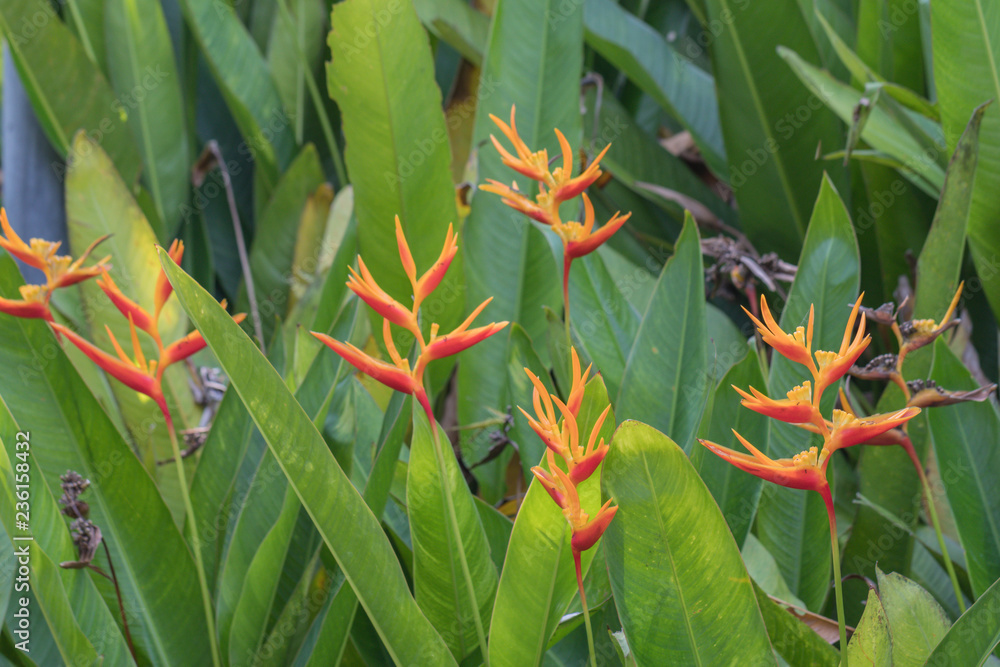
Heliconiaceae is a family of monocotyledonous flowering plants containing the single genus Heliconia. These large, tropical herbs resemble banana plants with their paddle-shaped leaves forming pseudostems. They are renowned for their spectacular and long-lasting inflorescences, which feature brightly colored, boat-shaped bracts arranged in two ranks, enclosing the relatively inconspicuous true flowers. The fruit is typically a blue or purple drupe.
Overview
The Heliconiaceae family consists of a single genus, Heliconia, with approximately 100 to 250 species (species counts vary). Native primarily to the tropical Americas, these plants are now widely cultivated throughout the tropics and subtropics worldwide for their dramatic and colorful inflorescences. They are often referred to as "lobster-claws," "wild plantains," or "false bird-of-paradise."
Heliconias thrive in humid tropical forests, forest edges, and clearings, often growing in dense clumps from underground rhizomes. Their most striking feature is the inflorescence, where the large, brightly colored bracts (not the petals) provide the main visual display, attracting pollinators, primarily hummingbirds in the Neotropics (and bats or insects for some species). The bracts often hold water, creating microhabitats for insects and frogs.
Economically, Heliconiaceae are highly significant in the horticultural trade as landscape plants and especially as cut flowers due to the longevity and vibrant colors of their inflorescences. They are a defining feature of tropical gardens and floral arrangements.
Quick Facts
- Scientific Name: Heliconiaceae
- Common Name: Heliconia family, Lobster-claw family
- Number of Genera: 1 (Heliconia)
- Number of Species: Approximately 100-250
- Distribution: Native to tropical Americas; widely cultivated pantropically.
- Evolutionary Group: Monocots - Commelinids - Order Zingiberales
Key Characteristics
Growth Form and Habit
Large, perennial herbs growing from subterranean rhizomes, often forming extensive clumps. Erect aerial shoots are pseudostems formed by the tightly rolled, sheathing bases of the leaves (similar to banana plants).
Leaves
Leaves are large, simple, and paddle-shaped or oblong, resembling banana leaves. They have a prominent midrib and parallel lateral veins, often tearing easily between the veins. Leaves are arranged alternately in two ranks (distichous) along the pseudostem and possess a distinct petiole and a sheathing base.
Inflorescence
The inflorescence is terminal, typically large and very showy, either erect or pendent. It consists of several to many large, stiff, boat-shaped or trough-like bracts, usually brightly colored (red, orange, yellow, pink, green, often multi-colored). These bracts are arranged distichously (alternately in two ranks) along a central axis (rachis). Each bract encloses a cluster (cincinnus) of several flowers.
Flowers
Flowers are bisexual, strongly zygomorphic (bilaterally symmetrical), and relatively inconspicuous compared to the bracts. They emerge sequentially from within the bracts.
- Perianth: Composed of 6 tepals in two whorls (3+3), but highly modified and fused. Typically, 5 tepals are fused together forming a tube with free lobes at the apex, while the single upper (adaxial) tepal remains free or nearly free. The perianth is often greenish, yellowish, or whitish.
- Androecium: Usually consists of 5 fertile stamens and 1 sterile stamen (staminode), which is often smaller and differently shaped, typically located opposite the free tepal. Filaments are attached to the base of the perianth tube.
- Gynoecium: Ovary is inferior, composed of 3 fused carpels forming a 3-locular ovary. Each locule contains a single basal ovule. A single slender style extends from the ovary, ending in a small capitate (head-like) or slightly 3-lobed stigma. Septal nectaries are present within the ovary walls.
Fruits and Seeds
The fruit is a fleshy drupe, typically spherical or oblong. It is often brightly colored when mature, commonly blue, violet, or reddish. Each drupe contains 1 to 3 hard pyrenes (stones), each enclosing a single seed. Seeds contain endosperm and are sometimes surrounded by an aril.
Chemical Characteristics
Plants contain starches in their rhizomes. While related families in Zingiberales are known for essential oils, Heliconiaceae are not typically noted for strong aromatic compounds. Contain phenolic compounds and other metabolites common in monocots.
Field Identification
Identifying Heliconiaceae relies almost entirely on recognizing their unique and showy inflorescences, combined with their banana-like leaves and tropical habitat.
Primary Identification Features
- Habit: Large herb with pseudostems formed by rolled leaf sheaths.
- Leaves: Large, banana-like (paddle-shaped), distichously arranged.
- Inflorescence: Terminal, erect or pendent, composed of large, brightly colored, boat-shaped bracts arranged distichously (alternating in two ranks).
- Flowers: Relatively small, zygomorphic, hidden within the bracts.
- Fruit: Drupe, often blue or purple when ripe.
- Habitat: Tropical forests, edges, clearings (native or cultivated).
Secondary Identification Features
- Flower Structure: 5 fused + 1 free tepal, 5 stamens + 1 staminode, inferior ovary (requires dissection or close look).
- Rhizomatous Growth: Often forming large clumps.
- Pollinators: Often visited by hummingbirds in the Neotropics.
Seasonal Identification Tips
- Flowering: Can occur seasonally or year-round in suitable tropical climates. The inflorescences are very long-lasting, remaining colorful for weeks or months.
- Fruiting: Drupes develop within the bracts after flowering.
- Vegetative: The large, banana-like leaves and pseudostem habit are recognizable year-round.
Common Confusion Points
Heliconias are sometimes confused with related families in the Zingiberales order:
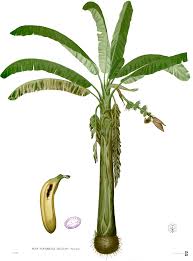
- Musaceae (Banana family): Similar large leaves and pseudostems. However, banana inflorescences are typically pendent, with large, usually purplish bracts covering rows of flowers, and the fruit is the familiar banana berry.
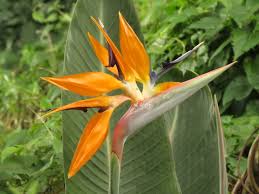
- Strelitziaceae (Bird-of-Paradise family): Includes Strelitzia (Bird of Paradise) and Ravenala (Traveler's Palm). Leaves can be similar. Strelitzia has a boat-shaped bract (spathe) from which highly modified, bird-like orange/blue flowers emerge. Ravenala has leaves arranged in a striking flat fan.
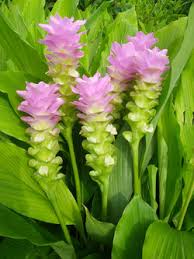
- Zingiberaceae (Ginger family): Often aromatic plants with different leaf arrangements (ligules often present). Inflorescences vary, sometimes cone-like spikes or borne basally near the ground; flowers have a distinctive labellum (lip) formed from fused staminodes.
- Cannaceae (Canna family): Leaves are broad but arranged differently. Flowers are large, showy, and highly asymmetric, with the colorful parts being modified staminodes, not bracts.
The key distinguishing feature of Heliconiaceae is the inflorescence structure with multiple, large, distichously arranged, colorful, boat-shaped bracts.
Field Guide Quick Reference
Look For:
- Large herb, banana-like leaves
- Pseudostems
- Terminal inflorescence (erect or pendent)
- Large, colorful, boat-shaped bracts
- Bracts arranged in two ranks (distichous)
- Small flowers hidden inside bracts
- Fruit a blue/purple drupe
- Tropical regions
Key Variations:
- Inflorescence orientation (erect vs. pendent)
- Bract color and shape
- Plant size
Notable Examples
A diverse genus with many horticulturally popular species.

Heliconia psittacorum
Parrot's Beak / Parrot Heliconia
A widely cultivated, smaller Heliconia species. Features erect inflorescences with relatively slender, pointed bracts, often orange or red with yellow or greenish tips. Numerous cultivars exist with varying colors. Relatively easy to grow in tropical/subtropical gardens.

Heliconia rostrata
Hanging Lobster Claw / False Bird of Paradise
One of the most iconic species, known for its large, pendent inflorescences with alternating, boat-shaped bracts that are typically bright red with yellow or green edges. Very popular in tropical landscaping and as a cut flower.

Heliconia bihai
Macaw Flower / Firebird
A robust species with large, erect inflorescences. Bracts are typically red, orange, or yellowish, often quite open and boat-shaped. It is one of the parent species for many popular horticultural hybrids (often grouped under H. x nickeriensis).
Phylogeny and Classification
Heliconiaceae belongs to the order Zingiberales, a well-defined and distinctive group within the commelinid clade of monocots. Zingiberales, often called the ginger order, is characterized by large herbaceous plants, often with pseudostems, large leaves with distinct petioles, and typically showy, zygomorphic flowers with inferior ovaries.
The order Zingiberales comprises eight families: Heliconiaceae, Musaceae (bananas), Strelitziaceae (bird-of-paradise), Lowiaceae, Zingiberaceae (gingers), Costaceae (spiral gingers), Cannaceae (cannas), and Marantaceae (prayer plants). Molecular phylogenetic studies place Heliconiaceae as one of the earlier diverging lineages within the order, often considered sister to the remaining families or part of a basal grade along with Musaceae, Strelitziaceae, and Lowiaceae.
Position in Plant Phylogeny
- Kingdom: Plantae
- Clade: Angiosperms (Flowering plants)
- Clade: Monocots
- Clade: Commelinids
- Order: Zingiberales
- Family: Heliconiaceae
Evolutionary Significance
Heliconiaceae holds considerable evolutionary and ecological interest:
- Zingiberales Diversity: Represents a distinct lineage within the Ginger order, showcasing unique modifications of the basic Zingiberales body plan, especially in inflorescence structure.
- Pollination Syndromes: Exhibits highly specialized co-evolutionary relationships with pollinators, particularly hummingbirds in the Neotropics, driven by bract color, nectar rewards, and flower morphology.
- Neotropical Radiation: The genus Heliconia has undergone significant species diversification throughout the tropical Americas.
- Ecological Roles: Important components of tropical ecosystems, providing food (nectar, fruit) and habitat (water held in bracts) for various animals.
- Horticultural Appeal: Their dramatic forms and colors have made them globally popular ornamental plants, illustrating aesthetic diversification.