
Musaceae
Banana Family
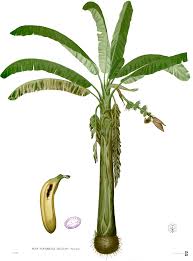
Musaceae, the banana family, is a small but economically vital family of monocots in the order Zingiberales. It contains just 3 genera (Musa, Ensete, Musella) and about 91 species of large, often tree-like perennial herbs native to the Old World tropics. They are characterized by pseudostems formed from rolled leaf sheaths, very large leaves with pinnate-parallel venation, distinctive inflorescences with large bracts, zygomorphic flowers, and fleshy berry fruits – the familiar bananas and plantains.
Overview
Though small in terms of species number, Musaceae holds immense global significance due to cultivated bananas and plantains (derived primarily from Musa acuminata and Musa balbisiana). These fruits are staple foods and major export crops for many tropical countries. Native to tropical regions of Africa, Asia, and Australia, bananas are now cultivated pantropically. The plants are giant herbs, lacking true woody stems; their apparent 'trunk' is a pseudostem composed of tightly rolled, overlapping leaf sheaths arising from an underground rhizome or corm.
Besides the edible Musa cultivars, the family includes Ensete (ensets or false bananas), some species of which are cultivated in Africa (especially Ethiopia) for their starchy corms and pseudostems rather than fruit, and Musella, a smaller ornamental genus from Asia. Various non-edible Musa species and Ensete are also grown ornamentally for their dramatic foliage and sometimes colorful inflorescences.
Musaceae members are strictly tropical or subtropical plants and are not native to Oklahoma (current location as of March 27, 2025). While they might be grown ornamentally in containers or as annuals during the warm season, they require protection from frost and freezing temperatures.
Quick Facts
- Scientific Name: Musaceae Juss.
- Common Name: Banana family
- Number of Genera: 3 (Ensete, Musa, Musella)
- Number of Species: Approximately 91
- Distribution: Native to Old World tropics (Africa, Asia, Australia); widely cultivated pantropically.
- Evolutionary Group: Monocots (Commelinids)
- Order: Zingiberales
Key Characteristics
Growth Form and Habit
Large to giant perennial herbs, often appearing tree-like but lacking true woody tissue. Growth arises from a substantial underground rhizome or corm. The aerial 'trunk' is a pseudostem formed by the tightly rolled, concentric bases (sheaths) of the leaves.
Leaves
Leaves are very large (among the largest simple leaves in the plant kingdom), simple, with entire margins that often become tattered by wind along the parallel side veins. They are arranged spirally around the pseudostem. Each leaf consists of a long, stout petiole, a massive blade with a prominent midrib, and numerous parallel veins extending perpendicularly or obliquely towards the margin (pinnate-parallel venation). Leaves are rolled longitudinally in bud.
Inflorescence
The inflorescence is large, complex, and terminal, emerging through the center of the pseudostem; it may be erect, oblique, or drooping (pendulous). It consists of a thick central axis bearing clusters (hands or cincinni) of flowers. Each cluster is subtended by a large, often colorful (red, purple, yellow, green), spathe-like bract. Typically, the basal bracts subtend female (or functionally female) flowers, while the distal bracts subtend male (or functionally male) flowers (plants are monoecious). Bracts often abscise as fruits develop.
Flowers
Flowers are unisexual (or functionally so) and zygomorphic (bilaterally symmetric). They are typically arranged in one or two rows within each bract cluster. Key features include:
- Perianth: Composed of 6 tepals in two whorls (3+3), but highly modified from the typical monocot pattern. Usually, the 3 outer tepals and 2 inner lateral tepals are fused together forming a 5-lobed or 5-toothed compound structure (often called the 'standard' or compound tepal). The remaining inner median tepal is typically free, smaller, and sometimes more membranous.
- Androecium: Stamens typically number 6 ancestrally, but usually only 5 are fertile and developed, arranged opposite the lobes of the compound tepal. The sixth stamen (opposite the free inner tepal) is either absent or present as a small staminode. Filaments are relatively thick; anthers are long and linear, opening via longitudinal slits. Female flowers possess staminodes.
- Gynoecium: Ovary is inferior, composed of 3 fused carpels forming 3 locules. Placentation is axile, with numerous ovules per locule. A single, long, slender style arises from a depression at the ovary apex, terminating in a capitate or slightly 3-lobed stigma. Male flowers possess a non-functional pistillode. Nectaries are located within the septa (partitions) of the ovary.
Fruits and Seeds
The fruit is a fleshy berry derived from the inferior ovary, commonly known as a banana or plantain. The berry wall develops from the ovary wall and surrounding receptacle tissue. In wild species, the fruit is filled with numerous hard, dark, rounded or angled seeds. However, most cultivated bananas and plantains are parthenocarpic (fruit develops without pollination/fertilization) and effectively sterile, lacking developed seeds or containing only tiny, aborted ovules.
Chemical Characteristics
Plants store starch, particularly in rhizomes and fruits (especially plantains). They contain phenolic compounds and tannins. Latex channels are sometimes present in various tissues but may not be conspicuous. Flower and bract colors are due to anthocyanins and carotenoids.
Field Identification
Identifying Musaceae is generally straightforward due to their massive size and distinctive features, especially in their native or cultivated tropical range.
Primary Identification Features
- Giant Herbaceous Habit: Large, non-woody plants often resembling trees.
- Pseudostem: Trunk-like structure formed by tightly rolled leaf sheaths.
- Very Large Simple Leaves: Massive blades with prominent midrib and pinnate-parallel venation, spirally arranged.
- Large Terminal Inflorescence: Drooping or erect structure with large, often colorful bracts covering clusters of flowers.
- Zygomorphic Flowers: Bilaterally symmetric flowers with modified tepals (usually 5 fused + 1 free).
- 5 Fertile Stamens (Usually): Sixth stamen absent or sterile.
- Inferior Ovary: Ovary located below the floral parts.
- Berry Fruit (Banana/Plantain): Fleshy fruit, often seedless in cultivated varieties.
Secondary Identification Features
- Inflorescence Orientation: Pendulous (Musa) vs. Erect (Ensete, Musella).
- Bract Color and Persistence: Color (red, purple, green, yellow) and whether they fall off early or persist.
- Presence of Seeds: Wild types have hard seeds; cultivated types usually lack seeds.
- Plant Size and Habit: Ensete often larger and monocarpic (dies after flowering); Musella much smaller.
Seasonal Identification Tips
- Tropical/Subtropical Climates: Growth, flowering, and fruiting can occur year-round, though influenced by rainfall and temperature.
- Post-Fruiting: The individual pseudostem that flowers and fruits typically dies, but the plant persists via suckers from the underground rhizome/corm (except in monocarpic Ensete).
- (Oklahoma Context: Not applicable for field identification in the wild. Ornamental plants would show growth during warm months and require winter protection or treatment as annuals).
Common Confusion Points
- Strelitziaceae (Bird-of-Paradise family): Also large herbs in Zingiberales, but leaves are distichous (arranged in two ranks, opposite each other), and flowers are highly modified for bird pollination, often emerging from boat-shaped bracts (Strelitzia, Ravenala).
- Heliconiaceae (Heliconia family): Large herbs with paddle-shaped leaves, often distichous. Inflorescences have brightly colored, boat-shaped, distichously arranged bracts; flowers differ in structure.
- Zingiberaceae (Ginger family): Often aromatic rhizomes, leaves distichous with a ligule (appendage at sheath/blade junction), flowers highly zygomorphic with a prominent labellum (fused staminodes).
- Cannaceae (Canna family): Leaves spiral or distichous, flowers highly asymmetric with colorful petal-like staminodes, fruit a warty capsule.
- Arecaceae (Palm family): True trees with woody trunks (not pseudostems), different leaf structure (palmate or pinnately compound), different flower/fruit structure.
Look for the combination: Giant herb + Pseudostem + Large spiral leaves with pinnate-parallel veins + Characteristic banana inflorescence/fruit.
Field Guide Quick Reference
Look For:
- Giant herb with pseudostem
- Very large, spiral leaves
- Pinnate-parallel leaf venation
- Large inflorescence with big bracts
- Zygomorphic flowers (5+1 tepals)
- Usually 5 fertile stamens
- Inferior ovary
- Fruit a berry (banana)
Key Variations:
- Inflorescence erect vs. drooping
- Bract color
- Presence/absence of seeds
- Plant size/longevity (Ensete vs. Musa)
- Genus (Musa, Ensete, Musella)
Notable Examples
The Banana family is small but includes globally important food crops and striking ornamentals.

Musa Cultivars (e.g., 'Cavendish')
Banana / Plantain
Cultivated bananas and plantains are mostly sterile, parthenocarpic hybrids derived primarily from wild species Musa acuminata and Musa balbisiana. 'Cavendish' group bananas dominate the global export market. Plantains are typically starchier and cooked before eating. Plants exhibit the characteristic pseudostem, large leaves, and drooping inflorescence leading to bunches of seedless berries.

Ensete ventricosum
Enset / Ethiopian Banana / False Banana
A massive, banana-like herb native to eastern Africa, particularly important as a staple food crop in Ethiopia. Unlike Musa, it is cultivated primarily for its starchy pseudostem base and underground corm, not its (inedible, seeded) fruit. Typically monocarpic, dying after flowering. Leaves are enormous, often with a reddish midrib.

Musa ornata
Flowering Banana
A species native to Southeast Asia, often grown ornamentally for its relatively compact size (compared to edible bananas) and attractive, erect inflorescence with pinkish or lilac bracts and flowers. Produces small, seeded, inedible fruits. Several ornamental cultivars exist.

Musella lasiocarpa
Chinese Dwarf Banana / Golden Lotus Banana
A smaller, more cold-tolerant species native to Yunnan, China, forming clumps of pseudostems. Grown ornamentally for its striking, large, erect, bright yellow inflorescence composed of persistent bracts, resembling a lotus flower. Flowers and small, seeded fruits are hidden within the bracts.
Phylogeny and Classification
Musaceae belongs to the order Zingiberales, a well-defined and distinctive group within the Commelinid clade of Monocots. Zingiberales are characterized by large herbaceous habits, often large leaves usually differentiated into petiole, sheath, and blade, specialized bracts, zygomorphic flowers, and inferior ovaries. Within the order, Musaceae is considered part of the basal grade, possibly sister to a clade containing Strelitziaceae and Lowiaceae, or sister to all other Zingiberales families except these two.
The family itself is clearly monophyletic, containing only three closely related genera (Musa, Ensete, Musella). The evolution within the family involved the development of the massive herbaceous form, the unique pseudostem structure, specialized inflorescences likely adapted for pollination by bats, birds, or mammals in wild species, and culminating in the human-driven selection for parthenocarpy and sterility in edible bananas, a process involving hybridization between wild Musa species.
Position in Plant Phylogeny
- Kingdom: Plantae
- Clade: Angiosperms (Flowering plants)
- Clade: Monocots
- Clade: Commelinids
- Order: Zingiberales
- Family: Musaceae
Evolutionary Significance
Musaceae represents an early diverging lineage within the specialized Zingiberales order. Its evolution showcases the potential for extreme size in herbaceous monocots through the development of the pseudostem. The family provides a compelling example of co-evolution with animal pollinators (bats, birds, mammals likely pollinated wild ancestors) shaping floral and inflorescence structure. Furthermore, the history of banana domestication, involving interspecific hybridization and selection for parthenocarpy and sterility, is a classic case study in plant breeding and human influence on plant evolution, resulting in one of the world's most important fruit crops.


