Sphagnaceae
Peat Moss Family
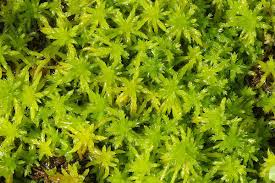
The Sphagnaceae is a unique and ecologically vital family containing the single genus Sphagnum, commonly known as peat mosses. They are characterized by their distinctive growth habit with a terminal capitulum and fascicles of branches, unique leaf cell structure (hyaline and chlorophyllose cells), absence of rhizoids, and globose capsules borne on pseudopodia. They dominate peatland ecosystems worldwide.
Overview
Sphagnaceae is a monogeneric family (containing only Sphagnum) and often placed in its own class, Sphagnopsida, reflecting its ancient and distinct evolutionary lineage separate from most other mosses. Peat mosses are among the most ecologically and economically important bryophytes on the planet.
They are the principal component of peatlands (bogs, muskegs, poor fens), covering vast areas, particularly in the Northern Hemisphere. Their unique physiology allows them to hold large amounts of water and acidify their environment, creating conditions that inhibit decomposition. This leads to the accumulation of partially decayed plant material known as peat, which represents a massive global store of carbon. Peat is harvested for horticultural use (as soil amendment) and historically as fuel.
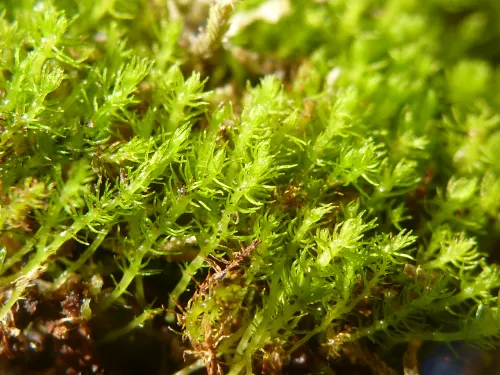
Sphagnum mosses are readily identifiable by their unique growth form, pale coloration, and specialized habitats.
Quick Facts
- Scientific Name: Sphagnaceae Dumort.
- Common Name: Peat Moss Family
- Number of Genera: 1 (Sphagnum)
- Number of Species: Approximately 200-350 (taxonomy complex)
- Distribution: Cosmopolitan, but most abundant and diverse in temperate, boreal, and arctic regions, particularly the Northern Hemisphere. Found in wet, acidic, nutrient-poor habitats.
- Evolutionary Group: Bryophytes - Mosses - Class: Sphagnopsida
Key Characteristics
Growth Form and Habit
Plants exhibit indeterminate apical growth, forming cushions, hummocks, lawns, or floating mats. Stems are erect and differentiated into a main axis and branches arranged in clusters called fascicles at nodes along the stem. Near the stem apex, the fascicles are densely crowded, forming a conspicuous head or capitulum. Each fascicle typically contains a mix of spreading branches and slender, drooping (pendent) branches that hang down along the stem. Mature plants lack rhizoids; anchorage and water absorption occur directly through the stem and pendent branches. Older parts of the plant die off below, contributing to peat accumulation.
Leaves
Leaves are dimorphic (stem leaves differ from branch leaves). Stem leaves are generally smaller, spaced apart, and vary in shape (triangular, lingulate, ovate) depending on the species section. Branch leaves are typically larger, more crowded, concave, ovate to lanceolate, and closely overlap (imbricate). Both types of leaves lack a costa (midrib) and possess a unique cellular structure (areolation): a network of narrow, living, green chlorophyllose cells surrounding large, empty, dead hyaline cells (hyalocysts). The hyaline cells are typically perforated by pores and reinforced by internal spiral or ring-like thickenings (fibrils). This structure allows Sphagnum to absorb and hold vast quantities of water (up to 20 times its dry weight).
Sporophyte (Capsule)
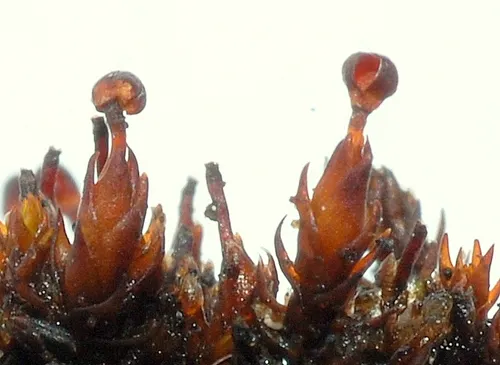
Sporophytes develop terminally on short, specialized archegonial branches, usually within the capitulum. The mature sporophyte consists of a foot embedded in the gametophyte and a nearly spherical, dark brown to blackish, glossy capsule. Uniquely, the capsule is elevated not by a seta (sporophytic stalk), but by a stalk of gametophyte tissue called a pseudopodium. The capsule has a distinct lid (operculum) but lacks a peristome. Spore dispersal occurs explosively: as the capsule dries, internal pressure builds up (to several atmospheres) until the operculum is forcibly ejected with an audible pop, dispersing the spores via an "air gun" mechanism.
Habitat and Ecology
Sphagnum species are quintessential inhabitants of wet, acidic, nutrient-poor environments. They are the dominant plants in bogs (ombrotrophic peatlands receiving water only from precipitation) and common in poor fens (minerotrophic peatlands with some groundwater influence), muskeg, wet heathlands, tundra, and acidic swamps or pools. They are ecosystem engineers: they absorb cations (like calcium, magnesium) from rainwater, releasing hydrogen ions, which acidifies their environment. This acidity, combined with waterlogging and phenolic compounds released by the moss, inhibits microbial decomposition, leading to the accumulation of peat. Different Sphagnum species often occupy distinct microhabitats within peatlands based on water level and chemistry (e.g., hummock-formers vs. hollow-dwellers).
Field Identification
Sphagnum mosses are generally easy to recognize as a group due to their unique appearance and habitat:
Primary Identification Features
- Distinctive Growth Form: Erect stems with a dense terminal head (capitulum) and clusters (fascicles) of branches along the stem.
- Habitat: Found in wet, acidic environments like bogs, fens, muskeg, or wet tundra.
- Pale Coloration: Often pale green, yellowish, whitish, pinkish, reddish, or brownish (due to hyaline cells and pigments).
- Spongy Texture: Plants feel soft and hold a lot of water when wet.
- Unique Leaf Cells: Network of large, clear hyaline cells and narrow green chlorophyllose cells (requires magnification but influences overall texture/appearance).
- Absence of Costa: Leaves lack a midrib.
- Globose Capsule on Pseudopodium: When fertile, the small, dark, spherical capsule raised on a gametophyte stalk is diagnostic.
Secondary Identification Features
- Lack of Rhizoids: Mature plants are not anchored by rhizoids.
- Dimorphic Leaves: Stem and branch leaves differ in shape and size (useful for species ID).
- Branch Arrangement: Number and type (spreading vs. pendent) of branches per fascicle are important for species ID.
Seasonal Identification Tips
- Year-Round Gametophytes: The distinctive vegetative structure is present year-round. Coloration may vary seasonally or with moisture levels.
- Sporophyte Maturity: Capsules typically mature and dehisce in summer. The blackish capsules on pseudopodia can be conspicuous.
Common Confusion Points
- Generally Unmistakable: The combination of growth form (capitulum/fascicles), habitat, pale color, and spongy texture makes Sphagnum unique among mosses.
- Other Bog Mosses: While other mosses like Polytrichum, Aulacomnium, or some Dicranaceae grow in bogs, they lack the characteristic Sphagnum structure (capitulum, fascicles, hyaline cells, pseudopodium).
- Superficial Resemblance: From a distance, dense carpets might resemble other mat-forming plants, but closer inspection reveals the unique moss structure.
Field Guide Quick Reference
Look For:
- Growth in bogs, fens, wet acidic sites
- Distinctive structure: terminal capitulum, branch fascicles
- Often pale green, whitish, reddish, brownish
- Spongy texture, high water retention
- Leaves lack costa
- Capsule (if present) globose, on pseudopodium
Key Variations:
- Single genus Sphagnum
- Many species differing in color, branch/leaf details
- Unique hyaline/chlorophyllose leaf cells
- No peristome
Notable Examples
Sphagnum is a large genus often divided into sections based on morphology. Different species dominate different microhabitats within peatlands.

Sphagnum palustre
Blunt-leaved Bog Moss / Pale Peat Moss
A common, robust species belonging to section Sphagnum. Often forms large cushions or carpets in moderately acidic fens and bog margins. Typically pale green to yellowish-brown. Characterized by broad, hooded branch leaves and large stem leaves. Branches in fascicles are stout.

Sphagnum capillifolium
Red Bog Moss / Small Red Peat Moss
A very common species in section Acutifolia, typically forming compact hummocks in bogs and wet heathlands. Often distinctly reddish or pinkish, especially in exposed sites, but can be green in shade. Has relatively small, pointed branch leaves and small, triangular stem leaves. Capitulum is usually rounded and dense.

Sphagnum cuspidatum
Feathery Bog Moss / Pointed Bog Moss
A species characteristic of wet hollows, pool margins, and floating mats in bogs (section Cuspidata). Often submerged or emergent. Plants are typically weak-stemmed, feathery, and pale green or yellowish. Branch leaves are long, narrow, and pointed (cuspidate), especially when submerged. Capitulum often star-shaped when viewed from above.
Phylogeny and Classification
Sphagnaceae (containing only Sphagnum) represents one of the most ancient and distinct lineages of extant mosses. Its unique combination of features (protonemal development, gametophyte structure with capitulum and fascicles, dimorphic leaves with hyaline/chlorophyllose cells, lack of rhizoids, sporophyte development with pseudopodium, explosive capsule dehiscence without peristome) clearly separates it from all other moss groups.
Consequently, it is placed in its own class, Sphagnopsida. Phylogenetic analyses consistently show Sphagnopsida diverging very early in moss evolution. It is often considered the sister group to the clade containing Takakiopsida + all other mosses, or sometimes sister to just Takakiopsida, with both lineages branching off before the diversification of the remaining major moss classes (Andreaeopsida, Polytrichopsida, Tetraphidopsida, Bryopsida).
Position in Plant Phylogeny
- Kingdom: Plantae
- Division: Bryophyta (Mosses)
- Class: Sphagnopsida
- Order: Sphagnales
- Family: Sphagnaceae
Evolutionary Significance
The Sphagnaceae family is profoundly significant for:
- Basal Phylogenetic Position: Representing a very early branch in moss evolution, crucial for understanding the origins and diversification of mosses.
- Unique Morphology and Physiology: Possessing a suite of unique anatomical and physiological traits (hyaline cells, water retention, acidification) not found elsewhere.
- Ecosystem Engineering: Actively modifying their environment to create and maintain peatland ecosystems, which are globally important habitats.
- Peat Formation and Carbon Sequestration: Being the primary peat-forming organisms, responsible for sequestering vast amounts of carbon over millennia, playing a critical role in the global carbon cycle.
- Economic Importance: Peat derived from Sphagnum is a major horticultural resource and has been used historically as fuel and for other purposes.