
Polytrichaceae
Haircap Moss Family
Polytrichaceae is a distinct family of robust, often large mosses (division Bryophyta), commonly known as haircap mosses. They are characterized by their complex internal stem structure, leaves bearing vertical photosynthetic lamellae on their upper surface, and unique sporophytes with an epiphragm membrane and a nematodontous peristome, often covered by a hairy calyptra.
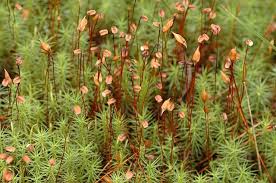
Overview
Polytrichaceae is the sole family in the order Polytrichales and class Polytrichopsida, representing a distinct and relatively early-diverging lineage within the mosses (Bryophyta). This family includes well-known genera like Polytrichum, Pogonatum, and Atrichum, comprising around 350-400 species distributed worldwide, particularly abundant in temperate, boreal, and alpine regions.
These mosses are typically larger and more structurally complex than many other moss groups. They often form extensive turfs or tall, erect stems, thriving in acidic soils, forests, bogs, heathlands, and disturbed areas. Their common name, "Haircap Moss," refers to the conspicuous hairy calyptra (a remnant of the archegonium) that covers the capsule in many species, especially in the genus Polytrichum.
Polytrichaceae exhibit several unique features, including specialized water and sugar conducting cells (hydroids and leptoids) in their stems, photosynthetic lamellae on their leaves that increase surface area, and a distinctive peristome structure controlling spore release.
Quick Facts
- Scientific Name: Polytrichaceae
- Common Name: Haircap Moss family
- Notable Genera: Polytrichum, Pogonatum, Atrichum
- Number of Species: Approximately 350-400
- Distribution: Cosmopolitan, especially temperate, boreal, alpine
- Evolutionary Group: Bryophytes - Mosses (Bryophyta) - Polytrichopsida - Polytrichales
Key Characteristics
Gametophyte
The gametophyte is typically robust, perennial, and acrocarpous (sporophyte produced at the tip of the main stem). Stems are erect, often tall for mosses, and display significant internal differentiation with a central strand of water-conducting hydroids and sometimes sugar-conducting leptoids, analogous to vascular tissue. Leaves are usually narrow (lanceolate to linear), rigid when dry, and possess a broad costa (midrib). A key feature is the presence of numerous vertical plates of chlorophyll-rich cells, called lamellae, covering the upper (adaxial) surface of the costa, greatly increasing photosynthetic surface area. Leaf margins are often toothed. Rhizoids are well-developed, anchoring the plant.
Reproductive Structures (Gametangia)
Plants are often dioicous. Antheridia are typically borne terminally in conspicuous splash cups formed by modified perigonial leaves, facilitating sperm dispersal by raindrops. Archegonia are terminal, surrounded by perichaetial leaves.
Sporophyte
The sporophyte consists of a foot, a long, rigid seta, and a capsule:
- Foot: Embedded in the gametophyte apex.
- Seta: Typically long, wiry, and persistent.
- Capsule (Sporangium): Usually erect or slightly inclined, often distinctly angular (4-6 sided, boxy) or cylindrical. It possesses stomata, typically restricted to the neck region. The capsule opens via an operculum (lid), which is often beaked.
- Peristome: Unique type called nematodontous, consisting of 32 or 64 (or multiples) short, stout, non-hygroscopic teeth made of whole cells. These teeth are attached at their tips to a distinctive membrane, the epiphragm, which stretches across the capsule mouth like a drumhead. Spores are released through pores between the teeth and the epiphragm.
- Calyptra: The remnant of the archegonium covering the developing capsule is large, persistent, and often densely covered in hairs (hence "haircap"), especially in Polytrichum and Pogonatum.
Spores
Spores are generally small, spherical, and appear smooth or finely papillose under light microscopy. They typically possess a faint trilete scar.
Cellular and Chemical Features
Gametophyte cells contain multiple small chloroplasts. The complex stem anatomy with hydroids and leptoids is notable. Cell walls may contain lignin-like phenolic compounds, contributing to their rigidity. The photosynthetic lamellae on the leaves are a major anatomical feature.
Field Identification
Identifying Polytrichaceae usually relies on their robust size, leaf structure (lamellae), and distinctive capsule features.
Primary Identification Features
- Robust, Erect Moss Habit: Often forming tall tufts or turfs.
- Leaves with Adaxial Lamellae: Vertical plates of cells on the upper surface of the broad costa (may require hand lens or dissection).
- Long Seta and Erect Capsule: Sporophyte usually tall and sturdy.
- Angular or Boxy Capsule Shape: Often 4-6 sided (e.g., Polytrichum).
- Epiphragm and Peristome: Membrane covering capsule mouth with short teeth attached (best seen after operculum falls, may need lens).
- Large, Hairy Calyptra: Conspicuous cap covering the capsule in many species.
Secondary Identification Features
- Rigid Leaves: Often stiff, especially when dry.
- Toothed Leaf Margins: Common in many species.
- Complex Stem Structure: Visible in cross-section.
- Habitat: Often on acidic soil, peat, rock ledges, or disturbed ground.
Seasonal Identification Tips
Look for features throughout the year:
- Gametophyte: Perennial and visible year-round. Leaf lamellae are always present. Male splash cups are conspicuous when present.
- Sporophyte: Mature capsules are often present for extended periods, typically maturing in summer or autumn. The persistent seta and capsule shape, along with the hairy calyptra (before it falls off), are useful identifiers even after spore release.
Common Confusion Points
Polytrichaceae can be confused with other large, erect mosses:
- Dicranaceae (e.g., Dicranum): Can form large tufts, but leaves lack lamellae, capsules are often curved or asymmetric, and peristome consists of 16 forked teeth (arthrodontous type).
- Bryaceae (e.g., Bryum): Some species are large, but leaves lack lamellae, capsules are typically nodding or pendulous, and peristome is double and arthrodontous.
- Mniaceae: Often have broad leaves, but lack lamellae, capsules are usually pendulous, peristome is different.
- Dawsoniaceae: Closely related (sometimes included in Polytrichales), very large mosses resembling Polytrichaceae, but peristome consists of numerous hair-like filaments, not stout teeth. (Distribution mainly Southern Hemisphere).
Field Guide Quick Reference
Look For (Gametophyte):
- Robust, erect moss
- Leaves with lamellae on costa (use lens)
- Stems internally complex
- Often toothed leaf margins
Look For (Sporophyte):
- Long, rigid seta
- Capsule erect, often 4-6 angled
- Epiphragm covering mouth
- Peristome of short, stout teeth (32/64)
- Large, hairy calyptra (often)
Notable Examples
This family includes some of the largest and most structurally complex mosses.

Polytrichum commune
Common Haircap Moss / Common Hair Moss
A very common, large moss forming extensive dark green turfs in bogs, heathlands, and forests worldwide. Stems can be tall (up to 40 cm). Leaves are long and narrow with numerous lamellae. The capsule is distinctly 4-angled (boxy) and covered by a large, golden-brown hairy calyptra.

Polytrichum juniperinum
Juniper Haircap Moss
Another cosmopolitan species, often found in drier, more exposed habitats than P. commune, such as sandy soils or disturbed ground. Its leaves have distinctive reddish-brown tips and margins that fold over the lamellae when dry, resembling juniper leaves. Capsule is 4-angled with a hairy calyptra.

Pogonatum urnigerum
Urn Haircap Moss
Widespread in temperate and boreal regions, often on disturbed mineral soil or rock crevices. Distinguished from Polytrichum by its cylindrical (not angular) capsule. It still possesses leaf lamellae and often a hairy calyptra. Plants are typically bluish-green.

Atrichum undulatum
Common Smoothcap / Catherine's Moss
Common in woodlands and shaded banks in the Northern Hemisphere. Its leaves are broader than Polytrichum, distinctly transversely undulate (wavy), and have fewer, lower lamellae restricted to the costa. The capsule is cylindrical and, importantly, the calyptra is smooth or nearly so (not hairy), hence "Smoothcap".
Phylogeny and Classification
Polytrichaceae is the sole family currently recognized in the order Polytrichales and the class Polytrichopsida. This class represents one of the major, early-diverging lineages of mosses (Bryophyta), distinct from the largest class Bryopsida (which contains Funariaceae, Bryaceae, etc.) and other basal classes like Sphagnopsida (peat mosses) and Andreaeopsida (lantern mosses).
The Polytrichopsida are considered highly specialized, exhibiting perhaps the most complex level of anatomical and morphological organization among mosses, particularly in their stem structure (with hydroids/leptoids) and leaf lamellae. Their unique nematodontous peristome structure also sets them apart from the arthrodontous peristomes found in Bryopsida.
Position in Plant Phylogeny
- Kingdom: Plantae
- Clade: Embryophytes (Land Plants)
- Division: Bryophyta (Mosses)
- Class: Polytrichopsida
- Order: Polytrichales
- Family: Polytrichaceae
Evolutionary Significance
Polytrichaceae is evolutionarily significant for:
- Early Moss Lineage: Represents a distinct branch in moss evolution, separate from the main Bryopsida radiation.
- Structural Complexity: Shows a high degree of anatomical complexity in both gametophyte (stem structure, leaf lamellae) and sporophyte (capsule, peristome), suggesting parallel evolution of complex traits in bryophytes.
- Adaptations to Terrestrial Life: Features like internal conducting strands and photosynthetic lamellae can be seen as advanced adaptations for terrestrial life compared to simpler mosses.
- Ecological Importance: Dominant components of certain ecosystems (e.g., peatlands, boreal forests), contributing significantly to biomass and ecosystem function.


