Rhabdoweisiaceae
Tooth-fringe Moss Family
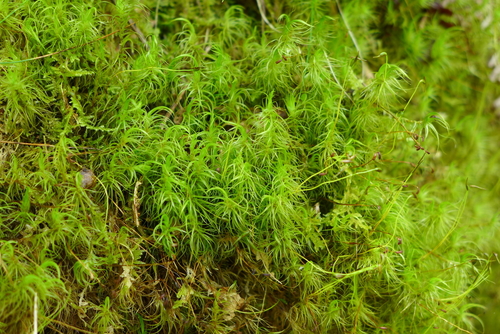
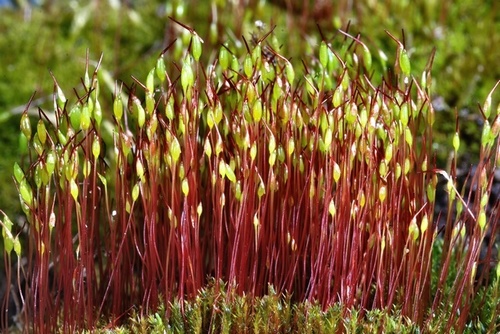
The Rhabdoweisiaceae is a family of small, tuft-forming acrocarpous mosses, typically found in the crevices of acidic rocks. They often have leaves that are crisped when dry and are distinguished by their erect, often ribbed capsules with a single peristome of 16 fragile teeth that are usually undivided or irregularly split, unlike the deeply forked teeth of related Dicranaceae.
Overview
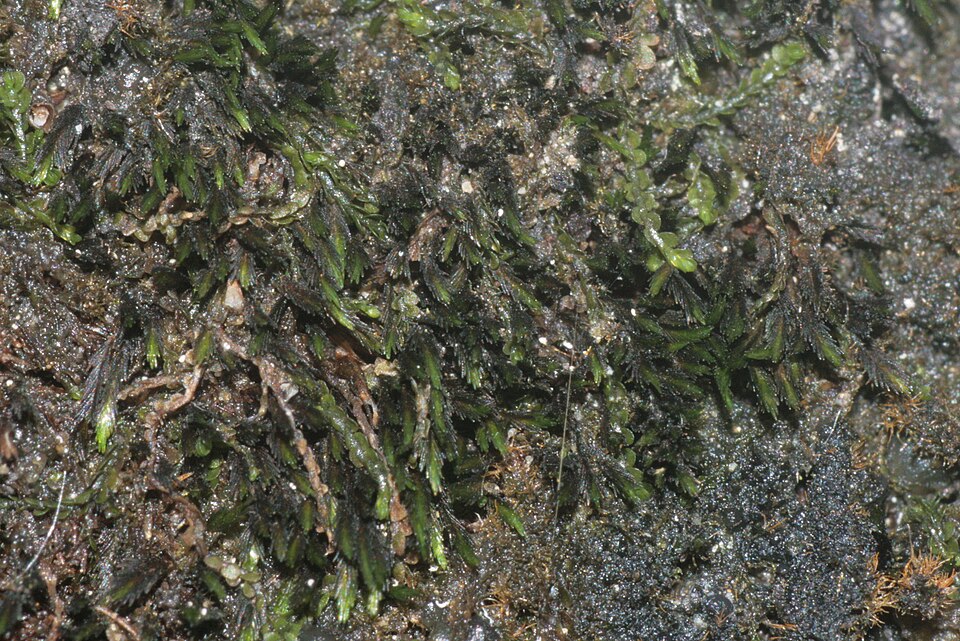
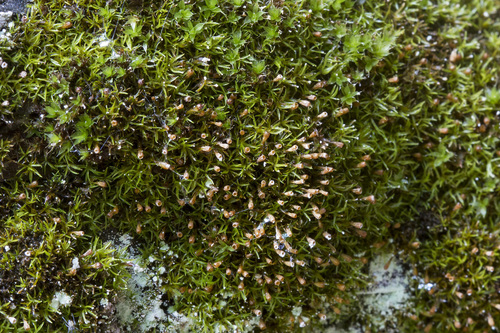
Rhabdoweisiaceae is a relatively small family within the order Dicranales, closely related to Dicranaceae and Ditrichaceae but distinguished primarily by its peristome structure. The family comprises small mosses that typically form dense cushions or tufts, characteristically inhabiting shaded crevices of acidic or non-calcareous rock faces, cliffs, and boulders, particularly in montane or northern regions.
Members of this family often have leaves that become noticeably crisped or curled when dry. While sharing the acrocarpous habit and general appearance with some other rock-crevice mosses, the combination of habitat, leaf posture, erect ribbed capsules, and the unique peristome (16 undivided or irregularly perforated/split teeth) helps define the Rhabdoweisiaceae.
Quick Facts
- Scientific Name: Rhabdoweisiaceae Limpr.
- Common Name: Tooth-fringe Moss Family (less common)
- Number of Genera: Approximately 10 (e.g., Rhabdoweisia, Amphidium, Oncophorus, Arctoa, Cynodontium - placement varies)
- Number of Species: Approximately 40-50
- Distribution: Widespread, particularly in temperate, boreal, montane, and arctic regions of both hemispheres.
- Evolutionary Group: Bryophytes - Mosses (Class: Bryopsida, Order: Dicranales)
Key Characteristics
Growth Form and Habit
Plants are acrocarpous, small, forming dense cushions or tufts, typically green to yellowish-green. Stems are erect, usually sparsely branched.
Leaves
Leaves are typically erect-spreading to spreading when moist, often becoming strongly crisped, curled, or contorted when dry. Leaf shape is commonly lanceolate to linear-lanceolate, usually tapering to an acute or acuminate apex. Margins are generally plane or slightly recurved, typically entire or finely toothed (serrulate) near the apex. The costa (midrib) is single and strong, usually ending in or just below the apex (percurrent or subpercurrent). Leaf cells are typically small, quadrate to short-rectangular, firm-walled, and can be smooth (Rhabdoweisia) or papillose (Amphidium). Alar cells at the basal corners are usually not strongly differentiated.
Sporophyte (Capsule)
Sporophytes are terminal on stems. The seta (stalk) is typically erect, straight, and varies from short to moderately long. The capsule is characteristically erect and symmetric, usually ovoid to short-cylindrical, often with a distinct, wide mouth when dehisced, and frequently becomes 8-ribbed or furrowed longitudinally when dry and empty. The operculum (lid) is typically conical to rostrate (beaked).
The peristome is single, consisting of 16 teeth. These teeth are typically narrow, lanceolate, often fragile, pale yellowish to reddish-brown, and usually vertically papillose-striate. Critically, the teeth are generally undivided, or irregularly perforated or split only partway, lacking the deep, regular division into two filiform forks seen in Ditrichaceae and most Dicranaceae.
Habitat
Characteristically found growing in crevices and on ledges of acidic or non-calcareous rock faces, cliffs, and boulders. They prefer shaded, often humid microhabitats, such as north-facing slopes, ravines, or near waterfalls. Some species, particularly in the genus Amphidium, may also grow epiphytically on tree bases or roots in humid environments.
Field Identification
Identifying Rhabdoweisiaceae often involves habitat, leaf posture, and capsule details:
Primary Identification Features
- Habitat: Typically in crevices of acidic rock faces in shaded, humid sites.
- Leaves Crisped/Curled When Dry: A common and noticeable feature.
- Erect, Wide-mouthed, Ribbed Capsule: Characteristic capsule shape and posture (when fertile).
- Peristome Teeth Undivided or Irregularly Split: Key microscopic feature distinguishing from Dicranaceae/Ditrichaceae.
- Small Acrocarpous Cushions/Tufts: Typical growth form.
Secondary Identification Features
- Lanceolate/Linear-Lanceolate Leaves: Common leaf shape.
- Strong Costa Ending Near Apex: Midrib usually prominent.
- Small Quadrate/Rectangular Leaf Cells: Smooth or papillose depending on genus.
- Short to Moderate Seta Length: Capsule often not elevated far above the leaves.
Seasonal Identification Tips
- Year-Round Gametophytes: Tufts are visible year-round; crisped appearance is best seen when dry.
- Sporophytes: Capsules often mature in summer or fall. The ribbed texture and wide mouth are persistent features on old capsules. Peristome teeth are fragile and may break off.
Common Confusion Points
- Dicranoweisia crispula (Dicranaceae): Grows on acidic rock, has strongly crisped leaves. Differs in having peristome teeth deeply split into two forks.
- Ditrichaceae: Some species grow on soil over rock, but peristome teeth are deeply split.
- Grimmiaceae: Common rock mosses, often with crisped leaves, but usually possess hyaline hair points, different cell structure (often sinuose walls), and different peristome types (teeth often broader, sometimes cribrose, or absent).
- Orthotrichaceae: Can grow on rock, have ribbed capsules, but usually have a double peristome and often immersed/emergent capsules on very short setae.
- Seligeriaceae: Very small rock crevice mosses, but leaves often subulate, capsule shape different, peristome teeth undivided but often shorter/broader.
Field Guide Quick Reference
Look For:
- Small acrocarpous tufts/cushions
- Habitat: Acidic rock crevices (shaded, humid)
- Leaves crisped/curled when dry
- Capsule erect, wide-mouthed, often ribbed
- Peristome teeth undivided or irregularly split (lens/microscope)
Key Variations:
- Genera Rhabdoweisia, Amphidium, Oncophorus etc.
- Leaf cells smooth or papillose
- Seta short to moderate
Notable Examples
Genera like Rhabdoweisia and Amphidium are characteristic of the family.

Rhabdoweisia fugax
Fugitive Tooth-fringe Moss
A common species found in acidic rock crevices in temperate and boreal regions. It forms small, bright green tufts with linear-lanceolate leaves that are strongly crisped when dry. Leaf cells are smooth. The erect, ovoid capsule is wide-mouthed and typically has 8 distinct ribs when dry. The peristome teeth are fragile, undivided or slightly perforated.

Amphidium mougeotii
Mougeot's Yoke-moss
Widespread in montane regions, forming dense, soft, yellowish-green cushions in damp, shaded rock crevices or occasionally on tree bases. Leaves are linear-lanceolate and strongly crisped when dry. Unlike Rhabdoweisia, the leaf cells of Amphidium are distinctly papillose (usually C-shaped papillae). Capsules are short-stalked, often partially hidden, ovoid, and ribbed, with fragile peristome teeth.
Phylogeny and Classification
Rhabdoweisiaceae is placed within the order Dicranales, representing a distinct lineage within this major group of acrocarpous mosses. It is characterized morphologically by the combination of often crisped leaves, erect ribbed capsules, and particularly by the single peristome with 16 teeth that are typically undivided or only irregularly perforated or split, contrasting with the deeply forked teeth of the closely related Dicranaceae and Ditrichaceae.
Molecular studies generally support the monophyly of Rhabdoweisiaceae (or its core genera) and its position within Dicranales. The inclusion of certain genera like Oncophorus or Cynodontium may vary depending on the specific phylogenetic analysis, sometimes placing them closer to Dicranaceae.
Position in Plant Phylogeny
- Kingdom: Plantae
- Division: Bryophyta (Mosses)
- Class: Bryopsida
- Order: Dicranales
- Family: Rhabdoweisiaceae
Evolutionary Significance
The Rhabdoweisiaceae family is significant for:
- Peristome Evolution: Illustrating variation in peristome structure within the Dicranales, particularly the retention (or secondary derivation) of undivided or irregularly split teeth compared to the deeply forked teeth common in the order.
- Habitat Specialization: Representing a lineage primarily adapted to the microhabitats of acidic rock crevices.
- Morphological Convergence: The crisped leaves are a feature shared with unrelated rock-dwelling mosses like Grimmiaceae, possibly representing convergent adaptation to desiccation stress.
- Dicranales Phylogeny: Helping to understand the relationships and character evolution within the Dicranales order.