Dicranaceae
Fork Moss Family
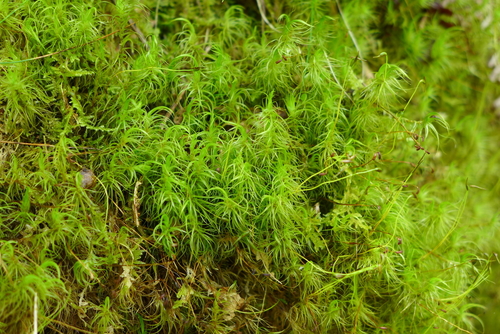
The Dicranaceae is a large and diverse family of acrocarpous mosses, commonly known as fork mosses due to their characteristic peristome teeth, which are typically split (forked) partway down. Members often form tufts or cushions, frequently have sickle-shaped leaves (falcate-secund), and are found worldwide in various habitats, often favouring acidic substrates.
Overview
Dicranaceae is one of the major families of mosses, belonging to the order Dicranales. It encompasses a wide range of morphologies, from small turf-forming species to large, robust cushion mosses. They are ecologically important in many ecosystems, particularly in boreal forests, peatlands, and alpine environments where they can be dominant ground cover.
Key features often associated with the family include the acrocarpous growth form, leaves that are frequently lanceolate or subulate and curved to one side (falcate-secund), often well-differentiated alar cells at the leaf bases, and sporophytes with typically inclined or curved capsules bearing a single peristome of 16 teeth split into forks. They are found globally, inhabiting soil, rock, decaying wood, tree bases, and peat.
Quick Facts
- Scientific Name: Dicranaceae
- Common Name: Fork Moss Family, Broom Moss Family (for some Dicranum species)
- Number of Genera: Approximately 40-50 (e.g., Dicranum, Dicranella, Campylopus, Paraleucobryum, Kiaeria)
- Number of Species: Approximately 600-900
- Distribution: Cosmopolitan.
- Evolutionary Group: Bryophytes - Mosses (Class: Bryopsida, Order: Dicranales)
Key Characteristics
Growth Form and Habit
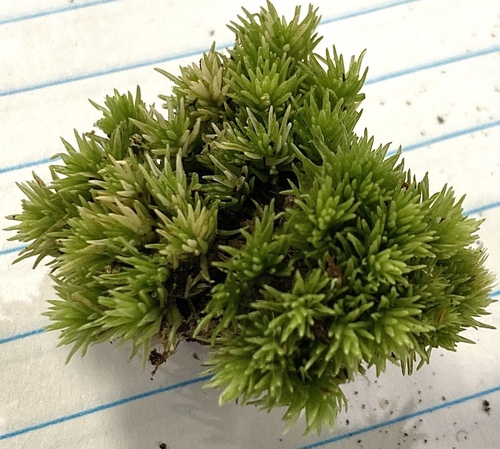
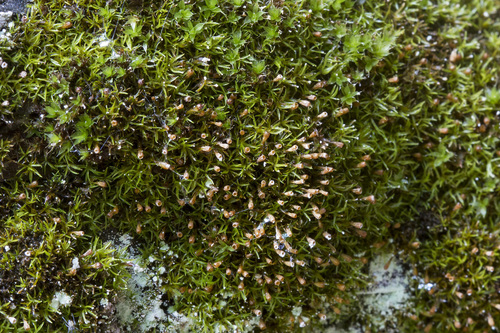
Plants are acrocarpous, growing erect or ascending, typically forming dense tufts, cushions, or extensive mats. Size ranges from small (a few mm) to large and robust (many cm tall). Stems are usually densely covered with leaves.
Leaves
Leaf shape is variable but commonly lanceolate to subulate (awl-shaped). A very frequent characteristic is that the leaves are falcate-secund, meaning they are sickle-shaped and strongly curved towards one side of the stem, especially near the shoot apex (giving a "combed" appearance). However, some species have straight or merely flexuose (wavy) leaves. The costa (midrib) is typically strong, single, and usually percurrent (reaching the tip) or excurrent (extending beyond). A key microscopic feature is the presence of differentiated alar cells at the basal corners of the leaves; these cells are often enlarged, inflated, thin-walled, and sometimes colored brownish or reddish. The shape, size, and number of rows of these alar cells are crucial for genus and species identification. Upper leaf cells vary from quadrate to rectangular or elongated, and can be smooth or papillose.
Sporophyte (Capsule)
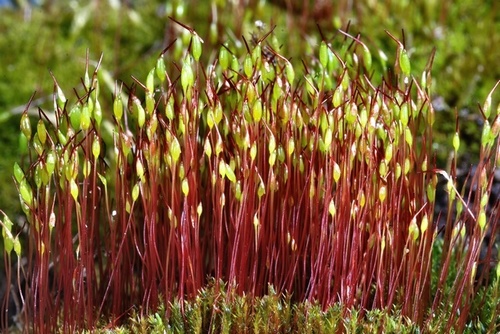
Sporophytes are terminal on stems. The seta (stalk) is usually long, stout, and erect or curved. The capsule is typically exserted (held well above the leaves), often inclined to horizontal, and frequently curved and asymmetric (arcuate). Some species have capsules that are strumose (possessing a goiter-like swelling at the base). Capsule shape is generally ovoid to cylindrical. The operculum (lid) is usually long-rostrate (long-beaked).
The peristome is highly characteristic (Dicranoid type): it is single, consisting of 16 teeth that are typically reddish or brownish. Each tooth is deeply divided (split) about halfway down into 2 (occasionally 3) filiform (thread-like) forks, which are often vertically striate below and papillose above.
Habitat
Dicranaceae occupy a very broad range of habitats but show a strong tendency towards acidic substrates. They are common on acidic soil and humus in forests, heaths, and tundra; on acidic rock outcrops; on decaying logs and stumps; at the base of trees; and are major components of peatland vegetation (bogs and fens). While some species tolerate neutral conditions, they are generally less common on strongly calcareous substrates.
Field Identification
Identifying Dicranaceae often involves recognizing a combination of features:
Primary Identification Features
- Acrocarpous Growth: Forming tufts or cushions with terminal sporophytes.
- Falcate-Secund Leaves: Sickle-shaped leaves curved to one side are very common (though not universal) in the family.
- Differentiated Alar Cells: Enlarged/colored cells at the basal corners of the leaves (best seen with a hand lens or microscope).
- Inclined, Curved Capsule: Capsules are often nodding or horizontal, and frequently asymmetric or strumose (except in some genera like Dicranella where they can be more erect).
- Dicranoid Peristome: 16 teeth split halfway into 2-3 forks (requires magnification).
Secondary Identification Features
- Habitat: Frequently found on acidic soil, rock, wood, or peat.
- Leaf Shape: Lanceolate to subulate leaves are common.
- Strong Costa: Midrib usually prominent.
- Size: Often medium to large mosses.
Seasonal Identification Tips
- Year-Round Gametophytes: The vegetative plants are typically perennial and identifiable year-round.
- Sporophyte Maturity: Capsules often mature from spring through fall, depending on species and climate. The distinctive shape and orientation of the capsule can be helpful even after spores are shed.
Common Confusion Points
- Ditrichaceae: Closely related, similar peristome. Generally smaller, leaves often straight-subulate, capsules usually erect and symmetric, alar cells usually undifferentiated, often on disturbed mineral soil.
- Leucobryaceae: Distinctive whitish color due to multi-layered leaf cells (hyalocysts and chlorocysts).
- Mniaceae / Bryaceae: Usually have broader, often bordered leaves, different alar cells, and typically a perfect double peristome.
- Some Pottiaceae: Can have lanceolate leaves but usually prefer calcareous habitats, often have papillose cells or hair points, and have different peristomes.
- Pleurocarpous Mosses (e.g., Hypnaceae): Some pleurocarps have falcate leaves (e.g., Hypnum), but their creeping growth habit with lateral sporophytes distinguishes them.
Field Guide Quick Reference
Look For:
- Acrocarpous tufts/cushions
- Leaves often falcate-secund (sickle-shaped, curved to one side)
- Differentiated alar cells (basal leaf corners)
- Capsule often inclined/curved/strumose
- Habitat often acidic (soil, rock, wood, peat)
Key Variations:
- Large family (Dicranum, Dicranella, Campylopus etc.)
- Peristome teeth split halfway (Dicranoid)
- Leaf shape lanceolate to subulate common
- Cosmopolitan distribution
Notable Examples
This large family includes many common and ecologically important mosses.

Dicranum scoparium
Broom Fork Moss
A very common, large, robust moss forming dense tufts or mats in acidic woodlands, heaths, and peatlands. Its leaves are strongly falcate-secund, giving patches a characteristic "swept" or "combed" appearance like a broom. The capsules are curved and inclined on long setae. A keystone species in many northern ecosystems.

Dicranella heteromalla
Silky Forklet Moss
A common, smaller moss forming silky, bright green or yellowish-green patches on disturbed, acidic soil banks, often along trails or streams. Leaves are narrow, flexuose (wavy) to somewhat secund, tapering to a fine point. Sporophytes are frequent, with long yellowish setae and small, erect or slightly inclined capsules.

Campylopus introflexus
Heath Star Moss
Originally from the Southern Hemisphere, this species has become an aggressive invasive in acidic habitats (heathland, peat bogs, dunes) in Europe and North America. It forms dense, dark green cushions. Its leaves are straight and rigid, ending in a long, hyaline (clear) hairpoint that is characteristically reflexed (bent backwards) when dry. Sporophytes are less common in invaded regions.
Phylogeny and Classification
Dicranaceae is the namesake family of the order Dicranales. It represents a major evolutionary radiation of acrocarpous mosses, characterized by the distinctive Dicranoid peristome. The family, even in its modern circumscription, is large and diverse, and relationships among genera are still being refined by molecular studies.
The Dicranales order as a whole is a significant component of global moss diversity. Families within the order share features of the peristome and often aspects of leaf structure (like strong costae), but exhibit wide variation in habitat preference, gametophyte morphology (e.g., leaf arrangement, cell structure), and sporophyte details (e.g., capsule orientation).
Position in Plant Phylogeny
- Kingdom: Plantae
- Division: Bryophyta (Mosses)
- Class: Bryopsida
- Order: Dicranales
- Family: Dicranaceae
Evolutionary Significance
The Dicranaceae family is significant for:
- Major Acrocarpous Lineage: Representing one of the largest and most successful radiations of acrocarpous mosses.
- Ecological Dominance: Many species are dominant components of ground flora, especially in boreal, temperate, and montane ecosystems on acidic substrates.
- Morphological Diversity: Exhibiting a wide range of adaptations in leaf shape (e.g., falcate-secund), alar cell development, and capsule morphology within the constraints of the Dicranoid peristome.
- Indicator Species: Many species are indicators of specific environmental conditions, particularly soil acidity and moisture levels.