Phyllanthaceae
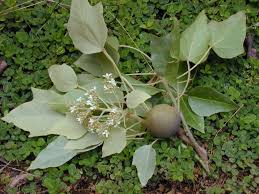
The Phyllanthaceae family, commonly known as the Leaf Flower Family, is a large family of flowering plants in the order Malpighiales. Previously often included within the Euphorbiaceae (Spurge family), Phyllanthaceae is now recognized as distinct based largely on molecular data. It comprises a diverse range of plants including herbs, shrubs, and trees, distributed predominantly throughout tropical and subtropical regions worldwide. The family is notable for genera like Phyllanthus, where flowers often appear to arise directly from leaf-like flattened stems (phylloclades) or along leafy branches.
Overview
Phyllanthaceae is a large and diverse family, containing around 50-60 genera and over 2000 species. Its members exhibit a wide array of growth forms, from tiny annual herbs to large forest trees. The family is most diverse in the tropics and subtropics but extends into temperate zones. Key characteristics often include simple, alternate leaves with stipules, small unisexual flowers typically lacking petals, a superior ovary usually with 3 chambers each containing 2 ovules, and fruit that is commonly a schizocarp (splitting into segments). Crucially, members of Phyllanthaceae generally lack the milky latex found in many Euphorbiaceae sensu stricto.
The genus Phyllanthus itself is enormous (potentially over 1000 species) and displays remarkable morphological variation, including "phyllanthoid branching" where lateral branches resemble compound leaves, and the unusual placement of flowers along these branches or even seemingly on the leaves themselves (actually on phylloclades). Other significant genera include Glochidion, known for specific pollination mutualisms with Epicephala moths, Breynia, often cultivated for ornamental foliage, and Antidesma, which includes species with edible drupes.
The separation of Phyllanthaceae from Euphorbiaceae was a major outcome of molecular phylogenetic studies of the order Malpighiales, clarifying relationships within this large group of flowering plants.
Quick Facts
- Scientific Name: Phyllanthaceae
- Common Name: Leaf Flower Family
- Number of Genera: Approximately 50-60
- Number of Species: Over 2000
- Distribution: Pantropical and subtropical, extending into temperate regions.
- Evolutionary Group: Eudicots - Rosids - Malpighiales
Key Characteristics
Growth Form and Habit
Extremely variable: includes annual or perennial herbs, shrubs, trees, and sometimes lianas. Some species exhibit succulent characteristics. Habit ranges from small ephemeral herbs to large canopy trees.
Leaves
Leaves are typically alternate (rarely opposite), simple, and usually have entire margins. Stipules are generally present and can be persistent, scale-like, or modified. A distinctive feature in many Phyllanthus species is "phyllanthoid branching" where determinate lateral branches bear small, distichous leaves and flowers, resembling pinnately compound leaves; these entire branch units are often deciduous. Some species have phylloclades (flattened, leaf-like stems that are photosynthetic).
Inflorescence
Flowers are often borne in axillary clusters (fascicles) or arranged in cymes, racemes, or spikes; sometimes flowers are solitary. Cauliflory (flowers on the trunk) or ramiflory (flowers on older branches) occurs in some tree species. In many Phyllanthus, flowers appear directly on the underside of leafy branches or phylloclades.
Flowers
Flowers are typically small, actinomorphic (radially symmetrical), and unisexual (plants monoecious or dioecious). Key features include:
- Perianth: Usually consists of a single whorl of (3-)5-6(-8) free or basally fused, sepal-like segments (tepals or sepals).
- Petals: Usually absent. If present, typically 4-6, small, and inconspicuous.
- Androecium (Male Flowers): Stamens (2-)3-10(-many); filaments can be free or fused together (monadelphous) into a central column. Anthers dehisce via longitudinal slits. A nectar disc or distinct glands are often present.
- Gynoecium (Female Flowers): Features a superior ovary composed of (2-)3(-15) fused carpels. Each carpel typically forms a locule containing 2 ovules (a key difference from Euphorbiaceae s.s., which usually has 1 ovule/locule). Styles are usually free or fused only at the base, often deeply bifid (forked) or multifid. A nectar disc is often present.
Fruits and Seeds
The most common fruit type is a schizocarp, which splits septicidally into segments (typically 3, two-seeded segments called cocci), often elastically dehiscent. Some genera produce fleshy drupes (e.g., Antidesma, Bischofia) or berries. Seeds typically number 2 per locule/segment and sometimes possess a fleshy appendage called a caruncle. Milky latex is typically absent.
Chemical Characteristics
The family produces a wide array of secondary metabolites, including various alkaloids, tannins, lignans (like phyllanthin), flavonoids, and terpenoids. Many species have a long history of use in traditional medicine systems worldwide.
Field Identification
Identifying Phyllanthaceae involves recognizing a combination of features, especially distinguishing it from the similar Euphorbiaceae family:
Primary Identification Features
- Habit: Highly variable (herbs, shrubs, trees).
- Leaves: Usually alternate, simple, with stipules present.
- Latex: Milky latex absent in most genera.
- Flowers: Small, unisexual, actinomorphic, petals usually absent, sepals/tepals (3-)5-6.
- Ovary: Superior, usually 3-carpellate.
- Ovules: Typically 2 ovules per locule (check dissected ovary or fruit segments).
- Fruit: Often a 3-parted schizocarp (splitting into segments), sometimes a drupe or berry.
- Phyllanthoid Branching: Look for deciduous lateral branches mimicking compound leaves in many Phyllanthus.
Secondary Identification Features
- Styles often bifid (forked).
- Flowers frequently clustered in leaf axils or appearing on underside of branches/leaves (Phyllanthus).
- Pantropical/subtropical distribution.
Seasonal Identification Tips
- Flowering and fruiting can occur year-round in tropical regions or seasonally in temperate zones.
- Fruit characteristics (schizocarp vs. drupe/berry, number of segments/seeds) are often crucial for identification.
Common Confusion Points
The main confusion is with Euphorbiaceae sensu stricto:
- Euphorbiaceae (Spurge Family): Often possesses milky latex; typically has only 1 ovule per ovary locule; Euphorbia genus has unique cyathium inflorescences. Phyllanthaceae usually lacks latex and has 2 ovules/locule.
- Other families in Malpighiales: Many families in this large order have simple alternate leaves. Check for unisexual flowers, absence of petals, ovary details (number of carpels/locules, ovule number), fruit type, and presence/absence of latex.
- Urticaceae/Moraceae: Also have small unisexual flowers, but often have specialized inflorescences (syconia in figs, catkins), different stipule types, or latex.
- The combination of alternate simple leaves with stipules, lack of latex, unisexual flowers usually lacking petals, superior ovary with 2 ovules per locule, and often schizocarpic fruit is characteristic of Phyllanthaceae.
Field Guide Quick Reference (Phyllanthaceae)
Look For:
- Habit: Herbs, shrubs, trees
- Leaves: Alternate, simple, stipules present
- Latex usually absent
- Flowers: Small, unisexual, petals usually absent
- Ovary: Superior, usually 3-carpellate
- Ovules: 2 per locule
- Fruit: Often 3-parted schizocarp, sometimes drupe/berry
- Phyllanthoid branching common
Key Distinctions:
- Lack of latex & 2 ovules/locule (vs. often latex & 1 ovule/locule in Euphorbiaceae)
- No cyathia (vs. Euphorbia)
- Combination of features distinguishes from other families with simple leaves / small flowers
Notable Examples
Phyllanthaceae is a large family with many significant genera:

Phyllanthus spp.
Leaf Flowers
An enormous and highly diverse genus (potentially >1000 species) of herbs, shrubs, and trees found worldwide in tropics and subtropics. Characterized by phyllanthoid branching and flowers borne along the underside of these leafy branchlets. Includes medicinally important species and P. emblica (Amla).

Glochidion spp.
(Cheese Trees)
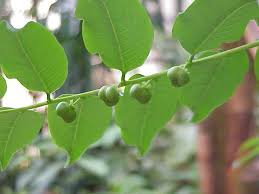
A large genus of shrubs and trees found in Asia, Australasia, and the Pacific islands. Known for their schizocarpic fruits resembling small cheese wheels and their obligate pollination mutualism with seed-predating Epicephala moths.

Breynia spp.
Snow Bush
A genus of shrubs and small trees from Asia and Australia. Breynia disticha (Snow Bush) is widely cultivated for its attractive foliage, often mottled with white, pink, and green.

Antidesma spp.
Bignay, Chinese Laurel
A genus of trees and shrubs found in the Old World tropics. Many species, like A. bunius (Bignay), produce edible drupes borne in pendant racemes or spikes, often used for jams, jellies, and wine.
Phylogeny and Classification
Phyllanthaceae is a major family within the large and diverse order Malpighiales, situated within the Rosid clade of eudicots. Its recognition as a distinct family represents a significant taxonomic change resulting from molecular phylogenetic analyses, which showed that the traditional, broadly defined Euphorbiaceae was polyphyletic.
Phyllanthaceae comprises a large part of the former Euphorbiaceae sensu lato, specifically lineages lacking latex and typically having 2 ovules per ovary locule. It forms a well-supported monophyletic group. Within Malpighiales, its close relatives include families like Picrodendraceae and potentially Ixonanthaceae, while Euphorbiaceae sensu stricto (containing Euphorbia, Croton, etc.) forms a separate, related lineage within the same order.
Position in Plant Phylogeny
- Kingdom: Plantae
- Clade: Angiosperms (Flowering plants)
- Clade: Eudicots
- Clade: Rosids
- Order: Malpighiales
- Family: Phyllanthaceae
Evolutionary Significance
Phyllanthaceae holds considerable evolutionary significance:
- Its segregation from Euphorbiaceae highlights the power of molecular data in resolving complex phylogenetic relationships among morphologically diverse groups.
- It represents a massive evolutionary radiation across the tropics, showcasing incredible diversity in growth forms, morphology (e.g., phyllanthoid branching, phylloclades), and ecological adaptations.
- The family contains examples of highly specialized pollination mutualisms, such as the obligate relationship between Glochidion and Epicephala moths, providing models for co-evolutionary studies.
- Its pantropical distribution makes it a key component for understanding global biogeographic patterns.