Rhizophoraceae
Mangrove Family (Rhizophora & Relatives)
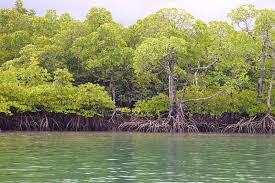
Rhizophoraceae is a family of trees and shrubs primarily known for containing the core group of "true mangroves" adapted to tropical and subtropical intertidal zones worldwide. Key characteristics include usually opposite, simple, leathery leaves with large interpetiolar stipules, and remarkable adaptations to saline, waterlogged environments such as specialized root structures (prop roots, pneumatophores) and viviparous propagules (seeds germinating on the parent tree). While famous for mangroves, the family also includes several inland, non-mangrove genera.
Overview
The Rhizophoraceae family comprises about 16 genera and 120 species. It is ecologically most significant for its mangrove members (genera Rhizophora, Bruguiera, Ceriops, Kandelia), which are foundational species in mangrove ecosystems globally. These ecosystems provide critical coastal protection, nursery habitats for fish and crustaceans, carbon sequestration, and resources for local communities.
The adaptations of mangrove Rhizophoraceae are textbook examples of evolution in response to environmental stress. Prop roots provide stability in soft mud, pneumatophores allow gas exchange in anaerobic sediments, salt exclusion or excretion mechanisms manage salinity, and vivipary ensures successful establishment of seedlings in the challenging intertidal environment. The family also includes several genera found in inland tropical rainforests, lacking these specialized mangrove adaptations but sharing core floral and vegetative traits.
Phylogenetically, Rhizophoraceae belongs to the order Malpighiales, closely related to Erythroxylaceae (the Coca family).
Quick Facts
- Scientific Name: Rhizophoraceae
- Common Name: Mangrove Family (Rhizophora & Relatives)
- Number of Genera: Approximately 16
- Number of Species: Approximately 120
- Distribution: Pantropical and subtropical coastlines (mangrove genera); inland tropical forests (other genera).
- Evolutionary Group: Eudicots - Malpighiales
- Habitat: Intertidal mangrove swamps; inland tropical forests.
Key Characteristics
Growth Form and Habit
Trees or shrubs. Mangrove genera are specifically adapted to saline, anaerobic, intertidal conditions.
Leaves
Leaves are usually simple, opposite (sometimes whorled in inland genera), with entire margins, and typically thick and leathery (coriaceous). A key feature is the presence of large, conspicuous interpetiolar stipules (located between the petioles of an opposite pair of leaves), which sheath the terminal bud and fall off early, often leaving a scar encircling the node.
Stems
Stems are woody. Mangrove genera often show specialized aerial root structures originating from the stem or branches.
Roots
Root systems are highly modified in mangrove genera. Common adaptations include arching prop roots or stilt roots (Rhizophora) arising from the trunk and branches, and/or erect, looping knee roots or peg-like pneumatophores (Bruguiera, Ceriops) arising from horizontal roots, facilitating gas exchange in anaerobic mud.
Sexuality and Inflorescence
Inflorescences are typically axillary, often appearing as simple or branched cymes, clusters (fascicles), or sometimes flowers are solitary. Flowers are usually perfect (bisexual).
Flowers
Flowers are actinomorphic (radially symmetrical), often borne on jointed stalks (pedicels), and usually 4-merous (parts in fours), though sometimes 5- to 16-merous. A hypanthium (floral cup) may be present.
- Calyx: Consists of 4 (or 5-16) sepals, which are typically thick, fleshy or leathery, and persistent, often enlarging in fruit.
- Corolla: Consists of 4 (or 5-16) petals, alternating with the sepals. Petals are often smaller than sepals, sometimes fleshy or membranous, and frequently fringed with hairs, deeply lobed, or appendaged. They may fall off early.
- Stamens: Usually twice the number of petals (e.g., 8 or 10), sometimes numerous (up to ~40). Filaments are often short; anthers typically open via longitudinal slits.
- Ovary: Position varies from superior to inferior, composed of 2-5 (rarely more) fused carpels, forming an ovary with 2-5 (or more) locules. Each locule usually contains 2 ovules. A single style is present, with a lobed or capitate stigma.
Fruits, Seeds, and Vivipary
The fruit type is variable, including fleshy berries or drupes, or sometimes dry capsules. A remarkable feature of the mangrove genera (Rhizophora, Bruguiera, Ceriops, Kandelia) is vivipary: the seed germinates while the fruit is still attached to the parent tree. The embryonic root (radicle) and hypocotyl grow out of the fruit, forming a long, buoyant, often pencil-shaped propagule. This propagule eventually detaches and falls, planting itself in the mud below or floating to a new location.
Chemical Characteristics
Plants in this family, especially the bark and leaves of mangrove species, are often rich in tannins, which likely provide defense against herbivores and pathogens and were historically used for tanning leather.
Field Identification
Identifying Rhizophoraceae, particularly the mangrove members, relies on a combination of habitat, vegetative features, and reproductive adaptations:
Primary Identification Features
- Habitat: Intertidal mangrove swamps (for mangrove genera) or inland tropical forests.
- Habit: Trees or shrubs.
- Leaves: Usually simple, opposite, entire, leathery.
- Stipules: Large, conspicuous interpetiolar stipules sheathing the terminal bud (often reddish or greenish), leaving scars at the nodes.
- Mangrove Adaptations: Presence of characteristic prop roots or pneumatophores in mangrove species.
- Viviparous Propagules: Observation of germinated seedlings (long, pencil-like hypocotyls) hanging from the parent tree in mangrove species.
- Flowers: Often 4-merous with persistent sepals and frequently fringed/hairy petals.
Secondary Identification Features
- Flower Position: Typically axillary cymes.
- Petal Details: Fringed, hairy, or lobed petals (requires close look).
- Fruit Type: Berry, drupe, or capsule (often seen with emerging propagule in mangroves).
Seasonal Identification Tips
- Year-round Features: Leaf arrangement (opposite), leathery texture, interpetiolar stipules (or scars), and specialized root structures (in mangroves) are visible year-round.
- Flowering/Fruiting: Viviparous propagules are often present for extended periods and are highly diagnostic for mangrove genera. Flowering times vary.
Common Confusion Points
Distinguishing Rhizophoraceae mangroves from other mangrove trees:
- Avicenniaceae (Black Mangroves - now often in Acanthaceae): Have opposite leaves but lack conspicuous interpetiolar stipules, possess peg-like pneumatophores, flowers are different (often 5-merous, bilabiate corolla), and fruit is a cryptoviviparous capsule (seed coat shed before dropping).
- Combretaceae (e.g., Lumnitzera): Have alternate leaves, lack specialized aerial roots (though may have cable roots), flowers are 5-merous, fruit is different (often woody/corky).
- Myrtaceae (e.g., Osbornia): Have opposite leaves but lack large interpetiolar stipules, possess aromatic oils (crushed leaves), different flower structure (often numerous stamens), fruit is a capsule or berry.
For inland genera, confusion might arise with other opposite-leaved tropical trees, but the large interpetiolar stipules are a good clue for Rhizophoraceae.
Field Guide Quick Reference
Look For:
- Tree/shrub (Mangrove or inland)
- Leaves usually simple, opposite, leathery
- Large interpetiolar stipules (or scars)
- Mangrove Genera:
- - Prop roots or pneumatophores
- - Viviparous propagules hanging from tree
- Flowers often 4-merous
- Petals often fringed/hairy
Key Variations:
- Habitat (mangrove vs. inland)
- Type of aerial roots (prop vs. pneumatophore)
- Propagule shape and size
- Flower part number (4 vs. 5+)
- Ovary position (superior vs. inferior)
Notable Examples
The family is best known for its mangrove genera, but also includes inland tropical trees:

Rhizophora mangle
Red Mangrove
A classic mangrove species found on tropical coastlines of the Americas and West Africa. Famous for its extensive network of arching prop roots that stabilize the tree in mud and aid aeration. Produces long, pencil-shaped viviparous propagules.

Bruguiera gymnorhiza
Large-leafed Orange Mangrove
Widespread mangrove tree in the Indo-West Pacific region. Characterized by knee roots (pneumatophores) that loop above the mud surface. Flowers often have reddish, persistent calyces. Produces cigar-shaped viviparous propagules.

Carallia brachiata
Freshwater Mangrove (misnomer)
An example of an inland, non-mangrove member of the family, found in tropical forests from India to Australia. It's a tree lacking mangrove root adaptations and vivipary. Has opposite leaves and interpetiolar stipules characteristic of the family, but flowers/fruits differ from mangrove genera. The common name is misleading.
Phylogeny and Classification
Rhizophoraceae is placed within the large eudicot order Malpighiales. Molecular phylogenetic studies consistently show a close relationship between Rhizophoraceae and Erythroxylaceae (the Coca family), with the two families often resolved as sister groups. This pairing forms a distinct clade within the diverse Malpighiales order.
The family itself is divided into several tribes, clearly separating the highly specialized mangrove genera (tribe Rhizophoreae) from the inland genera (e.g., tribes Gynotrocheae, Macarisieae). This suggests that the suite of mangrove adaptations, including vivipary and specialized roots, likely evolved once within the family lineage that invaded coastal habitats.
Position in Plant Phylogeny
- Kingdom: Plantae
- Clade: Angiosperms (Flowering plants)
- Clade: Eudicots
- Clade: Rosids
- Order: Malpighiales
- Family: Rhizophoraceae
Evolutionary Significance
Rhizophoraceae is highly significant from an evolutionary perspective:
- Adaptation to Extreme Environments: The mangrove genera provide outstanding examples of convergent evolution and adaptation to the multiple stresses of intertidal life (salinity, anoxia, unstable substrate).
- Vivipary: Represents a remarkable reproductive adaptation ensuring seedling survival and dispersal in aquatic environments.
- Ecological Keystone Species: Mangrove Rhizophoraceae are foundation species that create entire ecosystems (mangrove forests), supporting high biodiversity.
- Phylogenetic Context: Its position within Malpighiales helps understand the diversification of this major angiosperm order and the evolution of traits like woodiness and chemical defenses.