Osmundaceae
Royal Fern Family
Osmundaceae is a family of leptosporangiate ferns representing the only extant family in the ancient order Osmundales. It includes about 4-6 genera and 15-25 living species, known commonly as royal ferns, interrupted ferns, and cinnamon ferns. Found nearly worldwide, often in wet habitats, they are distinguished by their large, often dimorphic fronds, stipule-like flanges at the stipe base, and unique sporangia that are not clustered into sori and possess only a rudimentary annulus.
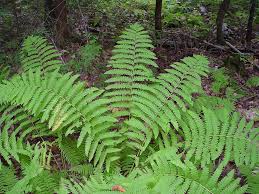
Overview
The Royal Fern family, Osmundaceae, represents an early branch in the evolutionary tree of leptosporangiate ferns, distinct from the large Polypodiales order. Often considered "living fossils," the family has an extensive fossil record dating back to the Permian period, indicating its ancient origins. Extant species are found globally, typically favouring moist environments like swamps, bogs, stream banks, and wet forests.
Members are generally large ferns with stout rhizomes that can form substantial tussocks or even short trunks over time. A key vegetative feature is the presence of wing-like stipular flanges at the base of the leaf stalks. Fronds are often dimorphic, meaning sterile (photosynthetic) and fertile (spore-bearing) fronds look different, or partially dimorphic (hemianthic), where only certain parts of a frond are fertile. Unlike most common ferns, their sporangia are relatively large, thick-walled, not grouped into distinct sori, and lack the typical spring-like annulus for spore dispersal.
Several species, like the Royal Fern (Osmunda regalis), Cinnamon Fern (Osmundastrum cinnamomeum), and Interrupted Fern (Claytosmunda claytoniana), are well-known and sometimes cultivated, though they can be slow-growing. The fibrous root mass from the rhizomes (osmunda fiber) was historically used as a potting medium for orchids.
Quick Facts
- Scientific Name: Osmundaceae
- Common Name: Royal Fern family
- Number of Genera: Approximately 4-6 extant (e.g., Osmunda, Osmundastrum, Todea, Leptopteris)
- Number of Species: Approximately 15-25 extant
- Distribution: Nearly cosmopolitan, primarily temperate and tropical, often in wet habitats.
- Evolutionary Group: Monilophytes - Leptosporangiate Ferns - Osmundales
Key Characteristics
Habit and Rhizome
Plants are perennial ferns. Rhizomes are typically stout, woody, creeping to ascending or erect, often forming large tussocks or short trunks due to persistent leaf bases and a dense mass of fibrous roots. Rhizomes lack scales but often possess multicellular hairs, especially when young.
Fronds (Leaves)
Fronds are typically large, sometimes very large (up to several meters).
- Stipe (Leaf Stalk): Stout, not jointed to the rhizome. A distinctive feature is the presence of broad, fleshy or wing-like stipular flanges at the very base of the stipe. Vascular bundles are typically arranged in a C-shape in cross-section.
- Blade (Lamina): Usually pinnately compound (once or twice pinnate). Fronds are often dimorphic (separate sterile and fertile fronds) or partially dimorphic (hemianthic) (fertile pinnae restricted to certain parts of an otherwise sterile frond). In some genera (Todea, Leptopteris), fronds are monomorphic (all fronds similar and potentially fertile).
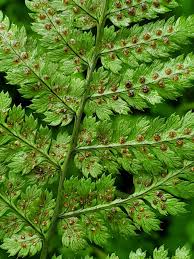
- Venation: Veins are typically free and dichotomously branching.
Reproductive Structures (Sporangia, Spores)
The reproductive structures are unique among living leptosporangiate ferns.
- Sporangia Arrangement: Sporangia are NOT clustered into sori. Instead, they are borne directly on the surface or margins of fertile pinnae or segments, often densely covering these specialized, non-leafy structures (in dimorphic/hemianthic species) or borne on the underside of vegetative-like fronds (in monomorphic species).
- Indusium: Absent (no protective covering over sporangia).
- Sporangia: Relatively large compared to those of Polypodiales. Develop from several initial cells and have walls more than one cell thick (features sometimes described as intermediate between eusporangiate and leptosporangiate development). They develop more or less simultaneously rather than sequentially. Crucially, they lack a typical vertical annulus. Instead, they possess a rudimentary annulus consisting of a lateral or apical patch/shield or line of thickened cells. Dehiscence (splitting) occurs along a longitudinal slit.
- Spores: Produced in large numbers (typically 128-512 per sporangium). Spores are trilete (three-armed scar), globose, relatively large, and distinctively green due to the presence of chlorophyll, making them short-lived.
Gametophyte
The haploid gametophyte (prothallus) is relatively large, green, photosynthetic, surface-living, often somewhat strap-shaped, elongate, or irregular (less commonly heart-shaped), and relatively long-lived compared to the spores.
Field Identification
Identifying Osmundaceae ferns involves recognizing their often large size, specific habitat preferences, unique stipe bases, frond dimorphism, and especially the distinctive sporangial arrangement:
Primary Identification Features
- Sporangia NOT in Sori: Spore capsules borne directly on fertile segments, often covering them (look like dense, clustered beads when mature), not in discrete round or linear sori.
- No Indusium: Sporangia are naked.
- Large Ferns in Wet Habitats: Often found in swamps, bogs, stream banks, wet woods.
- Stipular Flanges: Look for the wing-like extensions at the very base of the stipe (leaf stalk).
- Frond Dimorphism/Hemianthism: Fertile fronds or pinnae often look very different from sterile ones (e.g., non-leafy, brown/cinnamon-colored when mature).
- Stout Rhizome/Tussock/Trunk: Often forming a substantial base covered in old stipe bases and roots.
- Green Spores: If spores are visible (powdery deposit), they are green.
Secondary Identification Features
- Pinnately Compound Fronds: Blade typically divided once or twice.
- Free Venation: Veins do not form a network.
- Rudimentary Annulus: Sporangia lack the typical vertical ring of Polypodiales (requires magnification and knowledge).
Seasonal Identification Tips
- Fertile Fronds: The unique fertile fronds/pinnae are most obvious during the sporulating season (often spring/summer). They may persist after spore release.
- Sterile Fronds: Present throughout the growing season.
- Rhizome/Base: Visible year-round.
Common Confusion Points
- Large Polypodiales Ferns (e.g., Dryopteris, Matteuccia, Onoclea): Some wood ferns or ostrich/sensitive ferns can be large, dimorphic, and grow in wet areas. However, they all have sporangia clustered into distinct sori (round, linear, etc.) which are often covered by true indusia, and their sporangia have a typical vertical annulus. They lack the stipular flanges of Osmundaceae.
- Other Basal Fern Lineages (e.g., Marattiaceae): Also large ferns with complex sporangial structures, but Marattiaceae have true eusporangia (very large, fused into synangia) and different stipule types and anatomy.
Field Guide Quick Reference
Look For:
- Large fern, often in wet habitat
- Stout rhizome/tussock/trunk
- Stipular flanges at stipe base
- Fronds pinnately compound
- Often dimorphic or partially dimorphic
- Sporangia NOT in sori (on fertile pinnae)
- No indusium
- Sporangia large, rudimentary annulus
- Spores green, trilete
Key Distinctions:
- vs. Polypodiales (most common ferns): Osmundaceae sporangia NOT in sori, lack vertical annulus & indusium; have stipular flanges.
Notable Examples
Osmundaceae includes several well-known and distinctive ferns:

Osmunda regalis
Royal Fern
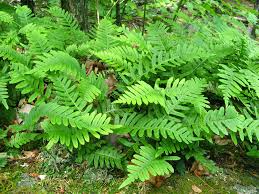
A large, majestic fern found in wetlands across much of the world. Fronds are bipinnate. It is partially dimorphic (hemianthic), with fertile pinnae clustered at the apex of otherwise sterile-looking fronds, resembling a 'flowering' panicle when mature.

Osmundastrum cinnamomeum
Cinnamon Fern
Common in eastern North America and East Asia in wet areas. Fully dimorphic: sterile fronds are pinnate-pinnatifid and green, while separate fertile fronds emerge centrally, are non-leafy, covered in cinnamon-brown sporangia, and wither early.

Claytosmunda claytoniana
Interrupted Fern
Found in eastern North America and East Asia. Named for its partially dimorphic fronds where several pairs of fertile, sporangia-bearing pinnae are located in the middle of the otherwise sterile frond blade, 'interrupting' the pattern of green leaflets.

Todea barbara
King Fern
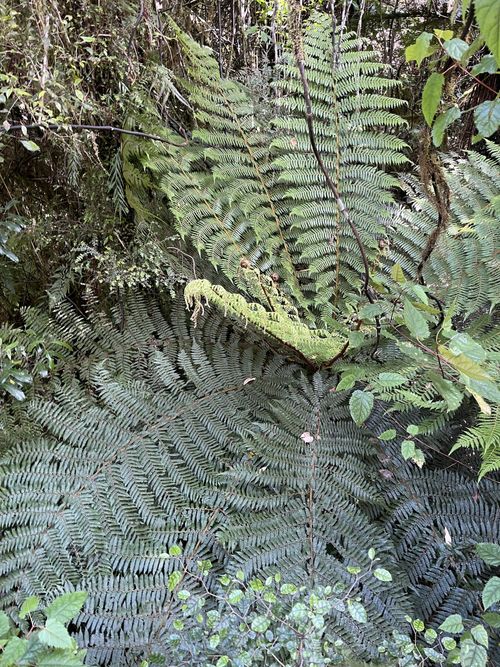
Native to South Africa, Australia, and New Zealand. This species forms a thick, fibrous trunk. Unlike many other Osmundaceae, its fronds are monomorphic (not dimorphic), with sporangia borne scattered on the underside of normal-looking pinnae.
Phylogeny and Classification
Osmundaceae is the sole surviving family of the ancient fern order Osmundales. This order represents one of the earliest diverging lineages within the Polypodiopsida (leptosporangiate ferns), branching off before the vast radiation that produced the Polypodiales order. Its fossil record extends back over 250 million years, making the family a lineage of "living fossils" that retains some features considered ancestral or intermediate among ferns.
Molecular phylogenetics confirms the isolated position of Osmundales relative to other extant fern orders like Polypodiales, Cyatheales (tree ferns), and Salviniales (water ferns). Relationships among the extant genera within Osmundaceae are well-studied, supporting the recognition of distinct lineages like Osmunda, Osmundastrum, Claytosmunda, and the Todea/Leptopteris group.
Position in Plant Phylogeny
- Kingdom: Plantae
- Clade: Tracheophytes (Vascular Plants)
- Clade: Monilophytes (Ferns and Horsetails)
- Class: Polypodiopsida (Leptosporangiate Ferns)
- Order: Osmundales
- Family: Osmundaceae
Evolutionary Significance
Osmundaceae holds considerable evolutionary importance:
- Ancient Lineage: Represents a very old group of ferns with a rich fossil history, providing insights into fern evolution through geological time ("living fossils").
- Basal Position: Its position as an early-diverging lineage within leptosporangiate ferns helps understand ancestral character states and the evolution of features found in more derived groups like Polypodiales.
- Unique Sporangial Development: Possesses sporangia with features considered intermediate between eusporangia and typical leptosporangia (e.g., thick walls, rudimentary annulus), offering clues about the evolution of sporangial structure.
- Frond Dimorphism: Exhibits various states of sterile/fertile frond differentiation, useful for studying the evolution of reproductive specialization in leaves.
- Biogeography: Its global distribution despite being an ancient lineage raises questions about past climate tolerance, dispersal, and vicariance.