Cyatheaceae
Scaly Tree Fern Family
Cyatheaceae is the largest family of tree ferns, belonging to the order Cyatheales. These impressive ferns are characterized by their upright, trunk-like stems (caudices) topped with a crown of large, pinnately compound fronds. They are distinguished from other tree fern families primarily by the presence of conspicuous scales on the petioles (stipes) and often elsewhere. Found mostly in tropical and subtropical montane forests, they are a prominent feature of these ecosystems.
Overview
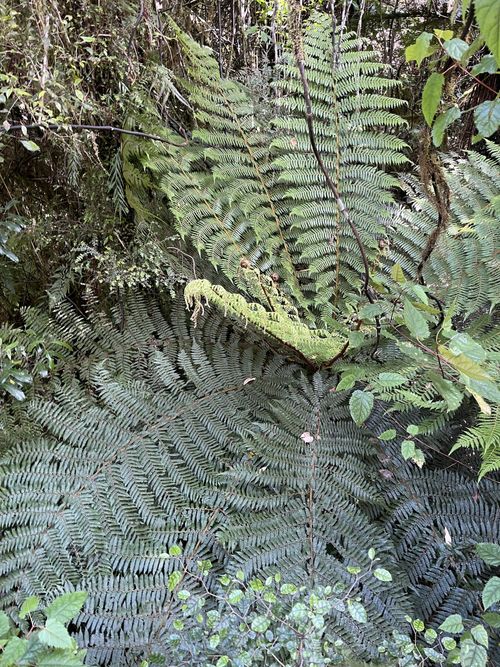
The Cyatheaceae, or scaly tree ferns, represent a major lineage of ferns that evolved an arborescent (tree-like) habit. Their trunks, formed from the stem often encased in persistent petiole bases and adventitious roots, can reach heights of over 20 meters in some species. The large, finely divided fronds, often several meters long, create a distinctive canopy-like crown.
These ferns are primarily inhabitants of humid, cool, tropical and subtropical montane regions (cloud forests), though some species extend into temperate rainforests (e.g., New Zealand, Tasmania) or lowland tropical forests. They thrive in high rainfall areas and are often found along streams, in gullies, or as understory components.
Unlike the Salviniales, Cyatheaceae are homosporous, producing only one type of spore. Reproduction occurs via spores released from sori located on the underside of fertile fronds. The presence and type of scales and the structure of the sori (especially the indusium, if present) are crucial for identifying genera and species within this large family.
Quick Facts
- Scientific Name: Cyatheaceae
- Common Name: Scaly tree fern family
- Number of Genera: Approx. 4-6 (e.g., Cyathea, Alsophila, Sphaeropteris, Gymnosphaera)
- Number of Species: Approximately 600+
- Distribution: Pantropical and subtropical, extending into some temperate regions, especially Southern Hemisphere. Primarily montane forests.
- Key Features: Tree-like habit (trunk/caudex), large compound fronds in a crown, conspicuous scales (not hairs) on stipes, homosporous, round sori with variable indusia.
- Evolutionary Group: Polypodiopsida (Leptosporangiate Ferns) - Cyatheales
Key Characteristics
Growth Form and Habit
Typically arborescent (tree-like) ferns with an erect, stout stem (caudex or trunk) that can range from short to over 20 meters tall. The trunk surface is often rough with persistent petiole bases and covered in adventitious roots.
Fronds (Leaves)
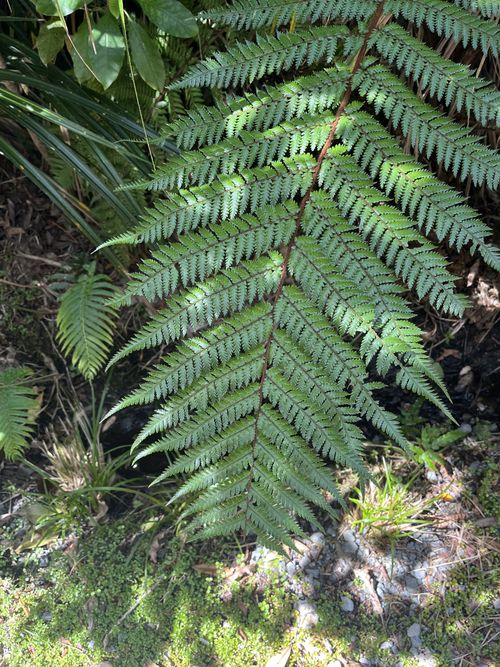
Fronds are large (often 1-5 meters long, sometimes more), borne in a terminal crown.
- Structure: Usually 2-pinnate or 3-pinnate (finely divided), though simpler forms exist.
- Vernation: Young fronds exhibit prominent circinate vernation (coiled fiddleheads), often covered in scales or hairs.
- Petioles (Stipes): Stipes are typically stout and bear characteristic scales near the base.
Scales
A defining feature is the presence of conspicuous scales, especially at the base of the petioles (stipes) and often on the trunk apex (crown) and costae/costules of the fronds. Hairs may also be present, but the scales are diagnostic for the family compared to related families like Dicksoniaceae which often emphasize hairs. Scale morphology (size, shape, color, margin structure, presence of marginal spines/setae) is critical for genus and species identification.
Sori and Indusial Characters
Cyatheaceae are homosporous. Spores are produced in sori located on the abaxial (underside) surface of fertile frond segments (pinnules).
- Sorus Shape: Sori are typically round.
- Sorus Position: Located on the veins, away from the margin.
- Indusium: The presence and type of indusium (a protective covering over the sorus) is highly variable and diagnostic for genera:
- Exindusiate: Lacking an indusium (e.g., some Alsophila).
- Cyathiform: Cup-shaped, surrounding the base of the sorus (characteristic of many Cyathea).
- Sphaeropteroid: Forming a complete sphere enclosing the young sorus, later splitting open irregularly (characteristic of Sphaeropteris).
- Scale-like or Hood-like: A small flap or hood partially covering the sorus.
Spores
Spores are trilete (with a three-pronged scar), typically tetrahedral in shape, and ornamentation varies.
Field Identification
Identifying Cyatheaceae involves recognizing the tree fern habit combined with the presence of scales and specific soral characteristics.
Primary Identification Features
- Tree-like Habit: An erect trunk (caudex) topped by a crown of large fronds.
- Large Compound Fronds: Fronds typically 2-pinnate or more complex, often several meters long.
- Scales Present: Look for conspicuous scales (not just hairs) on the petiole bases, trunk apex, and potentially along frond axes. Scale characteristics are key.
- Round Sori: Check the underside of fertile fronds for round clusters of sporangia (sori).
- Indusium Type (if visible): Observe the presence and shape of any protective covering over the sorus (cup-like, sphere-like, hood-like, or absent).
Common Confusion Points
- Other Tree Ferns (e.g., Dicksoniaceae): Families like Dicksoniaceae also form trunks, but often have hairs instead of prominent scales on the stipes, and their sori are typically marginal (at the edge of the pinnule) and protected by a two-valved indusium (formed by the reflexed leaf margin and an inner indusial flap).
- Large Terrestrial Ferns (e.g., some Dryopteridaceae, Blechnaceae): May have large fronds but lack a distinct, tall, woody trunk. Their rhizomes are usually creeping or form short, stout bases but not tree-like caudices. Sori and scale/hair types also differ.
- Young Palms or Cycads: These are seed plants, not ferns. Their leaves (though large and sometimes pinnate) have different textures, venation, and lack sori. Young stems are structured differently.
Field Guide Quick Reference
Look For:
- Tree-like trunk (caudex)
- Crown of large, pinnately compound fronds
- Scales on petiole bases/apex
- Round sori on frond underside
- Indusium present (various shapes) or absent
- Habitat typically moist forests
Distinguish From:
- Dicksoniaceae (often hairy, marginal sori)
- Large non-tree ferns (no trunk)
- Palms/Cycads (seed plants, different leaves, no sori)
Notable Examples
This large family includes many well-known tree ferns cultivated worldwide and important ecologically.

Cyathea
Cyathea Tree Fern
One of the largest genera, often characterized by cup-shaped (cyathiform) indusia covering the sori, though indusial characters vary. Includes many species found throughout the tropics and subtropics, like C. dealbata (Silver Fern of New Zealand, though sometimes placed in Alsophila).

Alsophila
Alsophila Tree Fern
Another large genus, often characterized by scale-like or absent indusia. Includes species like A. australis (Rough Tree Fern) from Australia and surrounding regions. Taxonomy between Cyathea and Alsophila can be complex.

Sphaeropteris
Sphaeropteris Tree Fern
Distinguished by its sori being completely enclosed within a globose indusium when young, which later splits open. Includes the commonly cultivated S. cooperi (Australian Tree Fern or Cooper's Tree Fern), known for its fast growth and lighter green, lacier fronds.
Phylogeny and Classification
Cyatheaceae is the core family of the order Cyatheales, one of the major orders within the leptosporangiate ferns (Polypodiopsida). This order represents a significant radiation of ferns, particularly characterized by the evolution of the tree habit in several families.
Phylogenetic studies place Cyatheales among the 'core leptosporangiates', distinct from earlier diverging lineages like Schizaeales or Salviniales. Within Cyatheales, Cyatheaceae is closely related to families like Dicksoniaceae, Metaxyaceae, and Cibotiaceae. The classification and relationships among the genera within Cyatheaceae itself (e.g., the scope of Cyathea vs Alsophila) have been subject to revision based on molecular data.
Position in Plant Phylogeny
- Kingdom: Plantae
- Clade: Tracheophytes (Vascular plants)
- Class: Polypodiopsida (Leptosporangiate ferns)
- Order: Cyatheales
- Family: Cyatheaceae
Evolutionary Significance
Cyatheaceae are important for understanding:
- Evolution of the Tree Habit: Represents one of the most successful lineages of arborescent ferns.
- Diversification in Montane Tropics: Shows extensive speciation associated with tropical mountain environments.
- Fern Morphology: Exhibits diversity in scale structure and indusial types, providing characters for phylogenetic studies.
- Ecological Roles: Significant structural components of many forest ecosystems.