Metaxyaceae
(No common name; often Metaxya Family)
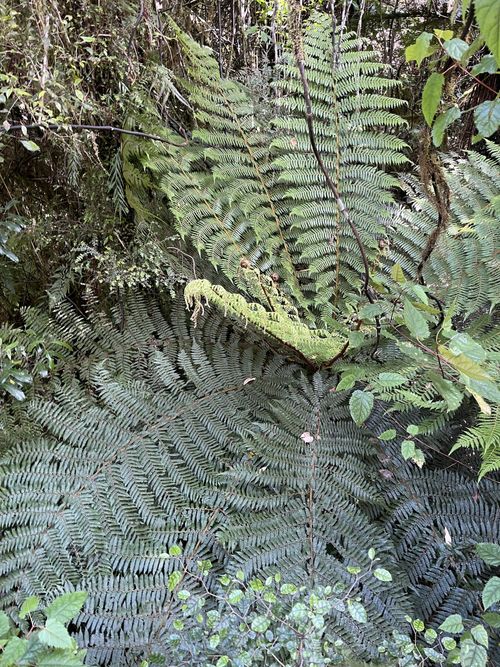
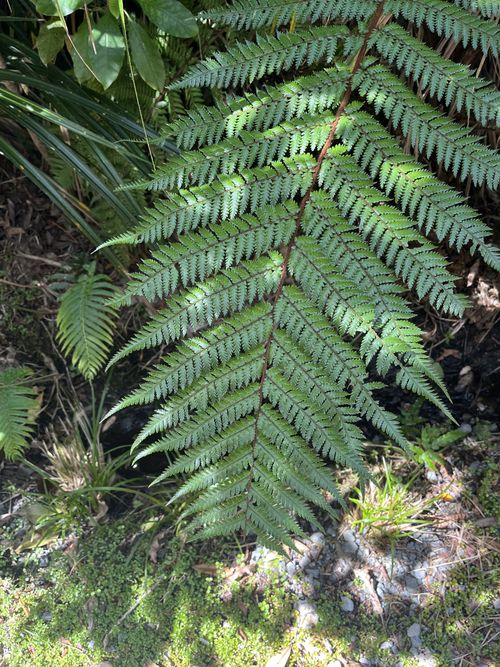
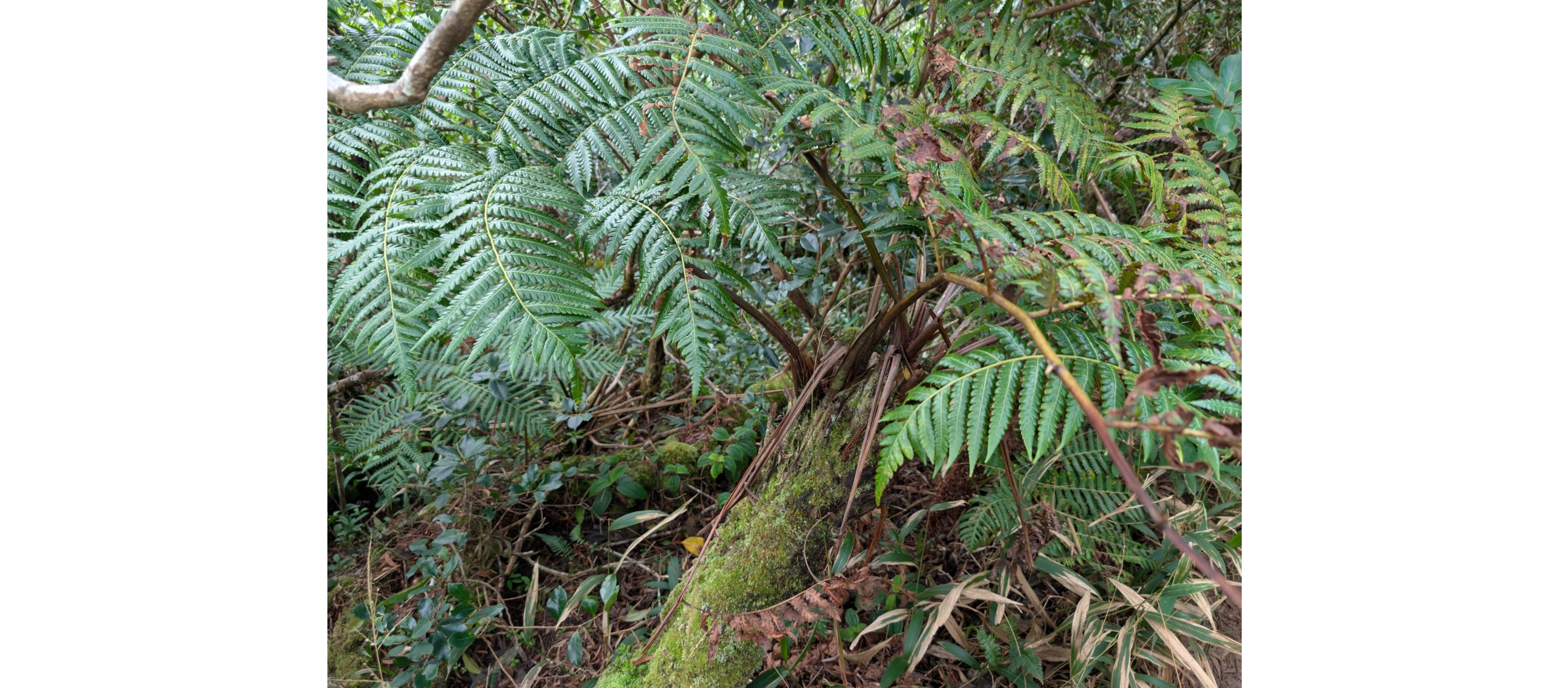
Metaxyaceae is a small family of large, terrestrial ferns in the order Cyatheales, containing the single genus Metaxya. These ferns are characterized by their stout, creeping to ascending rhizomes bearing scales, large simply pinnate fronds, and round sori lacking indusia (exindusiate). The family is restricted to the Neotropics.
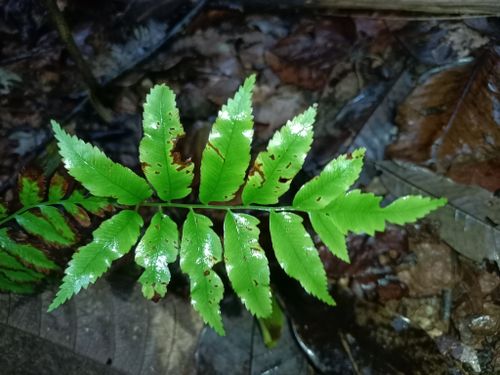
Overview
Metaxyaceae, represented solely by the genus Metaxya, is a distinct family within the Cyatheales order. These ferns are large, terrestrial plants typically found in lowland or lower montane tropical rainforests of Central and South America and the Caribbean. They prefer shaded, moist environments, often growing on forest floors or along stream banks.
Unlike many other families in the Cyatheales (like Cyatheaceae or Dicksoniaceae), Metaxya has relatively simple frond architecture, being simply pinnate with large, undivided pinnae. The rhizomes are stout, creeping to ascending (sometimes forming short trunks in old specimens), and covered in conspicuous scales, distinguishing them from the scale-less Plagiogyriaceae.
Reproductively, Metaxyaceae are homosporous. Their sporangia are grouped into round sori arranged in rows on the underside of the pinnae, but these sori notably lack any protective covering (indusium). The combination of large 1-pinnate fronds, scaly rhizomes/stipes, and exindusiate sori helps define this Neotropical family.
Quick Facts
- Scientific Name: Metaxyaceae
- Common Name: No widely accepted common name; Metaxya Family.
- Number of Genera: 1 (Metaxya)
- Number of Species: Approximately 2-6 (depending on taxonomy)
- Distribution: Neotropics (Central America, northern South America, Caribbean).
- Key Features: Terrestrial, stout rhizome/short trunk with scales, large 1-pinnate fronds, round exindusiate sori, homosporous.
- Evolutionary Group: Polypodiopsida (Leptosporangiate Ferns) - Cyatheales
Key Characteristics
Growth Form and Habit
Large terrestrial ferns with stout, creeping to ascending rhizomes, sometimes forming short, thick trunks in older plants. Rhizomes bear scales.
Fronds (Leaves)
Fronds arise from the rhizome apex, are large (up to 2.5 meters long), and relatively simple in structure for the order.
- Structure: Distinctly 1-pinnate (simply pinnate).
- Pinnae: Pinnae are large, numerous, lanceolate, stalked, with margins that are entire or serrated towards the apex.
- Texture: Herbaceous to somewhat leathery.
- Vernation: Young fronds show circinate vernation.
- Petioles (Stipes): Long, stout, bearing scales especially at the base.
Fronds are generally monomorphic (sterile and fertile fronds are similar in appearance).
Indument
Rhizomes and petiole bases are covered in conspicuous, broad, brown, non-clathrate scales. Hairs may also be present on costae or younger parts.
Sori
Metaxyaceae are homosporous. Sporangia are grouped into distinct sori on the abaxial (lower) surface of the pinnae.
- Sorus Shape: Sori are round.
- Sorus Position: Located on the veins, typically arranged in 1-3 irregular rows on each side of the costa, away from the margin.
- Indusium: Sori are exindusiate (lacking an indusium).
- Paraphyses: Simple or branched paraphyses (sterile filaments) are usually present among the sporangia within the sorus.
Spores
Spores are trilete, globose-tetrahedral, greenish when fresh, and typically have a smooth or slightly granular surface.
Field Identification
Identifying Metaxyaceae relies on recognizing the large, simply pinnate fronds combined with the presence of scales and round, exindusiate sori.
Primary Identification Features
- Frond Structure: Large and strictly 1-pinnate with numerous large, lanceolate pinnae.
- Indument: Presence of broad scales on the stout rhizome and stipe bases.
- Sori: Round sori arranged in rows on the underside of pinnae.
- Exindusiate: Sori lack any covering (indusium).
- Habit: Large terrestrial fern, often with a stout base or short trunk.
- Habitat: Lowland or lower montane tropical rainforests in the Neotropics.
Common Confusion Points
- Other large 1-pinnate ferns: Several fern families have large 1-pinnate species (e.g., some Blechnaceae, Dryopteridaceae, Tectariaceae, Marattiaceae). Distinguishing features include:
- Blechnum often has linear sori or dimorphic fronds.
- Dryopteridaceae/Tectariaceae usually have indusiate sori (though sometimes reduced or absent) and different scale types.
- Marattiaceae have very different sporangia (eusporangiate, often fused into synangia) and fleshy stipules at the stipe base.
- Tree Ferns (Cyatheaceae, Dicksoniaceae): Typically have much more divided fronds (2-pinnate or more) and often taller trunks. Cyatheaceae usually have scales, but sori may be indusiate; Dicksoniaceae often have hairs and marginal sori.
Field Guide Quick Reference
Look For (Metaxya):
- Large terrestrial fern
- Fronds strictly 1-pinnate
- Broad scales on rhizome/stipe base
- Round sori in rows
- Sori exindusiate (no covering)
- Neotropical rainforest habitat
Distinguish From:
- Other 1-pinnate ferns (check sori, indument, stipules)
- Tree ferns (more divided fronds, often taller trunks)
Notable Examples
The family contains only the genus Metaxya.

Metaxya
(No common name)
The sole genus of the family, found in Neotropical rainforests. Characterized by large, simply pinnate fronds, scaly rhizomes/stipes, and round, exindusiate sori. Metaxya rostrata is the most well-known and widespread species; a few other closely related species have been described more recently.
Phylogeny and Classification
Metaxyaceae is placed within the order Cyatheales. While representing a distinct lineage, its phylogenetic position is generally considered to be within the core group of Cyatheales, possibly sister to or nested near the clade containing Cyatheaceae, Dicksoniaceae, and Cibotiaceae, rather than being one of the earliest diverging branches like Thyrsopteridaceae or Loxsomataceae. Its exact relationships continue to be investigated with molecular data.
Its unique combination of features—large size, simple pinnate fronds (unusual for the order), presence of scales, and exindusiate sori—justifies its recognition as a distinct family within the Cyatheales radiation.
Position in Plant Phylogeny
- Kingdom: Plantae
- Clade: Tracheophytes (Vascular plants)
- Class: Polypodiopsida (Leptosporangiate ferns)
- Order: Cyatheales
- Family: Metaxyaceae
Evolutionary Significance
Metaxyaceae is interesting for:
- Phylogenetic Position: Helps understand the relationships among the major families within Cyatheales.
- Morphological Simplicity: Its 1-pinnate frond structure contrasts with the highly divided fronds common in related families, perhaps representing a secondary simplification or retention of an ancestral trait within its lineage.
- Neotropical Endemism: Contributes to the rich fern diversity of the American tropics.