Cibotiaceae
Cibotium Family / Manfern
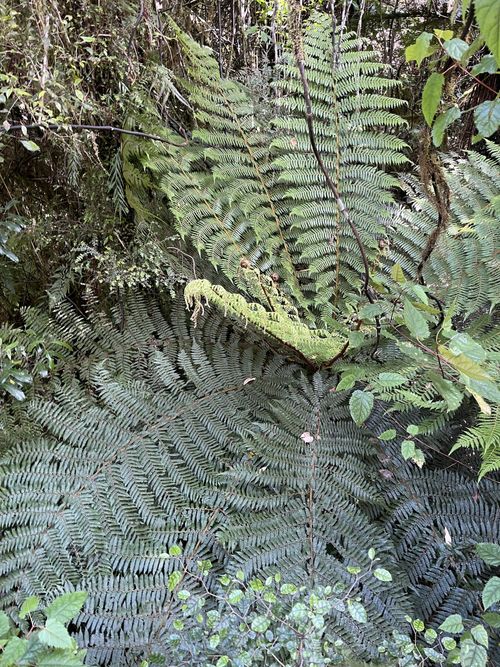
Cibotiaceae is a family of large tree ferns in the order Cyatheales, containing the single genus Cibotium. These ferns are renowned for their massive trunks and very large, often drooping fronds. A key characteristic is the dense covering of soft, typically golden-yellow or reddish-brown hairs (known as 'pulu' in Hawaii) at the trunk apex and stipe bases. Like Dicksoniaceae, they possess marginal sori protected by two-valved indusia. The genus has a disjunct distribution across Southeast Asia/Malesia, Hawaii, and Central America.
Overview
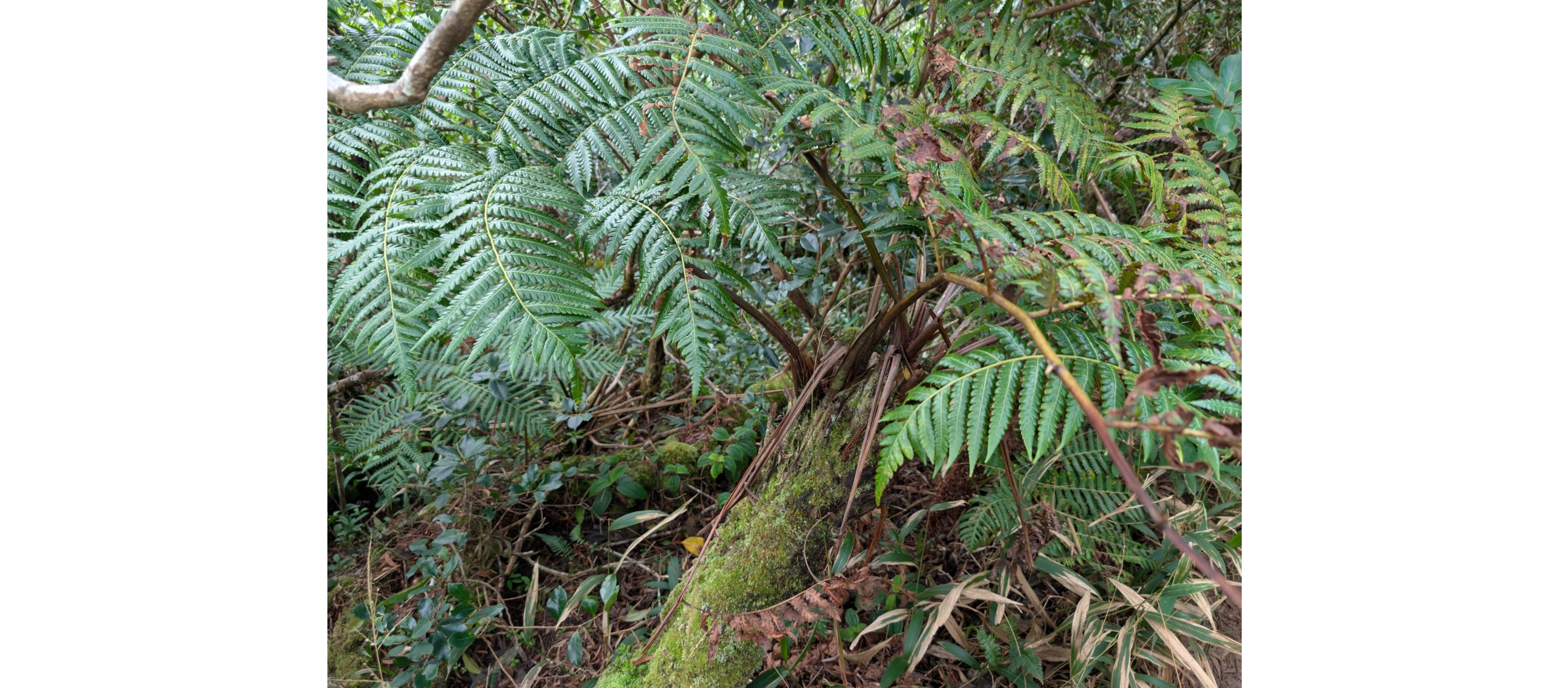
Cibotiaceae, comprising the genus Cibotium, is a family of impressive tree ferns belonging to the core group of the Cyatheales order. They are among the largest ferns, capable of developing massive, erect trunks reaching heights of 10 meters or more, crowned by enormous, arching fronds that can exceed 6 meters in length.
Perhaps the most striking visual feature is the dense mass of soft, silky hairs that covers the apical bud (where new fronds emerge) and the bases of the petioles. These hairs, often golden-yellow ('pulu' in Hawaiian species) or reddish-brown, historically had various uses, such as stuffing material. This hairy indument distinguishes them from the scaly Cyatheaceae.
Cibotium species are found in humid, wet forest environments, often in montane regions or cloud forests. Their distribution is notably disjunct, with distinct groups of species in Southeast Asia/Malesia, the Hawaiian Islands (where they are ecologically dominant native ferns), and Central America (Mexico to Costa Rica). Like their close relatives, they are homosporous, reproducing via spores produced in marginal sori with two-valved indusia.
Quick Facts
- Scientific Name: Cibotiaceae
- Common Name: Cibotium Family, Manfern, Hāpuʻu (Hawaii)
- Number of Genera: 1 (Cibotium)
- Number of Species: Approximately 9-11
- Distribution: Disjunct: SE Asia/Malesia; Hawaii; Central America.
- Key Features: Massive tree ferns, dense soft golden/reddish hairs ('pulu') on apex/stipes, very large compound fronds, marginal sori with bivalvate indusia, homosporous.
- Evolutionary Group: Polypodiopsida (Leptosporangiate Ferns) - Cyatheales
Key Characteristics
Growth Form and Habit
Massive arborescent (tree-like) ferns with stout, erect trunks (caudices) that can become very tall and thick, often covered in persistent stipe bases and adventitious roots.
Fronds (Leaves)
Fronds are very large (up to 6 meters or more), borne in a large terminal crown, often arching or somewhat drooping.
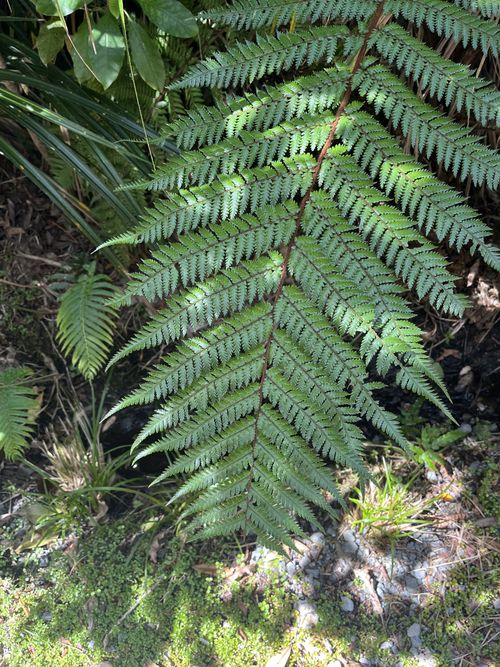
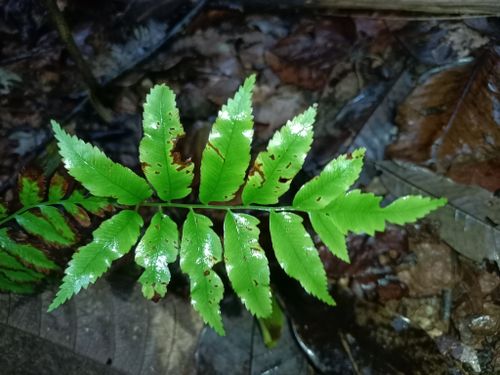
- Structure: Typically 2-pinnate to 3-pinnate, broadly lanceolate or triangular in outline.
- Texture: Often somewhat leathery; undersides may be glaucous (bluish-white) in some species.
- Vernation: Young fronds exhibit prominent circinate vernation, densely covered in the characteristic hairs.
- Petioles (Stipes): Very stout and fleshy at the base, densely covered in soft hairs.
Fronds are generally monomorphic.
Hairs (Indument)
Rhizome/trunk apex and petiole bases are characteristically covered in dense, soft, long, multicellular hairs. These hairs are often glossy and typically golden-yellow, orange, or reddish-brown. Scales are absent.
Sori and Indusial Characters
Cibotiaceae are homosporous. Spores are produced in sori located on the frond margins.
- Sorus Position: Sori are marginal or submarginal, borne at the terminus of veins on the ultimate segments (lobes).
- Indusium: Each sorus is protected by a distinctive two-valved (bivalvate) indusium, similar to Dicksoniaceae. The outer valve is formed by the modified leaf margin tissue, and the inner valve is a true indusium flap. The two valves are often somewhat unequal in size and firm in texture.
- Receptacle: Sporangia are attached to a receptacle within the indusium.
Spores
Spores are trilete, globose-tetrahedral, and ornamentation varies.
Field Identification
Identifying Cibotiaceae involves recognizing the massive tree fern habit, the characteristic dense, soft, often colourful hairs, and the marginal bivalvate sori.
Primary Identification Features
- Habit: Massive tree ferns with thick trunks.
- Indument: Dense covering of soft, long, golden-yellow to reddish-brown hairs ('pulu') on apex and stipe bases; absence of scales.
- Very Large Fronds: Fronds typically 2-3 pinnate and exceptionally large.
- Marginal/Submarginal Sori: Sori located at or near the edge of the ultimate frond segments.
- Bivalvate Indusium: Sori protected by two distinct flaps.
Common Confusion Points
- Dicksoniaceae: Also hairy tree ferns with similar bivalvate sori. Cibotium often has more massive trunks and typically softer, more brightly coloured (golden/reddish) hairs compared to the often stiffer, duller brown hairs of many Dicksonia species. Frond size can also be larger in Cibotium.
- Cyatheaceae: Distinguished by the presence of prominent scales (not just hairs) and usually non-marginal, non-bivalvate sori.
Field Guide Quick Reference
Look For (Cibotium):
- Massive tree habit
- Dense, soft, golden/reddish hairs (pulu)
- Very large (2-3 pinnate) fronds
- Marginal/submarginal sori
- Two-valved indusium
- Specific geographic ranges (Asia, Hawaii, C. America)
Distinguish From:
- Dicksoniaceae (hair color/texture, size)
- Cyatheaceae (scales, soral position/type)
Notable Examples
The family contains the single genus Cibotium, with species found across its disjunct range.

Cibotium
Manfern, Hāpuʻu
The sole genus, known for massive trunks and dense golden or reddish hairs ('pulu'). Key species include C. glaucum and C. menziesii (Hāpuʻu) endemic to Hawaii, C. barometz (Scythian Lamb or Woolly Fern) from Asia, known from folklore, and C. regale from Mexico and Central America.
Phylogeny and Classification
Cibotiaceae is a family within the core group of the order Cyatheales. Molecular phylogenetics places it as closely related to Cyatheaceae, Dicksoniaceae, and Metaxyaceae. The exact relationships among these four families are sometimes debated, but they consistently form a well-supported clade distinct from the earlier diverging lineages of Cyatheales.
The family's distinct morphology (especially the indument) and its unique disjunct distribution pattern (Asia, Hawaii, Central America) make it a significant component of the Cyatheales order. This distribution likely reflects a complex history involving ancient connections, dispersal, and extinction.
Position in Plant Phylogeny
- Kingdom: Plantae
- Clade: Tracheophytes (Vascular plants)
- Class: Polypodiopsida (Leptosporangiate ferns)
- Order: Cyatheales
- Family: Cibotiaceae
Evolutionary Significance
Cibotiaceae is important for:
- Tree Fern Diversity: Represents a distinct lineage of massive tree ferns within the core Cyatheales.
- Biogeography: Its unusual tripartite disjunct distribution is a classic puzzle in plant geography.
- Ethnobotany: The historical use of 'pulu' hairs connects the plants to human history, particularly in Hawaii.
- Conservation: Several species face threats due to habitat loss and past over-harvesting.