Melanthiaceae
Bunchflower Family / Trillium Family
Melanthiaceae is a family of perennial herbaceous flowering plants in the order Liliales (Monocots). Arising from rhizomes, bulbs, or corms, these plants are found predominantly in temperate regions of the Northern Hemisphere. The family includes well-known genera such as Trillium (trilliums), Veratrum (false hellebores), and Xerophyllum (beargrass), as well as genera formerly placed in Trilliaceae (Trillium, Paris). Many species contain toxic alkaloids or saponins.
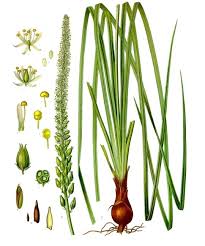
Overview
Melanthiaceae comprises about 16 genera and approximately 170 species of perennial herbs. They grow from underground storage organs like rhizomes, bulbs, or corms. The family's distribution is centered in temperate North America and eastern Asia, with fewer representatives in Europe and South America. They inhabit a range of environments, including woodlands, meadows, montane areas, and wetlands.
The family's circumscription has evolved with molecular phylogenetic studies. Notably, it now includes genera like Trillium and Paris, which were sometimes previously placed in their own family, Trilliaceae. Melanthiaceae is characterized by its often conspicuous, 3-merous flowers (typically with 6 tepals and 6 stamens), superior ovary (usually), and fruit type (capsule or berry). A significant number of species in this family, particularly in genera like Veratrum and Zigadenus (now often split, e.g., Toxicoscordion), are highly poisonous due to the presence of steroidal alkaloids and saponins.
Quick Facts
- Scientific Name: Melanthiaceae
- Common Name: Bunchflower Family, Trillium Family
- Number of Genera: Approximately 16
- Number of Species: Approximately 170
- Distribution: Primarily temperate Northern Hemisphere, some S. America/Asia.
- Habit: Perennial herbs from rhizomes, bulbs, or corms.
- Evolutionary Group: Monocots - Liliales
- Toxicity: Many species contain toxic alkaloids/saponins (e.g., Veratrum, Zigadenus).
Key Characteristics
Growth Form and Habit
Perennial herbs regenerating from underground rhizomes, bulbs, or corms. Stems are typically erect and unbranched below the inflorescence.
Leaves
Leaves are simple, entire, with parallel venation (monocot feature), and typically sheathing at the base. Arrangement is variable: leaves can be all basal, arranged alternately along the stem (often broad and sometimes pleated, e.g., Veratrum), or distinctively arranged in one or more whorls on the stem, often just below the flower or inflorescence (e.g., Trillium, Paris).
Inflorescence
Inflorescences are usually terminal, taking the form of racemes, panicles, or umbel-like clusters. In some genera (Trillium, Paris), flowers are solitary and terminal.
Flowers
Flowers are usually actinomorphic (radially symmetrical), mostly bisexual, and typically 3-merous (parts in threes), though sometimes 4-merous (Paris). They are often showy but can be inconspicuous in some genera.
- Perianth: Typically consists of 6 distinct, free tepals arranged in two similar whorls (3+3), which are often petal-like (petaloid). In Trillium and Paris, the perianth is clearly differentiated into 3 green sepals and 3 colored petals. Tepals/petals are often persistent in fruit. Colors range from white, greenish, and yellowish to pink, purple, or deep maroon. Nectaries are often present at the base of the tepals or stamens.
- Androecium: Usually 6 stamens (rarely more, e.g., 8 in 4-merous Paris), arranged in two whorls of 3. Filaments are free. Anthers are typically basifixed or sometimes versatile, opening via longitudinal slits (or rarely apical pores).
- Gynoecium: The ovary is usually superior (rarely half-inferior), composed of 3 (rarely more) fused carpels (syncarpous), forming a 3-locular ovary. Placentation is axile, with few to numerous ovules per locule. There are typically 3 distinct styles that are free or fused only at the base, or sometimes a single style with a 3-lobed stigma.
Fruits and Seeds
The fruit is most commonly a capsule that splits open septicidally (along the partitions between locules) or loculicidally (along the back of each locule). In some prominent genera (Trillium, Paris), the fruit is a fleshy berry. Seeds are often numerous, sometimes flattened or winged, or may possess a fleshy appendage (aril or elaiosome, especially in Trillium) that attracts ants for dispersal (myrmecochory).
Chemical Characteristics
Many members of the family contain potent steroidal alkaloids (especially C-nor-D-homosteroidal alkaloids in Veratrum and Zigadenus relatives) and steroidal saponins. These compounds make many species highly toxic if ingested. Caution is strongly advised.
Field Identification
Identifying Melanthiaceae involves recognizing their monocot herb habit, specific leaf arrangements, floral structure, and potential toxicity:
Primary Identification Features
- Perennial Herb Habit: Arising from rhizomes, bulbs, or corms.
- Leaf Arrangement: Leaves basal, alternate, or distinctively whorled below the flower/inflorescence (Trillium, Paris). Parallel venation.
- 3-merous Flowers (usually): Flowers typically with 6 tepals (or 3 sepals + 3 petals) and 6 stamens.
- Superior Ovary (usually): Ovary positioned above other floral parts, typically 3-carpellate.
- 3 Styles or 3-lobed Stigma: Gynoecium structure often reflects the 3 carpels.
- Fruit a Capsule or Berry: Depending on the genus.
- Potential Toxicity: Be aware that many species, especially those resembling lilies or onions but lacking their scent (Veratrum, Zigadenus), are highly poisonous.
- Habitat/Range: Mostly temperate Northern Hemisphere woodlands, meadows, or wet areas.
Secondary Identification Features
- Tepals/Petals Often Persistent: Floral whorls may remain attached to the developing fruit.
- Nectaries Present: Often visible at the base of tepals or stamens.
- Seeds with Elaiosomes (Trillium): Fleshy appendages on seeds for ant dispersal.
Seasonal Identification Tips
- Flowering Season: Typically spring or early summer in temperate regions. Flowers are crucial for identification.
- Fruiting Season: Capsules or berries develop in summer/fall. Elaiosomes on Trillium seeds are visible upon fruit dehiscence.
- Vegetative Season: Leaf arrangement (basal, alternate, or whorled) and underground storage organs can be helpful clues. Pleated leaves of Veratrum are distinctive.
Common Confusion Points
Melanthiaceae can be confused with other monocot families, especially Liliales:
- Liliaceae (Lily Family - sensu stricto): Also perennial herbs from bulbs/rhizomes with 6 tepals and 6 stamens, superior ovary. Distinctions can be subtle, often involving style/stigma structure (Liliaceae usually single style with 3-lobed stigma), anther attachment (often versatile in Liliaceae), nectary position, and molecular data. Many genera formerly in Liliaceae are now placed elsewhere.
- Colchicaceae (Autumn Crocus Family): Herbs from corms/rhizomes, 6 tepals, 6 stamens, superior ovary with 3 distinct styles (similar to some Melanthiaceae). Often flower in autumn without leaves (Colchicum). Contain different toxic alkaloids (colchicine).
- Asparagales families (e.g., Asparagaceae, Amaryllidaceae): Can have similar flower structures (6 tepals, 6 stamens), but ovary is often inferior in Amaryllidaceae, and phytochemistry (e.g., presence of onion/garlic scents in Alliodeae) and seed coat structure differ.
- Alismatales families (e.g., Araceae, Alismataceae): Generally very different floral structures (spadix/spathe, apocarpous ovaries, etc.) or aquatic habits.
Field Guide Quick Reference
Look For:
- Perennial herb (Monocot) from rhizome/bulb/corm
- Leaves basal, alternate, or whorled
- Flowers usually 3-merous
- 6 tepals (petaloid) OR 3 sepals + 3 petals
- 6 stamens
- Superior ovary (usually 3 carpels)
- Often 3 styles or 3-lobed stigma
- Fruit a capsule or berry
- WARNING: Many species toxic
Key Variations:
- Leaf arrangement (basal/alt/whorled)
- Perianth (tepals vs sepals/petals)
- Fruit type (capsule vs berry)
- Presence/absence of elaiosomes
- Flower solitary vs. in raceme/panicle
Notable Examples
This family includes beautiful wildflowers as well as dangerously poisonous plants:

Trillium spp.
Trilliums, Wakerobins
Iconic woodland wildflowers of North America and Asia. Characterized by a single stem bearing a whorl of three leaves and a single terminal flower with 3 green sepals and 3 often showy petals (white, pink, red, maroon, yellow). Fruit is a berry-like capsule; seeds dispersed by ants attracted to elaiosomes.

Veratrum spp.
False Hellebores
Robust perennial herbs with thick rhizomes, large, broad, strongly pleated leaves arranged alternately, and terminal panicles of numerous, often greenish or whitish, star-shaped flowers. Found in temperate Northern Hemisphere. Highly poisonous due to steroidal alkaloids.

Zigadenus sensu lato (e.g., Toxicoscordion, Anticlea)
Death Camas
A group of bulbous perennials primarily from North America, known for being highly toxic (containing zygacine and other alkaloids). They typically have linear basal leaves and racemes or panicles of whitish or greenish, star-shaped flowers. The genus Zigadenus has been split; toxic species are now often in Toxicoscordion. Easily confused with edible relatives like onions (but lack onion smell).

Xerophyllum tenax
Beargrass
Native to western North America montane areas. Forms large clumps of tough, grass-like basal leaves arising from a woody rhizome. Produces a tall stalk bearing a dense raceme of numerous small, creamy white, star-shaped flowers. Important ecologically and culturally (used in basketry).

Paris quadrifolia
Herb Paris
A distinctive woodland herb from Europe and Asia. Typically has a single whorl of 4 (sometimes more) broad leaves below a single terminal flower. The flower usually has 4 narrow green sepals, 4 narrow yellowish petals, 8 stamens, and a superior ovary that develops into a dark blue-black berry. Considered poisonous.
Phylogeny and Classification
Melanthiaceae belongs to the order Liliales, one of the major orders of early-diverging Monocots. This order is distinct from other large monocot groups like Commelinids (containing Poales and Zingiberales) and Alismatales. Liliales is characterized by often showy flowers, typically with 6 tepals and 6 stamens, superior ovaries (mostly), and presence of nectaries often on the perianth.
Within Liliales, Melanthiaceae represents one of the main families. Its circumscription now includes the tribe Parideae (genera Trillium, Paris, Pseudotrillium), which was sometimes treated as a separate family Trilliaceae, based on strong molecular evidence. Melanthiaceae appears to be closely related to families like Petermanniaceae, Colchicaceae, Alstroemeriaceae, and the core Liliaceae sensu stricto.
Position in Plant Phylogeny
- Kingdom: Plantae
- Clade: Angiosperms (Flowering plants)
- Clade: Monocots
- Order: Liliales
- Family: Melanthiaceae
Evolutionary Significance
Melanthiaceae is significant for understanding monocot evolution:
- Diversity within Liliales: Showcases morphological diversity within the order, including variations in leaf arrangement (basal, alternate, whorled), perianth structure (tepals vs. sepals/petals), fruit type (capsule vs. berry), and underground storage organs.
- Inclusion of Trilliaceae: The merging of Trilliaceae (Trillium, Paris) into Melanthiaceae based on molecular data highlights how phylogenetic studies refine traditional classifications.
- Evolution of toxicity: The presence of potent steroidal alkaloids in several genera represents a significant chemical defense strategy.
- Dispersal syndromes: Exhibits different seed dispersal mechanisms, including wind dispersal (winged seeds), gravity/water (capsules), and ant dispersal (elaiosomes on berries/seeds).
- Biogeography: Its predominantly Northern Hemisphere temperate distribution provides insights into the historical biogeography of Liliales.