Liliaceae
Liliaceae, the lily family as narrowly defined (sensu stricto) under modern APG classifications, is a family of monocots in the order Liliales, comprising about 15 genera and roughly 700 species. These are typically perennial herbs growing from bulbs (sometimes rhizomes), predominantly found in temperate regions of the Northern Hemisphere. They are characterized by often large, showy flowers with 6 distinct, petaloid tepals (frequently spotted or lined), 6 distinct stamens, a superior ovary composed of 3 carpels, and fruit usually a capsule containing numerous flat or winged seeds. Many familiar 'lily-like' plants formerly included here are now placed in Asparagales families (Amaryllidaceae, Asparagaceae).
Overview
Once a vast, loosely defined family containing almost any monocot with 6 tepals and 6 stamens, Liliaceae has been dramatically restricted based on molecular phylogenetic data. The modern, strict definition (Liliaceae sensu stricto) includes primarily the true lilies (Lilium), tulips (Tulipa), fritillaries (Fritillaria), trout/fawn lilies (Erythronium), mariposa lilies (Calochortus), and a few related genera. Familiar plants like onions (Allium), asparagus (Asparagus), hyacinths (Hyacinthus), daylilies (Hemerocallis), hostas (Hosta), aloes (Aloe), and yuccas (Yucca) are now placed in different families within the order Asparagales.
The redefined Liliaceae are predominantly bulbous perennials native to temperate climates of the Northern Hemisphere. They are hugely important horticulturally, with Lilium and Tulipa representing two of the most significant groups of ornamental bulb flowers globally, cultivated in thousands of varieties. Other genera like Fritillaria, Erythronium, and Calochortus include prized species for rock gardens or woodland settings. While some species contain alkaloids or saponins and may be toxic if ingested (e.g., tulips, some fritillaries), the family lacks the widespread pungent sulfur compounds of Allioideae or the specific alkaloids of Amaryllidaceae.
In Oklahoma (current location as of March 27, 2025), native Liliaceae sensu stricto are represented primarily by species of Trout Lily (Erythronium, e.g., E. albidum), found in moist woodlands flowering in early spring. Mariposa Lilies (Calochortus) might occur in specific habitats in the west. Cultivated lilies (Lilium) and tulips (Tulipa) are, of course, common garden plants flowering in spring and summer, but are not native.
Quick Facts
- Scientific Name: Liliaceae Juss. (sensu stricto)
- Common Name: Lily family
- Number of Genera: Approximately 15-19
- Number of Species: Approximately 600-730
- Distribution: Primarily temperate regions of the Northern Hemisphere.
- Evolutionary Group: Monocots (Lilioid Monocots)
- Order: Liliales
Key Characteristics
Growth Form and Habit
Predominantly perennial herbs growing from bulbs, which are often composed of fleshy scales and possess contractile roots. Some genera grow from rhizomes or corms. Stems are typically erect, unbranched, and either leafy or appearing as a leafless scape bearing terminal flowers.
Leaves
Leaves are simple, with entire (smooth) margins and parallel venation. Arrangement varies: they can be basal, alternate along the stem, or distinctly whorled (Lilium, Fritillaria, Medeola). Leaf shape ranges from linear and grass-like to lanceolate, ovate, or elliptic. Bases sometimes sheathing.
Inflorescence
Flowers are often large and showy. They can be solitary and terminal (Tulipa, Erythronium, Calochortus), or borne in terminal racemes (Lilium sometimes), umbels (rarely true umbels), or panicles. Bracts may be present or absent.
Flowers
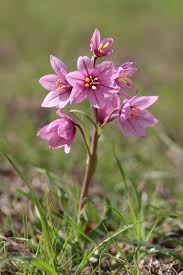
Flowers are usually bisexual, typically actinomorphic (radially symmetric), sometimes slightly zygomorphic, and usually large and visually conspicuous. They are hypogynous (superior ovary) and typically 3-merous in the perianth and androecium.
- Perianth: Composed of 6 distinct (free) tepals arranged in two similar whorls of 3 (3+3). Tepals are usually large, petaloid, and often brightly colored (white, yellow, orange, red, pink, purple). They frequently bear spots, lines, or marks, and often possess nectaries located near the base (appearing as grooves, pits, or patches).
- Androecium: Stamens number 6, arranged in two whorls of 3. Filaments are distinct, attached to the receptacle or the very base of the tepals. Anthers are relatively large, typically attached near the base (basifixed) or near the middle and able to pivot (versatile), opening via longitudinal slits. Pollen is typically monosulcate (single furrow).
- Gynoecium: Ovary is superior, composed of 3 fused carpels forming 3 locules. Placentation is axile, with typically numerous ovules per locule. A single style is usually present, often relatively long and conspicuous, terminating in a 3-lobed or capitate stigma.

Generalized Liliaceae flower: 6 distinct tepals (often showy/spotted), 6 stamens, superior 3-carpellate ovary with single style.
Fruits and Seeds
The fruit is characteristically a loculicidal capsule (splitting longitudinally through the locule walls into 3 segments), sometimes a septicidal capsule (splitting along the partitions). Rarely, the fruit is a berry (Medeola). Seeds are usually numerous, often flattened and sometimes winged, typically brownish. Endosperm is present, often fleshy or hard.
Chemical Characteristics
Members often contain steroidal saponins. Various alkaloids are present in some genera, such as tuliposides (causing 'tulip finger' dermatitis) in Tulipa and steroidal alkaloids (e.g., imperialine) in Fritillaria, which can be toxic. They lack the onion-like sulfur compounds of Allioideae and the characteristic Amaryllidaceae alkaloids. Calcium oxalate raphides are sometimes present.
Identification Basics
Identifying Liliaceae sensu stricto relies on recognizing the combination of bulbous habit, 6 distinct showy tepals, 6 stamens, and a superior ovary, distinguishing it from families containing similar-looking plants now excluded.
Primary Identification Features
- Habit: Perennial herbs, usually from bulbs.
- Leaves: Simple, parallel-veined, often basal, alternate, or whorled.
- Flowers: Usually large, showy, actinomorphic, 3-merous perianth.
- Perianth: 6 distinct (free) petaloid tepals, often spotted or lined, with nectaries at base.
- Stamens: 6 distinct stamens.
- Ovary: Superior, 3-carpellate, 3-locular, axile placentation.
- Style: Single style, stigma often 3-lobed.
- Fruit: Typically a loculicidal capsule with numerous flat/winged seeds.
- Chemistry: Lack onion scent; lack specific Amaryllidaceae alkaloids.
Secondary Identification Features
- Tepal Markings: Spots, lines, color patterns.
- Anther Attachment: Basifixed vs. Versatile.
- Leaf Arrangement: Whorled leaves distinctive for Lilium, Fritillaria, Medeola.
- Bulb Structure: Scaly vs. Tunicated (though less reliable).
- Flower Shape: Trumpet, Turk's cap (reflexed tepals), bell-shaped.
Seasonal Identification Tips
- Spring: Peak flowering season for many important genera like Tulipa, Erythronium, Fritillaria, early Lilium.
- Summer: Main flowering season for many Lilium species. Leaves usually present.
- Late Summer/Fall: Capsules mature and dehisce. Foliage senesces.
- Winter: Dormant as underground bulbs.
- (Oklahoma Context: Native Erythronium flowers very early spring in woodlands. Cultivated tulips flower early-mid spring, lilies later spring/summer).
Common Confusion Points (with excluded 'Lily-like' families)
- Amaryllidaceae: Also often bulbous, 6 tepals, 6 stamens. Key difference: Ovary usually inferior (except superior in Allioideae, which have onion scent); inflorescence usually a scapose umbel with spathes.
- Asparagaceae (subf. Scilloideae - Hyacinths, Squills, etc.): Often bulbous, 6 tepals, 6 stamens, superior ovary, capsule. Key differences: Flowers usually smaller, typically in racemes or spikes; tepals often fused basally; seed coat often black (phytomelan); different chemistry.
- Melanthiaceae (Trillium, Veratrum, etc.): Also Liliales, superior ovary. Key differences: Trillium has distinct sepals/petals in 3s, whorled leaves. Veratrum often pleated leaves, paniculate inflorescence, capsules often septicidal. Different alkaloids.
- Colchicaceae (Meadow Saffron Family): 6 tepals, 6 stamens, superior ovary, capsule, often from corms. Key differences: Typically 3 distinct styles (vs. 1 in Liliaceae); contains colchicine alkaloid; Colchicum flowers autumn without leaves.
- Iridaceae (Iris Family): 6 tepals, often showy. Key differences: Only 3 stamens; ovary inferior.
Focus on: Bulbous Habit + 6 Distinct Showy Tepals + 6 Stamens + Superior Ovary + Single Style + Capsule Fruit (often loculicidal) + Lack of Onion Scent.
Field Guide Quick Reference (Liliaceae s.s.)
Look For:
- Herb from bulb (usually)
- Leaves basal/alternate/whorled, parallel-veined
- Flowers large, showy, actinomorphic
- Perianth: 6 distinct tepals, often spotted/lined
- Stamens 6, distinct
- Ovary Superior, 3-locular, axile placentation
- Style 1, Stigma 3-lobed/capitate
- Fruit usually loculicidal capsule
- (No onion scent)
Key Genera Examples:
- Lilium: Tall stems, often whorled leaves, large trumpet/Turk's cap flowers
- Tulipa: Basal leaves, solitary cup-shaped flower
- Fritillaria: Often nodding, bell-shaped, checkered flowers
- Erythronium: Paired basal leaves (often mottled), nodding flower
- Calochortus: Distinct inner/outer tepals, often glandular
Representative Genera
The redefined Lily family includes some of the world's most iconic and widely cultivated bulbous flowers.

Lilium (e.g., L. superbum)
True Lilies
Genus of tall perennial herbs from scaly bulbs. Leaves typically alternate or whorled along the stem. Flowers large, often trumpet-shaped or with strongly recurved tepals (Turk's cap), frequently spotted, borne solitary or in racemes/umbels. Anthers often versatile. L. superbum native to eastern US.

Tulipa (e.g., T. gesneriana type)
Tulips
Native primarily to Central Asia, tulips are perennial herbs from tunicated bulbs. Leaves few, basal or low on the stem, often broad and somewhat fleshy. Flowers typically solitary, erect, cup-shaped or bowl-shaped, with 6 distinct tepals in nearly every color. Immense horticultural importance. Contain allergenic tuliposides.

Fritillaria (e.g., F. meleagris)
Fritillaries / Mission Bells
Perennial herbs from bulbs, native to temperate Northern Hemisphere. Leaves alternate or whorled. Flowers typically nodding, bell-shaped, often with distinctive checkered patterns (F. meleagris) or unusual colors (greenish, brownish, purple). Tepals have prominent nectaries near the base. Contain steroidal alkaloids.

Erythronium (e.g., E. albidum)
Trout Lilies / Fawn Lilies / Dog's-tooth Violets
Perennial woodland herbs from deep corms/bulbs, native to temperate North America and Eurasia. Typically produce two basal or near-basal leaves, often distinctively mottled. Bear solitary, nodding flowers with reflexed tepals in spring (white, yellow, pink). E. albidum is native to eastern/central US including Oklahoma.

Calochortus (e.g., C. nuttallii)
Mariposa Lilies / Sego Lilies / Globe Tulips
Diverse genus native to western North America, often in dry, open habitats. Grow from bulbs. Leaves usually few, linear, basal. Flowers erect, solitary or few, often strikingly beautiful. Characterized by 3 sepal-like outer tepals and 3 larger, broad, often colorful inner tepals which typically have conspicuous, ornate nectar glands near the base. C. nuttallii is the state flower of Utah, range approaches western OK.

Medeola (e.g., M. virginiana)
Indian Cucumber Root
A distinctive perennial woodland herb native to eastern North America. Features an unbranched stem with two distinct whorls of leaves (lower whorl larger than upper whorl). Produces small, nodding, greenish-yellow flowers with recurved tepals from the center of the upper whorl. Unusually for the family, fruit is a dark purple berry. Rhizome has a cucumber-like taste.
Phylogeny and Classification
Liliaceae sensu stricto, as defined by APG systems, belongs to the order Liliales, one of the major orders of Lilioid monocots (distinct from Commelinids). This order is characterized by often showy flowers with 6 tepals, usually 6 stamens, and frequently superior ovaries, though variation exists. The traditional, extremely broad concept of Liliaceae (Liliaceae sensu lato) was found to be highly polyphyletic based on molecular data, containing numerous lineages now recognized as separate families primarily within Liliales (e.g., Colchicaceae, Melanthiaceae, Smilacaceae) and Asparagales (e.g., Amaryllidaceae, Asparagaceae).
Liliaceae sensu stricto represents a well-supported monophyletic group within Liliales, often considered closely related to Smilacaceae and a clade containing Melanthiaceae and others. The family showcases diversification primarily related to pollination strategies (large showy flowers attracting insects) and adaptations for surviving unfavorable seasons via bulbs.
Position in Plant Phylogeny
- Kingdom: Plantae
- Clade: Angiosperms (Flowering plants)
- Clade: Monocots
- Order: Liliales
- Family: Liliaceae (sensu stricto)
Evolutionary Significance
The history of Liliaceae's classification reflects the progress of plant systematics, moving from broad morphological groupings to more refined phylogenetic classifications based on molecular data. Liliaceae sensu stricto represents a significant radiation of bulbous geophytes, primarily in the Northern Hemisphere, showcasing the evolution of large, visually attractive flowers often associated with insect pollination. The development of the bulb habit is a key adaptation allowing these plants to survive harsh winters or dry summers and flower rapidly when conditions are favorable. The family provides important model systems for studying floral development, pollination biology, and horticultural breeding within the monocots.


