Lejeuneaceae
Lejeunea Family
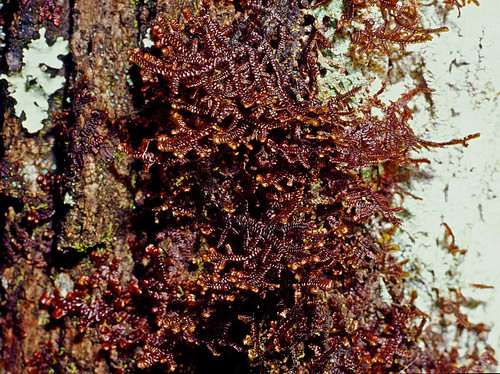
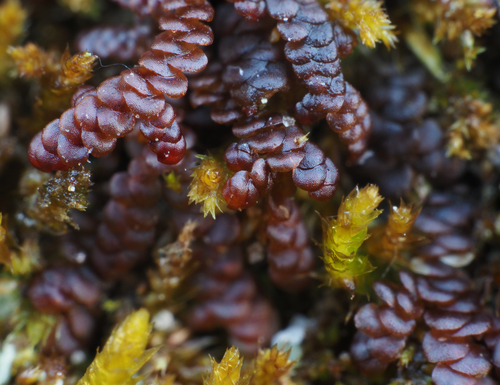
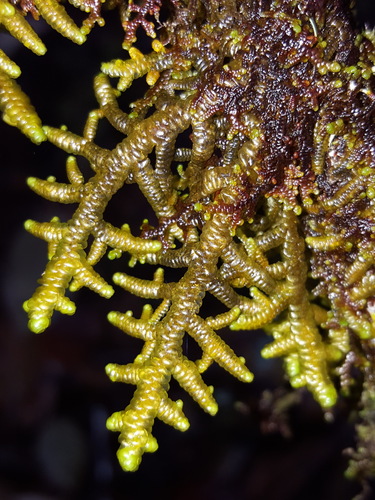
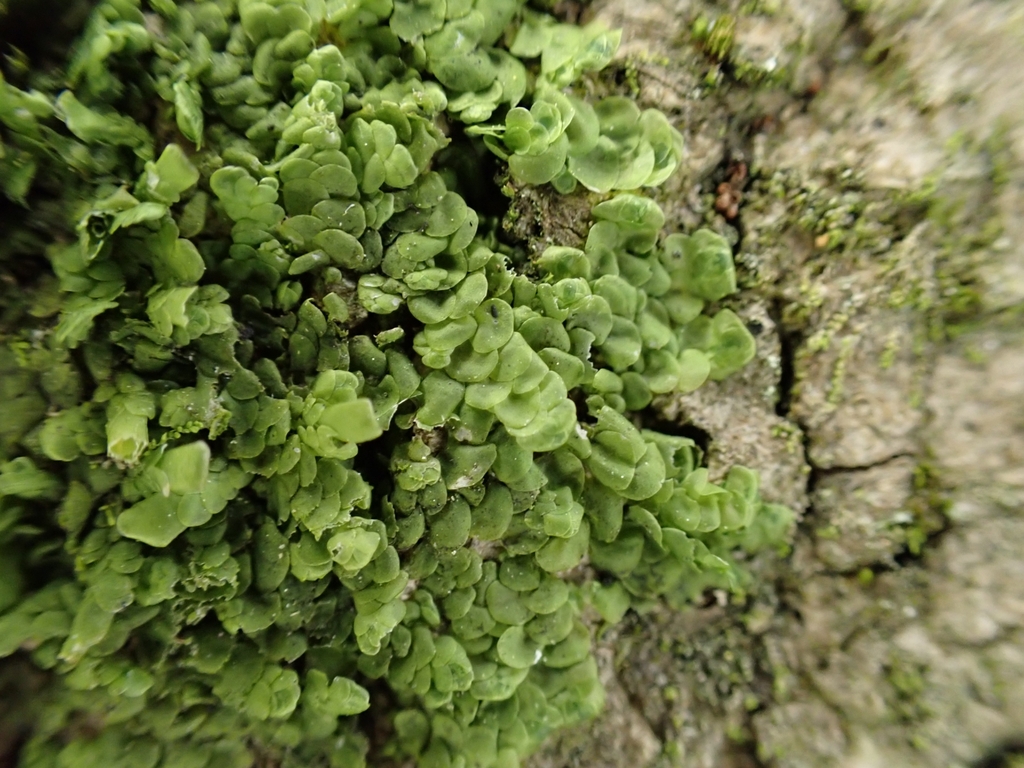
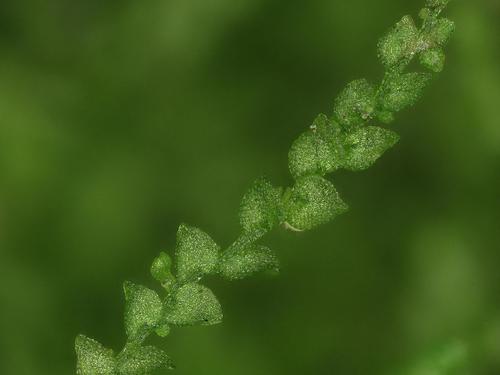
Lejeuneaceae is the largest family of liverworts, encompassing an extraordinary diversity of species (estimated 1,000-2,000+) in over 100 genera. These predominantly tropical leafy liverworts are typically small, delicate epiphytes, often forming intricate mats on bark, rock, or living leaves (epiphylls). They are characterized by highly variable bilobed leaves, often bilobed underleaves, and frequently keeled perianths.
Overview
The Lejeuneaceae represents a pinnacle of diversification within the liverworts (Marchantiophyta). This massive family dominates bryophyte floras in tropical and subtropical regions, although some genera extend into temperate zones. Members are typically small and inconspicuous, yet they play significant ecological roles, particularly as epiphytes and epiphylls (growing on the surface of living leaves), contributing substantially to biodiversity and microhabitat structure in humid forests.
Their morphological diversity is immense, ranging from simple creeping forms to complex, highly branched structures. This variation, combined with their small size, often makes identification challenging, frequently requiring microscopic examination of cell details, oil bodies, and reproductive structures. The family includes taxa adapted to a wide range of moisture conditions, from constantly wet cloud forests to seasonally dry environments.
Economically, Lejeuneaceae have limited direct use, but their ecological importance is considerable. As primary colonizers and components of epiphytic communities, they influence nutrient cycling and water retention in forest canopies. Their sensitivity to atmospheric pollution and habitat disturbance also makes them valuable bioindicators for environmental health, especially in tropical ecosystems.
Quick Facts
- Scientific Name: Lejeuneaceae
- Common Name: Lejeunea Family
- Number of Genera: ~100-200+ (classification varies)
- Number of Species: ~1,000-2,000+ (largest liverwort family)
- Distribution: Cosmopolitan, with highest diversity in tropical and subtropical regions worldwide.
- Evolutionary Group: Bryophytes - Marchantiophyta (Liverworts) - Jungermanniopsida - Porellales
Key Characteristics
Given the vast size of the family, characteristics can be highly variable. The following represent common features, but exceptions abound.
Gametophyte Form and Habit
Plants are typically small (often only a few mm wide), delicate, and form creeping or appressed mats, sometimes pendent. Color ranges from pale or whitish-green to bright green or yellowish-green, rarely brownish or reddish. Branching patterns are diverse, often pinnate or irregularly branched, with specific types (e.g., Lejeunea-type, Frullania-type) having taxonomic significance. Stems usually show limited differentiation between cortex and medulla.
Leaves (Phyllids)
Leaves are typically arranged in three rows (two lateral, one ventral/underleaves), but underleaves are absent in some large genera (e.g., Cololejeunea). Lateral leaves are usually incubous or sometimes transversely inserted, rarely succubous. They are almost always bilobed:
- Dorsal Lobe: Usually the larger part, shape varies widely (ovate, oblong, lanceolate).
- Ventral Lobule: Highly variable in size and shape; can be inflated, sac-like, flattened, or reduced to just a few cells. Often possesses an apical tooth or papilla, and sometimes a basal or marginal hyaline papilla (a clear, thin-walled cell), the position of which is critical for identification. A fold or keel connects the lobule to the lobe. In some groups (e.g., Cololejeuneoideae), a stylus (a small cellular appendage) may be present near the lobule base.
Underleaves (Amphigastria)
When present, underleaves are located on the ventral side of the stem. They are typically smaller than the lateral leaves and are most commonly bilobed, but can be entire (undivided) in some groups. Their shape, size, depth of division, and insertion line are important taxonomic characters.
Reproductive Structures
Sexual condition varies; many are autoicous (male and female organs on the same plant but separate branches) or dioicous (separate male and female plants).
- Antheridia occur in the axils of modified bracts, usually on specialized short branches (androecia).
- Archegonia are typically terminal on short specialized branches (gynoecia), protected by larger, often modified bracts and bracteoles, and a perianth.
- The perianth is highly characteristic in many Lejeuneaceae: typically emergent, inflated or flattened, and commonly possesses 5 keels (ridges) – two lateral, two ventral, one dorsal – though the number can vary (0, 3, 4, or more). It is usually contracted at the apex into a distinct beak.
Asexual reproduction is common via specialized means, including caducous (easily detached) leaves or branches, or multicellular gemmae produced on leaf surfaces or margins.
Sporophyte
The sporophyte develops within the perianth and remains dependent on the gametophyte. It generally conforms to the typical liverwort structure but often shows reductions:
- Foot: Anchors and absorbs nutrients.
- Seta: Often very short and delicate, consisting of few cell rows. Elongates briefly to push the capsule out.
- Capsule: Typically spherical, pale or light brown. The wall is thin (often 2-layered) and splits into 4 valves upon maturity. Contains spores and elaters. Elaters are usually unicellular with 1-2 spiral thickenings.
Spores
Spores are typically small, unicellular, greenish, and often have irregular shapes or surface ornamentations (papillose, baculate) which can be taxonomically useful.
Cellular Features & Oil Bodies
Microscopic features are crucial for identification. Leaf cells typically have trigones (wall thickenings at cell corners), which vary in size and shape. Cells contain oil bodies, whose number, size, shape (fusiform, spherical), and internal structure (homogeneous, granular, segmented) are highly diagnostic at the genus and species level but require fresh material to observe.
Chemical Characteristics
Lejeuneaceae produce a diverse array of secondary metabolites, including terpenoids and aromatic compounds, often concentrated in the oil bodies. These contribute to defense and potentially allelopathic interactions. Chemical profiles vary significantly across the family.
Field Identification
Identifying Lejeuneaceae, especially beyond the family level, is notoriously difficult due to their small size and immense diversity. Field identification often relies on recognizing the general habit and habitat, combined with features visible with a strong hand lens. Microscopic examination is usually essential for confirmation and genus/species identification.
Primary Identification Features (Hand Lens Level)
- Small Size & Delicate Habit: Look for tiny, often pale green, leafy plants forming thin mats on bark, rock, or leaves.
- Bilobed Lateral Leaves: Usually visible with a lens; try to discern the larger dorsal lobe and the smaller ventral lobule (shape varies greatly).
- Presence/Absence & Form of Underleaves: Check the ventral side for underleaves; note if they are present, bilobed, or entire. Absence of underleaves points towards specific genera like Cololejeunea.
- Incubous/Transverse Leaf Insertion: Observe the overlap pattern of lateral leaves (often difficult without practice).
- 5-Keeled Perianth (if fertile): If present, the characteristic shape with 5 ridges is a strong indicator of many Lejeuneaceae.
Secondary Identification Features
- Habitat: Predominantly epiphytic or epiphyllous in humid environments, especially tropics.
- Branching Type: Note the pattern (pinnate, irregular).
- Color: Often pale or yellowish-green.
- Lobule Details: With a very good lens or field microscope, look for teeth or papillae on the lobule margin.
Seasonal Identification Tips
Gametophytes are perennial. Reproductive structures are often seasonal but can sometimes be found year-round in favorable climates:
- Year-Round: Vegetative features (leaves, underleaves, branching) are key.
- Variable (often wet season): Look for perianths, androecia, and occasionally capsules briefly emerging on short setae. Asexual propagules like gemmae may also be present.
Common Confusion Points
Lejeuneaceae can be confused with:
- Other Porellales (Jubula, Frullania, Porella, Radula): Distinguished by combinations of lobule shape, underleaf presence/shape, perianth shape (e.g., inflated/beaked in Jubula, helmet lobules in Frullania, no underleaves in Radula, strap-like lobules in Porella).
- Small Mosses: Mosses have leaves typically arranged spirally (not in 3 distinct rows), often possess a midrib (nerve), and have different capsule structures (operculum, peristome teeth).
- Other small leafy liverworts (e.g., Cephaloziaceae, Lophoziaceae): These often have succubous leaf insertion and lack the complex lobule structure of Lejeuneaceae. Perianths are also different.
Note: Reliable identification often requires microscopic examination of cell structure, oil bodies (fresh material needed!), lobule details (hyaline papilla position), and reproductive structures.
Field Guide Quick Reference
Look For:
- Very small, delicate leafy liverworts
- Typically incubous/transverse leaves
- Bilobed lateral leaves (lobe + variable lobule)
- Underleaves often present & bilobed (but check!)
- Perianth often 5-keeled (if fertile)
- Epiphytic or epiphyllous habit common
Key Variations/Distinctions:
- Underleaves present or absent
- Lobule shape highly variable
- Perianth keels (typically 5, but variable)
- Microscopic features (oil bodies, trigones, papillae) are critical
- vs. Mosses: Leaf arrangement, nerve, capsule.
- vs. Other Liverworts: Leaf insertion, lobule complexity, perianth shape.
Notable Examples
With thousands of species, selecting examples is challenging. Here are a few genera representing some of the diversity within Lejeuneaceae:

Lejeunea
(Lejeunea)
The type genus for the family, Lejeunea is large and widespread, especially in temperate regions. Plants are typically small, green, with incubous leaves, relatively simple inflated lobules, bilobed underleaves, and 5-keeled perianths borne on short branches. Lejeunea cavifolia is a common example in moist, shaded habitats.

Cololejeunea
(Minute Lejeunea)
A very large genus, particularly diverse in the tropics, characterized by the complete absence of underleaves. Plants are often tiny epiphylls. Lobules are variable, and many species produce discoid gemmae on leaf surfaces. Cololejeunea minutissima is a widespread species found on bark.

Ptychanthus
(Ptychanthus)
Represents the subfamily Ptychanthoideae, often considered more robust than Lejeuneoideae. Plants are larger, often brownish, with pinnate branching resembling Frullania. Leaves are incubous with distinct lobules, and underleaves are large and typically undivided or shallowly bilobed. Perianths are often strongly keeled. Found in tropical and subtropical forests.

Microlejeunea
(Microlejeunea)
As the name suggests, these are extremely small, thread-like liverworts, often forming fine patches on bark. They have distant leaves, tiny lobules, and small, deeply bilobed underleaves. Microlejeunea ulicina is common in oceanic parts of Europe and North America.
Phylogeny and Classification
Lejeuneaceae is firmly placed within the order Porellales of the class Jungermanniopsida (liverworts). It represents the most species-rich family within the division Marchantiophyta, indicating a highly successful evolutionary radiation, particularly in tropical epiphytic niches.
Molecular phylogenetic studies confirm Lejeuneaceae as a monophyletic group, closely related to other families in the Porellales like Jubulaceae, Frullaniaceae, and Radulaceae. The internal classification of Lejeuneaceae is complex and still under active research, with numerous subfamilies and tribes proposed based on morphology and molecular data (e.g., Lejeuneoideae, Ptychanthoideae, Cololejeuneoideae). The sheer number of species and morphological convergence make resolving relationships challenging.
Position in Plant Phylogeny
- Kingdom: Plantae
- Clade: Embryophyta (Land Plants)
- Division: Marchantiophyta (Liverworts)
- Class: Jungermanniopsida
- Order: Porellales
- Family: Lejeuneaceae
Evolutionary Significance
Lejeuneaceae showcases remarkable evolutionary success and adaptation:
- Miniaturization: Many members exhibit extreme reduction in size, allowing colonization of microhabitats.
- Epiphytism & Epiphyllism: The family has extensively radiated into arboreal habitats, including the specialized niche of growing on living leaves.
- Morphological Innovation: Extreme diversity in lobule structure, asexual reproduction strategies (gemmae, caducous parts), and perianth forms highlights ongoing evolution.
- Tropical Dominance: Represents a major component of biodiversity in tropical rainforests, particularly in canopy ecosystems.
- Model System Potential: Certain species are being explored for studies in developmental biology and desiccation tolerance.