Radulaceae
Radula Family
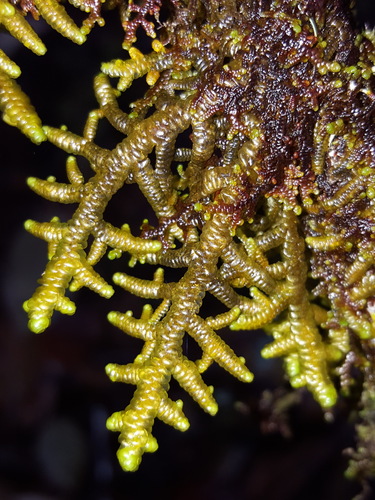
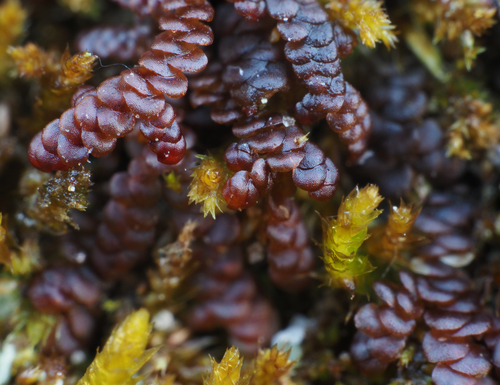
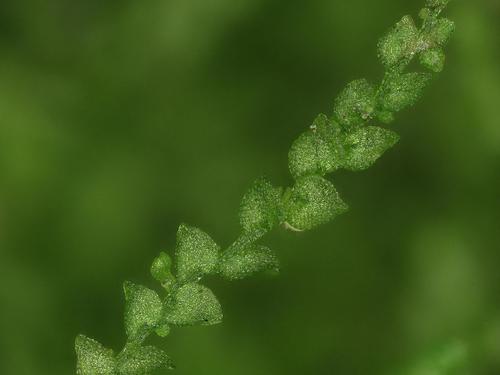
Radulaceae is a large, cosmopolitan family of leafy liverworts containing the single genus Radula. These plants typically form flat mats on bark or rock and are readily identified by their incubous, complicate-bilobed leaves (large dorsal lobe + smaller ventral lobule) combined with the complete absence of underleaves. Rhizoids uniquely arise only from the surface of the ventral lobule.
Overview
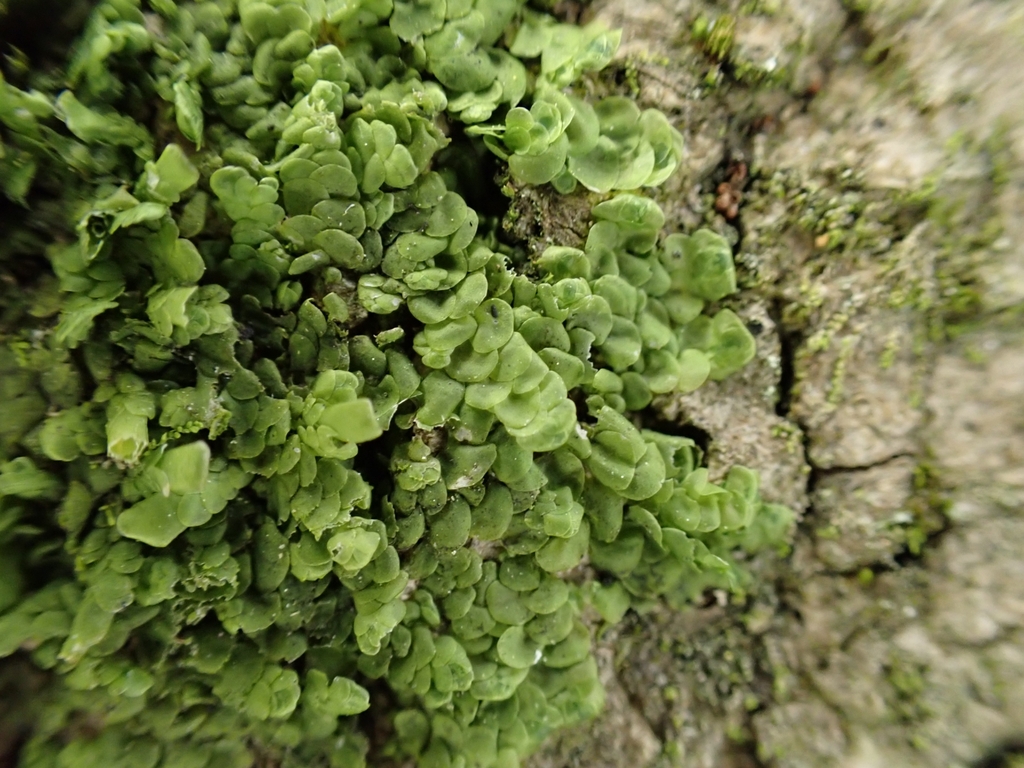
The Radulaceae family, represented by the large and globally distributed genus Radula, encompasses a significant number of leafy liverwort species. They are common inhabitants of humid environments worldwide, typically found growing as closely appressed, flat mats or patches on tree bark (epiphytic), rock surfaces (epilithic), or occasionally living leaves (epiphyllous). Their appearance is often neat and layered due to the overlapping incubous leaves.
Radulaceae belongs to the order Porellales, sharing the characteristic complicate-bilobed leaf structure with families like Porellaceae and Frullaniaceae. Each leaf consists of a large dorsal lobe and a smaller ventral lobule. However, Radulaceae is uniquely distinguished within this group by the complete absence of underleaves. Another diagnostic feature is that the rhizoids, used for attachment, arise exclusively from a specialized swollen area on the ventral lobule, not from the stem itself. Asexual reproduction via multicellular discoid gemmae produced on leaf margins is common in many species.
Phylogenetically, Radulaceae occupies its own suborder, Radulineae, within the Porellales, highlighting its distinct evolutionary path characterized by the loss of underleaves and specialization of rhizoid origin. They are ecologically important as primary colonizers and components of epiphytic and epilithic communities.
Quick Facts
- Scientific Name: Radulaceae
- Common Name: Radula Family
- Number of Genera: 1 (Radula)
- Number of Species: Approximately 200-300
- Distribution: Cosmopolitan (worldwide), diverse in temperate and tropical regions
- Evolutionary Group: Liverworts (Marchantiophyta) - Jungermanniopsida - Porellales - Radulineae
- Key Feature: Incubous complicate-bilobed leaves (lobe + lobule), NO underleaves, rhizoids on lobule.
- Habitat Specificity: Primarily epiphytic or epilithic.
Key Characteristics
Gametophyte Form and Habit
Plants are small to large, typically forming flat, closely appressed mats or patches on the substrate. Color is usually green to yellowish-green, sometimes brownish or blackish. Stems are prostrate, with branching typically irregular or sparsely and irregularly pinnate (Frullania-type lateral branching).
Leaves and Underleaves
Leaves are arranged incubously and are closely overlapping (imbricate). They are distinctly complicate-bilobed, divided into a large, typically ovate to orbicular dorsal lobe with a rounded apex, and a smaller, usually quadrate to rectangular ventral lobule. The lobule lies flat or slightly inflated against the dorsal lobe or stem. Underleaves are completely absent.
Rhizoids
Rhizoids are typically colorless or brownish and arise exclusively from a convex swelling on the surface of the ventral lobule, not from the stem. This is a key diagnostic feature.
Cellular Structure
Leaf cells are typically isodiametric (polygonal). Cell walls are usually thin, and trigones are generally small or absent, although sometimes distinct. Oil bodies are usually large and conspicuous, typically 1 (sometimes 2) per cell, coarsely granular or appearing botryoidal.
Asexual Reproduction
Asexual reproduction via gemmae is common in many species. The gemmae are characteristically multicellular, discoid (disc-shaped), and produced along the margins of the dorsal leaf lobes.
Reproductive Structures
Plants can be dioicous or monoicous.
- Antheridia are borne in the axils of saccate bracts, usually forming intercalary spikes on main stems or branches.
- Archegonia are terminal on main stems or leading branches, surrounded by 1-3 pairs of bracts that are often similar to but larger than the vegetative leaves. Bracteoles (corresponding to underleaves) are absent.
- A prominent perianth is present, typically well-exserted. It is characteristically strongly dorsiventrally compressed (flattened parallel to the stem), often appearing trumpet-shaped or strap-shaped (ligulate) above a tubular base. The mouth is wide, truncate or slightly bilabiate, and usually entire. Marsupia are absent.
Sporophytes and Spores
The sporophyte develops within the perianth. The seta is relatively short. The capsule is ovoid, blackish, with a wall composed of two layers of cells. Dehiscence occurs via four valves.
Field Identification
Identifying Radulaceae involves recognizing the flat mats on bark/rock with complicate-bilobed leaves and confirming the absence of underleaves. Rhizoid origin on the lobule is definitive but requires careful observation.
Primary Identification Features
- Habit: Flat mats closely appressed to bark or rock.
- Leaves: Incubous arrangement; complicate-bilobed with a large dorsal lobe and a smaller ventral lobule.
- Underleaves: Completely absent.
- Rhizoids: Arise only from the ventral lobule (use hand lens).
- Perianth (if fertile): Strongly flattened, often trumpet-shaped or strap-shaped above.
- Gemmae: Discoid gemmae often present on leaf margins.
Secondary Identification Features
- Color: Often green or yellowish-green.
- Branching: Often irregular.
- Cells (Microscopic): Trigones usually small or absent; oil bodies large, 1-2 per cell.
Seasonal Identification Tips
Radulaceae gametophytes are perennial and readily identifiable year-round:
- Year-Round: The complicate-bilobed leaves and absence of underleaves are constant features. Gemmae may be present frequently.
- Moisture: Plants are more easily examined when moist.
- Reproduction: The distinctive flattened perianths are often conspicuous when present.
Common Confusion Points
The absence of underleaves combined with complicate-bilobed leaves is key:
- Porellaceae (Porella): Also has incubous, complicate-bilobed leaves but possesses large, undivided underleaves. Rhizoids arise from underleaf bases.
- Frullaniaceae / Jubulaceae: Have incubous, complicate-bilobed leaves, but the lobule is typically modified into a helmet or sac, and bifid underleaves are present.
- Lejeuneaceae: Mostly smaller, have incubous, complicate-bilobed leaves with variable lobules, but possess bifid underleaves (usually).
- Metzgeriales (e.g., Metzgeria): Some form flat patches on bark/rock, but are thalloid (lack distinct stems and leaves).
Field Guide Quick Reference
Look For:
- Flat mats on bark/rock
- Leaves incubous, complicate-bilobed (lobe + lobule)
- Underleaves ABSENT
- Rhizoids arising from lobule
- Flattened, trumpet-shaped perianth
- Discoid gemmae on leaf margins common
Key Distinctions:
- Complicate leaves + NO underleaves
- Underleaves absent (vs. present in Porella, Frullania, Lejeunea)
- Rhizoids on lobule (vs. stem/underleaf base)
- Leaves incubous (vs. succubous in Scapaniaceae)
- Lobule typically flat (vs. helmet/sac in Frullania)
Notable Examples
The family contains only the large and cosmopolitan genus Radula:

Radula complanata
Flat Radula
A very common and widespread species in temperate Northern Hemisphere, typically found forming flat, yellowish-green patches on tree bark (especially deciduous trees) and sometimes rocks. Readily identified by the typical family features and frequent presence of both perianths and discoid gemmae on leaf margins. Monoicous.

Radula flaccida
(Epiphyllous Radula)
A pantropical species notable for commonly growing as an epiphyll (on the surface of living leaves) in humid rainforests. Plants are often delicate and pale green. Shows the characteristic family features adapted to this specialized microhabitat.
Phylogeny and Classification
Radulaceae is classified within the liverwort division Marchantiophyta, class Jungermanniopsida, and order Porellales. It occupies its own distinct suborder, Radulineae, separate from the Porellineae (which includes Porellaceae, Frullaniaceae, Lejeuneaceae, etc.). This reflects its unique combination of features, particularly the complete absence of underleaves coupled with complicate-bilobed leaves.
Molecular phylogenetic studies strongly support the monophyly of Radulaceae (containing only Radula) and its placement as a distinct lineage within the Porellales. It represents a major evolutionary branch within the order, characterized by the loss of underleaves and the specialized origin of rhizoids from the ventral lobule.
Position in Plant Phylogeny
- Kingdom: Plantae
- Clade: Embryophytes (Land Plants)
- Division: Marchantiophyta (Liverworts)
- Class: Jungermanniopsida
- Order: Porellales
- Suborder: Radulineae
- Family: Radulaceae
Evolutionary Significance
Radulaceae is significant for:
- Major Lineage in Porellales: Represents a distinct and highly successful evolutionary path within the order, characterized by underleaf loss.
- Cosmopolitan Success: The genus Radula has diversified globally across a wide range of climates and habitats.
- Specialized Rhizoid Origin: The development of rhizoids solely on the lobule is a unique morphological specialization.
- Asexual Reproduction: The prevalence of discoid gemmae contributes to the ecological success of many species.
- Epiphytism/Epilithism: A major component of epiphytic and epilithic bryophyte communities worldwide.