Porellaceae
Porella / Scale-leaf Family
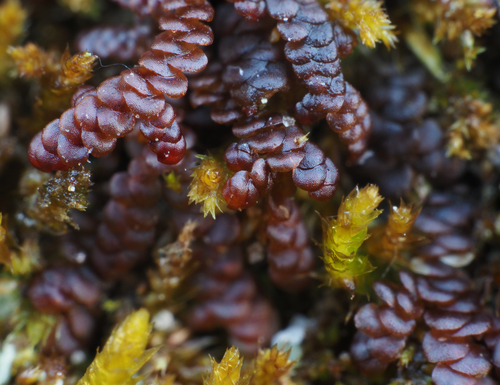
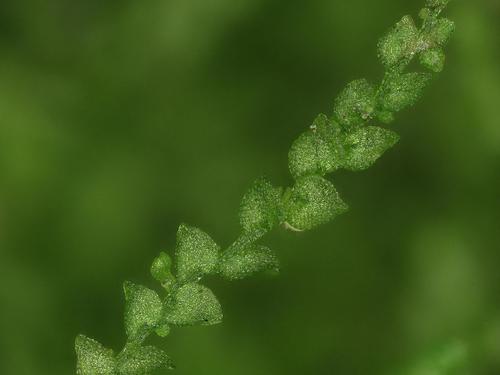
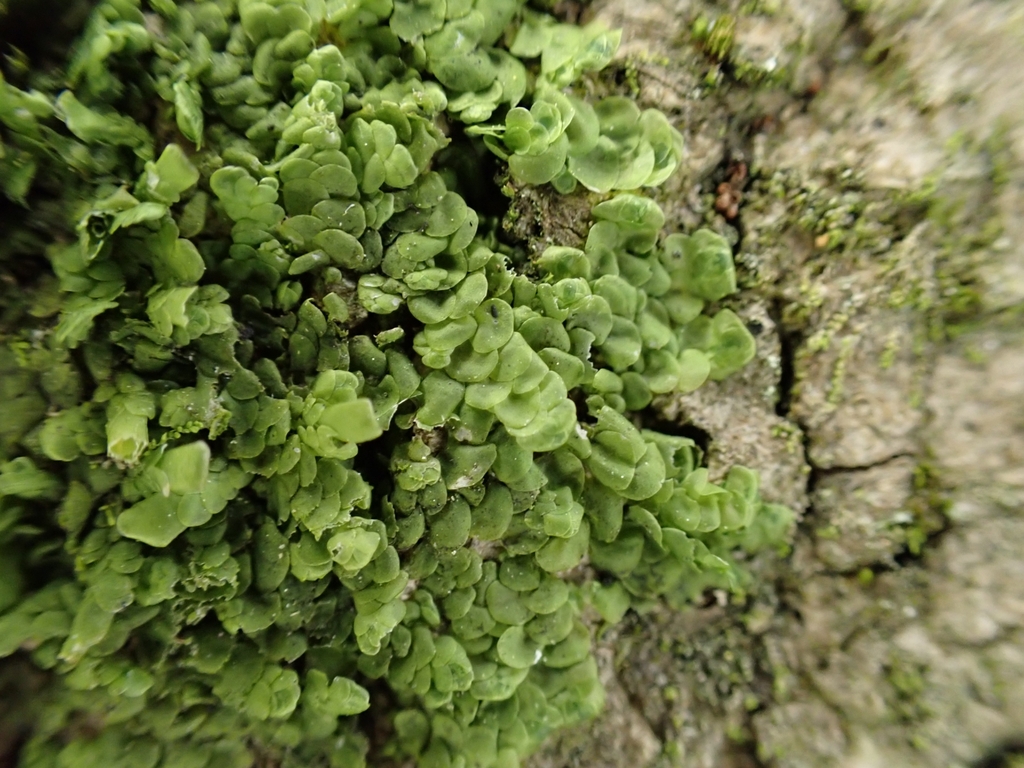
Porellaceae is a widespread family of relatively robust leafy liverworts, containing the single large genus Porella. They are key members of the order Porellales, characterized by incubous, complicate-bilobed leaves (with a large dorsal lobe and a distinct ventral lobule) and large, undivided underleaves. They are commonly found growing flat against tree bark or rocks.
Overview
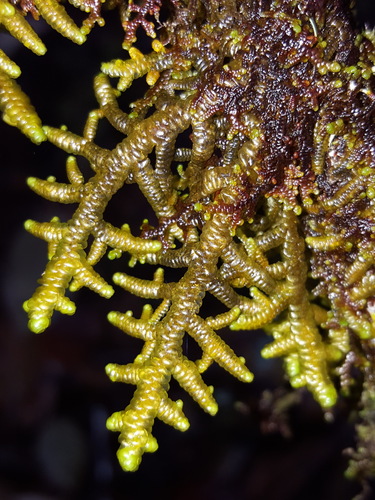
The Porellaceae family, represented by the cosmopolitan genus Porella, encompasses medium-sized to large liverworts that are often conspicuous where they occur. These plants typically form flat, closely appressed mats on tree bark (epiphytic) or rocks (epilithic), particularly in temperate forests and woodlands worldwide. Their regular, pinnate branching often gives them a neat, somewhat feather-like appearance, though less pronounced than in families like Lepicoleaceae.
The defining features of Porellaceae lie in their leaf structure. The leaves are incubously arranged and complicate-bilobed, meaning each leaf is divided into two distinct parts: a large, overlapping dorsal lobe (the main visible "leaf") and a smaller, but clearly defined, ventral lobule (the "scale-leaf") that lies underneath, typically parallel to the stem. Unlike related families like Frullaniaceae or Lejeuneaceae, this lobule is usually flat and tongue-shaped or ovate, not modified into a sac or helmet. Complementing this is the presence of large, undivided (entire) underleaves on the ventral side of the stem, which are often similar in size to the lobules.
As the type family for the order Porellales, Porellaceae is central to understanding this major group of complex leafy liverworts. They are significant components of epiphytic and epilithic communities in many regions.
Quick Facts
- Scientific Name: Porellaceae
- Common Name: Porella / Scale-leaf Family
- Number of Genera: 1 (Porella)
- Number of Species: Approximately 80-100
- Distribution: Cosmopolitan (worldwide), especially temperate regions
- Evolutionary Group: Liverworts (Marchantiophyta) - Jungermanniopsida - Porellales - Porellineae
- Key Feature: Incubous complicate-bilobed leaves (lobe + distinct flat lobule), large undivided underleaves.
- Habitat Specificity: Primarily epiphytic or epilithic.
Key Characteristics
Gametophyte Form and Habit
Plants are medium-sized to large, often robust, typically forming flat, closely appressed mats on the substrate. Color ranges from olive-green or yellowish-green to brownish-green, sometimes dark green or blackish. Stems are prostrate, usually regularly 1-3 times pinnately branched with Frullania-type lateral branches.
Leaves and Underleaves
Leaves are arranged incubously and are closely overlapping (imbricate). They are distinctly complicate-bilobed, divided into a large dorsal lobe and a smaller ventral lobule. The dorsal lobe is typically ovate to oblong with a rounded apex and entire margins. The ventral lobule is clearly differentiated, usually lingulate (tongue-shaped) to ovate, lying flat against the stem or slightly oblique, and typically has entire margins. Underleaves are consistently present, large, conspicuous (often as wide as or wider than the stem), typically undivided (entire) with a rounded or truncate apex, and often decurrent (running down the stem) at the base.
Rhizoids
Rhizoids are usually sparse, colorless or brownish, arising in tufts from the base of the underleaves.
Cellular Structure
Leaf cells are typically isodiametric (polygonal), with walls thin or slightly thickened. Trigones are often present and distinct, sometimes bulging. Oil bodies are present, usually granular or homogeneous, varying in number per cell.
Asexual Reproduction
Asexual reproduction via gemmae is absent.
Reproductive Structures
Plants are mostly dioicous, rarely monoicous.
- Antheridia are borne in the axils of saccate bracts on specialized, short, spike-like lateral branches.
- Archegonia are terminal on short lateral branches, surrounded by 2-5 pairs of bracts and bracteoles that are larger than vegetative leaves/underleaves.
- A large, prominent perianth is present, usually exserted well beyond the bracts. It is characteristically dorsiventrally compressed (flattened parallel to the substrate), often appearing triangular or ovate from above, typically inflated below but flattened towards the wide, often bilabiate or truncate mouth. The mouth is frequently ciliate or dentate. Marsupia are absent.
Sporophytes and Spores
The sporophyte develops within the perianth. The seta is relatively short. The capsule is spherical, dark, typically splitting into four valves irregularly or only partway. The capsule wall is multi-layered (usually 4-6 layers).
Field Identification
Identifying Porellaceae involves recognizing the relatively large, flat mats on bark or rock, combined with the unique leaf structure visible with a hand lens.
Primary Identification Features
- Habit: Medium to large plants forming flat mats on bark or rock, often pinnately branched.
- Leaves: Incubous arrangement; complicate-bilobed with a large dorsal lobe and a distinct, flat ventral lobule (visible underneath).
- Underleaves: Consistently present, large, and undivided (entire).
- Habitat: Primarily epiphytic (bark) or epilithic (rock).
- Perianth (if fertile): Large, flattened dorsiventrally, often triangular from above, with a wide mouth.
Secondary Identification Features
- Color: Often olive-green or brownish-green.
- Branching: Usually regularly pinnate.
- Gemmae: Absent.
- Cells (Microscopic): Often with distinct trigones.
Seasonal Identification Tips
Porellaceae gametophytes are perennial and conspicuous year-round:
- Year-Round: The characteristic habit, leaf structure (lobe + lobule), and large underleaves are always visible.
- Moisture: Plants appear more lush and slightly less appressed when moist.
- Reproduction: Large perianths are often present and conspicuous on female plants. Sporophytes may be seen emerging at certain times.
Common Confusion Points
Distinguishing Porellaceae from other complicate-bilobed families requires checking the lobule and underleaf structure:
- Frullaniaceae: Also incubous and complicate-bilobed, but the ventral lobule is typically modified into a helmet-shaped sac, and underleaves are usually bifid. Often reddish/brownish.
- Jubulaceae: Similar to Frullaniaceae, lobule often helmet-shaped, underleaves bifid. Perianth structure differs.
- Lejeuneaceae: A huge family, mostly smaller plants. Leaves incubous, complicate-bilobed, but lobule shape is highly variable (often inflated), and underleaves are typically bifid (though sometimes entire). Perianth shape varies but usually not large and flattened like Porella.
- Radulaceae: Complicate-bilobed with incubous leaves, but lacks underleaves entirely. Rhizoids arise only from the lobule.
- Scapaniaceae: Has complicate-bilobed leaves, but leaves are succubous, and underleaves are absent/rudimentary. Perianth flattened but different shape.
Field Guide Quick Reference
Look For:
- Robust mats on bark/rock
- Regularly pinnate branching
- Leaves incubous, complicate-bilobed
- Ventral lobule distinct, flat
- Large, undivided underleaves
- Large, flattened perianth (if fertile)
- Gemmae absent
Key Distinctions:
- Lobe + Flat Lobule + Large Undivided Underleaf
- Lobule flat (vs. helmet/sac in Frullaniaceae/Jubulaceae)
- Underleaves large & undivided (vs. bifid in Frullaniaceae/Jubulaceae/Lejeuneaceae)
- Underleaves present (vs. absent in Radulaceae)
- Leaves incubous (vs. succubous in Scapaniaceae)
Notable Examples
The family contains only the large and widespread genus Porella:

Porella platyphylla
Wall Scale-moss
A very common and widespread species in temperate Northern Hemisphere, often found on tree bark (especially base-rich bark like maple or ash) and rocks (often calcareous). Forms large, dull olive-green to brownish mats. Shows the typical large dorsal lobe, lingulate lobule, and large rounded underleaves.

Porella navicularis
Navicular Scale-moss
Common on the Pacific Coast of North America, typically growing as an epiphyte on tree trunks and branches. Often somewhat glossy green. Distinguished by its lobules and underleaves often having recurved margins, appearing somewhat boat-shaped (navicular).
Phylogeny and Classification
Porellaceae is the type family for the order Porellales and the suborder Porellineae, a major group within the class Jungermanniopsida of liverworts (Marchantiophyta). This order is characterized by its incubous, typically complicate-bilobed leaves and predominantly epiphytic or epilithic habit.
Within Porellales, Porellaceae represents a distinct lineage characterized by its relatively simple (flat, non-inflated) ventral lobule and large, undivided underleaves. Molecular phylogenetics confirms its monophyly and its position as sister to or closely related to other families within Porellineae, such as Jubulaceae, Lejeuneaceae, and Frullaniaceae, all of which share the complicate-bilobed leaf structure but differ in lobule modification and underleaf form.
Position in Plant Phylogeny
- Kingdom: Plantae
- Clade: Embryophytes (Land Plants)
- Division: Marchantiophyta (Liverworts)
- Class: Jungermanniopsida
- Order: Porellales
- Suborder: Porellineae
- Family: Porellaceae
Evolutionary Significance
Porellaceae is significant for:
- Defining Porellales: As the type family, it anchors the order Porellales, a major radiation of complex leafy liverworts.
- Widespread Success: The genus Porella is cosmopolitan and ecologically important in epiphytic and epilithic communities globally.
- Morphological Type: Represents a specific type of complicate-bilobed leaf structure (with flat lobule and large entire underleaf) within the broader diversity of Porellales.
- Indicator Species: Some Porella species are sensitive to air pollution and can be used as bioindicators.