Jackiellaceae
Jackiella Family
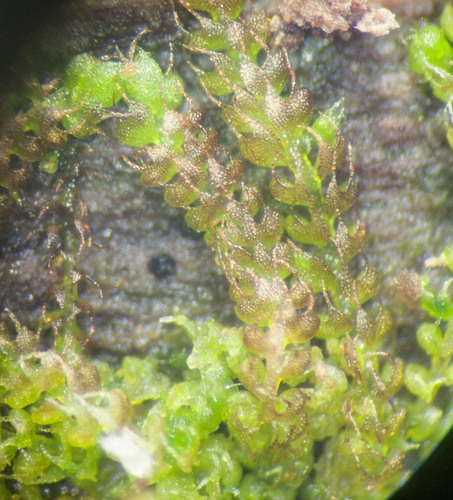
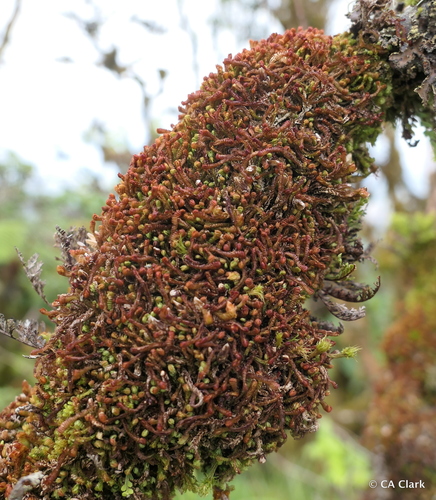
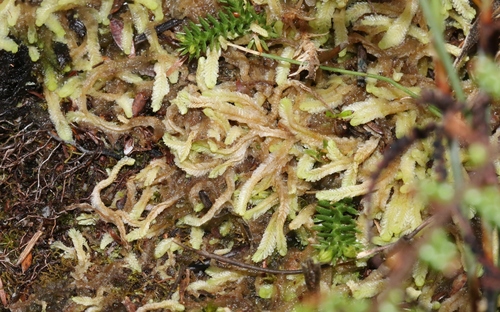
Jackiellaceae is a small family of leafy liverworts, primarily comprising the genus Jackiella. These plants are typically found in tropical and subtropical regions of the Old World and Australasia. They are characterized by their often brownish color, incubous or transverse leaves that are usually entire or shallowly notched (not deeply bilobed), the presence of distinct bifid underleaves, and a unique perianth structure often fleshy at the base.
Overview
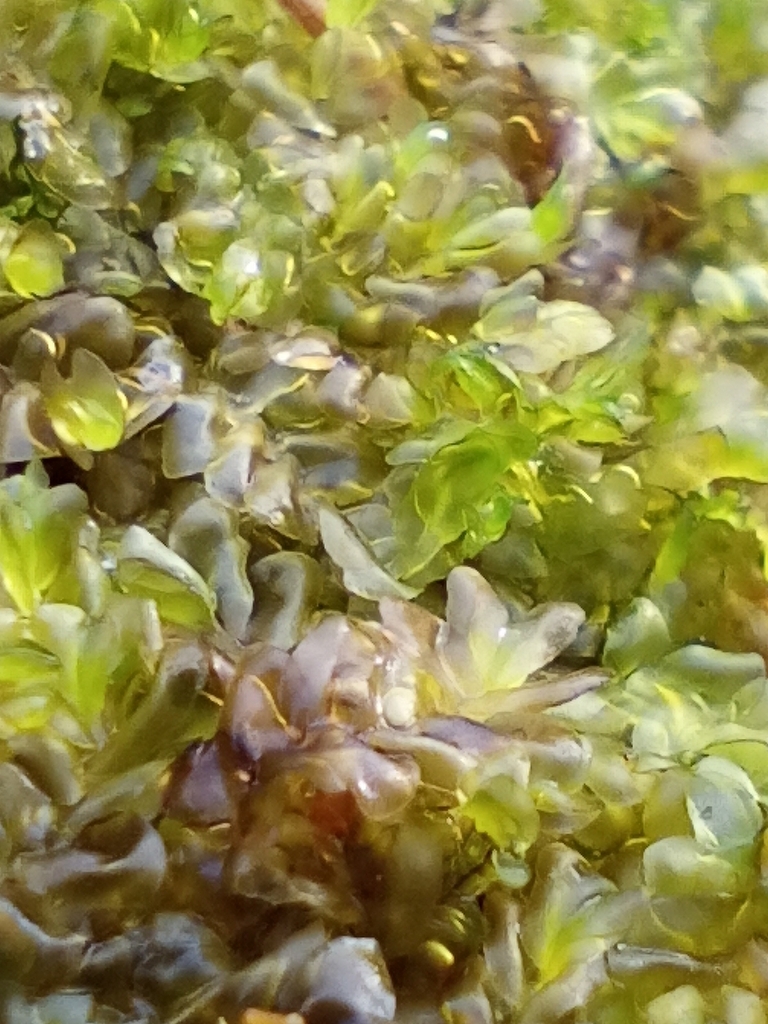
The Jackiellaceae family, centered around the genus Jackiella, represents a distinct lineage within the suborder Cephaloziineae. These small to medium-sized liverworts typically form prostrate mats on soil, rocks, or humus in moist, shaded forest environments, primarily in the Paleotropics (Southeast Asia, Malesia, Oceania) and Australasia, with some occurrences in Africa and the Neotropics.
Unlike the closely related Cephaloziaceae and Cephaloziellaceae, Jackiellaceae species generally do not have deeply bilobed leaves; instead, their leaves are typically incubous or transversely inserted and feature entire or only shallowly notched (retuse or emarginate) apices. Another key difference is the consistent presence of distinct, usually bifid underleaves. Fertile plants possess a characteristic perianth that is often fleshy and inflated at the base, abruptly narrowing to a beak-like mouth, distinguishing it from the more uniformly trigonous perianths of Cephaloziaceae.
Jackiellaceae contributes to the bryophyte diversity of tropical and subtropical forest floors and banks. Its specific morphological traits and geographical distribution provide valuable information for understanding the evolution and biogeography within the Cephaloziineae.
Quick Facts
- Scientific Name: Jackiellaceae
- Common Name: Jackiella Family
- Number of Genera: 1 (Jackiella) (primarily)
- Number of Species: Approximately 5-10
- Distribution: Primarily Paleotropical (SE Asia, Malesia, Oceania), Australasia, Africa; rare in Neotropics
- Evolutionary Group: Liverworts (Marchantiophyta) - Jungermanniopsida - Cephaloziineae
Key Characteristics
Gametophyte Form and Habit
Plants are small to medium-sized, typically forming prostrate, creeping mats, often closely appressed to the substrate. Color is usually characteristic, ranging from brownish-green to medium brown, dark brown, or blackish. Stems are creeping, with branching often sparse and predominantly ventral-intercalary.
Leaves and Underleaves
Leaves are typically inserted incubously or transversely and are usually closely overlapping (imbricate). They are broadly ovate to rounded-quadrate or reniform (kidney-shaped), concave or convex. Crucially, the leaf apex is typically entire, rounded, truncate, or shallowly retuse/emarginate (slightly notched) – not deeply bilobed as in Cephaloziaceae/Cephaloziellaceae. Underleaves are consistently present and distinct, though usually smaller than the leaves. They are typically bifid (divided into two acute lobes), and sometimes connate (fused) at the base with one or both adjacent lateral leaves.
Rhizoids
Rhizoids are usually numerous, colorless or brownish, arising in tufts from the stem near the base of the underleaves.
Cellular Structure
Leaf cells are typically small to medium-sized, roughly isodiametric to slightly elongated. Cell walls are often moderately to strongly thickened, usually with distinct, sometimes bulging or nodulose, trigones. The cuticle may be smooth or papillose.
Asexual Reproduction
Asexual reproduction via gemmae is generally uncommon or absent in this family, unlike in many Cephaloziaceae and Cephaloziellaceae.
Reproductive Structures
Plants can be dioicous or monoicous.
- Antheridia are borne in the axils of saccate bracts, usually forming intercalary spikes on main stems or branches.
- Archegonia are terminal on short ventral-intercalary branches that arise from near the underleaf bases. They are surrounded by several pairs of bracts and bracteoles.
- A distinctive perianth is present. It is typically emergent and characterized by a fleshy, inflated base (often subterranean or embedded in the substrate, resembling a perigynium but structurally a true perianth) that abruptly contracts above into a narrow, often beaked or tubular mouth. The upper part may be smooth or slightly plicate. Marsupia are absent.
Sporophytes and Spores
The sporophyte develops within the fleshy base of the perianth. The seta is relatively short. The capsule is typically ovoid, with a wall composed of two layers of cells. Dehiscence occurs via four valves.
Field Identification
Identifying Jackiellaceae involves finding small to medium, often brownish, mat-forming liverworts on soil or rock in humid forests, paying close attention to leaf shape, underleaves, and (if present) the unique perianth.
Primary Identification Features
- Habit: Prostrate mats, often brownish or blackish.
- Leaves: Incubous or transverse insertion, closely overlapping; apex entire, rounded, or shallowly notched (NOT deeply bilobed).
- Underleaves: Consistently present, distinct, usually bifid.
- Habitat: Typically terrestrial (soil, rock, humus) in moist, shaded forests, mainly Paleotropical/Australasian.
- Perianth (if fertile): Distinctive shape - fleshy/inflated base abruptly narrowed to a beaked mouth, often on short ventral branches.
- Cells (Microscopic): Often with distinct trigones.
Secondary Identification Features
- Branching: Often ventral-intercalary.
- Color: Dark pigmentation common.
- Gemmae: Usually absent.
Seasonal Identification Tips
Jackiellaceae gametophytes are perennial and identifiable year-round:
- Year-Round: Vegetative features (leaf shape/insertion, underleaf presence) are constant.
- Moist Conditions: Plants are easier to observe when hydrated.
- Reproduction: Perianths are key for confirmation but may be seasonal or inconspicuous depending on the short ventral branches.
Common Confusion Points
Distinguishing Jackiellaceae requires careful attention to leaf apex shape and underleaves:
- Cephaloziaceae (Odontoschisma): Some Odontoschisma have entire/retuse leaves and trigones, but typically lack distinct bifid underleaves and have a different (trigonous) perianth structure.
- Adelanthaceae: Some species have entire/retuse leaves, but often show differentiation into erect shoots where underleaves may be absent or different; perianth shape differs.
- Geocalycaceae: Have distinct underleaves, but leaves are usually succubous and often bilobed; perianth or marsupium structure is different.
- Jungermanniaceae (subg. Solenostoma): Can grow on soil/rocks and be brownish with entire leaves, but lack underleaves entirely and have a different perianth type.
Field Guide Quick Reference
Look For:
- Prostrate mats, often brownish
- Incubous/transverse leaves
- Leaf apex entire or shallowly notched
- Distinct bifid underleaves present
- Terrestrial habitat (soil/rock)
- Perianth with fleshy base & narrow beak (if fertile)
- (Microscope: Cells often with trigones)
Key Distinctions:
- Leaves NOT deeply bilobed (vs. Cephaloziaceae/ellaceae)
- Distinct bifid underleaves present (vs. absent/tiny in Cephaloziaceae/ellaceae, Jungermanniaceae)
- Unique perianth shape
- Leaves not succubous (vs. Geocalycaceae, Adelanthaceae)
Notable Examples
The family primarily consists of the genus Jackiella:

Jackiella javanica
(No common name)
A widespread species found across Southeast Asia, Malesia, and parts of Oceania. Forms brownish mats on soil banks in forests. Shows the characteristic incubous, entire or retuse leaves, bifid underleaves, and the distinctive basal-inflated perianth on short ventral branches.

Jackiella angustifolia
(No common name)
Another species from the Paleotropical region, potentially differing in leaf shape proportions or cellular details. Exhibits the core family characteristics.
Phylogeny and Classification
Jackiellaceae is classified within the liverwort division Marchantiophyta, class Jungermanniopsida, order Jungermanniales, and suborder Cephaloziineae. Molecular phylogenetic studies consistently place it within this suborder, confirming its relationship with families like Cephaloziaceae and Adelanthaceae, despite significant morphological differences.
The family represents a distinct evolutionary lineage within Cephaloziineae, characterized by the shift away from deeply bilobed leaves towards entire or shallowly notched leaves, the retention of distinct underleaves, and the development of a unique perianth structure with a fleshy base. Its predominantly Paleotropical distribution suggests a different biogeographical history compared to some other families in the suborder.
Position in Plant Phylogeny
- Kingdom: Plantae
- Clade: Embryophytes (Land Plants)
- Division: Marchantiophyta (Liverworts)
- Class: Jungermanniopsida
- Order: Jungermanniales
- Suborder: Cephaloziineae
- Family: Jackiellaceae
Evolutionary Significance
Jackiellaceae is significant for:
- Morphological Diversification: Demonstrates evolutionary pathways within Cephaloziineae leading away from the typical "threadwort" morphology (deeply bilobed leaves, no underleaves).
- Unique Perianth Structure: The basally fleshy, beaked perianth represents a specialized reproductive adaptation.
- Paleotropical Biogeography: Its distribution pattern contributes to understanding liverwort evolution in the Old World tropics and Australasia.
- Phylogenetic Link: Helps bridge morphological gaps and understand relationships within the diverse Cephaloziineae suborder.