Brevianthaceae
Brevianthus Family
The Brevianthaceae is a small family of leafy liverworts belonging to the order Jungermanniales. It contains only one genus, Brevianthus, with two known species endemic to Tasmania, Australia. These diminutive plants are found in moist, shaded habitats within cool temperate rainforests.
Overview
The Brevianthaceae family represents a unique and geographically restricted lineage of liverworts. Comprising only the genus Brevianthus, these plants are characterized by their small size, specific leaf arrangement (incubous), and presence of underleaves. They are an inconspicuous but integral part of the bryophyte flora in Tasmanian rainforest ecosystems.
Brevianthaceae typically grow on damp soil banks, humus, or shaded rock faces, often in association with other bryophytes. Their limited distribution highlights the unique biodiversity found in Tasmania's cool temperate rainforests. Studying such small, endemic families contributes to our understanding of bryophyte evolution and biogeography.
Unlike the economically significant Asteraceae, Brevianthaceae have no known direct economic uses. Their importance lies primarily in their ecological role within their specific habitat and their contribution to overall biodiversity and phylogenetic understanding of liverworts.
Quick Facts
- Scientific Name: Brevianthaceae
- Common Name: Brevianthus Family
- Number of Genera: 1 (Brevianthus)
- Number of Species: 2
- Distribution: Endemic to Tasmania, Australia
- Evolutionary Group: Liverworts (Marchantiophyta) - Jungermanniopsida
Key Characteristics
Gametophyte Form and Habit
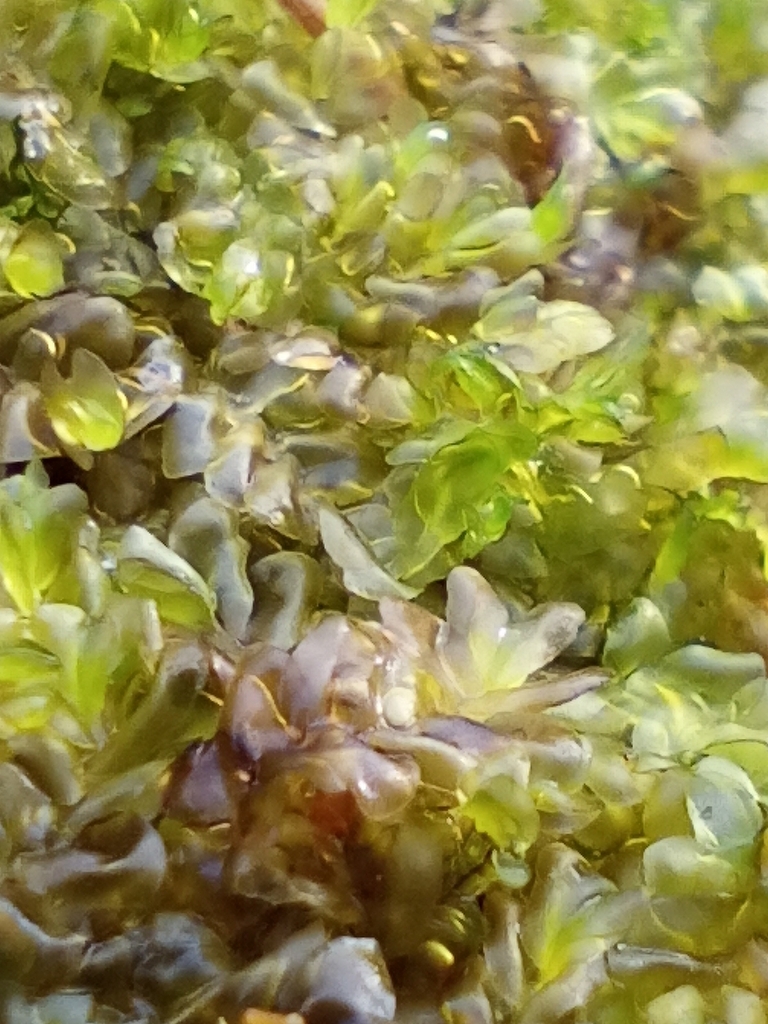
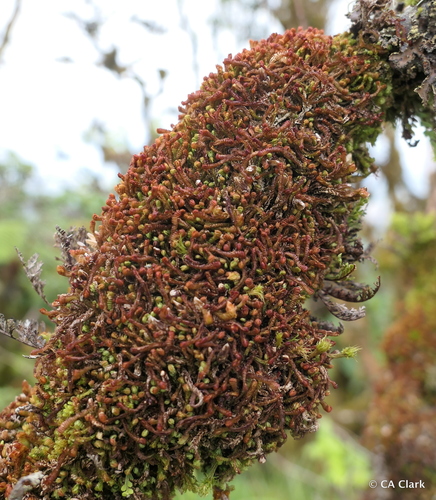
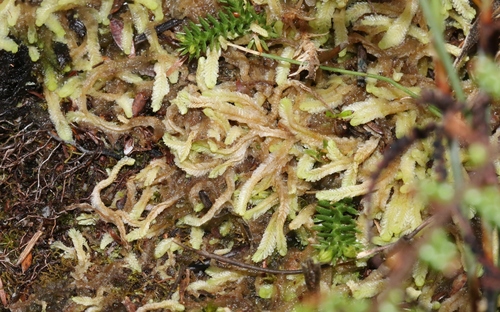
Plants are small, typically yellowish-green to brownish, forming loose mats or creeping individually among other bryophytes. Stems are prostrate to ascending, sparsely branched. Rhizoids are scattered on the ventral (underside) surface of the stem, anchoring the plant.
Leaves and Underleaves
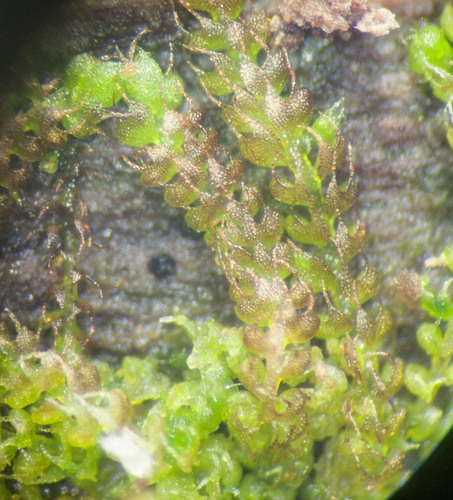
Leaves are arranged incubously along the stem (like overlapping roof shingles, where the upper margin of a lower leaf is covered by the lower margin of the leaf above it). They are typically broadly ovate and shallowly bilobed at the apex, though the sinus (notch) between the lobes can be very shallow, making them appear almost entire. Underleaves (smaller leaves on the ventral side) are present, usually small and bifid (split into two lobes).
Cellular Structure
Leaf cells are typically thin-walled, and often contain distinct oil bodies (membrane-bound organelles containing terpenoids), the number, size, and shape of which can be important taxonomic characters. Cell walls may have trigones (thickenings at the cell corners).
Reproductive Structures
Brevianthaceae are dioicous, meaning male and female reproductive structures occur on separate plants.
- Antheridia (male structures producing sperm) are borne in the axils of modified leaves (bracts) along the stem, often forming inconspicuous clusters.
- Archegonia (female structures containing the egg) are typically terminal on main shoots or branches. They are enclosed within a perianth, a protective tube-like structure formed from fused leaves, which is often inflated and has a contracted, lobed mouth.
Sporophytes and Spores
Following fertilization, the sporophyte develops within the archegonium and is protected by the perianth. The mature sporophyte consists of a foot (embedded in the gametophyte), a seta (stalk, which elongates rapidly at maturity), and a spherical to ovoid capsule.
The capsule contains spores and sterile cells called elaters. Elaters are typically elongated, spiral-thickened cells that twist and untwist with changes in humidity, aiding in spore dispersal when the capsule dehisces (usually by splitting into four valves).
Chemical Characteristics
Like many liverworts, Brevianthaceae possess characteristic oil bodies within their cells, containing various terpenoid compounds. The specific chemical composition is less studied compared to larger plant families but contributes to the plant's physiology and potentially defense.
Field Identification
Identifying Brevianthaceae in the field requires careful observation, often with a hand lens, due to their small size and specific habitat requirements in Tasmanian rainforests.
Primary Identification Features
- Habitat: Look in moist, shaded areas on soil banks, humus, or rock crevices in cool temperate rainforests of Tasmania.
- Size and Color: Small, leafy plants, typically yellowish-green to brownish.
- Leaf Arrangement: Distinctly incubous leaf arrangement (upper edge of lower leaf covered by leaf above).
- Leaf Shape: Broadly ovate leaves, appearing almost entire but technically shallowly bilobed at the apex.
- Underleaves: Presence of small, often bifid underleaves on the ventral stem surface (use hand lens).
Secondary Identification Features
- Branching Pattern: Sparsely branched stems.
- Texture: Plants often form loose, somewhat delicate mats.
- Reproductive Structures: Look for terminal perianths (inflated, protective structures around archegonia) on female plants. Male plants may have slightly modified bracts concealing antheridia.
- Sporophytes: If present, look for small capsules on elongated setae emerging from the perianths.
Seasonal Identification Tips
Brevianthaceae can be observed year-round as they are perennial gametophytes:
- Year-Round: Vegetative features (leaf arrangement, shape, underleaves) are always present.
- Wet Seasons (Autumn/Winter/Spring): Plants are likely more turgid and conspicuous. Reproductive structures (perianths, antheridia) may be more readily observed.
- Sporophyte Development: Sporophytes are most likely to mature and dehisce following periods of rain, often in spring or early summer, but timing can vary.
Common Confusion Points
Brevianthaceae might be confused with other small, leafy liverworts in the same habitat, particularly those with incubous leaves:
- Cephaloziaceae/Adelanthaceae members: Some genera in these related families share similar habitats and sizes. Distinguishing features often rely on subtle differences in leaf lobe depth/shape, underleaf presence/size, cell structure, oil bodies, and perianth characteristics (may require microscopic examination).
- Jackiellaceae members: Can be similar, but often differ in branching patterns, perianth shape, or underleaf form.
- Small Plagiochilaceae: While often larger, some small species could be confused, but typically have succubous (lower edge of upper leaf covers upper edge of lower leaf) or transverse leaf insertion, not incubous.
Field Guide Quick Reference (Tasmania)
Look For:
- Small size (mm scale)
- Yellowish-green/brownish color
- Incubous leaves
- Shallowly bilobed leaves
- Small, bifid underleaves
- Terminal perianths (female plants)
- Rainforest soil/rock habitat
Key Distinctions:
- Incubous vs. Succubous leaves
- Presence & form of underleaves
- Shallow leaf sinus
- Habitat specificity (Tasmanian rainforest)
- (Microscopic: Oil body details)
Notable Examples
The family Brevianthaceae contains only one genus, Brevianthus, with two recognized species:

Brevianthus flavus
(No common name)
The type species for the genus and family. Characterized by its yellowish-green color and specific cellular details. Found on soil and rock in shaded, moist locations within Tasmanian cool temperate rainforests. Distinguishing it from B. hypocanthidium often requires microscopic examination.

Brevianthus hypocanthidium
(No common name)
The second species in the genus, also endemic to Tasmania. It shares the general characteristics of the family, including incubous, shallowly bilobed leaves and small underleaves. Subtle differences in morphology, particularly potentially in the perianth or underleaf form, distinguish it from B. flavus.
Phylogeny and Classification
Brevianthaceae belongs to the division Marchantiophyta (liverworts), class Jungermanniopsida, order Jungermanniales. Within this large order, it is placed in the suborder Cephaloziineae. Its exact phylogenetic position relative to other families within this suborder is still an area of research, relying on both morphological and molecular data.
Liverworts represent one of the earliest diverging lineages of land plants (embryophytes). Brevianthaceae, as a small, endemic family, provides valuable data points for understanding the diversification and biogeographical history of leafy liverworts, particularly within the Australasian region.
Position in Plant Phylogeny
- Kingdom: Plantae
- Clade: Embryophytes (Land Plants)
- Division: Marchantiophyta (Liverworts)
- Class: Jungermanniopsida
- Order: Jungermanniales
- Suborder: Cephaloziineae
- Family: Brevianthaceae
Evolutionary Significance
The evolutionary significance of Brevianthaceae lies in:
- Endemism: Its restriction to Tasmania suggests a specific evolutionary history tied to the region's climate and geology, potentially representing a relictual lineage.
- Phylogenetic Placement: Helps resolve relationships within the diverse and complex Jungermanniales order, particularly the Cephaloziineae suborder.
- Morphological Traits: Exhibits a combination of characters (incubous leaves, specific underleaf form, perianth structure) that contribute to understanding character evolution in leafy liverworts.
- Biodiversity Contribution: Represents a unique component of global bryophyte diversity, highlighting the importance of conserving specialized habitats.