Adelanthaceae
Adelanthus Family
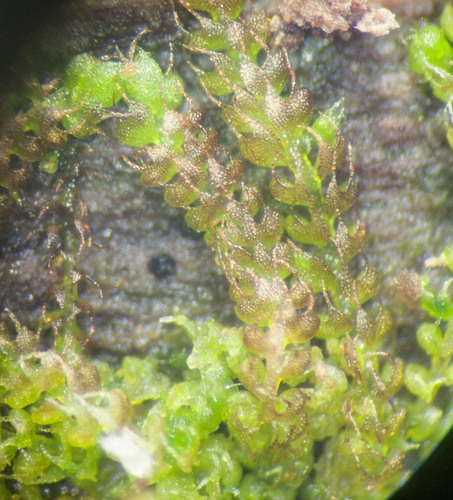
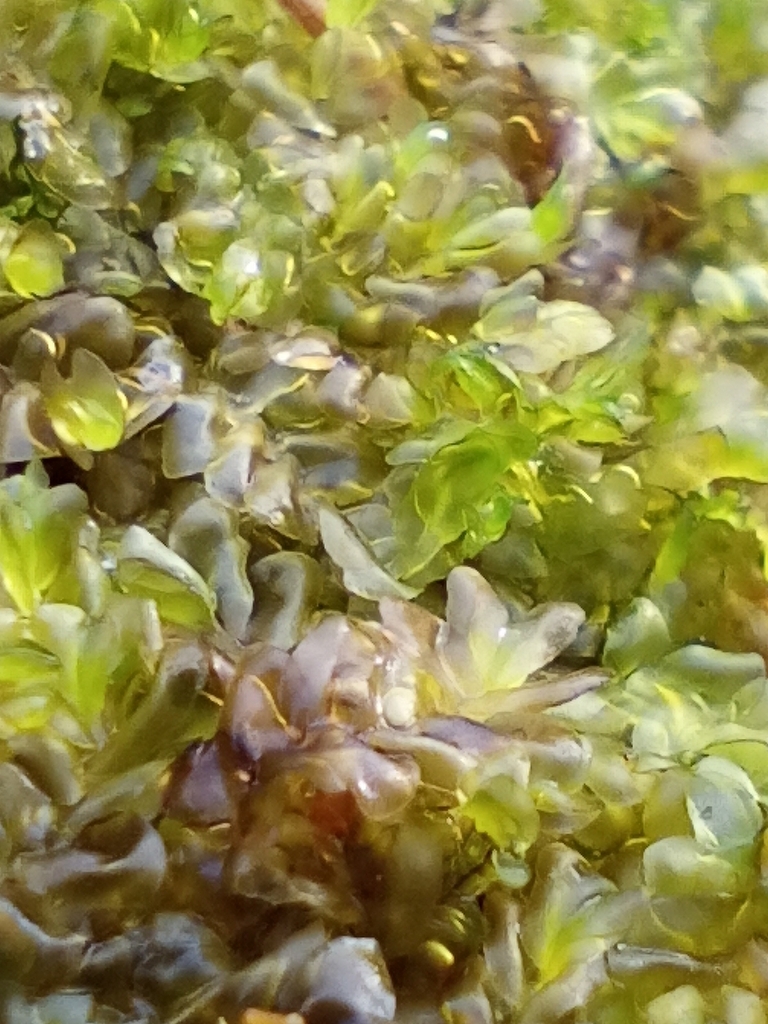
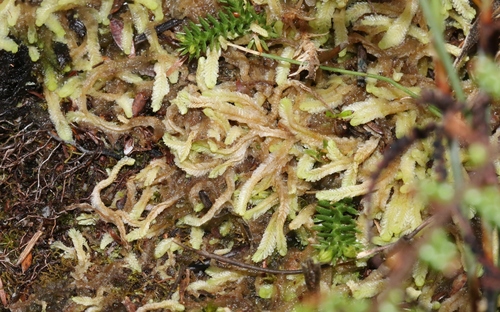
Adelanthaceae is a small family of leafy liverworts, primarily found in the Southern Hemisphere. It comprises two genera, Adelanthus and Wettsteinia. These plants often exhibit a distinct growth form with creeping rhizome-like stems giving rise to erect or ascending leafy shoots. They typically grow terrestrially in cool, humid temperate or montane environments.
Overview
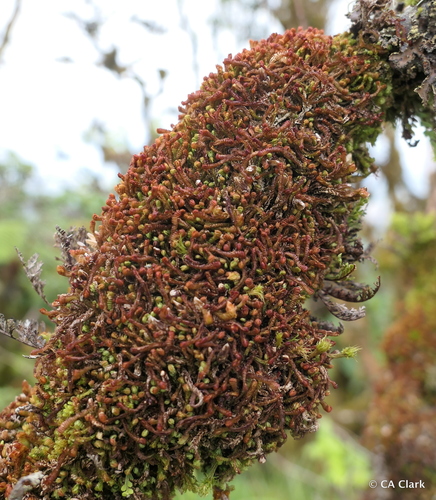
The Adelanthaceae family is a relatively small but distinct group within the vast order Jungermanniales. Containing the genera Adelanthus and Wettsteinia, the family is characterized by its predominantly Southern Hemisphere distribution, reflecting ancient Gondwanan origins. Plants often show a differentiation in habit, with creeping, subterranean or surface rhizomes producing erect, leafy, often unbranched or sparsely branched aerial shoots, giving them a turf-forming appearance.
Members of Adelanthaceae typically inhabit cool, moist terrestrial environments, growing on soil, humus, peat, decaying logs, or rocks in temperate rainforests, montane forests, bogs, and alpine or subantarctic heathlands. Their leaves are succubously arranged, and underleaves are often reduced or absent on the erect shoots, contributing to their characteristic appearance.
Phylogenetically, Adelanthaceae belongs to the suborder Cephaloziineae. Studying this family helps understand liverwort adaptations to terrestrial habitats, the evolution of differentiated growth forms, and the biogeographical history of the Southern Hemisphere bryoflora.
Quick Facts
- Scientific Name: Adelanthaceae
- Common Name: Adelanthus Family
- Number of Genera: 2 (Adelanthus, Wettsteinia)
- Number of Species: Approximately 15-16
- Distribution: Primarily Southern Hemisphere temperate and montane regions (Gondwanan), some extensions north
- Evolutionary Group: Liverworts (Marchantiophyta) - Jungermanniopsida - Cephaloziineae
Key Characteristics
Gametophyte Form and Habit
Plants are small to medium-sized, sometimes large, often forming dense turfs or mats. A key feature is the frequent differentiation into creeping, often subterranean, rhizome-like stems (stolons) and photosynthetic, erect or ascending leafy shoots. Color varies from green to yellowish-brown, reddish-brown, or dark brown. Branching of leafy shoots is often sparse, typically lateral (Frullania-type), while branching from the rhizomatous system is often ventral-intercalary.
Leaves and Underleaves
Leaves on erect shoots are arranged succubously. They are typically concave, often asymmetric, ovate to oblong or rounded-quadrate. Leaf margins can be entire or dentate. The leaf apex varies: it can be rounded, truncate, or distinctly bilobed or bidentate (especially in Adelanthus). Underleaves show significant variation; on erect shoots, they are often small, scale-like, lanceolate or bifid, and sometimes entirely absent. On creeping stems, underleaves may be larger or more developed. In Wettsteinia, underleaves can be larger and bifid even on erect stems.
Rhizoids
Rhizoids are typically frequent on the creeping stems, arising from the ventral surface or near underleaf bases, but often sparse or absent on the erect leafy shoots.
Cellular Structure
Leaf cells are usually isodiametric to slightly elongated. Cell walls are often moderately to strongly thickened, typically with distinct, sometimes bulging trigones. Oil bodies are present, varying among species.
Reproductive Structures
Plants are mostly dioicous, though some species are monoicous.
- Antheridia are found in the axils of modified bracts, forming intercalary spikes on stems or branches.
- Archegonia are terminal on leading erect shoots or main branches, surrounded by several pairs of bracts and bracteoles that are typically larger than the vegetative leaves/underleaves.
- A well-developed perianth is present, usually long, cylindrical to fusiform or clavate (club-shaped), typically strongly plicate (pleated) near the contracted mouth. Marsupia are absent.
Sporophytes and Spores
The sporophyte develops within the perianth. It consists of a foot, a seta, and an ovoid to cylindrical capsule. The capsule wall is multi-layered (typically 3-5 layers). Dehiscence occurs via four valves, releasing spores and elaters.
Field Identification
Identifying Adelanthaceae often involves recognizing the characteristic growth habit with erect shoots arising from creeping bases, along with leaf and underleaf details, in cool, humid terrestrial habitats.
Primary Identification Features
- Growth Habit: Often shows differentiation into creeping rhizomes/stolons and erect or ascending leafy shoots, frequently forming turfs.
- Leaves: Clearly succubous arrangement on erect shoots. Leaves entire or, more commonly, bilobed/bidentate at the apex.
- Underleaves: On erect shoots, often small, inconspicuous, or absent (though check creeping stems and genus Wettsteinia).
- Habitat: Typically terrestrial - on soil, humus, peat, logs, rocks in cool, humid temperate or montane regions (esp. Southern Hemisphere).
- Perianth: Terminal, long, plicate perianth (if fertile).
Secondary Identification Features
- Color: Often brownish or reddish-tinged, but can be green.
- Branching: Erect shoots often sparsely branched.
- Cell Walls (Microscopic): Typically with distinct trigones.
- Leaf Margin: Can be entire or dentate.
Seasonal Identification Tips
Adelanthaceae gametophytes are perennial and identifiable year-round:
- Year-Round: Growth habit, leaf arrangement/shape, and underleaf characteristics are constant vegetative features.
- Moisture: Plants are more easily observed when hydrated.
- Reproduction: Perianths containing developing sporophytes may be most apparent following favorable growth periods.
Common Confusion Points
Adelanthaceae can be confused with other turf-forming liverworts with succubous leaves:
- Jamesonielloideae (within Jungermanniaceae): Some species (e.g., Jamesoniella) have a similar habit with erect shoots and succubous leaves, but often differ in underleaf presence/shape, cell structure, or perianth details.
- Cephaloziaceae: Usually smaller, more delicate plants, often with more deeply bilobed leaves and typically lacking the distinct erect turf-forming habit from rhizomes.
- Some Geocalycaceae (Lophocolea, Chiloscyphus): Have succubous leaves, but typically possess large, conspicuous, bifid underleaves (unlike most Adelanthus erect shoots).
- Scapaniaceae: Have succubous leaves, but leaves are typically complicate-bilobed (folded with distinct dorsal and ventral lobes) and lack significant underleaves.
Field Guide Quick Reference
Look For:
- Erect shoots from creeping base (turf-forming)
- Succubous leaves
- Leaves entire or bilobed/bidentate
- Underleaves on erect shoots often small/absent
- Terrestrial habitat (soil, peat, logs)
- Cool, humid temperate/montane regions
- Long, terminal, pleated perianth
Key Distinctions:
- Erect habit from rhizomes
- Small/absent underleaves on erect shoots (usually)
- Succubous leaves (vs. incubous/transverse)
- Leaves not complicate-bilobed (vs. Scapaniaceae)
- Underleaves not large/bifid (vs. Geocalycaceae)
- Absence of marsupium/flagellae
Notable Examples
The family comprises two main genera:

Adelanthus lindenbergianus
(No common name)
A widespread species, particularly common in Southern Hemisphere temperate zones and extending northwards (e.g., Macaronesia, Andes). Forms dense, often brownish turfs. Erect shoots have succubous, typically bidentate or shallowly bilobed leaves and very small or absent underleaves. Commonly found on peat, soil, or logs.

Adelanthus falcatus
(No common name)
Another prominent species, often found in Australasia and South America. Similar turf-forming habit with erect shoots. Leaves are often strongly asymmetric and falcate (sickle-shaped), with an acute or bidentate apex. Underleaves typically absent on aerial shoots.

Wettsteinia densiretis
(No common name)
Representing the second genus, Wettsteinia species are found in similar Southern Hemisphere habitats. They differ from Adelanthus primarily in having larger, distinctly bifid underleaves that are often present even on erect shoots, and leaves that are typically entire or rounded at the apex rather than bilobed/bidentate.
Phylogeny and Classification
Adelanthaceae is classified within the liverwort division Marchantiophyta, class Jungermanniopsida, and order Jungermanniales. It belongs to the large suborder Cephaloziineae. Molecular phylogenetic studies confirm its placement within this suborder and support the monophyly of the family comprising the genera Adelanthus and Wettsteinia.
Within the Cephaloziineae, Adelanthaceae represents one of several distinct lineages. Its relationship to other families like Cephaloziaceae and Jackiellaceae is explored through ongoing research. The family's characteristic features, such as the differentiation of shoot systems and variable underleaf expression, provide valuable data for understanding morphological evolution within this suborder.
Position in Plant Phylogeny
- Kingdom: Plantae
- Clade: Embryophytes (Land Plants)
- Division: Marchantiophyta (Liverworts)
- Class: Jungermanniopsida
- Order: Jungermanniales
- Suborder: Cephaloziineae
- Family: Adelanthaceae
Evolutionary Significance
Adelanthaceae is significant for:
- Gondwanan Biogeography: Its distribution pattern strongly reflects ancient connections across the Southern Hemisphere continents.
- Morphological Differentiation: The common development of distinct creeping and erect shoot systems is an interesting adaptation.
- Underleaf Variation: The variability in underleaf size and presence within the family provides material for studying character evolution.
- Phylogenetic Insights: Helps resolve relationships within the diverse and complex suborder Cephaloziineae.