Hydrangeaceae
Hydrangea Family
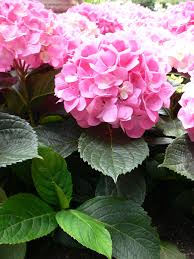
Hydrangeaceae is a family of flowering plants primarily composed of deciduous or evergreen shrubs, but also including some vines and small trees. They typically feature opposite, simple leaves, usually lacking stipules. Flowers are often arranged in showy, flat-topped or conical clusters (corymbs or panicles), and many species are known for having conspicuous, sterile marginal flowers surrounding the smaller fertile ones. The fruit is typically a capsule.
Overview
The Hydrangeaceae family includes about 17-19 genera and roughly 220-260 species. Its distribution is mainly centered in temperate and subtropical regions of the Northern Hemisphere, particularly Asia and North America, with some species extending into the Andes of South America and Malesia. The family is best known for the genus Hydrangea, widely cultivated for its large, showy inflorescences. Other horticulturally important genera include Philadelphus (Mock Orange) and Deutzia.
Members of this family occupy diverse habitats, from woodlands and forests to rocky slopes. The evolution of enlarged, petal-like sterile flowers in many Hydrangea species is a notable adaptation for attracting pollinators to the less conspicuous fertile flowers. Flower color in some cultivated hydrangeas (like H. macrophylla) is famously influenced by soil pH, which affects aluminum availability.
Economically, the primary importance of Hydrangeaceae lies in horticulture, with numerous species and cultivars grown globally as ornamental shrubs. Some species have limited use in traditional medicine or provide minor timber.
Quick Facts
- Scientific Name: Hydrangeaceae
- Common Name: Hydrangea family
- Number of Genera: Approximately 17-19
- Number of Species: Approximately 220-260
- Distribution: Primarily Northern Hemisphere temperate and subtropical regions; also Andes, Malesia.
- Evolutionary Group: Eudicots - Asterids - Order Cornales
Key Characteristics
Growth Form and Habit
Mostly deciduous or evergreen shrubs, sometimes climbing vines (lianas, e.g., some Hydrangea, Decumaria) or small trees.
Leaves
Leaves are usually arranged oppositely along the stem (rarely alternate or whorled). They are typically simple, with margins that are often toothed (serrated or dentate) or sometimes lobed or entire. Stipules are generally absent or minute.
Inflorescence
Inflorescences are typically terminal clusters, commonly broad, flat-topped or rounded corymbs, or sometimes elongated panicles. A characteristic feature of many species, especially in Hydrangea, is the presence of showy, sterile marginal flowers with enlarged, petal-like sepals surrounding the smaller, fertile inner flowers.
Flowers
Flowers are usually bisexual (except the sterile marginal ones) and typically radially symmetrical (actinomorphic). Flower parts are commonly in 4s or 5s.
- Sepals: 4 or 5 small sepals, often fused at the base and persistent on the fruit. (In sterile flowers, these become large and petal-like).
- Petals: 4 or 5 free petals, usually white, pink, or bluish. (Absent in sterile flowers).
- Androecium: Stamens usually twice the number of petals (commonly 8 or 10), sometimes numerous (e.g., Philadelphus). Filaments are distinct.
- Gynoecium: Ovary is usually inferior or semi-inferior (rarely superior), composed of 2-5 (sometimes more) fused carpels. It typically has as many locules as carpels with axile placentation, or sometimes becomes 1-locular with parietal placentation. Ovules are usually numerous. Styles are typically free and equal in number to the carpels, with distinct stigmas.
Fruits and Seeds
The most common fruit type is a capsule, typically dry and splitting open between the styles or by pores at the top (loculicidal or septicidal dehiscence) to release seeds. The capsule is often ribbed and crowned by the persistent calyx lobes and styles. Less commonly, the fruit may be a berry. Seeds are small and numerous, usually with endosperm.
Chemical Characteristics
Plants in this family often accumulate aluminum, which famously affects the flower color (blue vs. pink) in Hydrangea macrophylla depending on soil pH and aluminum availability. They may also contain iridoid glycosides, saponins, and sometimes cyanogenic glycosides.
Field Identification
Identifying Hydrangeaceae often relies on recognizing the shrubby habit, opposite leaves, characteristic flower clusters (often with sterile flowers), and capsule fruits.
Primary Identification Features
- Habit: Mostly shrubs, sometimes vines or small trees.
- Leaves: Usually opposite, simple, often toothed or lobed, stipules absent.
- Inflorescence: Typically corymbs or panicles, often flat-topped or rounded.
- Sterile Flowers: Often present on the margin of the inflorescence, with large, petal-like sepals (esp. Hydrangea).
- Fertile Flowers: 4 or 5 petals (usually white/pink/blue), often 8 or 10 stamens (sometimes many).
- Ovary: Usually inferior or semi-inferior.
- Fruit: Typically a capsule, often crowned by persistent sepals/styles.
Secondary Identification Features
- Branching: Opposite branching pattern.
- Buds: Often covered by a few scales.
- Number of Styles: Usually 2-5, free.
- Stamen Number: Often twice the number of petals.
Seasonal Identification Tips
- Late Spring/Summer: Flowering season; the showy inflorescences (with or without sterile flowers) are key.
- Fall/Winter: Fruits (capsules) mature and may persist. Dried flower heads (especially the papery sterile flowers) can remain conspicuous. Opposite branching and buds aid winter ID. Some species have fall color.
Common Confusion Points
Shrubs with opposite leaves and showy flower clusters can be confused:
- Viburnaceae/Adoxaceae (Viburnum): Also shrubs with opposite simple leaves and often flat-topped cymes, sometimes with sterile marginal flowers. However, Viburnum flowers are consistently 5-merous with 5 stamens, a single short style with a 3-lobed stigma, and the fruit is a drupe (single stone), not a capsule.
- Caprifoliaceae (Honeysuckle family): Includes shrubs and vines with opposite leaves, but flowers are often zygomorphic (bilaterally symmetrical) and tubular or 2-lipped, and fruit types vary (berries, capsules, achenes).
- Cornaceae (Dogwood family): Many dogwoods are shrubs/trees with opposite simple leaves, but flowers are typically 4-merous, often small and sometimes subtended by large showy bracts (not sterile flowers), and the fruit is a drupe. Leaves often have arcuate venation.
The combination of opposite simple leaves (no stipules), corymbose/paniculate inflorescences often with sterile marginal flowers, 4- or 5-merous fertile flowers with usually 8/10 stamens, inferior/semi-inferior ovary with multiple free styles, and a capsule fruit is characteristic of Hydrangeaceae.
Field Guide Quick Reference
Look For:
- Shrub (mostly), vine, small tree
- Leaves opposite, simple, no stipules
- Flowers in corymbs or panicles
- Sterile marginal flowers often present
- Fertile flowers 4-5 petals, 8-10 stamens
- Ovary inferior or semi-inferior
- Fruit a capsule
Key Variations:
- Presence/absence of sterile flowers
- Flower parts in 4s vs 5s
- Inflorescence shape (flat vs. conical)
- Leaf shape/margin
- Habit (shrub vs. vine)
Notable Examples
Includes many popular garden shrubs valued for their flowers.

Hydrangea macrophylla
Bigleaf Hydrangea / Mophead / Lacecap
A widely cultivated deciduous shrub native to Japan. Famous for its large, rounded ('mophead') or flat-topped ('lacecap') inflorescences. Lacecaps have fertile inner flowers surrounded by sterile marginal ones; mopheads consist almost entirely of sterile flowers. Flower color (pink or blue) depends on soil pH affecting aluminum uptake.

Hydrangea paniculata
Panicle Hydrangea / PeeGee Hydrangea
A large deciduous shrub or small tree native to East Asia. Known for its large, conical panicles of flowers produced in mid-late summer. Inflorescences typically contain both fertile and sterile flowers; the sterile flowers often age from white to pink or reddish. Many cultivars exist ('Limelight', 'Grandiflora').

Philadelphus spp.
Mock Orange
A genus of deciduous shrubs primarily from North America, Asia, and southeastern Europe. Cultivated for their abundant, often highly fragrant, white flowers produced in late spring or early summer. Flowers typically have 4 petals and numerous stamens. They lack the showy sterile flowers of many hydrangeas. Fruit is a capsule.

Deutzia spp.
Deutzia
A genus of deciduous (rarely evergreen) shrubs native mainly to Asia, with a few species in Central America. Grown for their profuse clusters (usually panicles or racemes) of typically white or pinkish, 5-petaled flowers in spring or early summer. Stamens often have winged filaments. Fruit is a capsule.
Phylogeny and Classification
Hydrangeaceae belongs to the order Cornales, which is positioned as an early diverging lineage within the large asterid clade of eudicots. Cornales is distinct from the two largest asterid subclades, the lamiids and campanulids, representing a separate evolutionary branch.
Molecular phylogenetic studies have clarified the relationships within Cornales. Hydrangeaceae is consistently recovered as a well-supported family. Its closest relatives within the order include Loasaceae (Stickleaf family), Grubbiaceae, Curtisiaceae, and Nyssaceae (Tupelo family), along with the namesake family Cornaceae (Dogwood family). The order exhibits considerable morphological diversity, ranging from herbs and shrubs to large trees.
Position in Plant Phylogeny
- Kingdom: Plantae
- Clade: Angiosperms (Flowering plants)
- Clade: Eudicots
- Clade: Asterids
- Order: Cornales
- Family: Hydrangeaceae
Evolutionary Significance
Hydrangeaceae holds interest from several evolutionary perspectives:
- Asterid Diversity: Represents a distinct lineage within the Cornales, contributing to the understanding of relationships and character evolution among early-diverging asterids.
- Inflorescence Evolution: The repeated evolution of showy sterile marginal flowers in Hydrangea provides a model system for studying the genetic and developmental basis of floral modifications for pollinator attraction.
- Horticultural Importance: The selection and hybridization within genera like Hydrangea, Philadelphus, and Deutzia demonstrate human influence on plant diversification for ornamental purposes.
- Biogeography: The family's distribution patterns, particularly the disjunctions between Asia and the Americas, reflect historical connections and dispersal events across the Northern Hemisphere.
- Physiological Adaptations: Aluminum accumulation and pH-dependent flower color change in some hydrangeas illustrate interesting plant physiological mechanisms.