Loasaceae
Stickleaf Family / Rock Nettle Family
The Loasaceae family, commonly known as the stickleaf or rock nettle family, comprises herbaceous plants, shrubs, and occasionally vines, renowned for their often intricate and painful hairs. Primarily found in the Americas, with some species in Africa and the Marquesas Islands, they often inhabit arid, rocky, or disturbed environments. The family belongs to the order Cornales.
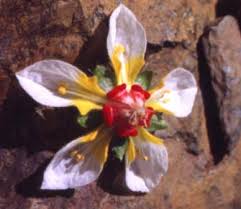
Overview
Loasaceae is a moderately sized family containing about 15-20 genera and 250-300 species. Its members are perhaps most famous for their diverse and often formidable epidermal hairs, which can be stinging (urticating), barbed (glochidiate), or simply rough (scabrid). These hairs serve as a defense mechanism and are a key characteristic of the family.
The family's distribution is centered in the temperate and tropical regions of North and South America, particularly in drier, mountainous, or coastal areas. A smaller number of species occur in southwestern Africa and the Marquesas Islands in the Pacific. Many species are adapted to harsh conditions, thriving on rocky slopes, deserts, and disturbed ground. Flowers are often showy, attracting various pollinators.
While some species are grown ornamentally (e.g., Mentzelia), the family has limited direct economic importance. However, their unique biology, particularly their hair structures and adaptations to arid environments, makes them ecologically and evolutionarily interesting.
Quick Facts
- Scientific Name: Loasaceae
- Common Name: Stickleaf family, Rock Nettle family
- Number of Genera: Approximately 15-20
- Number of Species: Approximately 250-300
- Distribution: Primarily Americas (North and South), also southwestern Africa and Marquesas Islands. Often in arid/rocky habitats.
- Evolutionary Group: Eudicots - Asterids - Cornales
Key Characteristics
Growth Form and Habit
Members range from annual or perennial herbs and subshrubs to larger shrubs and occasionally lianas (vines). Stems and leaves are typically covered in characteristic hairs.
Hairs (Trichomes)
This is a defining feature. Loasaceae possess highly specialized hairs, often mineralized with silica or calcium carbonate. Common types include:
- Stinging hairs: Similar to nettles (Urtica), these inject irritants upon contact (e.g., in Loasa, Caiophora).
- Barbed hairs (glochids): These hairs have backward-pointing barbs that cause them to cling tenaciously to skin, fur, or clothing (e.g., in Mentzelia - hence "stickleaf").
- Scabrid hairs: Simple, stiff hairs giving a rough texture.
- Combinations of hair types often occur on the same plant.
Leaves
Leaves are highly variable, typically alternate or opposite, simple or variously lobed to deeply pinnatifid (fern-like). Margins can be entire to serrate. They lack stipules (exstipulate) and often feel rough or sticky due to the hairs.
Inflorescence
Flowers are often borne in terminal cymes, which can be complex and branched (thyrses), or sometimes flowers are solitary.
Flowers
Flowers are often large and showy, usually actinomorphic (radially symmetrical) or nearly so. Key features include:
- Calyx: Usually 5 persistent sepals (sometimes 4 or up to 7).
- Corolla: Usually 5 petals (sometimes 4 or up to 7), often distinctively shaped – frequently clawed (narrowed at the base) and sometimes concave, hooded, or boat-shaped. Petal color varies widely (white, yellow, orange, red, pink).
- Androecium: Stamens are typically numerous (often 20 to hundreds), sometimes arranged in bundles opposite the petals. The outermost stamens may be modified into sterile, often petal-like or nectar-producing structures called staminodes.
- Gynoecium: The ovary is usually inferior (below the attachment of sepals and petals), though sometimes half-inferior or rarely superior. It is typically composed of 3-5 (rarely more) fused carpels, usually with a single locule and parietal placentation (ovules attached to the ovary wall). The style is single, often slender, with a simple or lobed stigma.
Fruits and Seeds
The fruit is most commonly a capsule that dehisces (splits open) in various ways (e.g., loculicidally, septicidally, by apical valves or pores). Less commonly, the fruit may be an achene or schizocarp. Seeds are often numerous, sometimes winged or sculptured.
Field Identification
Identifying Loasaceae often hinges on recognizing their unique hairs and distinctive flower structures:
Primary Identification Features
- Presence of characteristic hairs: Check leaves and stems for stinging hairs (handle with extreme care!) or barbed/sticking hairs (touch lightly with fabric or skin). Rough texture is common. This is often the most immediate clue.
- Showy flowers with numerous stamens: Look for flowers with many stamens, often surrounding a central style.
- Distinctive petals: Petals are often clawed (narrowed base) and may be concave or hooded.
- Inferior ovary (usually): Observe the flower structure to see if the ovary sits below the petals and sepals.
- Capsule fruit: Look for dry, dehiscent fruits, often topped by the persistent calyx lobes.
Secondary Identification Features
- Leaf arrangement and shape: Note if leaves are alternate or opposite, simple or lobed/divided.
- Habitat: Often found in dry, sunny, rocky, or sandy locations, or disturbed areas.
- Flower color: While variable, bright yellows and oranges are common in Mentzelia, reds and whites in Loasa/Caiophora.
Seasonal Identification Tips
Flowering time varies greatly depending on species and climate, often linked to rainfall in arid regions.
- Flowering Season: Look for the conspicuous flowers during spring, summer, or fall, depending on the local climate and species. Some desert species bloom briefly after rains.
- Fruiting Season: Capsules develop after flowering; the barbed hairs on fruits of stickleaf species (Mentzelia) are prominent during this time.
- Off-Season: Basal rosettes or dried stems might be present. The characteristic hairs often remain identifiable even on dead material.
Common Confusion Points
While the hairs are distinctive, confusion might arise with:
- Urticaceae (Nettle Family): Share stinging hairs but have very different, typically small, inconspicuous green flowers, usually with opposite leaves and stipules.
- Malvaceae (Mallow Family): Some have rough hairs (stellate hairs), but flowers have 5 separate petals and a distinctive column of fused stamens surrounding the style.
- Boraginaceae (Borage Family): Many have rough hairs, but flowers are typically tubular with 5 stamens, and fruits are usually nutlets.
Field Guide Quick Reference
Look For:
- Stinging or barbed/sticking hairs!
- Herbs or shrubs, often in dry/rocky places
- Alternate or opposite leaves, often lobed
- Showy flowers
- Numerous stamens
- Often 5 clawed petals
- Inferior ovary (usually)
- Capsule fruit
Key Variations:
- Hair type (stinging vs. barbed vs. rough)
- Flower color (yellow, orange, white, red)
- Presence/form of staminodes
- Leaf division (simple to highly pinnatifid)
- Capsule dehiscence type
Notable Examples
The family includes several well-known genera, especially in the Americas:

Mentzelia decapetala
Tenpetal Blazingstar
A striking biennial native to the Great Plains and western North America. Known for its very large, pale yellow to white flowers that open in the evening and have numerous stamens. The leaves have barbed hairs, characteristic of the "stickleaf" group within Mentzelia. It often grows in dry, gravelly, or disturbed soils.

Mentzelia laevicaulis
Giant Blazingstar
Another impressive species from western North America, often found on road cuts and disturbed slopes. It has large, bright yellow flowers with numerous stamens and distinctive smooth, white, shiny stems (laevicaulis = smooth stem). Unlike stickleafs, its hairs are less barbed.

Loasa spp.
Rock Nettles
This genus, primarily found in the Andes of South America, is notorious for its potent stinging hairs. Species often have intricate flowers, typically white, yellow, or reddish, with complex staminodes and distinctively shaped petals. Handle any suspected Loasa with extreme caution.

Caiophora spp.
(Related to Rock Nettles)
Also predominantly Andean, this genus is closely related to Loasa and shares the characteristic stinging hairs. Many species are vines or scrambling herbs with often reddish or orange flowers. Like Loasa, they possess complex floral structures and require careful handling.
Phylogeny and Classification
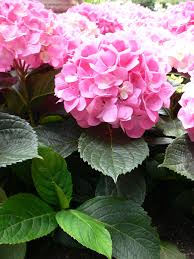
Loasaceae is placed within the order Cornales, a basal lineage within the Asterid clade of Eudicots. This placement might seem surprising as Cornales also includes woody families like Cornaceae (dogwoods) and Hydrangeaceae (hydrangeas), which appear morphologically quite different. However, molecular data strongly supports this relationship.
Within Cornales, Loasaceae is sister to a clade containing Hydrangeaceae and several smaller families. The order Cornales itself is sister to the remainder of the Asterids. The evolution of herbaceousness and specialized features like stinging/barbed hairs within Loasaceae represent significant divergences from the ancestral traits of the order.
Position in Plant Phylogeny
- Kingdom: Plantae
- Clade: Angiosperms (Flowering plants)
- Clade: Eudicots
- Clade: Asterids
- Order: Cornales
- Family: Loasaceae
Evolutionary Significance
Loasaceae showcases several interesting evolutionary trends:
- Development of specialized hairs: The evolution of complex stinging and barbed trichomes is a major adaptation for defense and potentially dispersal.
- Floral diversity: The family exhibits wide variation in flower size, color, petal shape, and the structure of stamens and staminodes, reflecting diverse pollination strategies.
- Adaptation to arid environments: Many species possess traits suited for survival in dry conditions.
- Placement in Cornales: Its position highlights the sometimes unexpected relationships revealed by molecular phylogenetics and the deep evolutionary history of Asterids.