Cornaceae
Dogwood Family
Cornaceae, the Dogwood family (including the former Nyssaceae - Tupelo family, under APG classification), is a family of deciduous or evergreen trees and shrubs belonging to the order Cornales, a basal lineage of Asterids. Found mostly in Northern Hemisphere temperate regions but extending into the tropics, members typically have simple leaves (usually opposite in Cornus, alternate in Nyssa), often with entire margins and distinctive arcuate venation in Cornus. Flowers are small, 4- or 5-merous, often clustered in heads or cymes (sometimes subtended by showy bracts), with an inferior ovary developing into a drupe fruit. Several Cornus species and Nyssa are native to Oklahoma.
Overview
Cornaceae belongs to the order Cornales, which occupies a crucial position as one of the earliest diverging lineages within the large Asterid clade of eudicots. As circumscribed by the Angiosperm Phylogeny Group (APG IV), the family is broader than traditional definitions and includes genera formerly placed in Nyssaceae (like Nyssa - Tupelos/Black Gum, Davidia - Dove Tree) alongside the core genus Cornus (Dogwoods) and Alangium. This expanded family comprises about 7 genera and roughly 85 species of trees and shrubs (rarely subshrubs).
The family is primarily distributed across Northern Hemisphere temperate zones, but extends into mountainous tropical regions in Asia and the Americas, and includes species in South America and Africa (Alangium). Key characteristics include generally simple leaves (usually opposite in Cornus, alternate in Nyssa), typically with entire margins and lacking stipules. The genus Cornus often exhibits distinctive arcuate venation where secondary veins curve smoothly towards the leaf tip. Flowers are typically small, 4- or 5-merous, radially symmetrical, and borne above an inferior ovary (epigynous). They are often aggregated into dense clusters (cymes, umbels, heads), which in some well-known Cornus species (like Flowering Dogwood) and Davidia are subtended by large, showy, petal-like bracts that serve to attract pollinators. The fruit is consistently a drupe (a fleshy fruit with a stony pit), often brightly colored.
Cornaceae holds significant horticultural importance, particularly the genus Cornus, which includes many popular ornamental trees and shrubs valued for flowers, bracts, fruit, fall color, or colorful winter twigs. Nyssa species are valued for timber (Tupelo) and brilliant fall foliage. Several species are native and common in Oklahoma, including Cornus florida (Flowering Dogwood), Cornus drummondii (Roughleaf Dogwood), and Nyssa sylvatica (Black Gum) in eastern parts of the state.
Quick Facts
- Scientific Name: Cornaceae Bercht. & J.Presl (sensu APG IV)
- Common Name: Dogwood family
- Number of Genera: Approximately 7
- Number of Species: Approximately 85
- Distribution: Primarily N Hemisphere temperate, also montane tropics, S. America, Africa (Alangium).
- Evolutionary Group: Eudicots - Asterids (Basal Asterid) - Order Cornales
Key Characteristics
Growth Form and Habit
Deciduous or evergreen shrubs and trees, rarely rhizomatous subshrubs. Twigs sometimes distinctively colored (e.g., red in Cornus sericea). Often possess characteristic unicellular T-shaped or Y-shaped hairs (requires magnification).
Leaves
Leaf arrangement usually opposite (Cornus, Alangium) but sometimes alternate (Nyssa, Davidia, Mastixia, etc.). Leaves are simple, typically with entire margins (though sometimes toothed or lobed in Nyssa or Alangium). Venation is pinnate; in Cornus, the secondary veins often curve smoothly towards the apex without reaching the margin (arcuate venation) - stretching the leaf blade often causes vascular strands to remain connected, a useful field trick. Stipules are absent (exstipulate).
Inflorescence
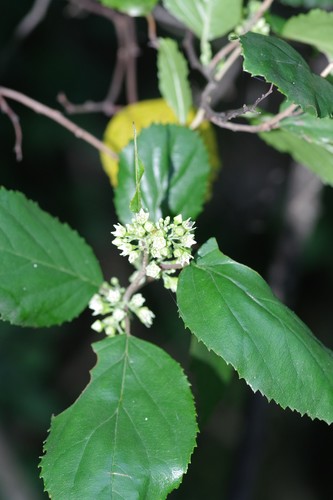
Inflorescences are variable, often terminal. Common types include open or flat-topped cymes (Cornus drummondii), umbels, or dense heads. In several species of Cornus (subgenera Cynoxylon and Benthamidia) and in Davidia, the compact inflorescence of small true flowers is surrounded by 4 to 6 (or 2 in Davidia) large, petaloid, typically white or pink bracts that are the main source of visual display.
Flowers
Flowers are generally small, actinomorphic (radially symmetrical), and usually bisexual (perfect), although frequently unisexual in the Nyssoid genera (plants then often dioecious or polygamo-dioecious). Flowers are epigynous (borne above the ovary) and typically 4- or 5-merous.
- Calyx: Consists of 4 or 5 small teeth or lobes fused to the summit of the inferior ovary, often inconspicuous and persistent.
- Corolla: Consists of 4 or 5 petals, which are free (distinct), usually small, often white, greenish, or yellowish. Petals are valvate or imbricate in bud. (Corolla absent in female flowers of Davidia).
- Androecium: Stamens number 4 or 5 (sometimes 8-10 in Nyssoids), arranged in a single whorl alternating with the petals. They are inserted on the surface of an epigynous nectar disk. Filaments are distinct; anthers usually dorsifixed or basifixed, 2-thecate, opening via longitudinal slits.
- Gynoecium: The ovary is inferior (very rarely superior in some Alangium), composed of (1-)2(-4) fused carpels forming a (1-)2(-4)-locular ovary. Each locule contains a single pendulous ovule attached near the apex (apical or apical-axile placentation). A single style arises from the center, topped by a simple or slightly lobed stigma(s). A prominent, often cushion-like or annular nectar disk typically crowns the ovary.
Fruits and Seeds
The fruit is consistently a drupe (a fleshy fruit with one or more hard inner "stones" or pits enclosing the seeds). The drupe can be globose, ovoid, or oblong, and is often brightly colored when ripe (red, blue, black, or white). The stone (endocarp) is bony or woody, may be smooth or ridged, and contains 1 or 2 (up to 4) seeds. Seeds possess abundant oily endosperm and a relatively large embryo.
Chemical Characteristics
Plants typically contain iridoid compounds (e.g., cornin), tannins, and accumulate calcium oxalate crystals. The presence of specific unicellular T-shaped or Y-shaped hairs is also characteristic microscopically.
Field Identification (Cornaceae sensu lato)
Identifying members of the expanded Dogwood family involves recognizing tree/shrub habit, simple leaves (opposite or alternate), characteristic flowers (often small, sometimes with large bracts), inferior ovary, and drupe fruits.
Primary Identification Features
- Habit: Tree or shrub (rarely subshrub).
- Simple Leaves: Usually with entire margins (check arrangement - opposite or alternate).
- Arcuate Venation (in Cornus): Secondary veins curve smoothly towards leaf tip.
- Showy Bracts (in some Cornus, Davidia): Large white/pink petal-like bracts subtending flower clusters.
- Small 4-5 merous Flowers: Often in dense cymes, heads, or umbels.
- Inferior Ovary: Positioned below calyx/corolla/stamens, often topped by nectar disk.
- Fruit a Drupe: Fleshy fruit with 1-4 internal hard stones (often red, blue, white, black).
- Native Species in Oklahoma: Cornus florida, C. drummondii, Nyssa sylvatica present locally.
Secondary Identification Features
- Exstipulate leaves (no stipules).
- T-shaped hairs present (microscopic).
- Flowers often bisexual (Cornus) or unisexual (Nyssa, Davidia).
- Distinctive bark (Nyssa - blocky; some Cornus - blocky or colorful twigs).
Seasonal Identification Tips (relevant to Oklahoma)
- Spring: Look for Cornus florida's iconic white/pink bracts before/as leaves emerge. Later spring/early summer, look for Cornus drummondii's flat-topped cymes of small white flowers (no bracts). Nyssa flowers inconspicuous green in spring.
- Summer: Observe leaf arrangement (opposite for Dogwoods, alternate for Black Gum) and shape. Check for arcuate venation in Cornus.
- Fall: Cornus florida develops bright red drupes. Cornus drummondii has white drupes. Nyssa sylvatica displays brilliant scarlet, orange, or yellow fall foliage and small dark blue drupes favored by birds.
- Winter: Cornus florida has distinctive large, biscuit-shaped terminal flower buds. Cornus drummondii has smaller buds. Nyssa has distinct branching pattern and bark. Red twigs of Cornus sericea (if planted) are prominent.
Common Confusion Points
- Viburnums (Viburnum, Adoxaceae): Often confused with bractless dogwoods (C. drummondii). Viburnums also have opposite simple leaves and drupe fruits, but usually possess small stipules or glands at petiole base, flowers often have 5-lobed stigmas (vs. simple/capitate in Cornus), and leaf venation is typically pinnate, not arcuate.
- Maples (Acer, Sapindaceae): Have opposite leaves, but leaves are typically palmately lobed (except Boxelder), and fruit is a distinctive winged samara, not a drupe.
- Ashes (Fraxinus, Oleaceae): Have opposite leaves, but they are pinnately compound, and fruit is a samara.
- Persimmon (Diospyros, Ebenaceae): Trees with alternate simple entire leaves, but flowers differ (often unisexual, sympetalous), ovary superior, fruit a large berry. (Order Ericales).
- The combination of usually opposite simple entire leaves (often arcuate veins), +/- showy bracts, inferior ovary, and drupe fruit strongly points to Cornaceae (Cornus). Alternate leaves + drupe fruit suggests Nyssa.
Field Guide Quick Reference (Cornaceae s.l.)
Look For:
- Tree or Shrub
- Simple leaves, usually entire
- Leaves Opposite (Cornus) or Alternate (Nyssa)
- Arcuate venation common in Cornus
- +/- Large, showy bracts
- Flowers small, 4-5 merous
- Ovary Inferior
- Fruit a Drupe
Key Variations:
- Leaf Arrangement (Opposite vs. Alternate)
- Presence/Absence of Showy Bracts
- Inflorescence Type (Head, Cyme, Umbel)
- Flower Sexuality (Bisexual vs. Unisexual)
- Drupe color (Red, White, Blue, Black)
Notable Examples
The expanded Cornaceae includes the familiar dogwoods, tupelos (black gums), and the unique dove tree, with several species native to Oklahoma.

Cornus florida
Flowering Dogwood
A beloved small deciduous tree native to eastern North America, including eastern Oklahoma. Famous for its four large, white (or pink) petal-like bracts surrounding the central cluster of tiny true flowers in spring. Leaves opposite with arcuate veins. Fruit a cluster of bright red drupes.

Other Cornus Types
Shrub Dogwoods, Kousa Dogwood
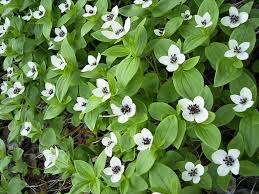
Includes shrubby species like C. drummondii (Roughleaf Dogwood, native to OK) with flat-topped cymes of small white flowers (no bracts) and white drupes, and C. sericea (Red Osier Dogwood) with red winter twigs. Also includes Asian species like C. kousa (Kousa Dogwood) with pointed bracts appearing after leaves.

Nyssa sylvatica
Black Gum, Black Tupelo
A deciduous tree native to eastern North America, including moist woods in eastern Oklahoma. Distinctive for its alternate, simple, entire, glossy leaves that turn brilliant scarlet in fall. Flowers are small and inconspicuous (plants often dioecious). Fruit is a small, dark blue drupe favored by wildlife. Bark becomes blocky with age. (Formerly Nyssaceae).

Davidia involucrata
Dove Tree, Handkerchief Tree
A deciduous tree native to China, famous for the two large, unequal white bracts that hang below each flower head, fluttering in the breeze. Flowers themselves are small, mostly male with a single female flower in some heads. Fruit is a greenish drupe with a grooved stone. Cultivated ornamentally. (Formerly Nyssaceae).

Cornus Fruit
Dogwood Drupes
The fruit in Cornus (and all Cornaceae) is a drupe. It contains a hard stone (endocarp) surrounding the seed(s). Drupes in Cornus are often brightly colored - red (C. florida, C. mas), white (C. sericea, C. drummondii), or blue/black (C. alternifolia) - and are important food for birds and wildlife.
Phylogeny and Classification
Cornaceae is the principal family within the order Cornales. This order represents a relatively early diverging lineage within the large Asterid clade, sister to the massive core Asterid radiation that includes orders like Gentianales, Lamiales, Solanales, and Asterales. Thus, Cornales provides key insights into the early evolution of Asterids.
The Angiosperm Phylogeny Group (APG) classification has significantly broadened Cornaceae to achieve monophyly. Based on strong molecular evidence, it now includes genera previously placed in families like Nyssaceae (Nyssa, Davidia, Camptotheca, Diplopanax, Mastixia) and Alangiaceae (Alangium), alongside the traditional genus Cornus. This makes Cornaceae encompass most of the diversity within the Cornales order, leaving only a few small, species-poor families separate (Hydrostachyaceae, Grubbiaceae, Curtisiaceae, Loasaceae).
Position in Plant Phylogeny
- Kingdom: Plantae
- Clade: Angiosperms (Flowering plants)
- Clade: Eudicots
- Clade: Asterids
- Clade: Basal Asterids
- Order: Cornales
- Family: Cornaceae (sensu APG IV)
Evolutionary Significance
Cornaceae (sensu lato) is significant for understanding Asterid evolution:
- Basal Asterid Lineage: Its position near the base of the Asterid tree makes it crucial for studying the origins and early diversification of this major eudicot clade (which contains about 1/3 of all angiosperms).
- Inclusion of Nyssoids: The merger based on molecular data highlights how phylogenetic relationships can sometimes contrast with traditional morphological groupings.
- Evolution of Showy Bracts: The independent evolution of large, petal-like bracts surrounding inconspicuous flowers in some Cornus species and Davidia is a classic example of convergent evolution for pollinator attraction.
- Drupe Fruit Consistency: The prevalence of the drupe fruit type across the morphologically diverse members suggests it might be an ancestral trait for the group, strongly linked to animal dispersal.
- Biogeography: The family's primarily Northern Hemisphere temperate distribution, with disjunctions and outliers, provides data for historical biogeographic studies of Asterids.