Costaceae
Spiral Ginger Family
Costaceae, the Spiral Ginger family, consists of perennial, rhizomatous herbs found throughout the tropics (pantropical). Belonging to the monocot order Zingiberales and closely related to true gingers (Zingiberaceae), they are often recognizable by their stems bearing leaves in a distinct spiral arrangement. Key features include simple leaves with a prominent ligule and sheathing base, showy zygomorphic flowers typically borne in dense, cone-like spikes with colorful bracts, a unique floral structure with only one fertile, petal-like stamen and a large petaloid labellum derived from sterile stamens, an inferior ovary, and fruit usually a capsule containing arillate seeds.
Overview
Costaceae is placed within the order Zingiberales, a group of tropical monocots known for large herbaceous members like bananas, heliconias, and true gingers. Costaceae itself is considered the sister family to Zingiberaceae (the Ginger family). It comprises about 7 genera and roughly 140 species of perennial herbs growing from fleshy rhizomes, distributed across the tropical regions of the Americas, Africa, Asia, and Australia, typically in moist forest environments.
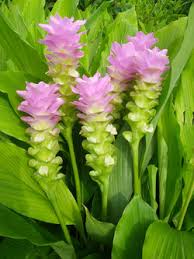
Many species in the family are known as "Spiral Gingers" due to the characteristic spiral arrangement of leaves around the stem, although this feature is not universal across all genera/species. Leaves are simple, entire, and possess both a basal sheath enclosing the stem and a prominent ligule at the sheath-blade junction. Inflorescences are usually dense, terminal, cone-like spikes composed of overlapping, often brightly colored bracts, from which the showy flowers emerge one or a few at a time.
The flowers are highly distinctive and key to identifying the family. They are strongly zygomorphic (bilaterally symmetrical) and possess a unique androecium (stamen whorl). Unlike true gingers, there is only one fertile stamen, and it is uniquely petaloid (petal-like), bearing the pollen sacs on its inner surface. Opposite this fertile stamen is a large, showy, petal-like structure called the labellum, which is derived from the fusion of several sterile stamens (staminodes). The ovary is inferior and typically 3-locular, developing into a capsule or sometimes a berry. Seeds usually bear a fleshy aril. Many Costus species are cultivated as ornamentals in tropical gardens or as houseplants for their attractive foliage, spiral habit, and showy flower spikes.
Quick Facts
- Scientific Name: Costaceae Nakai
- Common Name: Spiral Ginger family
- Number of Genera: Approximately 7
- Number of Species: Approximately 140
- Distribution: Pantropical
- Evolutionary Group: Angiosperms - Monocots - Commelinids - Order Zingiberales
Key Characteristics
Growth Form and Habit
Perennial, rhizomatous herbs, often large and robust (0.5 to 4+ meters tall). Stems (true stems or pseudostems formed by rolled leaf sheaths) are typically erect, unbranched or sparsely branched, and frequently exhibit a pronounced spiral growth pattern, resulting in a spiral arrangement of the leaves. Rarely epiphytic. Contain aromatic essential oils.
Leaves
Leaves are arranged alternately, often distinctly spirally, along the stem. They are simple, usually large, with entire margins, typically elliptic, ovate, or obovate. The base of the leaf forms a closed tubular sheath that surrounds the stem. At the junction of the sheath and the blade (petiole often short or absent) is a prominent membranous or leathery appendage called the ligule. Venation is pinnate-parallel, with a strong midrib and parallel lateral veins.
Inflorescence
The inflorescence is typically a dense, ovoid or cylindrical, cone-like terminal spike or head (sometimes borne on a separate leafless shoot). It is composed of tightly overlapping, often leathery or fleshy, frequently brightly colored (red, orange, yellow, green) bracts. Flowers emerge individually or in small groups from the axils of these bracts over a prolonged period.
Flowers
Flowers are usually large, showy, bisexual (perfect), strongly zygomorphic (bilaterally symmetrical), epigynous (borne above the ovary), and based on a 3-merous plan.
- Calyx: Consists of 3 sepals fused into a tube, typically with 3 lobes at the apex, usually shorter than the corolla tube, and persistent in fruit.
- Corolla: Consists of 3 petals fused below into a tube that is usually longer than the calyx tube. The 3 corolla lobes are typically unequal, often thin-textured.
- Androecium: Highly modified and diagnostically unique. There is only one functional, fertile stamen. This stamen itself is broad and petaloid (petal-like), often forming the upper part of the flower; the two pollen sacs (thecae) are located on the inner surface of this structure, usually about midway along its length. The remaining staminodes (typically 2 or more, representing the inner androecial whorl) are fused together to form a single large, showy, petal-like labellum. The labellum is usually the largest and most conspicuous part of the flower, often trilobed, typically positioned below the fertile stamen, serving as a landing platform for pollinators. Lateral staminodes (present in Zingiberaceae) are absent or vestigial.
- Gynoecium: The ovary is inferior, composed of 3 (less commonly 2 in Dimerocostus) fused carpels, forming a 3-locular (or 2-locular) ovary. Placentation is axile, with numerous ovules per locule. A single, slender style runs up from the ovary, typically passing through a groove or channel in the filament of the petaloid fertile stamen. The stigma is small, often cup-shaped, funnel-like, or slightly lobed, sometimes with small appendages, emerging near the level of the anther sacs. Septal nectaries are typically present in the ovary wall, releasing nectar often near the flower base.
Fruits and Seeds
The fruit is most commonly a loculicidal capsule, which is often somewhat fleshy, typically white or reddish, crowned by the persistent calyx, and splits open via 3 valves. Less frequently, the fruit is indehiscent and berry-like. It contains numerous seeds. Seeds are typically small, hard, black or brown, and possess a conspicuous, fleshy, usually white aril (an outgrowth associated with the hilum), which often aids in dispersal (e.g., by ants or birds). Both endosperm and starchy perisperm are present within the seed.
Chemical Characteristics
Plants contain aromatic essential oils and resins, contributing to their scent. Starch is stored in the rhizomes. Saponins and calcium oxalate crystals (raphides) are often present.
Field Identification
Costaceae members are typically identified by their often spiral growth habit, ligulate leaves with sheathing bases, dense cone-like flower spikes, and uniquely structured zygomorphic flowers.
Primary Identification Features
- Habit: Rhizomatous perennial herbs, often large.
- Spiral Leaf Arrangement (Often): Leaves distinctly arranged in a spiral around the stem.
- Leaves Simple, Entire, with Ligule and Sheath: Check for the appendage (ligule) at the top of the leaf sheath.
- Dense, Cone-like Spike Inflorescence (Usually): Terminal spikes with prominent, often colorful, overlapping bracts.
- Showy Zygomorphic Flowers: Bilaterally symmetrical.
- Unique Androecium: Look for 1 large petaloid fertile stamen and a large petaloid labellum below it.
- Inferior Ovary: Ovary located below the flower parts.
- Fruit a Capsule or Berry with Arillate Seeds: Check mature fruits for capsule structure and seeds with fleshy arils.
- Pantropical Distribution: Found in tropical forest habitats.
Secondary Identification Features
- Often aromatic when crushed.
- Flowers emerge sequentially from bracts.
- 3-locular ovary (usually).
- Rhizomatous base.
Seasonal Identification Tips
- Vegetative State: The spiral leaf arrangement (if present), ligulate leaves, and rhizomatous habit are useful year-round clues in tropical regions or greenhouses.
- Flowering/Fruiting: The cone-like inflorescences with showy flowers are highly diagnostic when present (flowering times vary by species and region). Capsules or berries with arillate seeds confirm identification later.
Common Confusion Points
- Zingiberaceae (Ginger Family): Sister family, very similar overall appearance. Key difference: Zingiberaceae leaves are usually arranged in two ranks (distichous), not spirally; the fertile stamen is not petaloid (has a distinct filament and anther); the labellum is formed from only 2 staminodes; functional lateral staminodes are usually present.
- Marantaceae (Prayer Plant Family): Also Zingiberales. Leaves often patterned, possess a distinct pulvinus causing leaf movement, flowers highly asymmetric (not just zygomorphic), different stamen/staminode structure (only half of one stamen fertile).
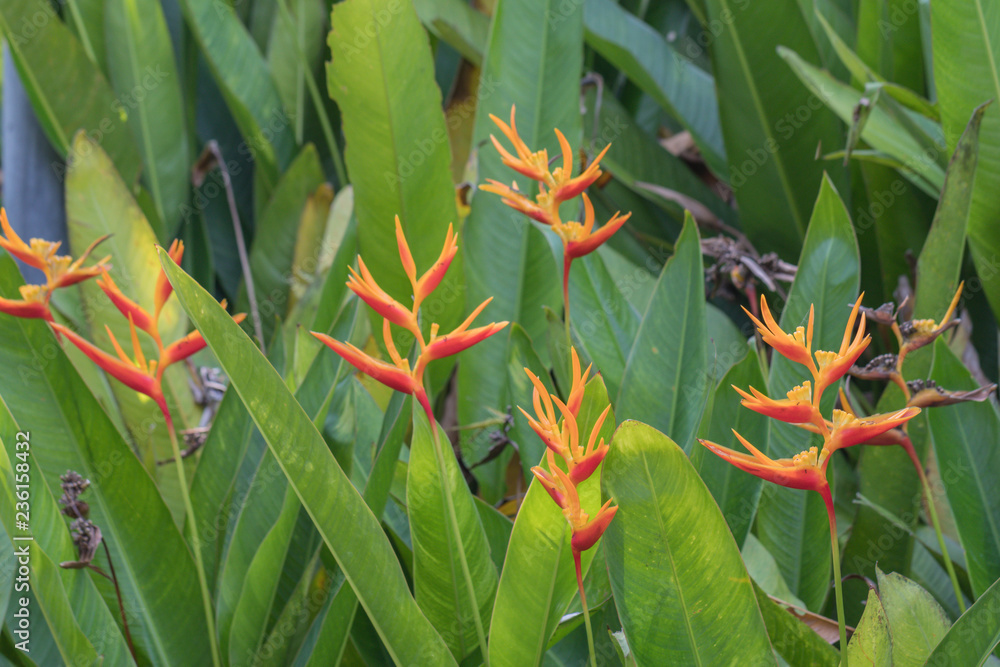
- Heliconiaceae (Heliconia Family): Large herbs with distichous leaves, showy inflorescences with large, boat-shaped bracts, flowers less conspicuous within bracts, different stamen/staminode structure.
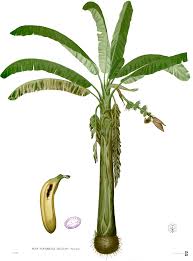
- Musaceae (Banana Family): Huge herbs with massive pseudostems from rolled leaf sheaths, enormous leaves, pendant or erect massive inflorescences, very different flower/fruit structure.
- The combination of spiral leaves (often) + 1 petaloid stamen + large labellum is unique to Costaceae within Zingiberales.
Field Guide Quick Reference
Look For:
- Rhizomatous herb, often large
- Leaves often in spiral
- Leaves simple, entire, with ligule & sheath
- Inflorescence usually dense cone-like spike
- Flowers showy, zygomorphic
- 1 Petaloid Fertile Stamen
- Large petaloid Labellum (from staminodes)
- Ovary Inferior
- Fruit capsule/berry with arillate seeds
- Tropical
Key Variations:
- Spiral vs. non-spiral growth
- Inflorescence shape (spike vs. looser)
- Bract color and shape
- Flower color (white, yellow, pink, red)
- Labellum shape (lobed, entire)
- Fruit type (Capsule vs. Berry-like)
Notable Examples
Costaceae are popular ornamental plants in tropical and subtropical gardens and as houseplants, valued for their striking foliage and showy inflorescences.

Costus species (e.g., C. speciosus, C. barbatus)
Spiral Ginger, Crepe Ginger, Red Tower Ginger
The largest genus (~100 species), found pantropically. Most exhibit the characteristic spiral stem and leaf arrangement. Flowers (white, yellow, pink, red) emerge from dense, terminal, bracteate spikes. Includes C. speciosus (Crepe Ginger, white flowers) and C. barbatus (Red Tower Ginger, red bracts, yellow flowers). Many species are cultivated.

Spiral Habit
Spiral Ginger Growth
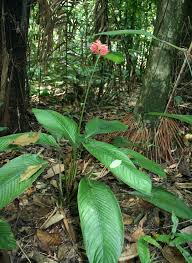
Many species, particularly in the genus Costus, show a distinct spiral arrangement of their leaves around the stem. This maximizes light exposure for lower leaves in forest understory environments and gives the family its common name.

Costaceae Flower Structure
Petaloid Stamen & Labellum
The flower's unique structure is key: only one stamen is fertile, and it is flattened and petal-like with pollen sacs on its surface. Opposite this is the large, showy labellum, formed from fused sterile stamens (staminodes), serving as the main attractant and landing platform.

Tapeinochilos ananassae
Indonesian Wax Ginger, Candle Ginger
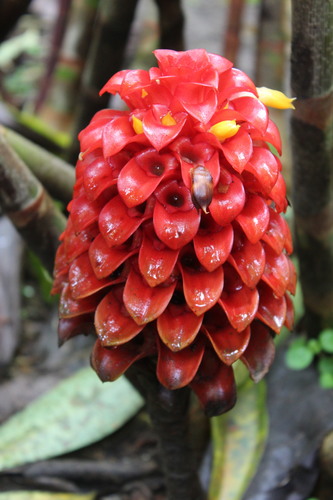
A striking species from Malesia and NE Australia, known for its large, terminal, cone-like inflorescence composed of bright red or orange, waxy, persistent bracts resembling a pineapple or candle flame. The actual flowers emerging from the bracts are smaller and usually yellow.

Other Genera (e.g., Dimerocostus)
Dimerocostus, Monocostus, etc.
Other smaller genera exist, like Dimerocostus from the Neotropics (distinguished by its 2-locular ovary) and Monocostus from Peru. They share the basic family characteristics but differ in details of ovary structure, habit, or inflorescence type.
Phylogeny and Classification
Costaceae is placed within the order Zingiberales, a well-defined and diverse group of tropical monocots within the Commelinid clade. This order is known for its large herbaceous members, often aromatic rhizomes, complex flower structures, and inferior ovaries.
Molecular phylogenetic studies have firmly established Costaceae as the sister family to Zingiberaceae (the true Ginger family). These two families share many characteristics but are clearly distinguished by features like leaf arrangement (spiral in Costaceae vs. distichous in Zingiberaceae) and the structure of the androecium (1 petaloid fertile stamen + labellum from 2+ staminodes in Costaceae vs. 1 conventional fertile stamen + labellum from 2 staminodes + lateral staminodes in Zingiberaceae). The Costaceae + Zingiberaceae clade represents one of the core groups within the Zingiberales order.
Position in Plant Phylogeny
- Kingdom: Plantae
- Clade: Angiosperms (Flowering plants)
- Clade: Monocots
- Clade: Commelinids
- Order: Zingiberales
- Family: Costaceae
- (Phylogenetic Position: Sister family to Zingiberaceae within Zingiberales)
Evolutionary Significance
Costaceae offers insights into monocot evolution, particularly within the Zingiberales:
- Evolution of Spiral Phyllotaxy: The common spiral arrangement of leaves contrasts with the primarily distichous arrangement in its sister family Zingiberaceae and other Zingiberales, raising questions about the evolution of leaf arrangement in the order.
- Extreme Androecial Modification: The development of a single petaloid fertile stamen and a large labellum from multiple fused staminodes represents a unique evolutionary pathway for pollinator attraction and pollen transfer compared to other Zingiberales families.
- Sister Group Comparison: Comparing Costaceae with Zingiberaceae helps reconstruct the ancestral state of this major clade and understand the divergence of key traits (leaf arrangement, stamen structure).
- Tropical Herb Radiation: Represents a significant diversification of large, rhizomatous herbs in tropical forest understories globally.
- Seed Dispersal: The prevalence of arillate seeds suggests specialized interactions with dispersal agents, commonly ants (myrmecochory) or birds.