
Cactaceae
Cactus Family
Cactaceae, the cactus family, is one of the most distinctive and recognizable plant families, renowned for its adaptation to arid environments. Comprising about 127 genera and over 1,750 species, cacti are primarily stem succulents native almost exclusively to the New World (Americas). They are characterized by photosynthetic stems, highly reduced or absent leaves (usually modified into spines), and the presence of unique structures called areoles from which spines, flowers, and new stems arise. Flowers are often large and showy, and the fruit is typically a berry.
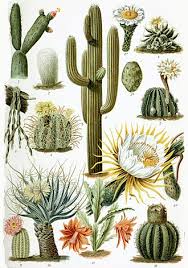
Overview
Cacti are iconic symbols of deserts and arid landscapes, showcasing remarkable adaptations to survive drought. Their fleshy stems store water and perform photosynthesis, while a waxy cuticle minimizes water loss. Spines, modified leaves arising from specialized buds called areoles, provide defense against herbivores, reduce drying winds, provide shade, and can even help condense dew. Most cacti utilize Crassulacean Acid Metabolism (CAM photosynthesis), opening their stomata primarily at night to take in CO2, further conserving water.
The family originated and diversified in the Americas, ranging from Canada to Patagonia and inhabiting deserts, grasslands, dry forests, and even tropical rainforests as epiphytes. A single species, Rhipsalis baccifera (Mistletoe Cactus), is the only cactus naturally found outside the Americas, occurring in Africa, Madagascar, and Sri Lanka, likely dispersed relatively recently by birds. Several species, particularly prickly pears (Opuntia) and hedgehog cacti (Echinocereus), are native to Oklahoma, including the Norman area where you are located (as of March 2025).
Cacti are widely cultivated worldwide as ornamentals, houseplants, and collector's items due to their unique forms and stunning flowers. Some species are important food sources, such as the pads (nopales) and fruits (tunas) of prickly pears (Opuntia) and the fruit of dragon fruit cacti (Hylocereus, now often in Selenicereus). Certain species, like Peyote (Lophophora williamsii), contain psychoactive alkaloids and hold deep cultural and religious significance for indigenous peoples.
Quick Facts
- Scientific Name: Cactaceae
- Common Name: Cactus family
- Number of Genera: Approximately 127
- Number of Species: Approximately 1,750
- Distribution: Native almost exclusively to the Americas (New World), from Canada to Patagonia. One species (Rhipsalis baccifera) also native to Africa/Asia. Found in diverse habitats, primarily arid/semi-arid.
- Evolutionary Group: Eudicots (Core Eudicot)
- Order: Caryophyllales
Key Characteristics
Growth Form and Habit
Predominantly stem succulents with photosynthetic stems. Growth forms are extremely diverse: globose (barrel cacti), columnar (saguaro), flattened and segmented pads called cladodes (prickly pears), cylindrical and segmented stems (chollas), epiphytic and trailing (holiday cacti, mistletoe cactus), climbing, or shrubby. Roots are typically fibrous and shallow, adapted to capture infrequent rainfall.
Leaves
Leaves are usually highly reduced, scale-like, or modified into spines, and typically non-photosynthetic and quickly falling (caducous). The primary exception is the genus Pereskia, considered near the ancestral lineage, which possesses persistent, broad, functional leaves along with areoles and spines.
Areoles
From the areole arise spines (modified leaves), glochids (in subfamily Opuntioideae - tiny barbed bristles easily detached), flowers, and new stem growth (branches).
Inflorescence
Flowers are almost always solitary, developing directly from an areole. They are never borne in complex inflorescences like racemes or panicles.
Flowers
Flowers are typically large, showy, perfect (bisexual), and actinomorphic (radially symmetric). Key features include:
- Perianth: Composed of numerous tepals (petal-like and sepal-like structures) that usually grade smoothly from smaller, outer, sepal-like bracts to larger, inner, colorful petal-like segments. Colors range widely (white, yellow, orange, red, pink, magenta).
- Androecium: Stamens are numerous (often hundreds), arising from the inner surface of the hypanthium (floral tube).
- Gynoecium: Ovary is inferior, sunk into the stem tissue, typically composed of 3 to many fused carpels forming a single chamber with numerous ovules on parietal placentas (attached to the ovary wall). A single style extends up through the stamens, terminating in multiple stigma lobes (often corresponding to the number of carpels). The receptacle tissue surrounding the ovary forms a floral tube (hypanthium) above the ovary.
Fruits and Seeds
The fruit is typically a fleshy berry, often bearing areoles, spines, or glochids on its surface. Sometimes the fruit is dry. It contains numerous seeds, which may sometimes have arils. Fruits of many species are edible.
Chemical Characteristics
Most cacti perform Crassulacean Acid Metabolism (CAM) photosynthesis to conserve water. Stem tissues are rich in mucilage for water storage. Like other families in the order Caryophyllales, cacti produce betalain pigments (red and yellow nitrogen-containing compounds) for coloration in flowers and fruits, instead of the anthocyanins found in most other flowering plants. Some species produce potent alkaloids (e.g., mescaline).
Field Identification
Identifying cacti is usually straightforward due to their unique features, primarily the presence of areoles.
Primary Identification Features
- Areoles Present: Look for the cushion-like structures on the stem from which spines, flowers, or branches arise. This is the definitive feature.
- Stem Succulence: Stems are fleshy and photosynthetic.
- Spines: Usually present (though sometimes absent), highly variable in size, shape, number, and color, arising from areoles.
- Leaves Absent or Reduced: Leaves are generally not visible on mature plants (except Pereskia).
- Showy Flowers with Many Parts: Flowers typically large, with numerous tepals and stamens, and an inferior ovary embedded in the stem/receptacle.
- Berry Fruit: Fruit is typically a fleshy berry, often with areoles/spines.
Secondary Identification Features
- Glochids: Presence of tiny, barbed bristles in areoles (characteristic of Opuntioideae - prickly pears, chollas). Be cautious, they detach easily and are irritating.
- Stem Shape: Globose, columnar, flattened pads (cladodes), segmented cylinders, ribbed, tuberculate.
- Spine Characteristics: Number, length, shape (straight, hooked), color.
- Flower Details: Color, size, time of opening (day or night).
- Habitat: Desert, grassland, forest epiphyte, etc.
Seasonal Identification Tips
- Spring/Summer: Main flowering season for many cacti, often triggered by rainfall. Flowers can be spectacular but sometimes short-lived.
- Summer/Fall: Fruits mature after flowering.
- Year-round: Stem morphology, areole presence, and spine characteristics are constant and key for identification at any time. (In Oklahoma, look for the distinctive pads of Opuntia or the ribbed stems of Echinocereus year-round).
- (Current Time Context: Late March in Oklahoma - Cacti are visible, but flowering may not have started for most species yet, depending on recent weather).
Common Confusion Points
- Succulent Euphorbiaceae: Many African euphorbias strongly resemble cacti (convergent evolution). Key differences: Euphorbias lack true areoles (spines arise differently, often in pairs from stipules), possess milky latex (usually white), and have tiny, highly reduced flowers grouped in structures called cyathia.
- Agavaceae / Asparagaceae (Agave, Yucca, Nolina): These are primarily leaf succulents (fleshy leaves, often sharp-tipped or spiny-margined), not stem succulents. Flowers typically have 6 tepals and a superior ovary.
- Crassulaceae (Sedum, Echeveria, Sempervivum): Mostly leaf succulents, flowers typically have parts in 4s or 5s with distinct sepals/petals and superior ovaries. Lack areoles and spines.
- Didiereaceae: Endemic to Madagascar, stem succulents with spines, but phylogenetically distinct (also in Caryophyllales) with different flower structure.
The absolute key is to look for the presence of areoles.
Field Guide Quick Reference
Look For:
- Succulent stems
- AREOLES present (pads producing spines/flowers)
- Spines usually present (from areoles)
- Leaves absent/reduced (except Pereskia)
- Large flowers, numerous tepals/stamens
- Inferior ovary
- Fruit a berry
Key Variations:
- Stem shape (pads, columns, globes, etc.)
- Presence of glochids (Opuntioideae)
- Spine morphology
- Flower color / Nocturnal vs. Diurnal
- Habitat (desert, grassland, epiphytic)
Notable Examples
The Cactus family includes iconic desert plants, popular houseplants, and species relevant to Oklahoma.

Opuntia humifusa
Eastern Prickly Pear
A common cactus native to eastern and central North America, including Oklahoma. Forms low, spreading clumps of flattened stem segments (pads or cladodes). Areoles bear clusters of spines (sometimes sparse) and numerous small, barbed glochids. Produces large, showy yellow flowers (sometimes with reddish centers) in late spring/early summer, followed by reddish, pear-shaped, edible fruits (tunas).

Echinocereus reichenbachii
Lace Hedgehog Cactus / Lace Cactus
A small, cylindrical or clustering cactus native to the south-central US, including Oklahoma and Texas. Stems are ribbed, with areoles bearing numerous short spines pressed against the stem, creating a lace-like appearance. Produces large, spectacular pink to magenta flowers in spring. Several subspecies exist.

Carnegiea gigantea
Saguaro
The iconic, massive columnar cactus of the Sonoran Desert (Arizona, Mexico). Can grow tree-like with arms, reaching great heights and ages. Stems are ribbed with spine-bearing areoles. Produces large white, night-blooming flowers near the stem apex, pollinated by bats and birds. Fruit is red and edible. A keystone species in its ecosystem.

Pereskia aculeata
Barbados Gooseberry / Leaf Cactus
A scrambling shrub or vine native to tropical America, representing a lineage near the base of the cactus family. Unlike most cacti, it retains persistent, broad, non-succulent leaves. However, it possesses areoles in the leaf axils which bear clusters of spines. Produces fragrant white or yellowish flowers and edible yellow/orange berries.

Lophophora williamsii
Peyote
A small, spineless, globose cactus native to the Chihuahuan Desert (Mexico, southern Texas). Known for its psychoactive alkaloid, mescaline. Grows low to the ground, often in clusters. Has indistinct ribs or tubercles and areoles bearing tufts of hairs. Produces small pinkish flowers from the center. Holds deep religious significance for Native American Church members; harvesting and possession are legally restricted.

Schlumbergera truncata
Thanksgiving Cactus / Christmas Cactus (group)
An epiphytic cactus native to coastal mountains of Brazil. Has flattened, segmented stems (phylloclades) with toothed or pointed margins. Bears zygomorphic (bilaterally symmetric) flowers, typically pink, red, white, or orange, often blooming around specific holidays in the Northern Hemisphere (Thanksgiving, Christmas - different species/hybrids bloom at slightly different times). Popular as houseplants.
Phylogeny and Classification
Cactaceae belongs to the large and diverse order Caryophyllales, within the Core Eudicots. This order is notable for including many families adapted to stressful environments (arid, saline) and for the presence of betalain pigments instead of anthocyanins in most constituent families. Cactaceae is nested within a clade often referred to as the "portulacine lineage," which includes families like Portulacaceae (purslanes), Didiereaceae (Madagascar succulents), and Anacampserotaceae.
The family itself likely originated in South America and underwent relatively rapid diversification. The leafy genus Pereskia (now sometimes split) represents traits closer to the non-succulent ancestors of cacti. The evolution of stem succulence, CAM photosynthesis, areoles, and spines were key innovations driving their adaptation to arid environments across the Americas. Despite their distinctive morphology, they are phylogenetically embedded within a broader group of flowering plants.
Position in Plant Phylogeny
- Kingdom: Plantae
- Clade: Angiosperms (Flowering plants)
- Clade: Eudicots
- Clade: Core Eudicots
- Order: Caryophyllales
- Family: Cactaceae
Evolutionary Significance
Cactaceae provides a classic example of adaptive radiation into arid environments. The evolution of stem succulence, CAM photosynthesis, the reduction of leaves into spines, and the development of the unique areole allowed cacti to thrive where water is scarce. Their New World origin and subsequent diversification across diverse habitats illustrate the power of key innovations in driving evolutionary success. The existence of leafy cacti like Pereskia provides valuable insight into the ancestral traits from which the highly specialized forms evolved. The family also demonstrates striking convergent evolution with other unrelated succulent groups like African euphorbias and Didiereaceae.


