Amaranthaceae
Amaranth Family / Goosefoot Family
Amaranthaceae is a large and diverse family of flowering plants in the order Caryophyllales, now including the formerly separate Chenopodiaceae (Goosefoot family). It encompasses herbs, shrubs, and rarely small trees, many adapted to arid, saline, or disturbed environments. The family includes important food crops like spinach, beets, quinoa, and amaranth grain, as well as many common weeds (pigweeds, goosefoots) and some ornamentals.
Overview
Amaranthaceae is a cosmopolitan family, comprising around 165-180 genera and 2,000-2,500 species. Its modern circumscription includes the Chenopodiaceae based on strong molecular phylogenetic evidence showing the traditional Amaranthaceae were nested within Chenopodiaceae. The combined family is particularly diverse in arid, semi-arid, and saline habitats worldwide, but also includes many species adapted to temperate zones, tropical regions, and disturbed sites (weeds).
The family exhibits great morphological diversity, ranging from annual herbs and robust weeds (Amaranthus, Chenopodium) to succulent halophytes (Salicornia, Suaeda), drought-tolerant shrubs (Atriplex), and rarely small trees. Many species (especially in the chenopod lineage) possess adaptations like fleshy leaves, bladder hairs (giving a mealy appearance), salt tolerance, and C4 photosynthesis. Flowers are typically small and individually inconspicuous, often wind-pollinated or self-pollinated, but frequently aggregated into dense, sometimes colorful, inflorescences.
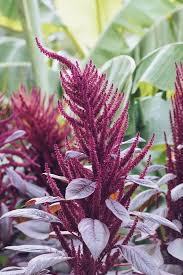
Economically, Amaranthaceae is highly significant. It includes vital food crops such as spinach (Spinacia oleracea), beets and sugar beets (Beta vulgaris), quinoa (Chenopodium quinoa), and grain amaranths (Amaranthus species). Several genera provide popular ornamentals like Cockscomb (Celosia) and Globe Amaranth (Gomphrena). Conversely, many species are considered problematic agricultural weeds (e.g., Pigweeds, Lambsquarters, Russian Thistle), and some are invasive in natural ecosystems.
Quick Facts
- Scientific Name: Amaranthaceae
- Common Name: Amaranth family, Goosefoot family
- Number of Genera: Approximately 165-180
- Number of Species: Approximately 2000-2500
- Distribution: Cosmopolitan, especially diverse in arid, saline, and disturbed habitats
- Evolutionary Group: Eudicots - Core Eudicots - Caryophyllales
- Current Date: March 29, 2025
Key Characteristics
Growth Form and Habit
Mostly annual or perennial herbs and subshrubs; also shrubs, rarely small trees or lianas. Many are adapted to harsh conditions (halophytes, xerophytes). Stems may be succulent or jointed (Salicornia).
Leaves
Leaves are usually alternate, sometimes opposite. They are typically simple, with entire margins most common, but sometimes toothed or lobed. Texture varies from thin to fleshy or succulent; some species have leaves reduced to scales or absent. A mealy (farinose) coating due to collapsed bladder hairs is common in the chenopod lineage. Stipules are absent.
Inflorescence
Flowers are individually small and often inconspicuous, but typically aggregated into dense and complex inflorescences such as spikes, panicles, cymes, or tight clusters called glomerules. Bracts and bracteoles are usually present, often persistent, and sometimes scarious (dry and papery), colored, or spine-tipped, becoming prominent around the fruit.
Flowers
Flowers are usually small, actinomorphic (radially symmetrical), and mostly bisexual, but sometimes unisexual (plants then monoecious, dioecious, or polygamous). Wind pollination is common.
- Perianth: Usually consists of a single whorl of (1-)3-5 sepal-like tepals. These are typically herbaceous or scarious, distinct or fused at the base, and usually persist, often enclosing the fruit. True petals are absent.
- Androecium: Stamens usually number (1-)3-5, positioned opposite the tepals. Filaments are distinct or sometimes fused at the base into a cup or tube.
- Gynoecium: Ovary is usually superior (rarely half-inferior), composed of (1-)2-3(-5) fused carpels, typically forming a single locule containing a single basal ovule (rarely more). Styles are 1-3, distinct or fused below, with various stigma forms (capitate, linear, feathery).
Fruits and Seeds
The most common fruit type is a dry, indehiscent, single-seeded fruit: either an achene (hard pericarp) or, more characteristically, a utricle (thin, bladder-like pericarp loosely surrounding the seed). The fruit is often enclosed by the persistent tepals and/or bracts. Less commonly, the fruit may be a circumscissile capsule (pyxis, opening by a lid) or rarely a berry or drupe.
Seeds are typically small, lens-shaped or rounded, often black or dark reddish-brown and shiny. The embryo is characteristically curved, annular, or spiraled around the nutritive perisperm tissue.
Chemical Characteristics
Amaranthaceae species possess betalain pigments (red/yellow) instead of anthocyanins for non-green coloration. Many accumulate nitrates or oxalates (making some species toxic if consumed in large quantities). High salt tolerance (halophytism) is common, often linked to succulence or salt-excreting glands/hairs. C4 photosynthesis has evolved multiple times independently within the family, especially in the chenopod lineage, as an adaptation to hot, arid conditions.
Field Identification
Identifying Amaranthaceae often involves recognizing a combination of features, including their often weedy or harsh-environment habitats, inconspicuous flowers aggregated into dense clusters, and characteristic fruits:
Primary Identification Features
- Habit: Mostly herbs or subshrubs, frequently found in disturbed areas, arid zones, or saline habitats.
- Small, Apetalous Flowers: Individual flowers lack petals and are typically small and greenish or scarious.
- Dense Inflorescences: Flowers usually clustered into dense spikes, panicles, or glomerules.
- Persistent Tepals/Bracts: Flowers typically have (1-)3-5 persistent tepals, often dry or papery, which frequently enclose the fruit. Persistent, sometimes spiny or colored, bracts are also common.
- Stamens Opposite Tepals: Usually (1-)3-5 stamens positioned opposite the tepal lobes.
- Superior Ovary (Usually) with Basal Ovule: Ovary typically has one locule and one ovule attached at the base.
- Fruit a Utricle or Achene: Fruit usually small, dry, single-seeded, enclosed by floral parts.
- Betalain Pigments: Reddish or yellowish stems/leaves/inflorescences utilize betalains (like beets), not anthocyanins.
Secondary Identification Features
- Alternate Leaves (Usually): Simple leaves, often with entire margins.
- Mealy Coating or Succulence: Leaves/stems may appear powdery/mealy (farinose) or be fleshy/succulent, especially in chenopod lineage members.
- Absence of Stipules.
- Curved Embryo in Seed: (Requires dissection/magnification).
Seasonal Identification Tips
- Growing Season: Vegetative features like leaf arrangement, shape, presence of mealiness or succulence can be helpful. Many are weedy annuals appearing after disturbance or rain.
- Flowering/Fruiting Season: Typically summer through fall. The structure of the inflorescence and the persistent floral parts surrounding the small fruits are key diagnostic features during this time.
Common Confusion Points
- Polygonaceae (Buckwheat family): Also includes many weedy herbs with small flowers in dense inflorescences. Polygonaceae typically have a distinctive sheathing stipule (ocrea) at each node (absent in Amaranthaceae), flowers often with petaloid tepals (usually 6 in two whorls), and fruit is typically a triangular or lens-shaped achene.
- Caryophyllaceae (Pink family): Mostly herbs, but typically have opposite leaves (often with swollen nodes), flowers usually with 5 distinct (often notched) petals and 5 sepals, superior ovary, and fruit usually a capsule opening by teeth or valves. Lack betalains.
- Plantaginaceae (Plantain family): Some Plantago species have dense spikes of small, inconspicuous flowers, but these typically have 4 scarious petals (corolla lobes), 4 sepals, and fruit is a circumscissile capsule (pyxis). Leaves are usually basal rosettes.
- Asteraceae (Daisy family): Some weedy Asteraceae might grow in similar habitats, but their flowers are arranged in characteristic composite heads (capitula) with surrounding bracts (involucre), and fruit is an achene (cypsela) often with a pappus.
Focus on the combination of small, apetalous flowers with persistent tepals/bracts, often in dense clusters, superior ovary with basal ovule, utricle/achene fruit, and absence of ocreae.
Field Guide Quick Reference
Look For:
- Herbs/Subshrubs (often weeds or in harsh habitats)
- Alternate simple leaves (usually)
- No stipules
- Small, apetalous flowers
- Dense inflorescences (spikes, clusters)
- Persistent, often scarious, tepals (3-5) / bracts
- Stamens (3-5) opposite tepals
- Superior ovary, 1 basal ovule
- Fruit: Utricle or achene enclosed by floral parts
Key Variations:
- Habit: Annual/perennial herb, shrub, succulent
- Leaf shape/succulence/mealiness
- Inflorescence structure (spikes, panicles, glomerules)
- Bracts/tepals: Green, scarious, colored, spiny
- Flower sexuality: Bisexual or unisexual
- Photosynthesis: C3 or C4
Notable Examples
This large family includes major food crops, common weeds, extremophiles, and popular ornamentals:

Amaranthus retroflexus
Redroot Pigweed / Common Amaranth
A common annual weed worldwide, typical of the genus Amaranthus. Features dense terminal spikes of small greenish flowers with sharp bracts. Other Amaranthus species are cultivated for grain or as leafy vegetables ("callaloo").

Chenopodium album
Lambsquarters / White Goosefoot
Another cosmopolitan annual weed, representative of the genus Chenopodium. Often has diamond-shaped leaves with a white mealy coating underneath. Flowers are tiny, greenish, in dense clusters. Closely related to quinoa (C. quinoa).

Beta vulgaris
Beet / Sugar Beet / Swiss Chard / Mangelwurzel
A species cultivated for its highly variable forms: swollen taproots (beetroot, sugar beet), large fleshy leaves (Swiss chard), or fodder roots (mangelwurzel). Native to coastal Europe. Flowers are small, greenish, in spikes.

Spinacia oleracea
Spinach
An annual plant cultivated worldwide for its edible leaves. Native to central and western Asia. Plants are typically dioecious, with inconspicuous greenish flowers.

Salicornia sp.
Glasswort / Samphire / Sea Bean
Succulent, annual halophytes growing in coastal salt marshes and saline flats. They have jointed, photosynthetic stems with leaves reduced to minute scales. Stems are edible and salty. Flowers are tiny, embedded in the fleshy joints.

Celosia argentea
Cockscomb / Plumed Celosia
An annual plant cultivated globally as an ornamental. Known for its brightly colored, dense inflorescences which can be plume-like (var. plumosa) or fasciated and convoluted like coral or brain (var. cristata).
Phylogeny and Classification
Amaranthaceae belongs to the core lineage of the large order Caryophyllales, within the core eudicots. This order is notable for including many families adapted to stressful environments and for the prevalence of betalain pigments and perisperm in the seeds of its core members.
Modern phylogenetic studies based on molecular data have led to a significant reclassification, merging the traditional Chenopodiaceae family into Amaranthaceae. This is because the traditional Amaranthaceae sensu stricto was found to be evolutionarily nested within the Chenopodiaceae lineage, making the latter paraphyletic without the merger. The combined Amaranthaceae family is strongly supported as monophyletic. Within the Caryophyllales, Amaranthaceae is closely related to other core families like Aizoaceae, Phytolaccaceae, Nyctaginaceae, and Caryophyllaceae.
Position in Plant Phylogeny
- Kingdom: Plantae
- Clade: Angiosperms (Flowering plants)
- Clade: Eudicots
- Clade: Core Eudicots
- Order: Caryophyllales
- Family: Amaranthaceae
Evolutionary Significance
Amaranthaceae is highly significant from evolutionary and ecological perspectives:
- Adaptation to Extreme Environments: Represents a major radiation into arid and saline habitats globally, showcasing adaptations like succulence, salt tolerance (halophytism), and C4 photosynthesis.
- C4 Photosynthesis Evolution: C4 photosynthesis has evolved independently multiple times within Amaranthaceae (especially the chenopod lineage), making it a key group for studying the evolution of this complex trait.
- Weediness and Domestication: The family includes both globally important food crops (spinach, beet, quinoa, amaranth) and numerous highly successful weeds, providing models for studying domestication processes and the evolution of weedy traits.
- Phylogenetic Merger: The merging of Chenopodiaceae and Amaranthaceae exemplifies how molecular data reshapes traditional classifications based on morphology.
- Betalain Pigments: As a prominent family possessing betalains, it contributes to understanding the distribution and function of these unique pigments within the Caryophyllales.