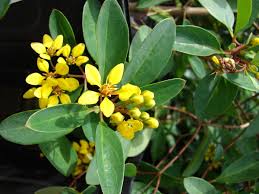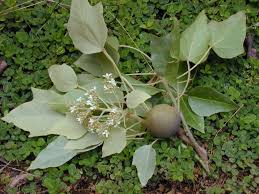
Erythroxylaceae
Coca Family
The Erythroxylaceae is a family of flowering plants in the order Malpighiales, consisting primarily of tropical trees and shrubs. The family includes 4 genera, but is dominated by the large genus Erythroxylum, which contains the species famously cultivated for cocaine production (E. coca and E. novogranatense). Members are characterized by simple, alternate leaves with distinctive stipules, and small flowers often bearing ligulate petals.
Overview
The Erythroxylaceae family contains about 4 genera and roughly 240-260 species, with the vast majority belonging to the genus Erythroxylum. The family has a pantropical distribution, with the greatest diversity found in the Neotropics (Central and South America). Species also occur in Africa, Madagascar, Southeast Asia, and parts of Australia.
These plants are typically trees or shrubs found in various tropical forest environments. A key characteristic is the presence of stipules (small leaf-like appendages at the base of the leaf stalk), which are often intrapetiolar (located within the angle between the stem and the petiole) and leave distinctive scars when they fall. The flowers are generally small, 5-merous, and often exhibit heterostyly (different style and stamen lengths in different individuals to promote cross-pollination).
The family is best known for Erythroxylum coca and related species, which are the source of the alkaloid cocaine. These species have been cultivated for centuries in the Andes for traditional uses, such as chewing leaves to combat fatigue and altitude sickness. Cocaine extracted from the leaves is a powerful stimulant and is illicitly traded worldwide. Other species in the family are used locally for timber or traditional medicine, but none have the same global profile as coca.
Quick Facts
- Scientific Name: Erythroxylaceae Kunth
- Common Name: Coca Family
- Number of Genera: 4 (Erythroxylum, Aneulophus, Nectaropetalum, Pinacopodium)
- Number of Species: Approximately 240-260 (mostly in Erythroxylum)
- Distribution: Pantropical, centered in the Neotropics.
- Evolutionary Group: Eudicots - Rosids - Malpighiales
- Key Feature: Trees/shrubs; simple alternate leaves with (often intrapetiolar) stipules; small 5-merous flowers often with ligulate petals; fruit usually a drupe. Contains source of cocaine.
Key Characteristics
Growth Form and Habit
Members of Erythroxylaceae are trees or shrubs, typically evergreen.
Leaves
Leaves are usually simple, alternate (rarely opposite), with entire (untoothed) margins and pinnate venation. A key feature is the presence of stipules, which are often intrapetiolar (borne on the stem side of the petiole base), persistent or caducous (falling early), often leaving characteristic scars around the node.
Inflorescence
Flowers are typically borne solitary or in small clusters (fascicles) in the leaf axils. Inflorescences are generally inconspicuous.
Flowers
Flowers are usually small, actinomorphic (radially symmetrical), bisexual (sometimes functionally unisexual), and typically 5-merous. Heterostyly is common in Erythroxylum.
- Calyx: Consists of 5 sepals, fused at the base into a short tube, persistent in fruit.
- Corolla: Consists of 5 distinct (free) petals, often white or yellowish. A characteristic feature of many species is a ligule – a small, often two-lobed appendage or flap – on the inner surface of each petal near the base.
- Androecium: Stamens are typically 10, arranged in two whorls of 5. The filaments are characteristically fused at their bases into a distinct tube surrounding the ovary.
- Gynoecium: A superior ovary composed of typically 3 fused carpels (sometimes 2 or 4), usually with 3 locules initially, but often only one locule develops fully and contains 1 or 2 pendulous ovules. Styles are typically 3, usually free or partly fused, each with a capitate or slightly lobed stigma.
Fruits and Seeds
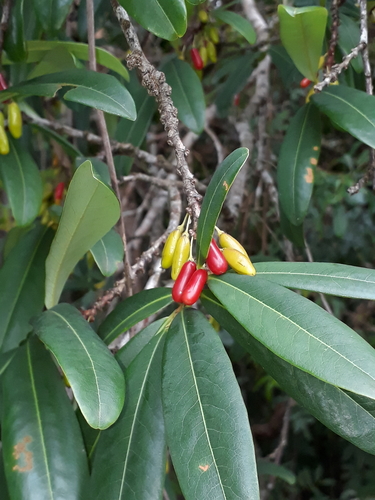
The fruit is typically a small, one-seeded drupe (a fleshy fruit with a hard stone enclosing the seed), often red or sometimes blue/black when mature. The seed contains endosperm.
Chemical Characteristics
The family, particularly the genus Erythroxylum, is known for producing tropane alkaloids, the most famous being cocaine. Other alkaloids and various secondary metabolites like flavonoids and tannins are also present.
Field Identification
Identifying members of the Erythroxylaceae family often involves looking for a combination of vegetative and floral features:
Primary Identification Features
- Habit: Trees or shrubs, primarily in tropical regions.
- Leaves: Simple, alternate leaves with entire margins.
- Stipules: Presence of stipules, often intrapetiolar (check for stipules or their scars at the node, inside the petiole attachment).
- Flowers: Small, 5-merous flowers in axillary clusters. Look for petals with an inner ligule (appendage) and 10 stamens fused into a tube at the base.
- Fruit: Small drupes, often red when ripe.
Secondary Identification Features
- Heterostyly: Flowers on different plants may have different style and stamen lengths (long-styled vs. short-styled forms).
- Habitat: Found in tropical forests, savannas, and sometimes drier habitats depending on the species.
- Leaf Lines: In some Erythroxylum species, two faint parallel lines may be visible on the underside of the leaf, flanking the midrib (though this is not universal).
Seasonal Identification Tips
- Year-round: Vegetative features like alternate leaves, entire margins, and especially the intrapetiolar stipules or stipule scars are useful year-round.
- Flowering/Fruiting Season: Varies by species and location. The small flowers (with ligules and stamen tubes) and the characteristic drupes are key diagnostic features when present.
Common Confusion Points
Distinguishing Erythroxylaceae from other tropical trees/shrubs requires attention to detail:
- Other families with stipules: Many families have stipules (e.g., Rubiaceae, Malpighiaceae, Rhizophoraceae). The combination with simple, alternate leaves, intrapetiolar position (often), and specific floral features (ligulate petals, stamen tube) is important for Erythroxylaceae.
- Families with drupes: Drupes are common fruits. Combine fruit type with vegetative and floral characters.
- Malpighiaceae: Also in Malpighiales, often have opposite leaves and frequently possess distinctive glands on the calyx and winged fruits (samaras), differing from Erythroxylaceae.
- Rhizophoraceae: Sister family, often have opposite leaves and lack the petal ligules and stamen tube of Erythroxylaceae. Mangrove members have distinctive adaptations like prop roots or vivipary.
Field Guide Quick Reference
Look For:
- Trees or shrubs (tropical)
- Simple, alternate leaves, entire margin
- Stipules present (often intrapetiolar)
- Small, 5-merous axillary flowers
- Petals often with inner ligule
- 10 stamens fused into basal tube
- Fruit a small drupe (often red)
Key Distinctions:
- Intrapetiolar stipules (or scars)
- Petal ligules
- Stamen tube (10 stamens)
- Drupe fruit type
- Compare leaf arrangement (alternate vs. opposite)
Notable Examples
The family is dominated by Erythroxylum, including the infamous coca plants:

Erythroxylum coca
Coca
Native to the eastern Andes. A shrub cultivated for its leaves, which contain cocaine alkaloids. Traditionally chewed or brewed into tea in South America. The primary source for illicit cocaine production.

Erythroxylum novogranatense
Colombian Coca / Java Coca
Closely related to E. coca, possibly derived from it through cultivation. More tolerant of varying conditions. Also cultivated for cocaine production and was historically used to flavor Coca-Cola (after decocainization).

Erythroxylum monogynum
Bastard Sandal / Red Cedar
A species native to India and Sri Lanka. Unlike coca, it does not contain significant cocaine alkaloids. The wood is sometimes used, and parts of the plant have applications in traditional medicine.
Phylogeny and Classification
Erythroxylaceae is placed in the large order Malpighiales, within the rosid clade of eudicots. Molecular phylogenetics has robustly shown that its sister family is Rhizophoraceae (the Mangrove family, although it also includes non-mangrove tropical trees). Together, Erythroxylaceae and Rhizophoraceae form a distinct clade within Malpighiales.
The order Malpighiales is exceptionally diverse, containing around 40 families, including well-known groups like Euphorbiaceae (spurges), Violaceae (violets), Salicaceae (willows), Passifloraceae (passion flowers), and Malpighiaceae itself. The relationship between Erythroxylaceae and Rhizophoraceae highlights the sometimes surprising connections revealed by molecular data, linking the primarily terrestrial Coca family with a family famous for its mangrove members.
Position in Plant Phylogeny
- Kingdom: Plantae
- Clade: Angiosperms (Flowering plants)
- Clade: Eudicots
- Clade: Rosids
- Order: Malpighiales
- Family: Erythroxylaceae
Evolutionary Significance
Erythroxylaceae holds significance in several evolutionary contexts:
- Alkaloid Evolution: The production of cocaine and related tropane alkaloids is a key chemical feature, offering insights into the evolution of plant secondary metabolism and defense mechanisms.
- Sister Relationship: The close relationship with Rhizophoraceae highlights evolutionary links between terrestrial and mangrove/coastal lineages within Malpighiales.
- Floral Morphology: Features like intrapetiolar stipules, ligulate petals, and the stamen tube are distinctive morphological traits within the order.
- Heterostyly: The common occurrence of heterostyly in Erythroxylum is a well-studied mechanism promoting outcrossing.