Nymphaeaceae
Water Lily Family
Nymphaeaceae is a family of aquatic perennial herbs belonging to the order Nymphaeales, one of the most ancient lineages of flowering plants (basal angiosperms). Comprising about 5-6 genera and 70-80 species, the family is cosmopolitan, inhabiting freshwater ponds, lakes, and slow streams worldwide. They are characterized by rhizomes rooted in mud, large floating or emergent leaves (typically heart-shaped with a sinus), large solitary flowers with numerous parts often spirally arranged, and fleshy fruits that mature underwater.
Overview
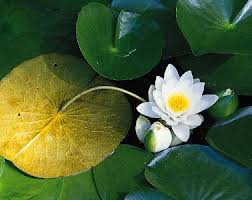
The Nymphaeaceae, or Water Lily family, includes iconic aquatic plants like water lilies (Nymphaea), yellow pond-lilies or spatterdocks (Nuphar), and the giant water platters (Victoria). These perennial herbs grow from substantial rhizomes or tubers anchored in the substrate of freshwater bodies.
Representing one of the earliest branches of the angiosperm evolutionary tree (along with Amborellales and Austrobaileyales), Nymphaeaceae provides crucial insights into the early evolution of flowering plants. Although superficially similar to lotuses (Nelumbo), water lilies are not closely related; Nelumbonaceae belongs to the eudicot order Proteales. Key differences include leaf attachment (sinus vs. peltate), receptacle structure, and fruit type.
Water lilies are widely cultivated globally as ornamental plants for ponds and water gardens, prized for their beautiful flowers and distinctive floating leaves. Some species have traditional uses; rhizomes and seeds of certain Nymphaea and Nuphar species have been used as food sources or in traditional medicine. They also play ecological roles, providing habitat and food for aquatic life.
Quick Facts
- Scientific Name: Nymphaeaceae Salisb.
- Common Name: Water Lily family
- Number of Genera: Approximately 5-6
- Number of Species: Approximately 70-80
- Distribution: Cosmopolitan in freshwater habitats.
- Evolutionary Group: Basal Angiosperms - Nymphaeales
Key Characteristics
Growth Form and Habit
Aquatic perennial herbs with stout, often horizontal rhizomes or tubers rooted in mud. Possess air canals (aerenchyma) throughout the plant for buoyancy and gas exchange.
Leaves
Leaves are typically large, simple, alternate or appearing basal from the rhizome. Leaf blades are usually orbicular (circular) or cordate (heart-shaped) with a distinct basal sinus where the long petiole attaches (not peltate). Blades usually float on the water surface or are held slightly emergent. Submerged juvenile leaves may also be present. Stipules may be present or absent.
Inflorescence
Flowers are solitary, borne on long peduncles, typically floating on the water surface or held emergent above it.
Flowers
Flowers are usually large, showy, actinomorphic (radially symmetrical), and bisexual. Key features include:
- Perianth: Consists of numerous parts, often spirally arranged or in indistinct whorls, typically grading from outer sepal-like structures (usually 4-6, free) to inner petal-like structures (numerous, free, often white, yellow, pink, red, or blue).
- Androecium: Stamens numerous (20 to over 700), spirally arranged. Filaments are often broad and petaloid, especially the outer ones, sometimes grading into petals. Anthers dehisce longitudinally. Innermost stamens may be sterile (staminodes).
- Gynoecium: Ovary is composed of 5 to numerous fused carpels (syncarpous), typically multilocular. Ovary position varies from superior to partly or fully inferior, often surrounded by stamen bases and perianth. Placentation is laminar (ovules covering inner carpel surfaces) or parietal. Ovules are numerous. Stigmas are radiate, forming a discoid structure on top of the ovary, often with sterile appendages.
Fruits and Seeds
The fruit is a fleshy, berry-like structure or a spongy, irregularly dehiscent capsule-like structure, derived from the syncarpous ovary. It typically matures underwater after the flower stalk coils or bends. Seeds are numerous, often operculate (with a lid), and frequently possess an aril (a fleshy covering) that aids in dispersal by water or animals.
Chemical Characteristics
Often contain alkaloids (e.g., nupharine in Nuphar), tannins, and mucilage. Lack ethereal oils characteristic of Magnoliids. Do not produce betalains.
Field Identification
Identifying Nymphaeaceae relies on recognizing their aquatic habit, large floating or emergent leaves (usually heart-shaped with a sinus), large solitary flowers with numerous petals and stamens, and fleshy fruit maturing underwater.
Primary Identification Features
- Habit: Aquatic perennial herbs with rhizomes/tubers.
- Leaves: Large, floating or emergent, usually orbicular or cordate with a basal sinus where petiole attaches.
- Flowers: Large, solitary, floating or emergent, actinomorphic, bisexual.
- Perianth: Numerous parts, grading from outer sepals (4-6) to inner petals (many).
- Stamens: Numerous, often with flattened or petaloid filaments.
- Ovary: Syncarpous (carpels fused), superior to inferior, multilocular.
- Fruit: Fleshy berry or spongy capsule-like structure, maturing underwater.
Secondary Identification Features
- Habitat: Freshwater ponds, lakes, slow streams.
- Seeds: Often numerous and arillate.
- Lack of Spongy Receptacle: Do not have the large, pitted receptacle seen in Nelumbo.
Seasonal Identification Tips
- Growing Season (Summer): Easily identified by their prominent floating/emergent leaves and large, showy flowers.
- Fruiting Season: Fruits develop underwater and are less commonly observed unless specifically searched for.
- Dormant Season (Winter): Plants typically die back to underwater rhizomes or tubers in temperate climates.
Common Confusion Points
- Nelumbonaceae (Lotus Family): Superficially similar aquatic plants with large flowers, but Nelumbo has peltate leaves held high above water, flowers/fruits with a unique large, obconical receptacle embedding separate carpels/nutlets. Phylogenetically distant (Proteales, Eudicots).
- Cabombaceae (Water Shield/Fanwort Family): Also in Nymphaeales. Brasenia (water shield) has peltate floating leaves (but smaller, oval, slimy underneath) and small inconspicuous flowers. Cabomba (fanwort) has dimorphic leaves (finely dissected submerged, small floating) and small flowers.
- Menyanthaceae (Bogbean Family - Order Asterales): Includes Nymphoides (Floating Hearts) which have floating cordate leaves resembling small water lilies, but flowers are typically 5-merous with fringed petals, superior/half-inferior ovary, and fruit a capsule. Phylogenetically distant (Asterids).
- Alismataceae / Hydrocharitaceae (Monocots): Some members have floating cordate leaves, but flower structure is typically 3-merous and very different.
Field Guide Quick Reference
Look For:
- Aquatic herb with rhizomes
- Large floating/emergent leaves with basal sinus
- Large solitary flowers
- Numerous spiral/whorled tepals (sepals/petals)
- Numerous stamens (often petaloid)
- Syncarpous ovary (often inferior)
- Fleshy fruit maturing underwater
Key Variations:
- Leaf shape details (orbicular vs. cordate vs. sagittate in some Nuphar)
- Flower color
- Ovary position (superior vs. inferior)
- Petal/stamen morphology
Notable Examples
Key genera in the Nymphaeaceae family include:

Nymphaea spp.
Water Lily
The largest genus, cosmopolitan. Includes hardy and tropical water lilies widely cultivated. Characterized by typically floating leaves and flowers, numerous petals grading into stamens, and syncarpous ovary usually partly or fully inferior. Flowers come in white, yellow, pink, red, blue, purple.

Nuphar spp.
Yellow Pond-lily, Spatterdock, Cow Lily
Found in temperate Northern Hemisphere. Characterized by typically yellow, globose flowers held above the water, with prominent sepals and reduced, inconspicuous petals. Ovary is superior or partly inferior. Leaves often floating or emergent.

Victoria amazonica & V. cruziana
Giant Water Lily, Amazon Water Platter
Native to South America (Amazon basin, Paraguay river). Famous for their enormous floating leaves (up to 3m diameter) with upturned rims and strong ribbed undersides capable of supporting significant weight. Large nocturnal flowers open white and turn pinkish.

Euryale ferox
Gorgon Plant, Prickly Water Lily
Native to southern and eastern Asia. Similar to Victoria but leaves are smaller, lack upturned rims, and are distinctively covered in sharp prickles on both surfaces. Flowers are smaller, purplish. Seeds (fox nuts) are edible and cultivated.
Phylogeny and Classification
Nymphaeaceae belongs to the order Nymphaeales, which represents one of the earliest diverging lineages of all living flowering plants (Angiosperms). Along with Amborellales and Austrobaileyales, Nymphaeales forms the "ANA grade" of basal angiosperms, sister to the clade containing all other flowering plants (Mesangiospermae, which includes Magnoliids, Monocots, and Eudicots).
This ancient phylogenetic position means Nymphaeaceae retains many features considered ancestral among angiosperms, such as flowers with numerous, spirally arranged parts, laminar stamens, and sometimes apocarpy-like development before fusion. Within Nymphaeales, Nymphaeaceae is sister to the family Cabombaceae (water shields and fanworts). The small family Hydatellaceae was also recently moved into Nymphaeales based on molecular data.
Position in Plant Phylogeny
- Kingdom: Plantae
- Clade: Angiosperms (Flowering plants)
- Grade: ANA Grade (Basal Angiosperms)
- Order: Nymphaeales
- Family: Nymphaeaceae
Evolutionary Significance
Nymphaeaceae is extremely important for understanding the early evolution of flowering plants:
- Basal Angiosperm Lineage: Provides critical insights into the morphology, genetics, and development of early angiosperms before the major radiations of monocots and eudicots.
- "Living Fossils": Retain numerous features considered ancestral for flowering plants (e.g., numerous spirally arranged floral parts, laminar stamens).
- Evolution of Aquatic Habit: Represents one of the earliest lineages to adapt to a fully aquatic lifestyle.
- Floral Development Studies: Used as models to study the genetic control of floral organ identity and development in basal angiosperms.
- Contrast with Nelumbo: The phylogenetic separation of Nymphaeaceae (basal angiosperm) and Nelumbonaceae (basal eudicot) despite superficial similarity highlights the importance of molecular data and reveals striking convergent evolution.