Nepenthaceae
Tropical Pitcher Plant Family
Nepenthaceae is a fascinating family of carnivorous plants containing the single genus Nepenthes, with over 170 species. Placed in the order Caryophyllales (core clade), these perennial plants are typically climbing or scrambling vines native primarily to the Old World tropics, especially Southeast Asia. They are famous for their highly modified leaves that form pitfall traps (pitchers) to capture and digest insects and other small prey, supplementing nutrient uptake in poor soil conditions.
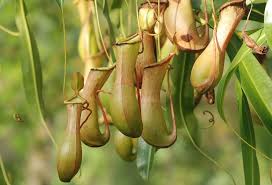
Overview
The Nepenthaceae family is monogeneric, comprising only the genus Nepenthes, commonly known as tropical pitcher plants or monkey cups. With over 170 recognized species and numerous natural hybrids, it's a diverse group found predominantly in the Malay Archipelago (especially Borneo, Sumatra, and the Philippines), extending to Madagascar, Seychelles, Sri Lanka, Indochina, New Caledonia, and northern Australia.
These plants are perennial vines, shrubs, or occasionally epiphytes, thriving in nutrient-poor, acidic, and moist habitats like peat swamps, heath forests, kerangas, and montane ridges. Their most striking feature is the pitcher trap, a complex modification of the leaf used to lure, trap, and digest arthropods and occasionally larger prey. This carnivorous habit allows them to obtain essential nutrients, particularly nitrogen and phosphorus, which are scarce in their native environments.
Nepenthes plants are highly sought after in horticulture by carnivorous plant enthusiasts. Their unique forms and ecological adaptations make them subjects of significant scientific research into evolution, biomechanics, and plant-animal interactions. Many species are threatened in the wild due to habitat destruction and over-collection.
Quick Facts
- Scientific Name: Nepenthaceae Dumort.
- Common Name: Tropical Pitcher Plant family, Monkey Cup family
- Number of Genera: 1 (Nepenthes)
- Number of Species: ~170-180+
- Distribution: Paleotropical: Madagascar, Seychelles, Sri Lanka, SE Asia (center of diversity), N Australia, New Caledonia.
- Evolutionary Group: Eudicots - Core Caryophyllales
Key Characteristics
Growth Form and Habit
Carnivorous perennial herbs, typically scrambling or climbing vines with stems that can reach many meters, sometimes shrubs or epiphytes. Often possess rhizomes.
Leaves and Pitchers
Leaves are alternate and simple. The leaf structure is highly modified: a flattened, petiole-like base expands into a typical leaf blade (lamina); the midrib extends beyond the lamina apex as a tendril, which coils around supports (in climbing species); the tip of the tendril inflates and develops into the characteristic pitfall trap or pitcher. Pitchers vary greatly in size, shape, and coloration, often differing between lower (terrestrial) and upper (aerial) parts of the same plant (leaf dimorphism). They typically feature a lid (operculum) covering the opening, a ribbed rim (peristome) that is often slippery, and digestive glands lining the inner lower surface.
Inflorescence
Inflorescences are typically racemes or panicles, borne terminally or appearing laterally. Bracts are usually present.
Flowers
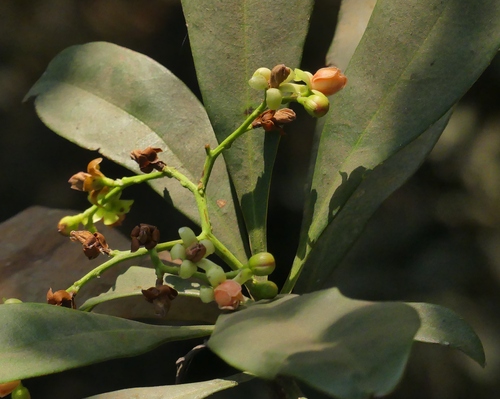
Flowers are small, inconspicuous, actinomorphic (radially symmetrical), unisexual (plants dioecious), and typically 4-merous (sometimes 3-merous). They lack petals (apetalous). Key features include:
- Perianth: Consists of a single whorl of 4 (or 3) sepal-like tepals, usually greenish or reddish, often with nectar glands on the inner surface.
- Androecium (Male Flowers): Stamens 4 to numerous (typically 4-24), filaments completely fused into a central column (synandrium) topped by the clustered anthers.
- Gynoecium (Female Flowers): Ovary is superior, composed of (3-)4 fused carpels (syncarpous). It is typically 4-locular with numerous ovules on axile placentas. Style is usually short or absent, with a discoid or lobed stigma.
Fruits and Seeds
The fruit is typically a leathery or woody loculicidal capsule, splitting open along 4 valves. Seeds are numerous, very small, and typically filiform (thread-like) or fusiform with papery wings at both ends, adapted for wind dispersal.
Chemical Characteristics
Produce digestive enzymes (proteases, chitinases, etc.) within the pitcher fluid. Possess betalain pigments (characteristic of core Caryophyllales), although often masked. Also produce nectar and volatile compounds to attract prey. Some species contain naphthoquinones (e.g., plumbagin).
Field Identification
Identifying Nepenthaceae (Nepenthes) is unmistakable due to the presence of their unique pitcher traps formed at the ends of leaf tendrils.
Primary Identification Features
- Carnivorous Habit: Presence of pitfall traps (pitchers) developed from modified leaf tips/tendrils.
- Habit: Typically climbing or scrambling vines (sometimes shrubs).
- Leaves: Alternate, simple blade extending into a tendril bearing a pitcher.
- Sexuality: Dioecious (separate male and female plants).
- Flowers: Small, unisexual, apetalous, 4 tepals (usually), stamens fused into a column (male), superior ovary (female).
- Fruit: Capsule with numerous, small, filiform or winged seeds.
- Distribution: Old World tropics, especially SE Asia.
Secondary Identification Features
- Habitat: Nutrient-poor, acidic, moist environments (bogs, heath forests, etc.).
- Inflorescence: Racemes or panicles of small flowers.
- Pitcher Morphology: Details of pitcher shape, size, peristome structure, and lid are key for species identification. Dimorphism between lower and upper pitchers is common.
Seasonal Identification Tips
- Year-round: The plants are perennial, and the distinctive pitchers are usually present year-round in suitable climates, making identification possible at any time.
- Flowering/Fruiting Season: Flowers and fruits are less conspicuous than pitchers but necessary for detailed study. Seasonality varies by species and location.
Common Confusion Points
- Sarraceniaceae (American Pitcher Plants): Also have pitfall traps, but leaves are modified directly into pitchers arising from a basal rosette (no tendril involved), flowers are large, bisexual, complex, with 5 sepals, 5 petals, numerous stamens, and a distinctive umbrella-like style. Found only in the Americas. Phylogenetically distant (Order Ericales).
- Cephalotaceae (Albany Pitcher Plant): Monotypic family from SW Australia. Has small pitchers arising near the base alongside regular foliage leaves. Flowers small, bisexual, 6 tepals, 12 stamens. Phylogenetically distant (Order Oxalidales).
- Bromeliaceae (Bromeliad Family): Some tank bromeliads hold water and trap insects, but they lack true digestive glands and pitcher structures. Leaves form a rosette, flower structure very different. Phylogenetically distant (Order Poales, Monocots).
Field Guide Quick Reference
Look For:
- Carnivorous vine/shrub
- Pitcher traps on leaf tendrils
- Alternate leaves
- Dioecious plants
- Small, 4-merous, apetalous flowers
- Stamens fused into column (male)
- Superior ovary (female)
- Capsule fruit with filiform/winged seeds
- Old World tropical distribution
Key Variations:
- Pitcher shape, size, color, peristome
- Lower vs. Upper pitcher morphology
- Vine vs. shrub habit
- Inflorescence structure
Notable Examples
All species belong to the genus Nepenthes. Diversity is immense, especially in Borneo and Sumatra:

Nepenthes attenboroughii
(Attenborough's Pitcher Plant)
A spectacular species discovered relatively recently on Mount Victoria, Palawan, Philippines. Produces very large, bell-shaped lower pitchers capable of trapping large prey, including rodents occasionally.

Nepenthes rajah
(Rajah Pitcher Plant)
Endemic to Mount Kinabalu and Mount Tambuyukon in Borneo. Famous for producing some of the largest pitchers in the genus, holding several liters of fluid. Known for its mutualistic relationship with tree shrews, which use the pitchers as toilets while feeding on nectar from the lid.

Nepenthes ampullaria
(Flask-shaped Pitcher Plant)
Widespread in Southeast Asia. Unusual for forming dense carpets of small, squat, ground pitchers with reduced lids, which primarily trap falling leaf litter rather than insects (detritivory).

Nepenthes distillatoria
(Sri Lankan Pitcher Plant)
The only Nepenthes species native to Sri Lanka. A climbing vine producing typical lower and upper pitchers, found in wet, open habitats.
Phylogeny and Classification
Nepenthaceae belongs to the order Caryophyllales and is firmly placed within the core Caryophyllales clade. This large order also includes families like cacti, beets, pinks, and other carnivorous groups.
Within the core Caryophyllales, Nepenthaceae is part of a specific lineage that includes several other carnivorous or related families. Its closest relatives are considered to be Droseraceae (sundews, Venus flytrap) and Drosophyllaceae (dewy pine), along with the non-carnivorous families Ancistrocladaceae and Dioncophyllaceae (which possess hook-like leaf modifications). This grouping highlights at least two independent origins of pitfall traps (Nepenthaceae vs. Sarraceniaceae in Ericales and Cephalotaceae in Oxalidales) and potentially multiple origins of carnivory within Caryophyllales itself (Nepenthaceae/Droseraceae lineage vs. others).
Position in Plant Phylogeny
- Kingdom: Plantae
- Clade: Angiosperms (Flowering plants)
- Clade: Eudicots
- Clade: Core Eudicots
- Order: Caryophyllales
- Clade: Core Caryophyllales
- Family: Nepenthaceae
Evolutionary Significance
Nepenthaceae is highly significant in evolutionary biology:
- Evolution of Carnivory: Provides a major example of the evolution of complex pitfall traps in plants, allowing study of the genetic and developmental pathways involved.
- Adaptive Radiation: The genus Nepenthes has undergone significant adaptive radiation, particularly in SE Asia, resulting in a wide array of pitcher morphologies adapted to different prey, microhabitats, and altitudes.
- Convergent Evolution: The pitfall trap mechanism evolved independently in Nepenthaceae, Sarraceniaceae, Cephalotaceae, and some Bromeliaceae, offering insights into convergent solutions to nutrient limitation.
- Plant-Animal Interactions: Exhibits complex interactions, including prey capture, mutualisms (e.g., with ants, bats, tree shrews inhabiting or utilizing pitchers), and specialized inquiline communities living within pitchers.
- Biogeography: Its distribution pattern provides clues about historical connections and dispersal across the Indian Ocean and Malesian regions.