Lophoziaceae
Notchwort Family
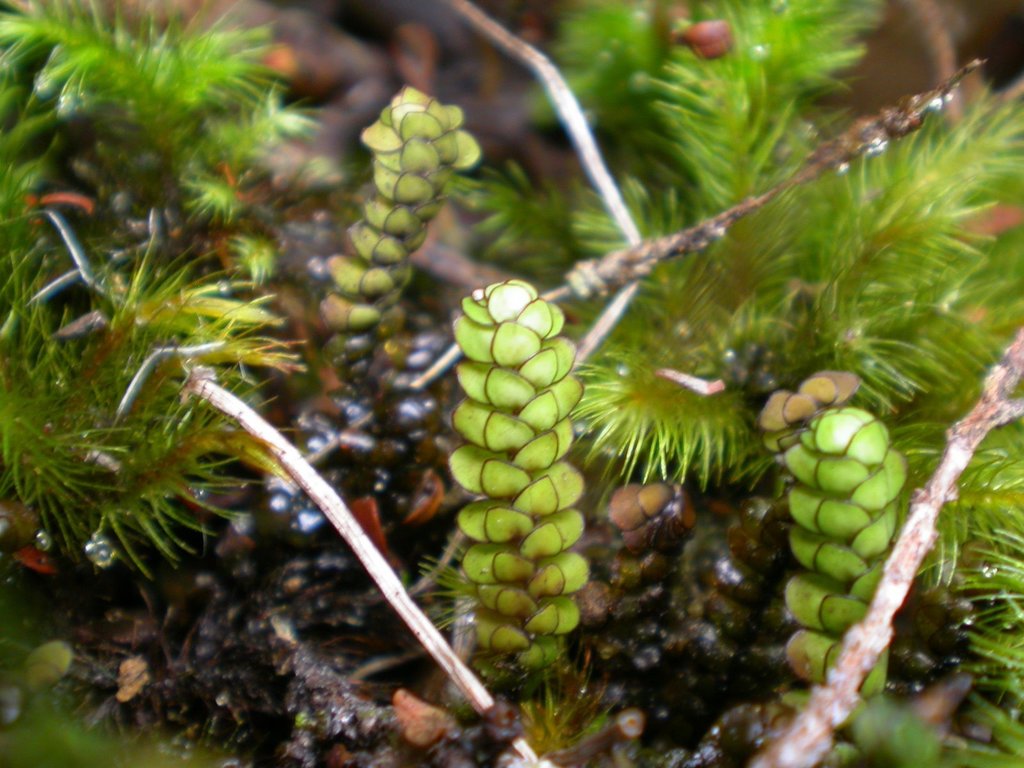
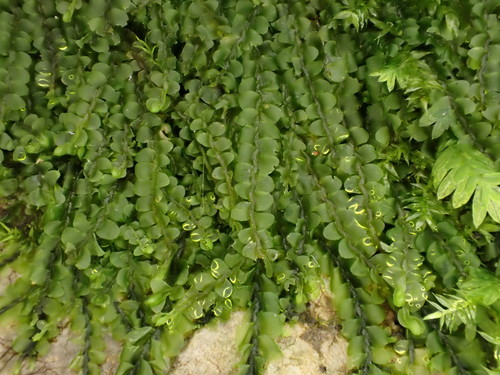
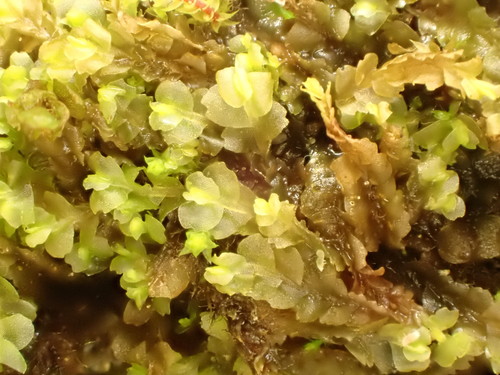
Lophoziaceae is a large and diverse family of leafy liverworts, predominantly found in the Northern Hemisphere. Commonly known as notchworts, many species feature characteristic succubous leaves that are simply (not complicate) bilobed, resembling a notch at the apex. Underleaves are typically absent or rudimentary, and asexual reproduction via often pigmented gemmae is widespread.
Overview
The Lophoziaceae, or Notchwort family, is one of the largest and most ecologically diverse families within the Jungermanniales, particularly dominant in temperate, boreal, arctic, and alpine ecosystems of the Northern Hemisphere. It includes well-known genera like Lophozia, Barbilophozia, and Tritomaria. While highly variable in size and color, many members share a common leaf structure: succubously arranged leaves that are typically divided into two simple lobes (hence "notchwort"), though some genera exhibit 3 or 4 lobes, or occasionally entire leaves.
Unlike the related Scapaniaceae, the leaves of Lophoziaceae are not complicate-bilobed (folded along a keel). Underleaves are generally absent or very small, making the shoots appear distinctly two-ranked. Lophoziaceae species occupy a vast range of habitats, from acidic peatlands and forest floors to rock crevices, soil banks, decaying wood, and tundra. Asexual reproduction via gemmae is a hallmark of the family, with many species producing characteristic clusters of often pigmented (reddish, brownish, purplish) gemmae on leaf tips or margins, aiding in dispersal and identification.
Phylogenetically, Lophoziaceae belongs to the suborder Jungermanniineae and is closely related to Scapaniaceae and Jungermanniaceae. The family's boundaries and internal classification have been subject to revision based on molecular data, but it remains a cornerstone group for understanding liverwort diversity and evolution, especially in cooler climates.
Quick Facts
- Scientific Name: Lophoziaceae
- Common Name: Notchwort Family
- Number of Genera: Approximately 15-20 (classification varies)
- Number of Species: Approximately 200+
- Distribution: Primarily Northern Hemisphere (temperate, boreal, arctic, alpine); some S. Hemisphere & tropics
- Evolutionary Group: Liverworts (Marchantiophyta) - Jungermanniopsida - Jungermanniineae
Key Characteristics
Gametophyte Form and Habit
Plants range from small and delicate to large and robust, typically forming mats, turfs, or growing as scattered shoots. Color is highly variable: green, yellowish-green, olive, brown, reddish, purplish, or blackish, often varying with light exposure. Stems are prostrate to ascending or erect, with branching patterns including lateral (Frullania-type), terminal (forking), and sometimes ventral-intercalary.
Leaves and Underleaves
Leaves are arranged succubously. They are typically simply lobed, most commonly bilobed (often with a V- or U-shaped sinus), but sometimes 3-4 lobed (e.g., Barbilophozia, Tritomaria) or occasionally entire or retuse (Gymnocolea). Lobes are usually triangular to ovate, with acute to rounded apices. Crucially, leaves are NOT complicate-bilobed. Underleaves are typically absent or rudimentary (small, lanceolate, scale-like, or reduced to slime papillae), though some genera like Barbilophozia may have larger, lobed underleaves.
Rhizoids
Rhizoids are usually colorless or brownish and typically scattered along the ventral side of the stem.
Cellular Structure
Leaf cells are typically isodiametric (polygonal) to slightly elongated. Cell walls range from thin to moderately thickened, and trigones (corner thickenings) are often distinct and sometimes bulging. Oil bodies are present, varying considerably in number, size, and structure (e.g., granular, homogeneous, segmented) across different genera and species, providing important taxonomic characters.
Asexual Reproduction
Asexual reproduction via gemmae is very common and characteristic of many genera (Lophozia, Barbilophozia, Tritomaria, Anastrophyllum, etc.). Gemmae are typically 1-2 celled, often angular or polyhedral (sometimes stellate), and frequently pigmented (red, brown, purple, yellowish). They are usually produced in clusters on the margins or apices of upper leaves, sometimes on specialized gemmiferous shoots.
Reproductive Structures
Plants can be dioicous or monoicous.
- Antheridia are borne in the axils of saccate bracts, usually forming intercalary spikes on main stems or branches.
- Archegonia are terminal on main shoots or leading branches, surrounded by several pairs of bracts and bracteoles (bracteole often present even if vegetative underleaves are absent) that are typically larger than vegetative leaves.
- A well-developed perianth is present, usually exserted beyond the bracts. It is typically cylindrical, fusiform, or ovoid, characteristically plicate (pleated or folded longitudinally, especially in the upper part), and contracted towards the mouth, which is usually lobed, dentate, or ciliate. The perianth is generally not strongly flattened dorsiventrally (unlike Scapaniaceae). Marsupia are absent.
Sporophytes and Spores
The sporophyte develops within the perianth. The seta is usually long. The capsule is typically ovoid to spherical, dark brown to blackish, with a wall composed of multiple (2-5) layers of cells. Dehiscence occurs via four valves.
Field Identification
Identifying Lophoziaceae often involves recognizing the combination of succubous, simply lobed leaves (usually 2-lobed), lack of underleaves, and the frequent presence of pigmented gemmae. Habitat and color can also be clues.
Primary Identification Features
- Leaves: Succubous arrangement; simply lobed (typically 2-lobed, sometimes 3-4 or entire), NOT complicate-bilobed.
- Underleaves: Usually absent or rudimentary.
- Gemmae: Very often present, typically angular and often pigmented (reddish, brownish, purplish), usually found on upper leaf margins/tips.
- Perianth (if fertile): Terminal, typically cylindrical/ovoid, plicate, NOT strongly flattened.
- Habitat: Diverse, common on soil, rock, logs, peat in temperate to arctic/alpine regions.
Secondary Identification Features
- Color: Highly variable, often with reddish/brownish/purplish tints, especially in exposed sites or on gemmae.
- Cell Walls (Microscopic): Usually with distinct trigones.
- Leaf Lobe Shape: Varies from acute to rounded.
Seasonal Identification Tips
Lophoziaceae gametophytes are perennial and identifiable year-round:
- Year-Round: Leaf lobing and lack of underleaves are constant features. Gemmae presence is often a reliable indicator whenever plants are actively growing.
- Pigmentation: Colors may intensify with stress (sun exposure, cold).
- Reproduction: Perianths are often conspicuous when present.
Common Confusion Points
Distinguishing Lophoziaceae requires careful observation of leaf structure and gemmae:
- Scapaniaceae: The most critical distinction: Scapaniaceae have complicate-bilobed leaves (folded into two distinct lobes). Lophoziaceae leaves are simply lobed.
- Jungermanniaceae: Often lack underleaves and have similar perianths, but leaves are typically entire or only shallowly retuse/emarginate, not distinctly lobed (though some exceptions exist). Gemmae are less common or different if present.
- Cephaloziaceae / Cephaloziellaceae: Also have bilobed leaves and lack underleaves, but cells are typically different (large/thin-walled in Cephaloziaceae, small/thick in Cephaloziellaceae), perianths often differ in shape/position, and gemmae may differ.
- Geocalycaceae: Distinguished by the presence of large, usually bifid underleaves.
Field Guide Quick Reference
Look For:
- Succubous leaves
- Leaves simply lobed (usually 2, sometimes 3-4)
- Leaves NOT complicate-bilobed
- Underleaves absent/rudimentary
- Gemmae often present, angular, pigmented
- Perianth usually plicate, not flattened
- Diverse habitats, esp. N. Hemisphere
Key Distinctions:
- Simply lobed leaves (vs. complicate in Scapaniaceae)
- Distinctly lobed leaves (vs. entire/retuse in Jungermanniaceae)
- Underleaves absent/tiny (vs. large in Geocalycaceae)
- Cells often with trigones (vs. large/thin in Cephaloziaceae)
- Perianth not strongly flattened (vs. Scapaniaceae)
Notable Examples
This large family includes many common and ecologically important genera:

Lophozia spp. (e.g., L. ventricosa complex, L. incisa)
Notchworts
The type genus, large and complex. Typically small to medium-sized, green to brownish/reddish. Leaves succubous, usually bilobed with a V-shaped sinus. Underleaves absent/rudimentary. Gemmae very common, angular, often greenish, reddish or brown, produced on upper leaf lobes. Found in diverse habitats.

Barbilophozia spp. (e.g., B. hatcheri, B. lycopodioides)
Bearded Notchworts
Often larger, more robust plants than Lophozia. Leaves typically 3-4 lobed, often with cilia (hairs) at the base of the ventral leaf margin. Underleaves usually present and distinct, often lobed or ciliate. Gemmae common. Found on soil, rocks, logs, often in montane or boreal regions.

Tritomaria spp. (e.g., T. quinquedentata, T. exsectiformis)
Three-toothed Notchworts
Characterized by typically 3-lobed, asymmetric leaves, often with sharp points. Underleaves absent or rudimentary. Gemmae common, often reddish-brown. Found on rocks, soil, logs, often in calcareous or base-rich areas.

Gymnocolea inflata
Inflated Notchwort
Forms blackish or dark olive-green patches, typically on wet, acidic peat or rock. Leaves are rounded and entire or shallowly retuse/emarginate (not distinctly lobed). Underleaves absent. Perianth characteristically inflated and wide-mouthed, often immersed among bracts.

Anastrophyllum spp. (e.g., A. minutum, A. michauxii)
(No common name)
Often forms dense turfs on rocks or logs. Leaves are typically bilobed, often asymmetric, with lobes frequently pointing upwards or forwards (secund). Underleaves absent or rudimentary. Gemmae often present. Some species have distinctive reddish or brownish hues.
Phylogeny and Classification
Lophoziaceae is a major family within the liverwort division Marchantiophyta, class Jungermanniopsida, order Jungermanniales, and suborder Jungermanniineae. It represents a large radiation within this suborder, characterized primarily by succubous, simply lobed leaves and the frequent absence of underleaves. Molecular phylogenetics confirms its close relationship to Scapaniaceae and Jungermanniaceae.
The boundaries of Lophoziaceae have been debated, and the family as traditionally circumscribed may be paraphyletic (not including all descendants of a common ancestor). Some genera previously included have been moved to other families (e.g., some to Anastrophyllaceae, if recognized), and relationships with families like Chonecoleaceae (in a different suborder but morphologically similar to some Lophoziaceae) are complex. Nonetheless, Lophoziaceae sensu lato remains a key group for understanding diversity within Jungermanniineae.
Position in Plant Phylogeny
- Kingdom: Plantae
- Clade: Embryophytes (Land Plants)
- Division: Marchantiophyta (Liverworts)
- Class: Jungermanniopsida
- Order: Jungermanniales
- Suborder: Jungermanniineae
- Family: Lophoziaceae (sensu lato)
Evolutionary Significance
Lophoziaceae is significant for:
- Major Radiation: Represents one of the largest and most ecologically diverse families of leafy liverworts, especially in the Northern Hemisphere.
- Asexual Reproduction Strategy: The widespread and prolific production of gemmae is a key factor in the ecological success and distribution of many species.
- Morphological Diversity: Exhibits considerable variation in leaf lobing (2-4 lobes), cell structure, and pigmentation within a common structural framework.
- Ecological Importance: Forms significant components of bryophyte communities in forests, peatlands, tundra, and alpine environments.
- Taxonomic Complexity: Serves as a model group for studying species boundaries, hybridization, and the integration of molecular and morphological data in bryophyte systematics.