Gymnomitriaceae
Gymnomitrion / Rockwort Family
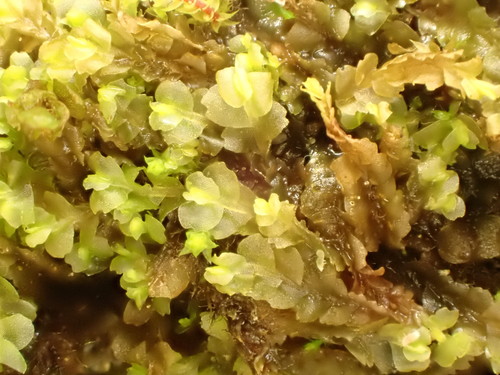
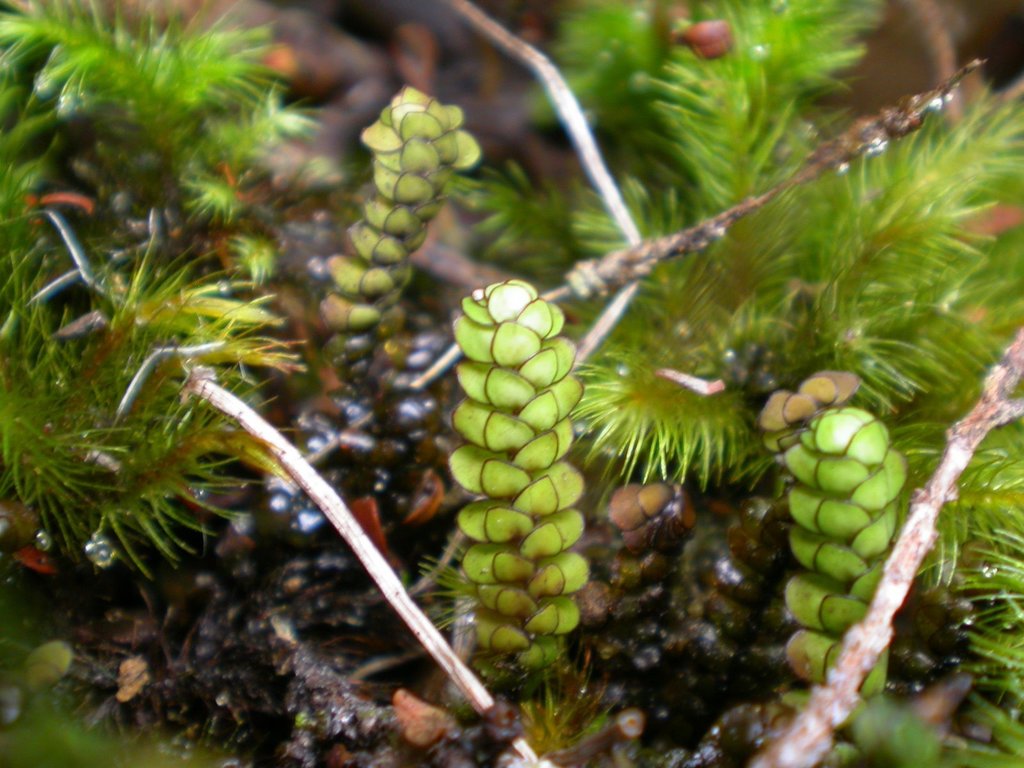
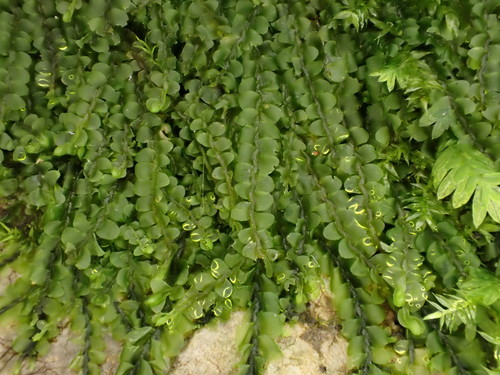
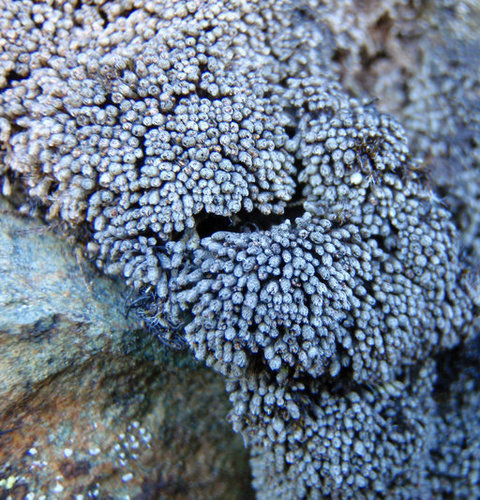
Gymnomitriaceae is a family of leafy liverworts highly adapted to arctic and alpine environments. Often called rockworts, these typically small plants form dense, compact cushions or turfs, frequently appearing smooth and worm-like (julaceous) due to their tightly appressed, concave leaves. They characteristically lack underleaves and often grow on exposed rocks or thin soil.
Overview
The Gymnomitriaceae family comprises a group of specialized liverworts predominantly found in cold, harsh environments like arctic tundra and high mountain ranges worldwide (arctic-alpine and bipolar distribution). Genera such as Gymnomitrion and Marsupella are characteristic members. These plants are masters of extreme conditions, often pioneering on exposed, acidic or siliceous rock faces, scree slopes, or gravelly soils where few other plants can survive. They typically form very dense, compact cushions or turfs, a growth form that helps conserve moisture and withstand wind and cold.
A key visual feature is the often julaceous (smoothly cylindrical or worm-like) appearance of the shoots, caused by the leaves being tightly appressed (pressed close) to the stem and strongly concave. The leaves are typically bilobed or emarginate (shallowly notched) and inserted transversely. Underleaves are absent. The overall coloration is frequently greyish, silvery, brownish, reddish, or blackish, rather than bright green. Reproduction often involves a perigynium (a fleshy tube or pouch derived from stem tissue protecting the archegonia and sporophyte) rather than a prominent perianth.
Phylogenetically, Gymnomitriaceae belongs to the suborder Jungermanniineae. It represents a significant evolutionary radiation into extreme cold and exposed habitats, showcasing remarkable adaptations in growth form, leaf structure, and reproductive strategies.
Quick Facts
- Scientific Name: Gymnomitriaceae
- Common Name: Gymnomitrion / Rockwort Family
- Number of Genera: Approximately 10-12
- Number of Species: Approximately 80-100
- Distribution: Primarily arctic-alpine and bipolar
- Evolutionary Group: Liverworts (Marchantiophyta) - Jungermanniopsida - Jungermanniineae
- Habitat Specificity: Typically exposed rock, scree, gravel in cold environments
Key Characteristics
Gametophyte Form and Habit
Plants are small to medium-sized, characteristically forming dense, compact cushions or turfs. Shoots are often julaceous (smoothly cylindrical, worm-like) due to tightly appressed leaves. Color is typically not pure green, often greyish-white, silvery-grey, yellowish-brown, reddish-brown, purplish-black, or black. Stems are erect, ascending, or creeping, often wiry. Branching is variable, often lateral or terminal, sometimes sparse.
Leaves and Underleaves
Leaves are typically inserted transversely (sometimes slightly succubous), densely overlapping (imbricate), and characteristically appressed to the stem, usually strongly concave. The leaf apex is typically bilobed or emarginate (shallowly notched), sometimes rounded or retuse. Underleaves are completely absent.
Rhizoids
Rhizoids are usually sparse, colorless or brownish, scattered or arising from specific points depending on the genus.
Cellular Structure
Leaf cells are typically small, quadrate to rectangular. Cell walls are often evenly thickened or possess small to medium-sized, sometimes indistinct trigones. Oil bodies are generally small, few per cell, or absent entirely.
Asexual Reproduction
Asexual reproduction via gemmae is generally rare or absent in this family.
Reproductive Structures
Plants are mostly dioicous, sometimes monoicous.
- Antheridia are borne in the axils of saccate bracts, often forming inconspicuous intercalary spikes.
- Archegonia are terminal on main shoots or branches. Protection for the developing sporophyte is variable and often involves reduced or modified structures:
- The perianth is frequently reduced or entirely absent.
- Instead, protection is often provided by a perigynium, a fleshy, tube-like or pouch-like structure developed from the stem tissue below the archegonia, which elevates the developing sporophyte. In some cases, a shoot calyptra (calyptra fused with stem tissue) serves this function.
- Marsupia are absent.
Sporophytes and Spores
The sporophyte develops within the perigynium or shoot calyptra. The seta is often short. The capsule is typically spherical to ovoid, dark, with a wall usually composed of two layers of cells. Dehiscence occurs via four valves.
Field Identification
Identifying Gymnomitriaceae involves recognizing the compact, often julaceous growth form, appressed leaves, lack of underleaves, and characteristic arctic-alpine rock or soil habitats.
Primary Identification Features
- Habit: Dense, compact cushions or turfs, often julaceous (smoothly cylindrical).
- Leaves: Tightly appressed to the stem, concave, typically bilobed or emarginate, inserted transversely.
- Underleaves: Completely absent.
- Color: Often greyish, silvery, brownish, or blackish, not typically bright green.
- Habitat: Restricted to arctic or alpine environments, typically on exposed rock, scree, or thin soil.
- Reproductive Structures: Perianth often reduced/absent; look for fleshy perigynia elevating the capsules (if fertile).
Secondary Identification Features
- Texture: Often feels firm or wiry.
- Cells (Microscopic): Small, often relatively thick-walled.
- Gemmae: Usually absent.
Seasonal Identification Tips
Gymnomitriaceae are perennial and present year-round, adapted to harsh conditions:
- Growing Season (Summer): Best time to observe, especially in snow-bed habitats after snowmelt.
- Appearance: Color and turgidity vary with moisture; often appear more greyish or blackish when dry.
- Reproduction: Sporophytes emerging from perigynia may be seen during the growing season but are often inconspicuous.
Common Confusion Points
The compact, julaceous habit is key, but confusion can arise:
- Antheliaceae (Anthelia): Also forms dense cushions in similar habitats, often greyish, but leaves are opposite and shoots are 3-ranked due to large underleaves.
- Andreaeaceae (Granite Mosses): True mosses (not liverworts) forming dark cushions on rock, but have nerve in leaves and different capsule structure (opening by slits, not valves).
- Small, dark forms of Lophoziaceae or Jungermanniaceae: May grow in similar habitats but typically have spreading (not appressed) leaves, often possess gemmae (Lophoziaceae), and usually have a distinct perianth.
- Arnelliaceae (Arnellia): Shares arctic-alpine habitat but grows on calcareous substrate, has entire leaves, and different branching/perianth.
Field Guide Quick Reference
Look For:
- Dense, compact cushions, often julaceous
- Often greyish, brownish, blackish
- Leaves appressed, concave, bilobed/emarginate
- Leaf insertion transverse
- Underleaves absent
- Arctic-alpine rock/scree/soil habitat
- Perianth reduced/absent; perigynium often present
Key Distinctions:
- Appressed leaves + Absent underleaves + Arctic-alpine habitat
- Leaves appressed (vs. spreading)
- Leaves alternate/transverse (vs. opposite in Anthelia)
- Underleaves absent (vs. present in Anthelia, Herbertaceae)
- Leaves bilobed/emarginate (vs. entire in Arnellia, Jungermannia)
- Perigynium often present (vs. prominent perianth in many others)
Notable Examples
Key genera include Gymnomitrion and Marsupella:

Gymnomitrion spp. (e.g., G. concinnatum, G. corallioides)
Rockworts
Often form very dense, smooth, silvery-grey or brownish cushions on exposed alpine rocks. Shoots are strongly julaceous with tightly appressed, concave, bilobed leaves. Perianth absent, sporophyte develops within a shoot calyptra/perigynium.

Marsupella spp. (e.g., M. emarginata, M. sphacelata)
Rustworts (sometimes)
A large genus with species typically forming dark (often blackish or reddish-brown) patches or turfs on wet rocks, stream banks, or late snow-beds. Leaves are typically transversely inserted, bilobed, and often less tightly appressed than Gymnomitrion. Perianth absent, sporophyte develops within a distinct basal perigynium.

Eremonotus myriocarpus
(No common name)
A small, rare arctic-alpine species often found on damp, shaded rock faces. Characterized by its very small size, transverse bilobed leaves, and production of numerous perianths (which are reduced compared to other families but present, unlike many Gymnomitriaceae).
Phylogeny and Classification
Gymnomitriaceae is classified within the liverwort division Marchantiophyta, class Jungermanniopsida, order Jungermanniales, and suborder Jungermanniineae. It represents a well-defined, monophyletic group characterized by adaptations to extreme cold and exposure.
Molecular studies confirm its placement within Jungermanniineae, closely related to families like Lophoziaceae, Scapaniaceae, and Jungermanniaceae. The evolution of the compact, julaceous growth form, appressed leaves, and the frequent replacement of the perianth with a perigynium are key evolutionary trends within the family, likely driven by selection pressures in harsh arctic-alpine environments.
Position in Plant Phylogeny
- Kingdom: Plantae
- Clade: Embryophytes (Land Plants)
- Division: Marchantiophyta (Liverworts)
- Class: Jungermanniopsida
- Order: Jungermanniales
- Suborder: Jungermanniineae
- Family: Gymnomitriaceae
Evolutionary Significance
Gymnomitriaceae is significant for:
- Adaptation to Extremes: A model group for studying morphological and physiological adaptations to cold, high-light, and potentially desiccating arctic-alpine environments (e.g., compact growth, appressed leaves, pigmentation).
- Pioneer Colonization: Important primary colonizers of bare rock and mineral soil in high-latitude/altitude ecosystems.
- Reproductive Strategies: Shows evolutionary trends towards reduction of the perianth and development of alternative protective structures like perigynia.
- Biogeography: Its bipolar and arctic-alpine distribution patterns provide insights into long-distance dispersal and glacial refugia.