Lepidoziaceae
Whipwort / Fingerwort Family (common names for some genera)
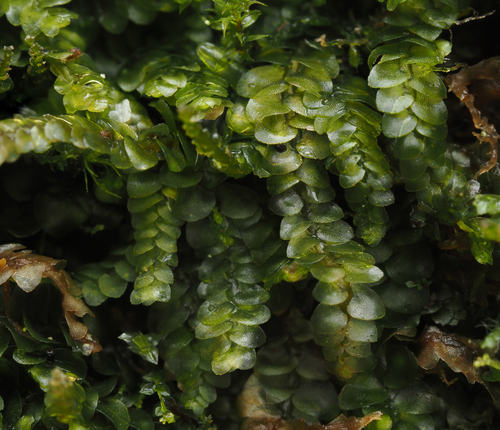
Lepidoziaceae is a large, diverse family of leafy liverworts (order Jungermanniales), characterized by incubously inserted leaves that are frequently deeply lobed or divided into narrow segments. Underleaves are usually present and often similarly lobed. Branching is often regularly pinnate, and perianths are typically borne on short ventral branches.
Overview
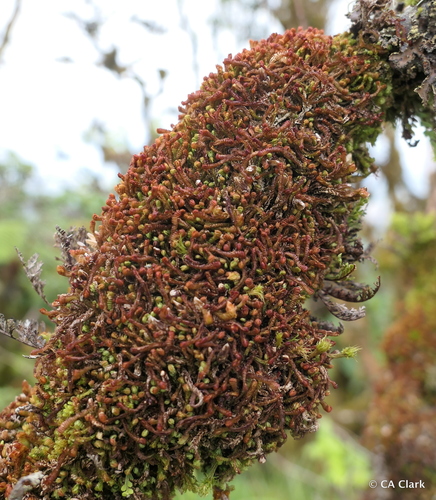
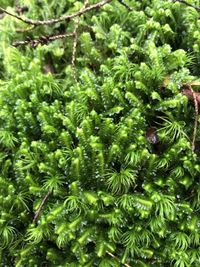
The Lepidoziaceae family is a major group within the leafy liverworts, encompassing a wide range of morphologies and ecological niches. It is found worldwide but shows particular diversity in the Southern Hemisphere and tropical regions. Genera like Lepidozia, Bazzania, Kurzia, and Telaranea are prominent members. These plants often form intricate mats or wefts on decaying wood, peat, soil, rocks, or as epiphytes.
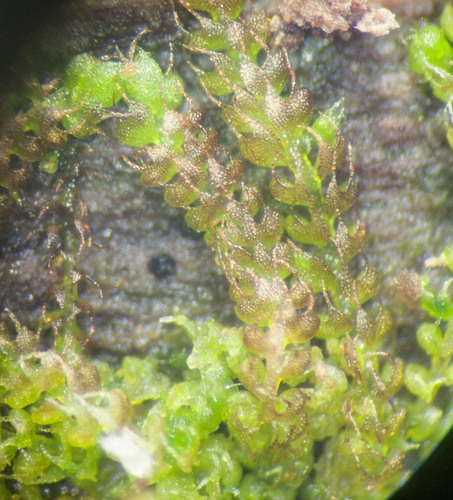
Key characteristics include the incubous insertion of lateral leaves (overlapping like downward-pointing shingles) and the frequent tendency for these leaves to be deeply lobed or divided, often into 3, 4, or more narrow, finger-like segments. Underleaves are typically present and often mimic the lateral leaves in being deeply lobed or divided. Many genera exhibit characteristic branching patterns, frequently regularly pinnate or bipinnate (feather-like), and sometimes possess specialized flagelliform (whip-like) branches. Reproductive structures (perianths) are usually found on short branches arising from the ventral side of the stem.
Quick Facts
- Scientific Name: Lepidoziaceae Limpr.
- Common Name: Whipwort / Fingerwort Family (for some genera)
- Number of Genera: Approx. 25-30 (including Lepidozia, Bazzania, Kurzia, Telaranea, Zoopsis).
- Number of Species: Large, several hundred species globally.
- Distribution: Cosmopolitan, particularly diverse in the Southern Hemisphere and tropics.
- Evolutionary Group: Bryophytes - Liverworts (Marchantiophyta) - Jungermanniopsida - Jungermanniales (Suborder Lepidoziineae).
Key Characteristics
Note: Lepidoziaceae are leafy liverworts typically with incubous, often divided leaves and underleaves, and pinnate branching.
Gametophyte (Leafy Shoot) Structure
The dominant phase is the leafy gametophyte, showing much diversity:
- Form: Variable, from delicate and thread-like (Telaranea, Kurzia) to robust and forming dense mats (Bazzania, some Lepidozia). Often pale green, yellowish, or brownish.
- Stems: Slender to moderately robust.
- Leaves: Arranged in two lateral rows, often overlapping.
- Shape: Highly variable, but characteristically deeply lobed or divided in many genera, often into 2-4 (or more) narrow, finger-like, or hair-like segments (e.g., Lepidozia, Kurzia, Telaranea). In some genera like Bazzania, leaves are asymmetric and typically 3-toothed at the apex rather than deeply lobed.
- Insertion: Distinctly incubous.
- Cells: Variable, often relatively small, walls thin or slightly thickened.
- Underleaves: Typically present and distinct, often resembling the lateral leaves in shape and degree of division (i.e., usually lobed or divided if the lateral leaves are). Size varies from smaller than to nearly as large as lateral leaves.
- Branching: Often very characteristic. Frequently regularly pinnate or bipinnate. Terminal branching (Frullania-type, Microlepidozia-type) is common. Some genera produce long, whip-like flagelliform branches with reduced leaves, which may aid in anchorage or propagation.
- Asexual Reproduction: Gemmae are uncommon in most genera. Fragmentation and specialized caducous (easily detached) leaves or branches occur in some.
Reproductive Structures
Species are often dioicous, sometimes monoicous.
- Antheridia: Male organs are borne in the axils of modified saccate bracts (androecia), typically located on specialized short branches, often ventral or lateral.
- Archegonia: Female organs are typically borne on very short, specialized ventral intercalary branches. They are enclosed within bracts and a well-developed perianth. The perianth is usually cylindrical to fusiform, often 3-keeled (trigonous) towards the apex, and typically contracted and lobed, ciliate, or toothed at the mouth.
Sporophyte
The sporophyte develops within the perianth on the short ventral branch:
- Foot: Embedded in the branch tissue.
- Seta: Distinct, elongating considerably at maturity, raising the capsule.
- Capsule: Ovoid to cylindrical, typically dark. Capsule wall is usually bistratose.
- Dehiscence: Capsule splits longitudinally into four straight valves upon maturity.
Spores and Elaters
Contained within the capsule.
- Spores: Small, spherical, typically finely papillose or nearly smooth.
- Elaters: Present, long and slender with 2 spiral thickenings.
Field Identification
Identifying Lepidoziaceae often involves recognizing the combination of incubous leaves (frequently divided), similarly divided underleaves, characteristic branching patterns, and the ventral position of reproductive structures.
Primary Identification Features
- Incubous Leaf Insertion: Lateral leaves overlap like downward-pointing shingles.
- Lobed/Divided Leaves (Common): Lateral leaves often deeply cut into 2-4 or more narrow segments (check genera like Lepidozia, Kurzia, Telaranea). Note: Bazzania leaves are typically 3-toothed, not deeply lobed.
- Lobed/Divided Underleaves (Common): Underleaves usually present and often mirroring the lobing pattern of the lateral leaves.
- Branching Pattern (Often Pinnate): Many species show regular, feather-like branching. Flagelliform (whip-like) branches may be present.
- Ventral Reproductive Branches: Perianths (and sporophytes) arise from short branches on the ventral side of the stem (may require careful observation).
Secondary Identification Features
- Habitat: Diverse, but common on decaying wood, peat, and soil in moist environments.
- Plant Form: Can range from robust mats (Bazzania) to delicate threads (Telaranea).
Seasonal Identification Tips
- Year-round: Distinctive vegetative features (leaf shape/division, underleaves, branching) are the primary means of identification and are present year-round.
- Reproductive Periods: Perianths on ventral branches can help confirm family placement.
Common Confusion Points
Lepidoziaceae might be confused with:
- Calypogeiaceae: Also have incubous leaves, but leaves are typically unlobed, underleaves large but usually simply bilobed (not divided like leaves), and reproductive structures involve a perigynium, not a perianth on a ventral branch.
- Herbertaceae: Have deeply divided leaves and underleaves, but leaves are often more symmetrically divided and insertion differs.
- Trichocoleaceae: Have highly divided leaves and underleaves, but appear distinctly 'hairy' due to cells being drawn out into cilia. Possess a perigynium.
- Cephaloziaceae: Often smaller, leaves typically bilobed but insertion is succubous or transverse, underleaves often small or absent, perianth usually terminal on main shoots/branches.
- Ptilidiaceae: Have incubous leaves that are deeply lobed and heavily ciliate along the margins.
Key differentiator: The combination of incubous leaves (often deeply divided) + distinct underleaves (often similarly divided) + characteristic branching (often pinnate) + perianth on short ventral branch points strongly to Lepidoziaceae.
Field Guide Quick Reference
Look For:
- Leafy shoots, often forming mats
- Leaves incubously inserted
- Leaves often deeply lobed/divided (check genus)
- Underleaves present, often lobed/divided
- Branching often pinnate
- Perianth on short ventral branch
Key Distinctions:
- Leaf insertion incubous (unlike Cephaloziaceae, Lophocoleaceae)
- Leaves/underleaves often divided (unlike Calypogeiaceae's unlobed leaves)
- Has perianth (unlike Calypogeiaceae's perigynium)
- Not 'hairy' (unlike Trichocoleaceae)
- Perianth ventral (unlike terminal in many others)
Notable Examples
Includes several large and common genera with diverse morphologies.

Lepidozia reptans
(Creeping Fingerwort)
A very common species found on logs, peat, and soil in temperate forests worldwide. Forms creeping mats with regularly pinnate branching. Leaves and underleaves are typically divided into 3-4 finger-like lobes.

Bazzania trilobata
(Greater Whipwort)
A large, robust species common in temperate forests, especially on logs and rocks. Forms extensive mats. Characterized by incubous, asymmetric leaves that are typically 3-toothed at the apex (not deeply lobed). Underleaves are large and broad, often slightly lobed or toothed. Branching is often Y-shaped (terminal, Frullania-type).

Kurzia species (e.g., K. pauciflora)
(Kurzia)
Often found in bogs and wet heathlands, growing amongst Sphagnum or on peat. Plants are typically small and wiry, brownish or blackish-green, with leaves and underleaves deeply divided into 3-4 narrow, almost hair-like segments. Branching is often pinnate.

Telaranea species (e.g., T. setacea)
(Spiderwort)
Delicate, often whitish-green or pale green liverworts found on peat, damp soil, or logs. Characterized by leaves and underleaves that are reduced essentially to 2-4 uniseriate (single row of cells) filaments or cilia, giving the plant a very fine, thread-like appearance.
Phylogeny and Classification
Lepidoziaceae is a large and central family within the Jungermanniales, forming the core of the suborder Lepidoziineae. This suborder also includes families like Calypogeiaceae and Adelanthaceae. The family itself is diverse and contains several distinct evolutionary lineages represented by genera with quite different morphologies (e.g., the robust Bazzania vs. the filamentous Telaranea).
Molecular phylogenetic studies have largely supported the monophyly of the family and its suborder, although the relationships between the various genera within Lepidoziaceae are complex and subject to ongoing research. The family represents a major evolutionary radiation characterized by incubous leaf insertion and a tendency towards leaf division, along with specific branching patterns and the ventral placement of reproductive structures.
Position in Plant Phylogeny
- Kingdom: Plantae
- Division: Marchantiophyta (Liverworts)
- Class: Jungermanniopsida
- Order: Jungermanniales
- Suborder: Lepidoziineae
- Family: Lepidoziaceae
Evolutionary Significance
Lepidoziaceae is significant for:
- Major Leafy Liverwort Radiation: Represents one of the largest and most diverse families in the Jungermanniales, showcasing extensive morphological variation (especially in leaf division and branching).
- Dominance in Southern Hemisphere: Particularly diverse and ecologically important in temperate and tropical regions of the Southern Hemisphere.
- Evolution of Leaf Form: Exhibits trends from simple leaves (or toothed apices) to deeply divided, almost filamentous structures.
- Phylogenetic Importance: Forms the core of the suborder Lepidoziineae, crucial for understanding the phylogeny of incubous-leaved liverworts.