Fissidentaceae
Pocket Moss / Feather Moss Family
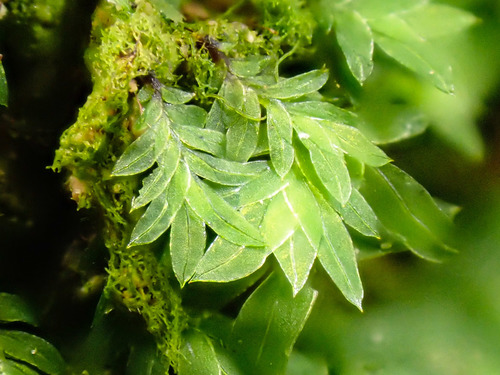
The Fissidentaceae family is renowned for its unique and highly distinctive leaf structure, unlike any other moss family. These mosses, often called pocket mosses or feather mosses, typically grow in moist, shaded habitats worldwide and are easily recognized by their flattened shoots with leaves arranged in two ranks, each featuring a characteristic pocket or sheath at the base.
Overview
Fissidentaceae is a large and cosmopolitan family of mosses, found in diverse habitats ranging from soil banks and rocks to tree bark and occasionally submerged environments. The family is largely defined by the genus Fissidens, which contains the vast majority of species. Their defining characteristic is the complex, two-ranked (distichous) and equitant leaf structure, giving the plants a flattened, feather-like or fern-like appearance.
These mosses thrive particularly well in humid, shaded conditions, making them common sights in forests, along streams, and in greenhouses. While most are small, their unique morphology makes them relatively easy to identify once the leaf structure is understood. The family represents a distinct evolutionary lineage within the mosses, often placed in its own order, Fissidentales.
Quick Facts
- Scientific Name: Fissidentaceae
- Common Name: Pocket Moss Family, Feather Moss Family
- Number of Genera: Primarily 1 (Fissidens), though sometimes split into smaller genera.
- Number of Species: Approximately 400-500+
- Distribution: Cosmopolitan; most diverse in tropical and subtropical regions.
- Evolutionary Group: Bryophytes - Mosses (Class: Bryopsida)
Key Characteristics
Growth Form and Habit
Plants are typically small to medium-sized and exhibit an acrocarpous growth form (sporophytes terminal on main stems or branches), although the flattened arrangement of leaves can sometimes mimic a pleurocarpous habit. Shoots are often unbranched or sparsely branched, appearing flattened or 'complanate' due to the leaf arrangement. They grow on various substrates like soil, rock, decaying wood, or tree bases.
Leaves
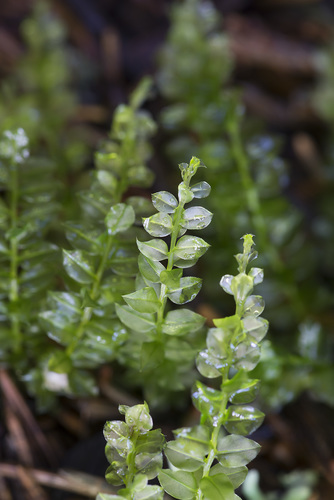
The leaves are the most diagnostic feature of the family. They are arranged strictly in two opposite ranks (distichous) along the stem and are equitant, meaning the base of each leaf clasps the stem and the base of the leaf above it, similar to the leaves of an iris.
Each leaf is uniquely structured, consisting of:
- Two basal vaginant laminae (or sheathing laminae): These form a pocket or sheath that encloses the stem.
- A single upper ventral lamina (or apical lamina): This extends upwards from the top of the pocket on the side facing the stem apex.
- Often, a dorsal lamina: This extends down the stem below the point of leaf insertion on the side away from the stem apex (may be reduced or absent in some species).
A single, usually strong costa (midrib) typically runs through the leaf, ending before the apex. This complex leaf structure is unparalleled in other moss families.
Sporophyte (Capsule)
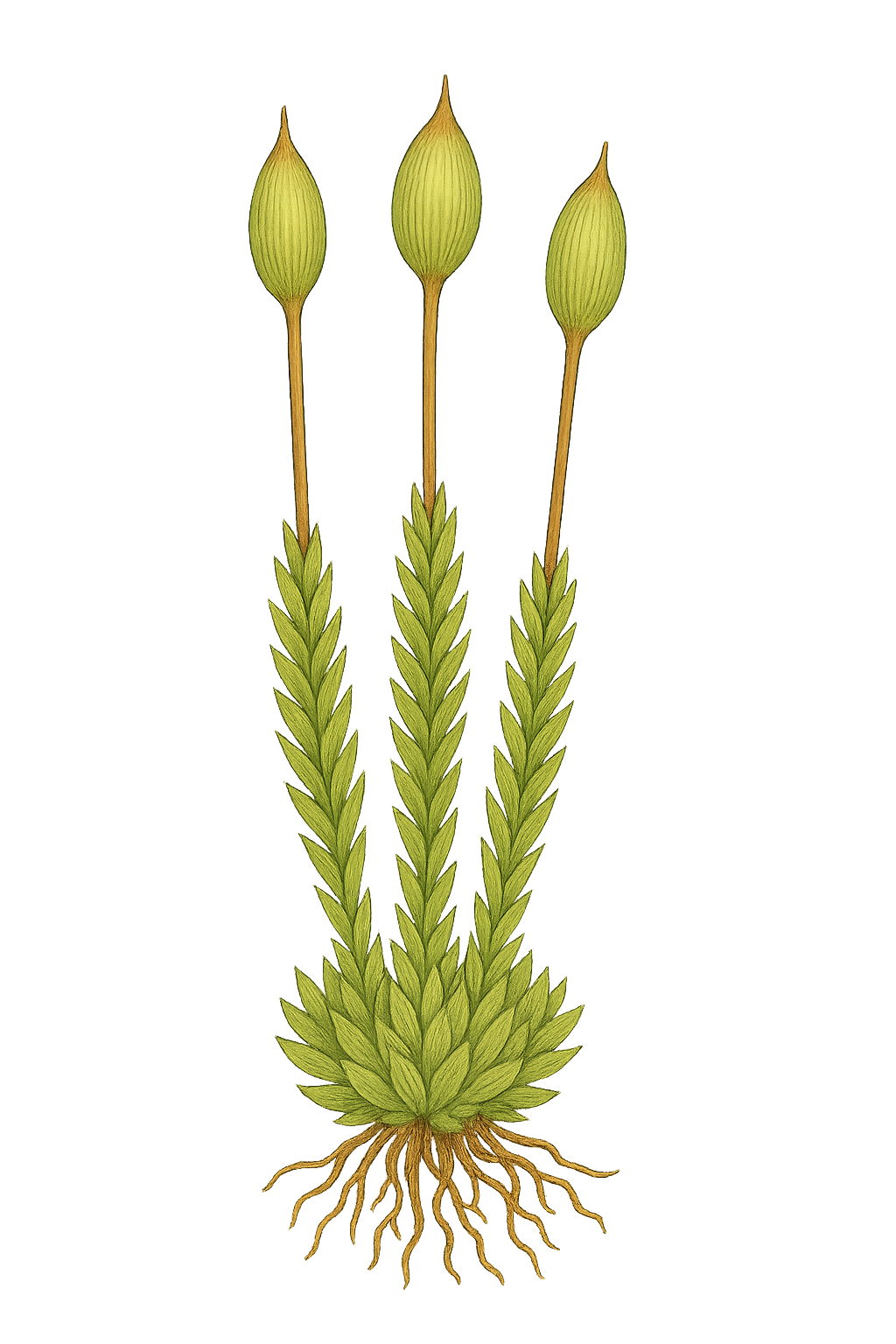
Sporophytes typically arise terminally on main shoots or branches (acrocarpous), though they can sometimes appear lateral due to innovation (new growth from below). The seta (stalk) is usually elongated, holding the capsule well above the leaves. The capsule is typically ovoid to cylindrical, erect or slightly inclined, and symmetrical. A distinct operculum (lid) is present. The peristome is single, consisting of 16 teeth that are characteristically deeply divided (about halfway) into two filiform (thread-like) forks, often papillose (roughened). This is known as the Fissidens-type peristome.
Habitat
Found in a wide range of habitats but generally prefer moist and shaded conditions. Common substrates include bare soil (especially clay banks along streams or trails), shaded rocks (often limestone), bases of trees, rotting logs, and occasionally submerged rocks in streams (e.g., Fissidens fontanus).
Field Identification
Identifying Fissidentaceae is primarily based on recognizing their unique leaf structure:
Primary Identification Features
- Unique Leaf Structure: This is the absolute key. Look for leaves in two distinct ranks, with the base of each leaf clearly clasping the stem and the leaf above (equitant), forming a visible pocket (vaginant laminae).
- Flattened Appearance: Shoots typically look flat, like a small feather or fern frond.
- Presence of Costa: Leaves almost always have a single, distinct midrib.
Secondary Identification Features
- Habitat: Often found in moist, shaded locations on soil, rock, or bark.
- Sporophyte Position: Usually terminal on stems or main branches.
- Peristome (if visible): 16 teeth, each deeply split into two forks (requires magnification).
Seasonal Identification Tips
- Year-Round: Gametophytes are typically perennial and visible year-round, especially in moist conditions.
- Sporophyte Season: Capsules are often produced in spring or fall, depending on the species and climate.
Common Confusion Points
- Other Complanate Mosses: Some pleurocarpous mosses like Plagiothecium or Neckera also have flattened shoots, but their leaves are arranged differently (spiral or multi-ranked, but flattened) and lack the unique equitant base and pocket structure of Fissidens.
- Leafy Liverworts: Some leafy liverworts (e.g., Plagiochila) can appear flattened and 2-ranked, but they lack a costa, often have lobed leaves, and possess underleaves (a third row of smaller leaves on the underside), unlike Fissidens. Their cell structure is also different.
- Fern Gametophytes: Small fern prothalli (gametophyte stage) can be flat and green but lack the distinct stem and complex leaf structure of Fissidens.
- Aquatic Forms (F. fontanus): Can resemble other fine-leaved aquatic plants but retains the characteristic Fissidens leaf structure upon close inspection.
Field Guide Quick Reference
Look For:
- Moss with distinctly flattened shoots
- Leaves arranged in 2 ranks only
- Leaf bases clasping stem & leaf above (equitant)
- Visible pocket at leaf base
- Single costa usually present
Key Variations:
- Genus Fissidens
- Habitat typically moist shade (soil, rock, bark)
- Sporophytes usually terminal
- Aquatic species exist (F. fontanus)
Notable Examples
With hundreds of species, Fissidens shows considerable variation, but some are particularly common or noteworthy.

Fissidens bryoides
Bryoid Feather Moss
A very common and widespread species found on bare, moist soil in shaded places like woodlands and stream banks. It forms small, neat, bright green flattened shoots. It's characterized by a distinct border of narrow, clear cells along the leaf margin and often produces terminal sporophytes with reddish setae.

Fissidens fontanus
Aquatic Feather Moss / Water Pocket Moss
An entirely aquatic species, often found attached to rocks or wood in streams and springs. It forms long, dark green, feathery strands that trail in the current. While adapted to water, it retains the characteristic two-ranked, equitant leaf structure of the family, though the leaves may be longer and more flaccid than terrestrial species.
Phylogeny and Classification
Fissidentaceae is generally considered phylogenetically distinct and is often placed in its own order, Fissidentales, within the Class Bryopsida. This reflects its unique morphology, particularly the leaf structure, which sets it apart from other major moss lineages.
While traditionally considered acrocarpous, its exact relationship to other large acrocarpous groups (like Dicranales, Pottiales, Bryales) or potentially even some pleurocarpous lineages is still an area of active research using molecular data. Its evolutionary origin and the development of its unique leaf form are subjects of significant botanical interest.
Position in Plant Phylogeny
- Kingdom: Plantae
- Division: Bryophyta (Mosses)
- Class: Bryopsida
- Order: Fissidentales
- Family: Fissidentaceae
Evolutionary Significance
The Fissidentaceae family is significant for:
- Unique Leaf Morphology: Representing a distinct evolutionary experiment in leaf structure among mosses, the equitant leaf with vaginant, ventral, and dorsal laminae is unparalleled.
- Ecological Diversity: Successfully occupying a wide range of habitats globally, from terrestrial shaded niches to fully aquatic environments.
- Species Richness: Being one of the largest moss genera, showcasing significant diversification within its unique morphological constraints.