
Ehretiaceae
Ehretia Family
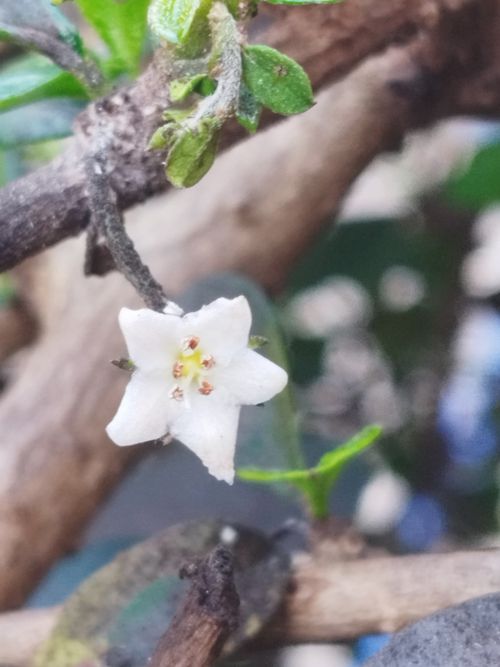
Ehretiaceae is a family of flowering plants in the order Boraginales, comprising approximately 150 species across several genera. These plants are characterized by their woody habit as trees or shrubs, often with smooth, gray bark. Members of this family typically have alternate, simple leaves with entire or serrate margins and a smooth to slightly rough texture. The flowers are arranged in terminal or axillary cymes, with a 5-lobed calyx, a 5-lobed corolla that is typically white or cream-colored, and a superior ovary that develops into a drupe fruit with 2-4 pyrenes (stones). The family has a pantropical distribution, with species occurring in tropical and subtropical regions of Asia, Africa, Australia, and the Americas, where they grow in various habitats from rainforests to dry woodlands.
Overview
The Ehretiaceae family comprises a diverse group of woody flowering plants that were previously included in the Boraginaceae family but are now recognized as a distinct family based on molecular and morphological evidence. The family name is derived from the genus Ehretia, which was named in honor of Georg Dionysius Ehret, a renowned 18th-century botanical artist.
Ehretiaceae has a pantropical distribution, with species occurring in tropical and subtropical regions of Asia, Africa, Australia, and the Americas. Different genera show different distribution patterns, with Ehretia being most diverse in Asia and Australia, Bourreria centered in the Caribbean and Central America, and Tiquilia adapted to desert regions of North and South America. Members of this family are found in a variety of habitats, from rainforests to dry woodlands and even desert environments.
Plants in this family are ecologically important as components of various forest ecosystems, providing food and habitat for wildlife. The fruits of many species are consumed by birds and mammals, which disperse the seeds. Several Ehretiaceae species have economic importance as sources of timber, ornamental plants, and traditional medicines. Some species, particularly in the genus Ehretia, are valued for their wood used in construction and furniture-making, while others are cultivated as ornamental trees for their attractive flowers or foliage.
Quick Facts
- Scientific Name: Ehretiaceae
- Common Name: Ehretia Family
- Number of Genera: Several, including Ehretia, Bourreria, Tiquilia, Rochefortia
- Number of Species: Approximately 150
- Distribution: Pantropical (Asia, Africa, Australia, Americas)
- Evolutionary Group: Angiosperms - Eudicots - Asterids - Boraginales
Key Characteristics
Growth Form and Habit
Members of Ehretiaceae are woody plants that may be trees or shrubs, ranging from small shrubs to large trees reaching 30 meters or more in height. Most species have a smooth, gray bark that becomes fissured with age. The wood is typically hard and dense. The branching pattern is often spreading, creating a rounded or umbrella-shaped crown in mature trees. An exception to the typical woody habit is found in the genus Tiquilia, which consists of small, often prostrate desert shrubs with specialized adaptations to arid environments.
Leaves
The leaves of Ehretiaceae are simple, alternate, and without stipules. They are typically ovate to elliptic in shape with entire or serrate margins. Unlike the closely related Cordiaceae, the leaves of most Ehretiaceae species have a smooth to slightly rough texture, rather than the distinctly scabrous texture found in many Cordiaceae. The venation is usually pinnate. The leaves may be deciduous or evergreen, depending on the species and habitat.
Reproductive Structures
The inflorescences are typically terminal or axillary cymes, sometimes forming panicles. The flowers are usually bisexual and have a 5-lobed calyx that is often persistent in fruit. The corolla is 5-lobed and typically white or cream-colored, though some species have pink, blue, or purple flowers. The corolla shape varies from rotate (wheel-shaped) to funnel-shaped. The androecium consists of 5 stamens attached to the corolla tube, and the gynoecium has a superior ovary with 2 carpels, each divided by a false septum to form 4 locules. The style is terminal and often bifid (forked) at the apex. The fruit is a drupe with a fleshy mesocarp and 2-4 pyrenes (stones), each containing 1 seed. In some genera, the pyrenes remain united in a single endocarp, while in others they separate at maturity.
Anatomical Features
Anatomically, Ehretiaceae species often have distinctive wood structure with storied rays and axial parenchyma. The leaves typically lack the cystoliths (mineral concretions) found in Cordiaceae. The pollen grains are typically tricolporate (having three apertures) and have distinctive exine (outer layer) patterns that can be useful for taxonomic purposes.
Distinguishing Features
Ehretiaceae can be distinguished from other plant families by a combination of:
- Woody habit (trees or shrubs)
- Alternate, simple leaves with smooth to slightly rough texture
- Terminal or axillary cymose inflorescences
- 5-lobed calyx and corolla
- Drupe fruits with 2-4 pyrenes

Flowers and fruits of Ehretia dicksonii, showing the white, 5-lobed flowers in cymose inflorescences and the small, orange drupes with persistent calyx.
Identification
Field Identification Tips
When trying to identify members of the Ehretiaceae family in the field, look for:
- Growth habit: Woody trees or shrubs, often with smooth, gray bark
- Leaves: Alternate, simple, with smooth to slightly rough texture
- Inflorescence: Terminal or axillary cymes, sometimes forming panicles
- Flowers: 5-lobed calyx and corolla, typically white or cream-colored
- Fruits: Drupes with 2-4 pyrenes, often with persistent calyx
Similar Families
Ehretiaceae may be confused with several other plant families:
- Cordiaceae: Closely related family with similar woody habit but typically with rougher leaves and different fruit structure
- Boraginaceae: Related family but typically herbaceous with different fruit types
- Heliotropiaceae: Another related family but with different inflorescence structure (typically scorpioid cymes) and fruit types
- Verbenaceae: Similar growth habit in some genera but with opposite leaves and different fruit structure
Distinguishing Features
The most reliable features for distinguishing Ehretiaceae from similar families include:
- Leaf texture: Smooth to slightly rough (versus distinctly scabrous in many Cordiaceae)
- Inflorescence structure: Terminal or axillary cymes (versus often scorpioid cymes in Heliotropiaceae)
- Fruit structure: Drupe with 2-4 pyrenes (versus various fruit types in other families)
- Style morphology: Terminal, often bifid at apex
For definitive identification, examination of the fruit structure is often necessary, as the number and arrangement of pyrenes within the drupe is a key diagnostic feature for the family and its genera.
Notable Examples
The family Ehretiaceae contains approximately 150 species across several genera. Here are some notable representatives:

Ehretia acuminata
Koda Tree
A medium to large deciduous tree native to East Asia, from the Himalayas to Japan and south to Australia. It can reach heights of 20-30 meters and is characterized by its smooth, gray bark and broadly ovate leaves with acuminate tips. The tree produces fragrant white flowers in large terminal panicles, followed by small, orange to red drupes that are attractive to birds. Ehretia acuminata is valued for its timber, which is used for furniture, construction, and musical instruments. It is also planted as an ornamental and shade tree in parks and gardens throughout its native range and beyond.

Bourreria succulenta
Strongbark
A small tree or large shrub native to the Caribbean region, particularly the Bahamas, Cuba, and other West Indian islands. It typically grows to 5-10 meters tall and has leathery, glossy leaves that are obovate to elliptic in shape. The plant produces clusters of fragrant white flowers with a tubular corolla that opens into 5 rounded lobes. The fruits are orange to red drupes that split into 4 segments at maturity. Bourreria succulenta is valued for its hard, durable wood (hence the common name "strongbark") and is also used in traditional medicine in the Caribbean for treating various ailments. It is occasionally cultivated as an ornamental for its attractive flowers and foliage.

Tiquilia canescens
Woody Crinklemat
A small, woody shrub native to arid regions of the southwestern United States and northern Mexico. Unlike most other Ehretiaceae, it has a low, spreading growth habit, forming mats or cushions typically less than 30 cm tall. The leaves are small, ovate, and densely covered with white hairs, giving the plant a grayish appearance (hence the specific epithet "canescens," meaning "becoming gray"). The flowers are small, funnel-shaped, and lavender to purple in color. Tiquilia canescens is highly adapted to desert conditions, with deep roots and specialized physiological mechanisms for drought tolerance. It plays an important ecological role in desert ecosystems as soil stabilizer and as food and shelter for desert wildlife.
Related Families
Ehretiaceae belongs to the order Boraginales and is phylogenetically related to several other plant families. Based on molecular studies, its closest relatives include:

Cordiaceae
Cordia Family

Heliotropiaceae
Heliotrope Family

Boraginaceae
Borage Family

Lennoaceae
Lennoa Family
Phylogenetic Note
Ehretiaceae has undergone significant taxonomic revisions based on molecular phylogenetic studies. Traditionally, the genera now included in this family were placed in Boraginaceae in a broad sense. However, molecular evidence has supported the recognition of Ehretiaceae as a distinct family within the Boraginales order. The family is most closely related to Cordiaceae, with which it shares the woody habit and drupe fruits, though there are significant differences in leaf texture, inflorescence structure, and fruit morphology. Within Ehretiaceae, molecular studies have revealed interesting evolutionary patterns, particularly in the genus Tiquilia, which has evolved specialized adaptations to desert environments that are quite different from the typical forest-dwelling members of the family. The taxonomic history of Ehretiaceae illustrates the ongoing refinement of our understanding of plant relationships as new evidence emerges from molecular studies.