Connaraceae
Connaraceae Family
Connaraceae is a family of flowering plants...
Overview
Connaraceae belongs to the order Oxalidales, within the Fabid clade of Rosids, and is considered the sister family to Oxalidaceae (Wood Sorrel family). It comprises about 12-16 genera and between 180 and 350 species (depending on taxonomic concepts), distributed across the pantropical regions of Africa, Asia, and the Americas. The predominant life form is woody lianas or scandent shrubs, making them significant components of the climber flora in tropical forests, although some erect shrubs and small trees also occur.
Vegetatively, Connaraceae are recognized by their almost consistently alternate, odd-pinnately compound leaves (though occasionally 1- or 3-foliolate) which notably lack stipules (exstipulate). The leaflets typically have entire margins and possess small swellings (pulvinules) at their base. Flowers are usually bisexual, radially symmetrical, 5-merous, and often exhibit heterostyly (different flower forms with varying style and stamen lengths). The androecium typically consists of 10 stamens fused basally, often in two whorls of different lengths. A key feature is the gynoecium, which is usually apocarpous, consisting of 1-5 (or up to 8) separate, superior carpels, although often only one carpel is fully developed or functional per flower (appearing unicarpellate).
This gynoecium structure leads to the characteristic fruit: typically only one carpel per flower matures into a distinct, often stipitate (stalked), asymmetrical, leathery or woody follicle that dehisces along one side. Each follicle usually contains a single seed, which frequently bears a conspicuous, brightly colored (red, orange, yellow) fleshy aril at its base or side, suggesting dispersal by birds or mammals. The family has limited direct economic importance but plays an ecological role in tropical ecosystems.
Quick Facts
- Scientific Name: Connaraceae R.Br.
- Common Name: Connarus family (no widespread English common name)
- Number of Genera: Approximately 12-16
- Number of Species: Approximately 180-350
- Distribution: Pantropical (Tropical Africa, Asia, Americas)
- Evolutionary Group: Eudicots - Rosids (Fabids / Eurosids I) - Order Oxalidales
Key Characteristics
Growth Form and Habit
Predominantly woody lianas (climbers) or scandent (clambering) shrubs. Less commonly, erect shrubs or small trees. Stems typically exhibit normal secondary growth (not anomalous).
Leaves
Leaves are almost always arranged alternately and spirally. They are characteristically odd-pinnately compound (with a terminal leaflet), though sometimes reduced to 3 leaflets (trifoliolate) or even 1 leaflet (unifoliolate). Leaflets have entire margins and typically possess a distinct swelling (pulvinulus) at their base; the main leaf stalk (rachis) may also be swollen at its base (pulvinus). Stipules are consistently absent (exstipulate).
Inflorescence
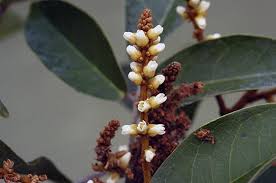
Inflorescences are usually terminal or axillary, typically branched panicles, but sometimes racemes or spike-like structures. Bracts are generally small.
Flowers
Flowers are usually bisexual (perfect), actinomorphic (radially symmetrical), and typically 5-merous. They are often small to medium-sized and commonly exhibit heterostyly (distyly or tristylly - different morphs with reciprocal lengths of styles and stamens).
- Calyx: Consists of 5 sepals, which are either free or fused only at the base. Sepals are often persistent and sometimes enlarge and become fleshy or wing-like in fruit (accrescent). Lobes overlap in bud (imbricate).
- Corolla: Consists of 5 petals, which are free, though sometimes slightly adherent to the stamen tube at the base. Petals are often white, yellowish, or pinkish, and overlap or are twisted in bud (imbricate or contorted).
- Androecium: Typically consists of 10 stamens arranged in two whorls of 5 (diplostemonous: 5 opposite sepals, 5 opposite petals). Stamens are usually heterodynamous (of unequal lengths), particularly in heterostylous flowers. Filaments are characteristically fused into a short tube at the very base. The inner whorl of stamens (opposite petals) is sometimes reduced to sterile staminodes or may be absent altogether. Anthers are dorsifixed, opening via longitudinal slits.
- Gynoecium: Characteristically apocarpous, consisting of 1-5 (rarely up to 8) distinct (free) carpels, or sometimes functionally reduced to a single carpel (unicarpellate). Each carpel is superior, typically contains 2 (range 1-several) ovules attached marginally or submarginally, and tapers into a terminal style with a small capitate or slightly lobed stigma.
Fruits and Seeds
The fruit usually consists of only one (due to abortion of the others) mature carpel developing into a stalked (stipitate), often obliquely oriented or asymmetrical, leathery or woody follicle. Less commonly, multiple follicles develop per flower. The follicle dehisces (splits open), typically along the ventral (adaxial) suture, to release usually 1 (sometimes 2) seed(s). Seeds are often ellipsoid, shiny black or brown, and very characteristically possess a fleshy, brightly colored (red, orange, or yellow) aril, usually located at the base or along one side. Alternatively, the seed coat itself may be fleshy (sarcotesta). Endosperm may be present (often sparse) or absent; the embryo is large.
Chemical Characteristics
Plants often contain tannins and non-protein amino acids. Saponins and alkaloids have also been reported in some species. Aluminum accumulation occurs in some members.
Field Identification
Connaraceae are recognized in the tropics by their climbing habit (often), alternate compound leaves lacking stipules, flowers with separate carpels, and distinctive follicle fruits often containing arillate seeds.
Primary Identification Features
- Habit: Mostly woody lianas or scandent shrubs (also erect shrubs/trees).
- Alternate, Odd-Pinnately Compound Leaves (Usually): Leaflets typically entire, check terminal leaflet presence.
- Exstipulate: Stipules are absent at the base of the petiole.
- Pulvinules Present: Base of leaflets often swollen.
- Apocarpous Gynoecium (Usually): Flowers have 1-5(-8) separate carpels (or appear unicarpellate).
- Follicle Fruit: Typically a single (or few), stalked, often asymmetric follicle develops per flower, splitting along one side.
- Arillate Seeds (Commonly): Seeds often have a brightly colored fleshy outgrowth (aril).
- Pantropical Distribution: Found in tropical forests worldwide.
Secondary Identification Features
- Flowers actinomorphic, 5-merous, often heterostylous.
- Stamens usually 10, basally fused, often unequal lengths.
- Calyx often persistent/accrescent in fruit.
Seasonal Identification Tips
- Year-Round: The liana habit and alternate, odd-pinnate, exstipulate leaves with pulvinules are key vegetative clues.
- Flowering Season: Look for terminal/axillary panicles of typically small, white/yellow/pink 5-merous flowers. Check for separate carpels or heterostyly if possible.
- Fruiting Season: The stalked, often brightly colored or contrasting follicle(s), especially when dehisced to show the arillate seed(s), are highly diagnostic.
Common Confusion Points
- Fabaceae (Legume Family): Many tropical lianas with pinnately compound leaves. Crucially distinguished by Fabaceae almost always having stipules, typically zygomorphic flowers (papilionaceous or caesalpinioid), always a single carpel, and fruit a legume pod (different structure/dehiscence).
- Sapindaceae (Soapberry Family): Can include lianas with alternate compound leaves (though often evenly pinnate or palmate). Usually have stipules (though sometimes small/absent). Flowers often unisexual, slightly zygomorphic, superior ovary typically 3-lobed/locular, fruit diverse (capsule, schizocarp, berry, drupe), rarely follicles.
- Anacardiaceae (Cashew Family): Trees/shrubs/lianas with alternate compound leaves. Usually have resin ducts, flowers small in panicles, superior ovary often 1-locular, fruit a drupe.
- The combination of alternate, exstipulate, odd-pinnate leaves with pulvinules, plus the apocarpous/unicarpellate gynoecium leading to a stalked follicle with often arillate seeds is the defining suite of characters for Connaraceae.
Field Guide Quick Reference
Look For:
- Liana or Shrub/Tree habit (mostly liana)
- Alternate, odd-pinnate leaves (usually)
- Exstipulate (no stipules)
- Leaflets entire, with pulvinules
- Flowers 5-merous, actinomorphic
- Gynoecium superior, apocarpous (1-5+ free carpels) or unicarpellate
- Fruit usually 1 follicle per flower, stalked
- Seeds often with bright aril
- Pantropical
Key Variations:
- Leaflet number (1, 3, 5+)
- Number of fertile carpels per flower (1-5+)
- Number of follicles developing per flower (usually 1)
- Aril presence, size, color
- Heterostyly presence/type
Notable Examples
Connaraceae are common components of tropical forests worldwide, primarily as climbing lianas, with Connarus and Rourea being the largest genera.

Connarus species (e.g., C. paniculatus)
Connarus
The largest genus (~80-100 species), distributed pantropically. Mostly lianas or shrubs. Leaves typically odd-pinnately compound. Flowers usually have only 1 functional carpel, developing into a single, stalked, often obliquely pear-shaped follicle per flower. Seeds possess a distinct basal or lateral aril, often yellow or orange.

Rourea species (e.g., R. minor)
Rourea
Another large, pantropical genus (~40-100 species), predominantly lianas. Leaves odd-pinnately compound. Flowers often exhibit heterostyly. Similar to Connarus, typically only one carpel develops into a stalked follicle per flower. Seeds are characteristically almost entirely covered by a fleshy aril or sarcotesta.

Connaraceae Fruit and Seed
Follicle with Arillate Seed
The typical fruit is a follicle, developing from usually just one carpel per flower. It splits open along one seam to release the seed(s). Seeds in Connaraceae very often have a brightly colored (red, orange, yellow), fleshy aril attached, which likely attracts birds for dispersal.

Cnestis species (e.g., C. ferruginea)
Cnestis
A genus of lianas or shrubs found in tropical Africa and Asia (~15 species). Leaves are odd-pinnate, often with rusty hairs. Unlike Connarus and Rourea, flowers typically have 3-5 carpels, and multiple follicles (often densely hairy) can develop per flower. Seeds usually have a basal aril.
Phylogeny and Classification
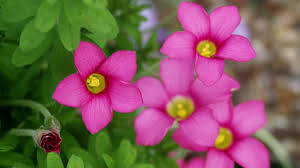
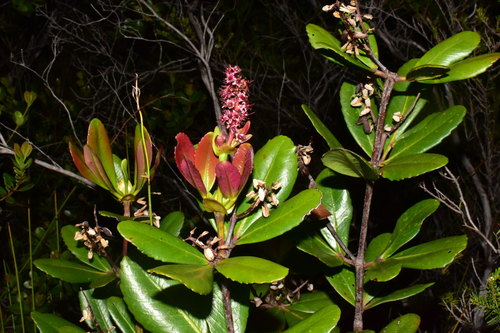
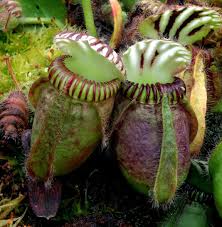
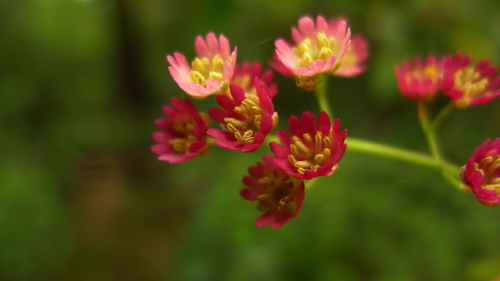
Connaraceae belongs to the order Oxalidales, which is part of the Fabid clade of Rosids. This order includes several morphologically diverse families, including wood sorrels, pitcher plants (Cephalotaceae), and various tropical trees and shrubs.
Molecular phylogenetic studies consistently place Connaraceae as the sister group to Oxalidaceae (the Wood Sorrel family). Together, Connaraceae and Oxalidaceae form a well-supported clade that is related to other families within Oxalidales, such as Cunoniaceae, Elaeocarpaceae, and the unique carnivorous family Cephalotaceae. The distinct morphology of Connaraceae (pinnate leaves, apocarpy, follicles) contrasts sharply with Oxalidaceae (often trifoliolate leaves with sleep movements, syncarpous ovary, capsule fruit) despite their close relationship.
Position in Plant Phylogeny
- Kingdom: Plantae
- Clade: Angiosperms (Flowering plants)
- Clade: Eudicots
- Clade: Rosids (Fabids / Eurosids I)
- Order: Oxalidales
- Family: Connaraceae
- (Phylogenetic Position: Sister group to Oxalidaceae within Oxalidales)
Evolutionary Significance
Connaraceae represents an important lineage within the Oxalidales order:
- Dominance of Liana Habit: Shows a major evolutionary radiation into the climbing woody vine (liana) niche in tropical forests globally.
- Retention/Evolution of Apocarpy: The presence of separate carpels (apocarpy) or a single carpel is notable within the core eudicots and provides insights into gynoecium evolution.
- Seed Dispersal Syndromes: The common development of brightly colored arils associated with dehiscent follicles points strongly towards adaptation for seed dispersal by birds and possibly mammals.
- Heterostyly: Frequent occurrence of heterostyly is a significant reproductive strategy promoting outcrossing.
- Oxalidales Diversity: Helps illustrate the morphological diversity within the Oxalidales order, contrasting with its sister family Oxalidaceae and other members like the carnivorous Cephalotaceae.