Elaeocarpaceae
Quandong Family / Blueberry Ash Family
The Elaeocarpaceae is a family of flowering plants, mostly trees and shrubs, belonging to the order Oxalidales. It has a predominantly tropical and subtropical distribution, found across Madagascar, Southeast Asia, Malesia, Australia, New Zealand, the Pacific Islands, and Central and South America. The family includes well-known genera like Elaeocarpus (Quandongs, Blueberry Ash) and Sloanea.
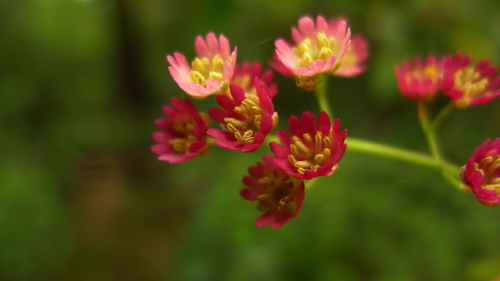
Overview
The Elaeocarpaceae family comprises approximately 12 genera and around 600 species. These plants are typically woody perennials, ranging from shrubs to large rainforest trees. They inhabit a wide range of environments, from lowland tropical rainforests to montane forests and temperate woodlands.
Many species in the family are valued for their timber (e.g., some Sloanea species), while others are cultivated as ornamentals for their attractive flowers or fruits (e.g., Elaeocarpus reticulatus - Blueberry Ash). The fruits of some Elaeocarpus species (Quandongs) are edible, and the hard, sculptured stones (endocarps) of some species are used traditionally as beads (Rudraksha beads).
The family is characterized by often having simple, alternate leaves, flowers with distinct sepals and petals (the latter often fringed or lobed), numerous stamens, and fruits that are typically capsules or drupes. Some species exhibit striking blue fruits due to structural coloration rather than pigments.
Quick Facts
- Scientific Name: Elaeocarpaceae Juss. ex DC.
- Common Name: Quandong Family, Blueberry Ash Family
- Number of Genera: Approximately 12 (e.g., Elaeocarpus, Sloanea, Aceratium, Crinodendron)
- Number of Species: Approximately 600
- Distribution: Pantropical and subtropical regions (Madagascar, SE Asia, Malesia, Australia, NZ, Pacific, C & S America)
- Evolutionary Group: Eudicots - Rosids - Oxalidales
- Key Feature: Trees/shrubs; flowers often with fringed/lobed petals and numerous stamens; fruit often a drupe or capsule.
Key Characteristics
Growth Form and Habit
Members of Elaeocarpaceae are predominantly evergreen or deciduous trees and shrubs. They range in size from small shrubs to large canopy trees in rainforests. Buttress roots are common in larger tree species, especially in Sloanea.
Leaves
Leaves are usually simple (rarely pinnately compound), arranged alternately, oppositely, or sometimes whorled. Leaf margins are often toothed (serrated or crenated), though sometimes entire. Stipules are typically present but often small and falling early (caducous).
Inflorescence
Flowers are borne in various types of inflorescences, commonly racemes, panicles, or cymes, arising from leaf axils or sometimes terminally. Some species have solitary flowers.
Flowers
Flowers are typically actinomorphic (radially symmetrical) and usually bisexual (rarely unisexual). They are often 4- or 5-merous (parts in fours or fives).
- Calyx: Consists of 4 or 5 distinct (free) or slightly fused sepals, often valvate in bud.
- Corolla: Consists of 4 or 5 distinct petals, which are characteristically often fringed, lobed, or divided at the apex (laciniate). Petals are sometimes absent (apetalous) in some genera (e.g., some Sloanea).
- Androecium: Stamens are numerous (usually 15 to many), typically free, and often inserted on a nectar-producing disc (receptacle). Anthers are typically basifixed, 2-locular, and characteristically dehisce via apical pores or short slits, rather than longitudinal slits.
- Gynoecium: A superior ovary composed of 2 to many fused carpels, forming an equal number of locules. Each locule contains one to many ovules. The style is usually single and simple or slightly lobed at the stigma.
Fruits and Seeds
The fruit is variable, most commonly a loculicidal capsule (often woody or spiny, especially in Sloanea) or a drupe (fleshy with a hard stone, typical of Elaeocarpus). Less commonly, it can be a berry. Seeds may possess a fleshy aril or sarcotesta, and the endosperm is typically oily and abundant.
Chemical Characteristics
The family is known to produce various alkaloids, tannins, and saponins. The blue color in some Elaeocarpus fruits is due to structural characteristics of the cuticle interacting with anthocyanins, not a blue pigment itself.
Field Identification
Identifying members of the Elaeocarpaceae family often involves looking at a combination of leaf, flower, and fruit characteristics:
Primary Identification Features
- Habit: Trees or shrubs, common in tropical/subtropical forests.
- Leaves: Usually simple, alternate or opposite, often with toothed margins and stipules (though stipules may fall early).
- Flowers: Distinct sepals and petals (4-5 each); petals often distinctively fringed, lobed, or divided at the tip.
- Stamens: Numerous stamens; anthers often opening by pores or short slits at the apex.
- Fruit: Typically a capsule (sometimes spiny) or a drupe (often blue, black, or red in Elaeocarpus).
Secondary Identification Features
- Buttress Roots: Present in large tree species, particularly Sloanea.
- Flower Buds: Sepals often valvate (meeting at edges without overlapping).
- Seeds: Sometimes with an aril; endocarp (stone) in Elaeocarpus drupes is often hard and sculptured.
- Habitat: Common components of rainforests and wet forests in their range.
Seasonal Identification Tips
- Flowering Season: Varies by species and location, often spring or summer. The distinctive fringed petals are key during this time.
- Fruiting Season: Fruits can be conspicuous, especially the brightly colored drupes of Elaeocarpus or the spiny capsules of Sloanea, often present in late summer or autumn/winter depending on the species.
- Year-round: Leaf arrangement (alternate/opposite), shape, and margin toothing can help narrow down possibilities. Buttress roots on large trees are a year-round feature.
Common Confusion Points
Elaeocarpaceae can sometimes be confused with members of other families:
- Malvaceae (Mallow family): Some Malvaceae have numerous stamens fused into a tube (monadelphous), unlike the free stamens of Elaeocarpaceae. Leaf shapes can sometimes be similar.
- Tiliaceae (Linden family - often now included in Malvaceae): Similarities in having numerous stamens and sometimes lobed petals, but differ in stamen arrangement and fruit details.
- Euphorbiaceae (Spurge family): Highly variable family, but generally differs in floral structure (often unisexual, reduced flowers, specialized cyathia in Euphorbia) and often presence of latex.
- Sapindaceae (Soapberry family): Often have compound leaves and different floral structures (usually fewer stamens, often asymmetrical flowers).
Field Guide Quick Reference
Look For:
- Trees or shrubs
- Simple leaves (alt/opp), often toothed
- Stipules present (may fall early)
- Flowers with 4-5 sepals & petals
- Petals often fringed/lobed/divided
- Numerous free stamens
- Anthers opening by pores/short slits
- Fruit a capsule (sometimes spiny) or drupe
Key Distinctions:
- Fringed/lobed petals
- Anther dehiscence (pores/slits vs. longitudinal)
- Stamens free (vs. fused in Malvaceae)
- Fruit type (capsule/drupe)
- Absence of milky latex
Notable Examples
The Elaeocarpaceae family includes ecologically and culturally significant species:

Elaeocarpus reticulatus
Blueberry Ash
A common small tree or shrub in eastern Australia, widely cultivated as an ornamental. Known for its masses of white or pink, fringed, bell-shaped flowers and distinctive bright blue drupes.

Sloanea woollsii
Yellow Carabeen
A large rainforest tree native to eastern Australia, often developing large buttress roots. It produces woody, spiny capsules that split open to reveal seeds often covered in a red aril. Valued for its timber.

Elaeocarpus angustifolius (syn. E. ganitrus)
Blue Quandong / Rudraksha
A large tree found from India through Southeast Asia to Australia. Produces round, blue drupes with edible flesh. The hard, sculptured stone (endocarp) is culturally significant in Hinduism as Rudraksha beads.
Phylogeny and Classification
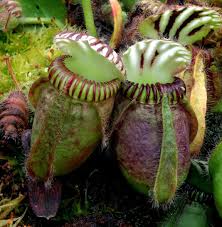
Elaeocarpaceae is placed in the order Oxalidales within the rosid clade of eudicots. This order also includes families like Oxalidaceae (Wood Sorrel Family), Cunoniaceae, Cephalotaceae (Albany Pitcher Plant), and Connaraceae. The relationships within Oxalidales have been clarified by molecular phylogenetic studies.
Historically, the circumscription of Elaeocarpaceae sometimes included genera now placed in Malvaceae (subfamily Tilioideae), but current classifications based on molecular data firmly place it in Oxalidales. The family itself is considered monophyletic.
Position in Plant Phylogeny
- Kingdom: Plantae
- Clade: Angiosperms (Flowering plants)
- Clade: Eudicots
- Clade: Rosids
- Order: Oxalidales
- Family: Elaeocarpaceae
Evolutionary Significance
Elaeocarpaceae provides insights into the diversification of woody lineages within the Oxalidales.
- Biogeography: Its wide, somewhat disjunct distribution across tropical and subtropical regions points to ancient origins and dispersal patterns, possibly linked to Gondwanan history.
- Floral Diversity: The variation in petal morphology (fringed, lobed, absent) and fruit types (drupe, capsule, berry) within the family showcases evolutionary experimentation.
- Anther Dehiscence: The prevalence of poricidal anther dehiscence is a notable feature within the order.
- Ecological Roles: Includes important canopy trees in many tropical forests, contributing significantly to forest structure and providing resources (fruits, nectar) for wildlife.