Cardiopteridaceae
Cardiopteris Family
Cardiopteridaceae is a relatively small family of flowering plants belonging to the order Aquifoliales. It comprises mostly woody vines and lianas, with some shrubs and trees, distributed across pantropical regions. The family is characterized by its typically alternate, simple leaves, small, often unisexual flowers with a superior ovary, and distinctive fruits that are often winged samaras (like in the type genus Cardiopteris) or fleshy drupes. Its current circumscription includes genera previously placed in the heterogeneous family Icacinaceae.
Overview
Cardiopteridaceae is firmly placed within the order Aquifoliales, part of the Asterid clade (specifically Campanulids or Euasterids II), based on robust molecular phylogenetic evidence. The family consists of about 6 genera and roughly 45 species found in tropical forests across the Americas, Africa, Asia, and Malesia. The majority of species are lianas or climbing shrubs, playing a role in the structure of tropical forest canopies, while some genera like Citronella and Gonocaryum consist of trees or shrubs.
Key diagnostic features include the consistently alternate arrangement of simple leaves, the typically small, unisexual flowers borne in axillary inflorescences, a superior ovary (usually with a single locule developing), and fruits that are often flattened and winged (samaras) or drupaceous. The family's definition stabilized relatively recently, following the dismantling of the polyphyletic Icacinaceae, with several genera being transferred to Cardiopteridaceae.
Direct economic importance of Cardiopteridaceae is limited. Some species might be used locally for timber or traditional medicine, but none are major commercial crops. Their significance lies primarily in their contribution to tropical biodiversity and their phylogenetic position within the Aquifoliales, helping to understand the evolution of this Asterid order.
Quick Facts
- Scientific Name: Cardiopteridaceae Blume
- Common Name: Cardiopteris family (No widely established English common name)
- Number of Genera: Approximately 6
- Number of Species: Approximately 45
- Distribution: Pantropical (Tropical Africa, Madagascar, SE Asia, Malesia, Australia, Central & South America)
- Evolutionary Group: Eudicots - Asterids - Order Aquifoliales
Key Characteristics
Growth Form and Habit
Predominantly woody lianas or vines, sometimes scandent shrubs. Some genera, notably Citronella and Gonocaryum, are small to medium-sized trees or shrubs. Stems are woody, sometimes with tendrils or twining growth in climbing species.
Leaves
Leaves are arranged alternately along the stem. They are simple, usually with entire margins (though sometimes lobed in Cardiopteris), and typically petiolate. Stipules are absent (exstipulate). Venation is pinnate. Domatia (small pits or hair tufts in vein axils) may be present on the underside of leaves in some species.
Inflorescence
Inflorescences are typically borne in the leaf axils (axillary), though sometimes terminal. They are usually branched cymose structures, appearing as cymes, thyrses, or panicles. Bracts are generally small.
Flowers
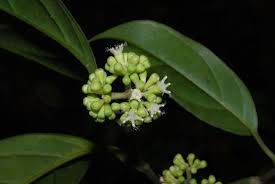
Flowers are generally small, inconspicuous, actinomorphic (radially symmetrical), and often unisexual, with plants being either monoecious (male and female flowers on the same plant) or dioecious (male and female flowers on separate plants). Bisexual flowers occur in some species. Key floral features:
- Calyx: Consists of 4 or 5 small sepals, fused at the base into a cup (cupular).
- Corolla: Consists of 4 or 5 petals, which are usually free (distinct) or only slightly fused at the very base, often white, greenish, or yellowish.
- Androecium: Stamens number 4 or 5, arranged alternate to the petals. Filaments may be attached to the base of the petals (epipetalous) or free. Anthers typically dehisce longitudinally. Staminodes (sterile stamens) may be present in female flowers.
- Gynoecium: The ovary is superior, typically composed of 2 fused carpels but usually appearing 1-locular due to abortion or partitioning. Contains two apical, pendulous ovules, though usually only one develops into a seed. Styles can be single with a simple or lobed stigma, or sometimes 2-5 distinct styles/stigmas. A pistillode (sterile pistil) may be present in male flowers.
Fruits and Seeds
The fruit is a key characteristic and is typically either a dry, indehiscent, flattened, and often winged fruit known as a samara (very characteristic in Cardiopteris, often heart-shaped or bilobed wings), or a fleshy, typically single-seeded drupe (common in Citronella, Gonocaryum). The fruit develops from the superior ovary and contains a single seed, usually with oily endosperm.
Chemical Characteristics
Chemical constituents are not as broadly studied or characteristic across the family as in some larger groups. Some species are known to contain alkaloids or triterpenoids. The presence of specific compounds might be useful for generic or specific identification but less so for the family as a whole currently.
Field Identification
Identifying Cardiopteridaceae in the field, especially in species-rich tropical forests, relies on combining habitat, habit, vegetative characters (especially leaf arrangement), and, when available, the distinctive fruit types.
Primary Identification Features
- Alternate Leaves: Simple, alternate leaves are a constant feature. Distinguishes from many tropical families with opposite leaves.
- Vine/Liana Habit: While not universal, this is the most common growth form for the family.
- Superior Ovary: Examine flowers (if present and large enough) to confirm the ovary position above the sepal/petal attachment.
- Characteristic Fruit: Look for flattened, winged samaras (often heart-shaped/bilobed in Cardiopteris) or distinct drupes. This is often the most diagnostic feature.
- Axillary Inflorescences: Small flowers typically borne in branched clusters arising from leaf axils.
- Pantropical Distribution: Found exclusively in tropical regions worldwide.
Secondary Identification Features
- Exstipulate Leaves: Lack of stipules at the base of the petiole.
- Unisexual Flowers: Common condition (plants monoecious or dioecious).
- Simple, Entire Leaves: Most common leaf form (though sometimes lobed).
- Small Flower Size: Flowers are generally not showy.
Seasonal Identification Tips
- Flowering/Fruiting: Timing varies greatly depending on tropical location and species. Fruits are often more persistent and distinctive than the small flowers.
- Vegetative State: Identification often relies on habit (liana/tree), alternate simple leaves, and lack of stipules. Careful comparison with other tropical families sharing these traits is needed. Petiole features (e.g., pulvinus) might be helpful.
Common Confusion Points
- Icacinaceae (sensu lato / split families): Historically confused. Remaining Icacinaceae (sensu stricto) and other segregate families (e.g., Metteniusaceae, Stemonuraceae) may overlap in habit and leaf arrangement but differ in floral details, pollen, fruit specifics, and phylogenetic placement (Stemonuraceae is sister group but distinct).
- Menispermaceae (Moonseed Family): Often dioecious lianas with alternate simple leaves in the tropics. However, Menispermaceae typically have very different flower structures (often 6-merous, distinct carpels), characteristic crescent-shaped embryos in seeds, and drupaceous fruits.
- Connaraceae (Zebrawood Family): Tropical lianas/shrubs often with alternate leaves, but leaves are usually compound, and fruits are typically follicles.
- Hernandiaceae (Hernandia Family): Some tropical trees/lianas with alternate simple leaves, but ovary is typically inferior in genera like Hernandia.
- Other tropical liana families require careful checking of flower structure (ovary position, stamen number/arrangement), fruit type, and presence/absence of stipules or specialized features like latex.
Field Guide Quick Reference
Look For:
- Alternate simple leaves
- Liana/vine habit (most common)
- Superior ovary
- Flattened/winged samara or drupe fruit
- Axillary inflorescences of small flowers
- Pantropical distribution
Key Variations:
- Habit: Liana vs. Tree/Shrub
- Fruit: Samara vs. Drupe
- Flower Sexuality: Unisexual vs. Bisexual
- Leaf shape (entire vs. lobed in Cardiopteris)
Notable Examples
Genera within Cardiopteridaceae represent different growth forms and fruit types characteristic of the family, primarily found in tropical ecosystems.

Cardiopteris species (e.g., C. quinqueloba)
Cardiopteris
The type genus, typically herbaceous or somewhat woody vines found in SE Asia, Malesia, and NE Australia. Leaves can be simple or palmately lobed. Most notable for its distinctive fruit: a flattened, broadly winged samara, often heart-shaped or bilobed, aiding wind dispersal. Flowers are small and unisexual.

Citronella species (e.g., C. moorei)
Citronella
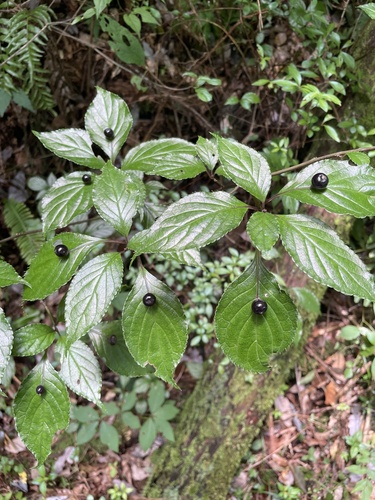
A genus of shrubs or small to medium-sized trees found in Malesia, Australia, and Central/South America. They have alternate, simple, often leathery leaves. Flowers are small, borne in panicles. The fruit is a fleshy drupe, often brightly colored (red, blue, black). Formerly placed in Icacinaceae. Note: Not related to citronella grass used for essential oil.

Gonocaryum species (e.g., G. gracile)
Gonocaryum
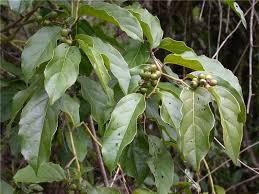
Comprises trees and shrubs native to SE Asia and Malesia. They possess alternate, simple leaves and produce small flowers in axillary clusters. The fruit is a relatively large, ovoid or oblong drupe. Like Citronella, this genus was previously often included in Icacinaceae.

Leptaulus species (e.g., L. daphnoides)
Leptaulus
A genus of shrubs or small trees found primarily in tropical Africa. Characterized by alternate, simple leaves and small flowers arranged in axillary cymes or fascicles. The fruit is a small drupe. This genus also has a history of association with Icacinaceae.
Phylogeny and Classification
Cardiopteridaceae is now confidently placed within the order Aquifoliales, a relatively small order within the large Asterid clade (Campanulids). This placement is strongly supported by molecular phylogenetic studies using DNA sequence data. Historically, the genera comprising Cardiopteridaceae had a complex taxonomic history, often being associated with or included within the large, ill-defined, and ultimately polyphyletic family Icacinaceae.
The recognition of Aquifoliales as a distinct order and the subsequent dissection of Icacinaceae led to the modern circumscription of Cardiopteridaceae, uniting genera like Cardiopteris, Citronella, Gonocaryum, Leptaulus, Dendrobangia, and Pseudobotrys based on shared ancestry. Within Aquifoliales, Cardiopteridaceae is considered sister to the family Stemonuraceae (another group largely segregated from Icacinaceae).
Position in Plant Phylogeny
- Kingdom: Plantae
- Clade: Angiosperms (Flowering plants)
- Clade: Eudicots
- Clade: Asterids (Campanulids / Euasterids II)
- Order: Aquifoliales
- Family: Cardiopteridaceae
Evolutionary Significance
Cardiopteridaceae holds significance for understanding plant evolution in several ways:
- Aquifoliales Diversity: Represents a distinct lineage within the Aquifoliales order, showcasing adaptation primarily to tropical climbing habits.
- Fruit Evolution: Exhibits diversification in fruit type within a relatively small family (winged samaras vs. fleshy drupes), likely reflecting different seed dispersal strategies.
- Taxonomic Resolution: The clarification of its phylogenetic position and relationship to genera formerly in Icacinaceae highlights the importance of molecular data in resolving complex historical classification problems based solely on morphology.
- Biogeography: Its pantropical distribution raises interesting questions about the historical movement and diversification of the Aquifoliales lineage across continents.