Anemiaceae
Anemia Fern Family
The Anemiaceae family, part of the ancient Schizaeales order, consists primarily of terrestrial ferns known for their unique frond structures, particularly the genus Anemia where fertile pinnae are often highly modified and distinct. The family includes the genera Anemia (widespread in the Neotropics) and Mohria (found in Africa and nearby islands).
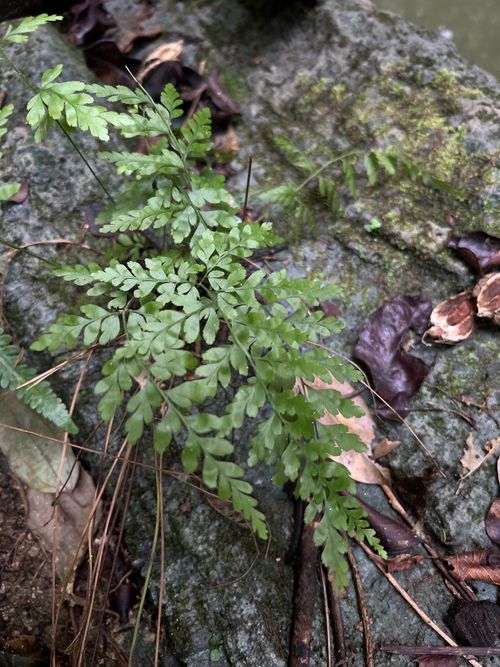
Overview
Anemiaceae represents a distinct lineage within the Schizaeales order of leptosporangiate ferns. These ferns typically grow in terrestrial habitats, often favouring rocky slopes, grasslands, or open woodlands, particularly in tropical and subtropical regions. The family is most diverse in the Americas (Anemia) and Africa (Mohria).
The most striking feature, especially in Anemia, is the strong division of labour within the frond, where the lowermost pair of pinnae are typically adapted solely for reproduction, becoming erect, highly divided structures bearing the sporangia, while the upper portion of the frond remains vegetative and leaf-like. This gives rise to the common name "flowering fern" for some species, although they are true ferns and do not produce flowers. Mohria species show less extreme dimorphism but share core characteristics like hairy rhizomes and similar sporangial features.
Anemiaceae ferns are recognized by their hairy rhizomes (lacking scales), often pinnately compound fronds, and sporangia borne singly or in rows on modified fertile segments, lacking true indusia (protective coverings). Their evolutionary history dates back to the Mesozoic era, making them part of an ancient fern lineage.
Quick Facts
- Scientific Name: Anemiaceae
- Common Name: Anemia fern family
- Number of Genera: 2 (Anemia, Mohria)
- Number of Species: Approximately 120 (around 115 in Anemia, 5-7 in Mohria)
- Distribution: Primarily Neotropical (Anemia), Africa and Indian Ocean islands (Mohria).
- Evolutionary Group: Polypodiopsida (Leptosporangiate Ferns) - Schizaeales
Key Characteristics
Growth Form and Habit
Members of Anemiaceae are typically terrestrial ferns. They grow from rhizomes that are short- to long-creeping or erect, and characteristically covered in hairs (trichomes) rather than scales. They are often found in relatively dry, open, or rocky environments.
Fronds (Leaves)
Fronds are usually pinnately compound (1- to 3-pinnate). A key feature, especially in Anemia, is frond dimorphism or partial dimorphism:
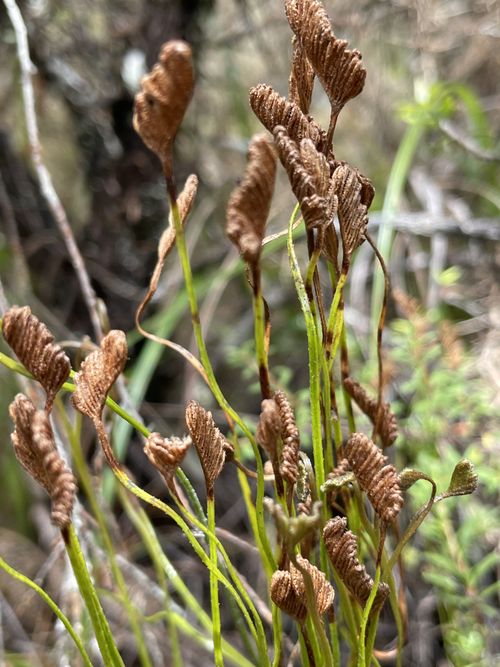
- Anemia type: The lowest pair of pinnae are typically highly modified into erect, long-stalked, paniculate fertile structures bearing sporangia. The rest of the frond above these is sterile and photosynthetic. In a few species, the entire frond is fertile or sterile.
- Mohria type: Fronds are less strongly dimorphic. Fertile and sterile fronds may look similar, or fertile pinnae may be slightly contracted. Sporangia are borne on the underside of these pinnae. Fronds are often aromatic when crushed.
Sporangia and Fertile Structures
Sporangia are borne on the modified fertile pinnae (Anemia) or on the abaxial (lower) surface of relatively unmodified pinnae (Mohria). Key features include:
- Sporangia are not grouped into definite sori and lack indusia (exindusiate).
- They occur singly or in two rows along the veins of the ultimate segments of the fertile pinnae.
- Sporangia are relatively large, sessile or short-stalked.
- Each sporangium has a characteristic annulus (ring of specialized cells involved in spore dispersal) that is transverse and apical or subapical, composed of a single row of thickened cells.
Spores
Spores are typically trilete (tetrahedral) and often possess distinctive ornamentation, such as parallel ridges, spines, or tubercles, which are important taxonomic characters, especially within the large genus Anemia.
Gametophytes
Gametophytes (prothalli) are typically terrestrial, surface-dwelling, green, and cordate (heart-shaped) or elongate.
Chemical Characteristics
Mohria species are known to be aromatic due to essential oils. Like other ferns, various phenolic compounds and terpenoids are present. Some Anemia species have shown interesting compounds in phytochemical studies.
Field Identification
Identifying Anemiaceae ferns in the field often relies on recognizing the distinctive frond structure, especially the fertile portions, and the presence of hairs instead of scales.
Primary Identification Features
- Erect Fertile Pinnae (Anemia): Look for the characteristic pair of erect, stalked, highly divided fertile pinnae at the base of an otherwise sterile, leaf-like frond.
- Hairy Rhizomes/Stipes: Check the base of the plant and stipes for hairs (not flat scales).
- Exindusiate Sporangia on Veins: Observe sporangia borne directly on veins or ultimate segments, not in covered sori. In Mohria, check the underside of pinnae.
- Apical Annulus: If magnification allows, note the position of the annulus on the sporangium.
Secondary Identification Features
- Frond Dissection: Note the degree of cutting (pinnate, bipinnate) of the sterile portion of the frond.
- Habitat: Often found in rocky crevices, grasslands, savannas, or open woodlands, sometimes on disturbed sites.
- Aroma (Mohria): Crush a frond segment to check for a characteristic scent.
Seasonal Identification Tips
Mature fronds with developed fertile structures are needed for confident identification:
- Growing Season: Fertile fronds are typically produced during the main growing season (often linked to rainfall).
- Dry Season/Winter: Persistent dead fronds, especially the hardened fertile stalks of Anemia, can remain visible and aid identification.
Common Confusion Points
- Osmundaceae (e.g., Osmunda): Some species have dimorphic fronds, but their sporangia are different (larger, lacking a distinct annulus) and often clustered on entirely separate fertile fronds or distinct portions of the frond. They also have different rhizome/stipe bases.
- Other Dimorphic Ferns: Various fern families have dimorphic fronds (e.g., Blechnaceae, Dryopteridaceae), but the specific pattern of basal, erect fertile pinnae in Anemia is unique. Check sporangia arrangement and presence/absence of indusia.
Field Guide Quick Reference
Look For (Anemia):
- Pair of erect, stalked, fertile pinnae at frond base
- Sterile portion above, pinnately compound
- Hairs on rhizome/stipe
- Sporangia in rows on fertile segments
- Habitat often rocky/open
Look For (Mohria):
- Terrestrial fern, often aromatic
- Fronds pinnately compound
- Fertile pinnae less modified
- Sporangia exindusiate on underside
- Hairs on rhizome/stipe
- African/Indian Ocean distribution
Notable Examples
The Anemiaceae family is dominated by the large genus Anemia, with Mohria representing a smaller, geographically distinct group.

Anemia
Flowering Fern (misnomer)
This large genus (over 100 species) is primarily found in the American tropics and subtropics, with a few species elsewhere. They are characterized by their unique frond structure with basal, erect fertile pinnae. Species vary in the dissection and texture of their sterile fronds. Examples include A. mexicana, A. adiantifolia, and A. phyllitidis.

Mohria
Scented Fern
A small genus (around 5-7 species) native to Africa (especially southern and eastern) and islands like Madagascar and Mauritius. These terrestrial ferns have pinnately compound fronds, often hairy or slightly scaly, and typically emit a fragrance when crushed. Fertile pinnae are less modified than in Anemia. M. caffrorum is a well-known example.
Phylogeny and Classification
Anemiaceae is a family within the order Schizaeales, a basal lineage of leptosporangiate ferns (Polypodiopsida). Modern phylogenetic classifications (like PPG I) recognize Anemiaceae as distinct from Schizaeaceae (containing only Schizaea) and Lygodiaceae (containing only Lygodium). These three families together form the monophyletic order Schizaeales.
The family Anemiaceae itself comprises the genera Anemia and Mohria, which form a well-supported sister group relationship. The specialized frond dimorphism seen in Anemia is a key evolutionary innovation within this lineage. The fossil record indicates the ancient origins of this group, extending back into the Mesozoic.
Position in Plant Phylogeny
- Kingdom: Plantae
- Clade: Tracheophytes (Vascular plants)
- Class: Polypodiopsida (Leptosporangiate ferns)
- Order: Schizaeales
- Family: Anemiaceae
Evolutionary Significance
Anemiaceae contributes significantly to our understanding of fern evolution:
- Basal Fern Lineage: As part of Schizaeales, it provides insights into early divergences among leptosporangiate ferns.
- Specialized Dimorphism: The evolution of the distinct fertile pinnae in Anemia is a remarkable example of functional specialization within a single frond.
- Biogeography: The distinct distributions of Anemia (primarily Neotropical) and Mohria (Afro-Malagasy) reflect ancient continental connections and diversification patterns.