Achariaceae
Chaulmoogra Family
Achariaceae is a family of flowering plants in the order Malpighiales, comprising trees, shrubs, and less commonly lianas or herbs, primarily distributed in tropical regions worldwide. The family is notable for often possessing cyanogenic glycosides and unique fatty acids (like chaulmoogric acid), and includes genera like Hydnocarpus (source of chaulmoogra oil, historically used for leprosy) and Pangium (Football fruit).
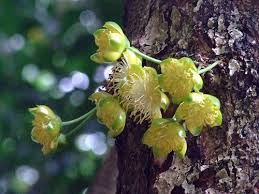
Overview
The Achariaceae family includes approximately 30 genera and around 145-150 species. Its members are found across the tropics of Africa, Southeast Asia, and Central and South America. The circumscription of this family has changed significantly with molecular phylogenetics; it now includes many genera previously placed in the Flacourtiaceae, a family that has been largely dismantled and its members redistributed among families like Salicaceae and Achariaceae.
Plants in this family occupy diverse tropical habitats, from lowland rainforests to montane forests. Many species are trees or shrubs forming part of the forest canopy or understory. The family is characterized chemically by the frequent presence of cyanogenic glycosides (releasing hydrogen cyanide when damaged) and cyclopropenoid fatty acids, which have had historical medicinal significance but are also toxic.
Economically, the family is best known for Hydnocarpus species, the source of chaulmoogra oil used historically to treat Hansen's disease (leprosy). Some species, like Pangium edule, have edible seeds after proper preparation to remove toxins, while others (Kiggelaria africana) are used in traditional medicine or have minor timber uses. Few are widely cultivated ornamentally.
Quick Facts
- Scientific Name: Achariaceae
- Common Name: Chaulmoogra Family
- Number of Genera: Approximately 30
- Number of Species: Approximately 145-150
- Distribution: Pantropical (Africa, Asia, Americas)
- Evolutionary Group: Eudicots - Rosids - Malpighiales
Key Characteristics
Growth Form and Habit
The majority of Achariaceae are trees and shrubs. Some genera include lianas or, rarely, perennial herbs (like Acharia itself). They typically inhabit tropical forest environments.
Leaves
Leaves are usually alternate, simple, though sometimes palmately lobed or compound (Pangium). Stipules are often present but may be small or fall early. Leaf margins are typically entire or toothed. Glands may be present on the petiole or leaf blade. Cyanogenic glycosides are common in the leaves and other tissues of many species.
Inflorescence
Inflorescences are variable, often axillary, and can be cymes, racemes, panicles, fascicles (clusters), or sometimes flowers are solitary. Bracts are typically small and inconspicuous.
Flowers
Flowers are typically unisexual (plants dioecious or monoecious), though sometimes bisexual. They are usually actinomorphic (radially symmetrical). Key floral features include:
- Calyx: Usually 3-5 sepals, distinct or slightly fused at the base.
- Corolla: Usually 3-5 petals (sometimes more, up to 15, or absent), often with scales or appendages at their base on the inner surface.
- Androecium: Stamens can be few to numerous (often many), filaments distinct or basally connate. Staminodes (sterile stamens) may be present, sometimes alternating with petals.
- Gynoecium (Pistillate/Bisexual flowers): A single superior ovary, typically composed of 2-5 (up to 10) fused carpels. Placentation is usually parietal (ovules attached to the ovary wall), resulting in a single locule, though sometimes appearing multi-locular due to intrusions of the placentae. Styles are distinct or fused, with varied stigma shapes.
Fruits and Seeds
The fruit is variable, commonly a capsule (splitting open) or a berry (fleshy, indehiscent). Some species have large, hard-shelled fruits (e.g., Pangium edule). Seeds can be numerous or few, sometimes winged or surrounded by an aril (a fleshy appendage). The seeds often contain unique fatty acids (chaulmoogric, hydnocarpic acids) and oily endosperm.
Chemical Characteristics
Achariaceae is chemically distinct due to the frequent presence of:
- Cyanogenic glycosides: Particularly gynocardin, which releases hydrogen cyanide upon tissue damage, serving as a defense mechanism.
- Cyclopentenyl fatty acids: Such as chaulmoogric acid, hydnocarpic acid, and gorlic acid, found in the seed oils of Hydnocarpus and related genera. These compounds have antibacterial properties but are also toxic.
Field Identification
Identifying Achariaceae requires careful observation, often including floral details. Its inclusion of former Flacourtiaceae members makes it morphologically diverse. Key features include:
Primary Identification Features
- Habit: Mostly trees or shrubs in tropical regions.
- Alternate leaves: Leaves typically arranged singly at different heights along the stem.
- Unisexual flowers (often): Check if individual flowers have only stamens or only a pistil, or if separate male and female flowers exist on the same or different plants.
- Superior ovary with parietal placentation: Examine the ovary position (above sepal/petal attachment) and internal structure (ovules on the outer wall of a single chamber).
- Petals often with basal scales/appendages: Look closely at the inner base of the petals for small scales or glands.
Secondary Identification Features
- Presence of stipules: Look for small leaf-like appendages at the base of the petiole (may fall early).
- Numerous stamens (often): Many species have a large number of stamens.
- Fruit type: Capsule or berry is common.
- Cyanogenic odor: Crushed leaves of some species may emit a faint bitter almond smell (due to cyanide), but caution is advised as these compounds are toxic.
Seasonal Identification Tips
- Flowering/Fruiting Times: Highly variable depending on species and tropical location; often tied to rainy seasons. Flowers are crucial for definitive identification.
- Fruits: Mature fruits (capsules or berries) can aid identification, especially distinctive ones like Pangium.
- Vegetative State: Alternate leaves on trees/shrubs in tropical regions, possibly with stipules, narrows possibilities but requires floral/fruit characters for confirmation.
Common Confusion Points
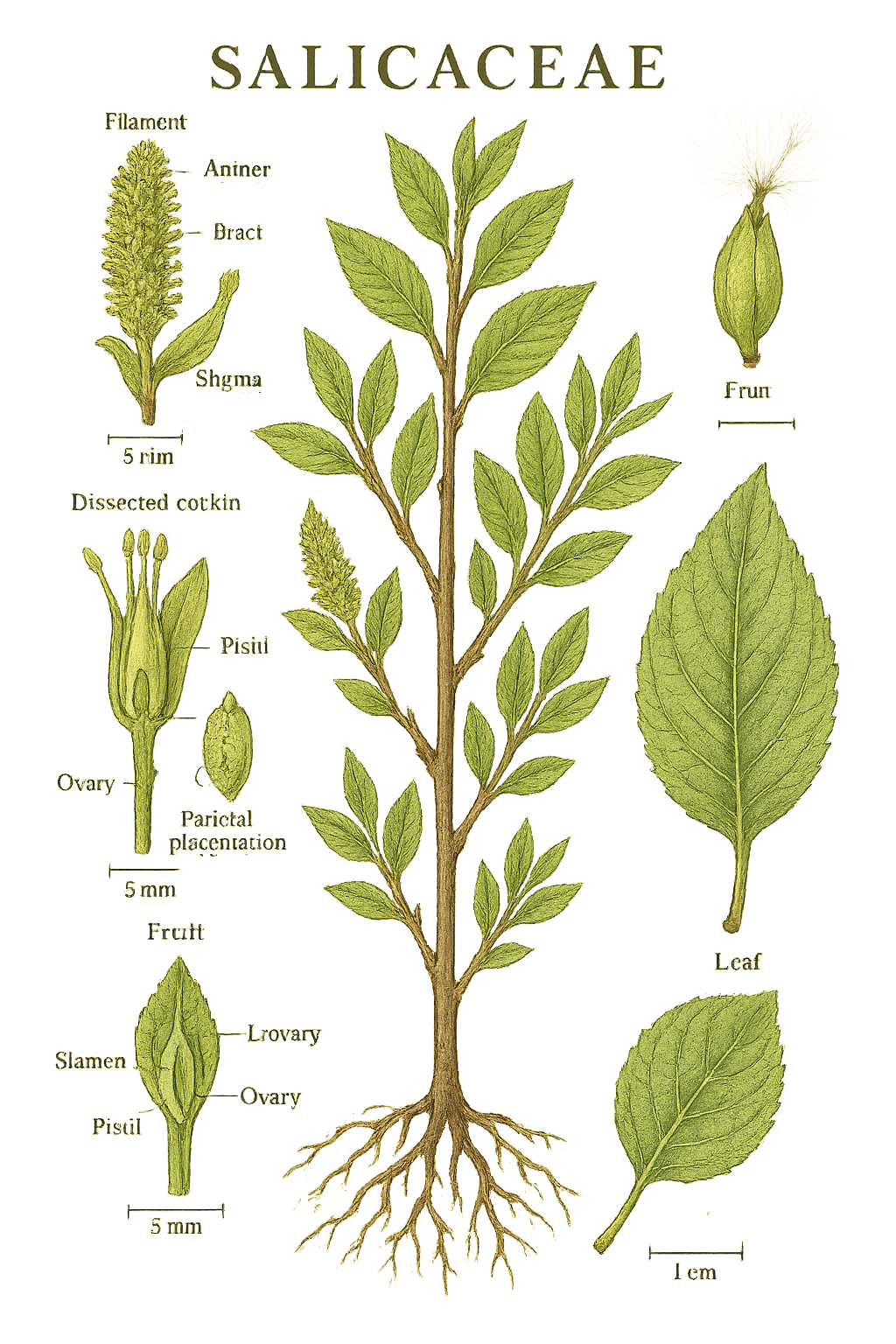
- Salicaceae (Willow family, incl. many former Flacourtiaceae): Also in Malpighiales, shares alternate leaves and sometimes unisexual flowers. Salicaceae often have catkins (e.g., Salix) or flowers with a prominent nectar disc, and seeds are often comose (hairy). Parietal placentation also occurs. Distinctions can be technical.
- Euphorbiaceae (Spurge family): Also in Malpighiales, extremely diverse. Often has milky latex (uncommon in Achariaceae), specialized cyathia inflorescences in Euphorbia, and typically 3-lobed schizocarp fruits.
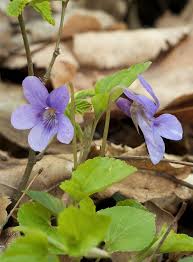
- Violaceae (Violet family): Also in Malpighiales. While temperate violets are herbaceous, tropical members can be trees/shrubs with alternate leaves. Flowers are typically bisexual and zygomorphic (bilaterally symmetrical) with a spurred lower petal, unlike the usually actinomorphic flowers of Achariaceae.
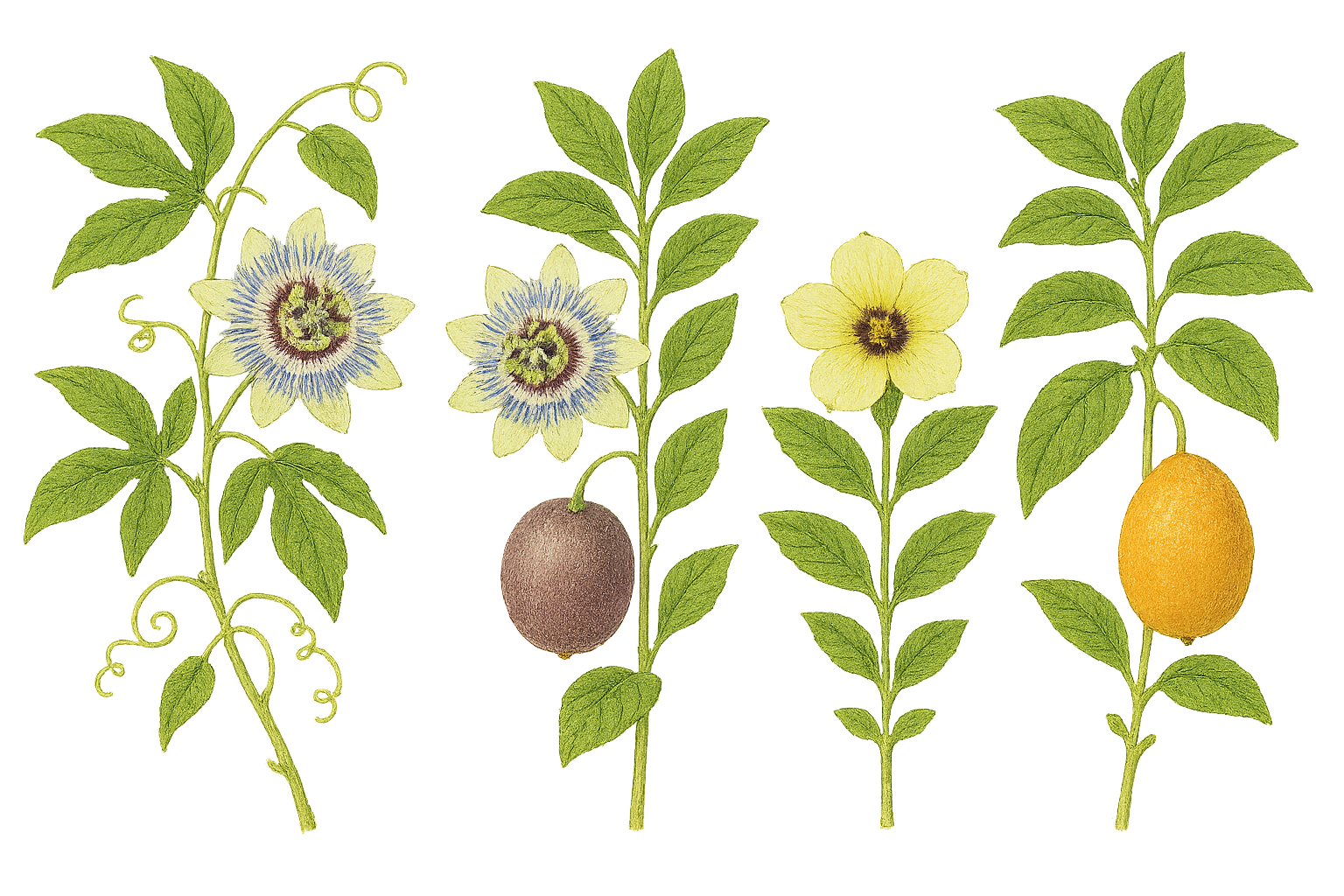
- Passifloraceae (Passion Flower family): Also in Malpighiales. Often vines with tendrils, distinctive complex flowers, and fruit typically a berry (passionfruit).
Field Guide Quick Reference
Look For:
- Tropical trees/shrubs
- Alternate, simple leaves (mostly)
- Stipules often present
- Unisexual flowers (common)
- Actinomorphic flowers
- Petals often with basal scales
- Superior ovary, parietal placentation
Key Variations:
- Habit: Trees, shrubs, lianas, herbs
- Leaves: Simple, lobed, or compound
- Flowers: Unisexual or bisexual
- Stamens: Few to numerous
- Fruit: Capsule or berry
- Presence of cyanogenic glycosides
Notable Examples
While not as widely known as some families, Achariaceae contains several genera of ecological or historical interest:

Hydnocarpus wightianus
Chaulmoogra
A tree native to the Western Ghats of India and Southeast Asia. Its seeds are the source of chaulmoogra oil, containing hydnocarpic and chaulmoogric acids. This oil was historically the primary treatment for leprosy before the advent of sulfone drugs, though its use was limited by toxicity.

Pangium edule
Pangi / Football Fruit / Keluak
A tall tree native to Southeast Asian mangrove swamps and rainforests. It produces large, brown, roughly football-shaped fruits. All parts of the plant, especially the seeds, contain high levels of hydrogen cyanide. Seeds are edible only after extensive preparation (boiling and soaking/fermentation) and are used in some regional cuisines (e.g., Indonesian rawon soup).

Kiggelaria africana
Wild Peach / Porkwood
A small to medium-sized tree native to southern and eastern Africa. It is dioecious, with inconspicuous greenish flowers followed by rough, spherical, yellowish capsules that split to reveal seeds covered in a bright orange-red fleshy aril, attracting birds. Used in traditional medicine and sometimes as timber.

Acharia tragodes
(Genus namesake)
The genus Acharia itself, after which the family is named, consists of a few species of perennial herbs native to South Africa. They are relatively inconspicuous compared to the tree genera often associated with the family's characteristics like cyanogenic glycosides.

Gynocardia odorata
(Source of Gynocardin)
A tree found in the Eastern Himalayas and Southeast Asia. This species is notable as the source from which the cyanogenic glycoside gynocardin was first isolated. It produces large, globose fruits containing numerous seeds.

Carpotroche brasiliensis
Sapucaínha / Pão-de-lepra
A tree native to the Atlantic Forest of Brazil. Its seeds also contain chaulmoogra-type oils and were traditionally used similarly to Hydnocarpus oils for skin ailments. The fruit is a woody capsule that splits open.
Phylogeny and Classification
Achariaceae is firmly placed within the large and diverse order Malpighiales, part of the rosid clade of eudicots. This order contains many well-known families like Euphorbiaceae, Salicaceae, Violaceae, and Passifloraceae. The current circumscription of Achariaceae is a result of molecular phylogenetic studies, which showed that several genera previously classified in the polyphyletic family Flacourtiaceae were closely related to the core Achariaceae genera (Acharia, Guthriea, Ceratiosicyos).
Within Malpighiales, Achariaceae is part of the "parietales" clade, characterized by parietal placentation. Its exact sister group relationships are still being refined but likely involve families such as Violaceae, Passifloraceae, Salicaceae, and Lacistemataceae. The inclusion of former Flacourtiaceae members has made Achariaceae morphologically more heterogeneous than its earlier, narrower definition.
Position in Plant Phylogeny
- Kingdom: Plantae
- Clade: Angiosperms (Flowering plants)
- Clade: Eudicots
- Clade: Rosids
- Order: Malpighiales
- Family: Achariaceae
Evolutionary Significance
The Achariaceae family exemplifies evolutionary diversification within the Malpighiales order, particularly concerning chemical defenses and seed dispersal:
- Chemical Defenses: The widespread production of cyanogenic glycosides and unique cyclopentenyl fatty acids represents a significant evolutionary strategy against herbivores and pathogens.
- Merger of Lineages: The modern circumscription highlights how molecular data can reveal evolutionary relationships obscured by convergent or conservative morphology, bringing together lineages previously separated (e.g., in Flacourtiaceae).
- Adaptation to Tropics: The family's pantropical distribution and diversification into various tree, shrub, and liana forms demonstrate successful adaptation to tropical ecosystems worldwide.
- Medicinal Plant Evolution: The presence of compounds like chaulmoogric acid points to the evolutionary interplay between plant secondary metabolites and their potential exploitation (by humans or other organisms) for medicinal or other purposes.